The NVIDIA Effect: Why Fortinet Shares Just Caught Fire
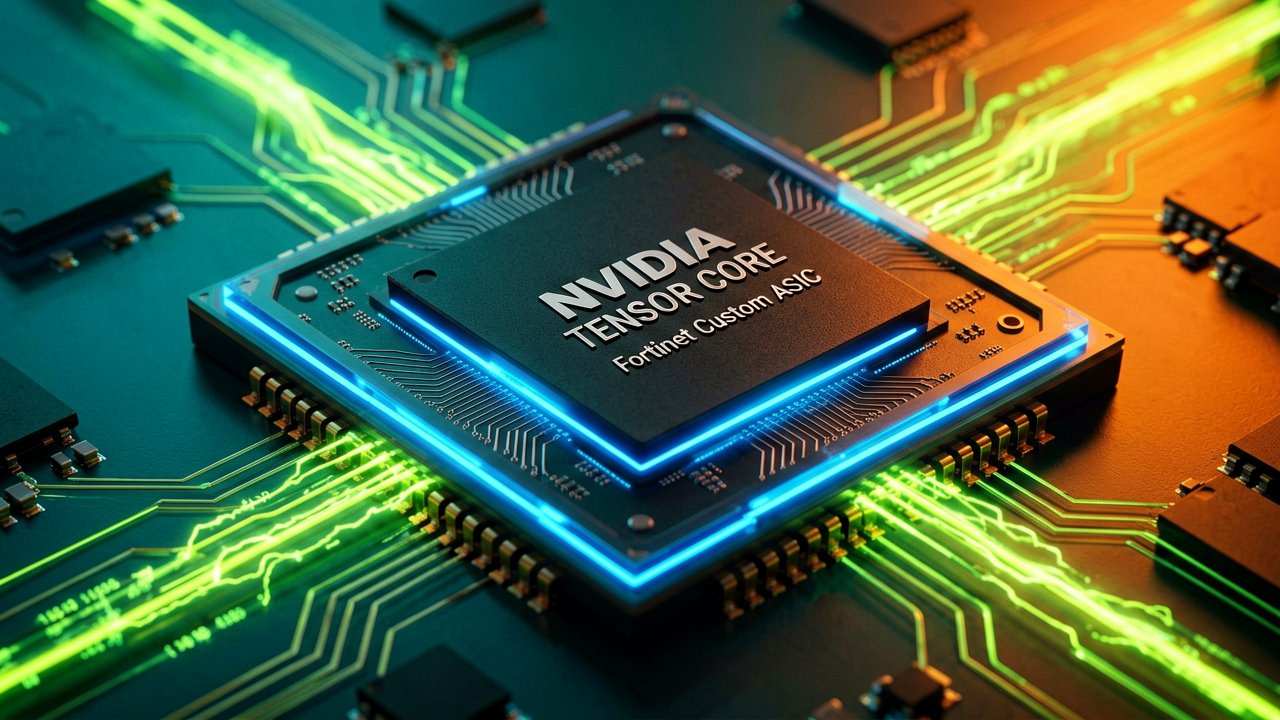
If you’ve been watching the markets lately, you know that mentioning "NVIDIA" is often the financial equivalent of pouring jet fuel on a stock price. But today’s 7.6% jump for Fortinet (FTNT) isn't just about riding the coattails of a trillion-dollar giant; it’s a calculated move to solve one of the messiest problems in modern cybersecurity: the crushing latency of real-time AI inspection. By tapping NVIDIA's prowess to accelerate its new FortiAIGate security appliance, Fortinet is effectively telling the industry that "fast enough" no longer cuts it when threats move at machine speed.
Breaking the Bottleneck
For years, cybersecurity has been a game of trade-offs. You could have deep, AI-driven packet inspection, or you could have high network throughput—rarely both. Fortinet’s decision to integrate NVIDIA’s acceleration technology into its FortiAIGate platform is a clear signal that they’re aiming for the best of both worlds. According to reporting from MarketWatch, the market responded with immediate enthusiasm, pushing shares higher as investors realized this partnership puts Fortinet at the forefront of the "AI-on-AI" battlefield.
It’s no secret that hackers are already using generative AI to craft more sophisticated malware and phishing schemes. To counter that, defensive AI needs to be smarter, but more importantly, it needs to be faster. By leveraging NVIDIA’s hardware, FortiAIGate can process massive datasets without causing the kind of network lag that usually makes IT admins reach for the "bypass" button. It’s a classic Fortinet move—engineering-heavy and focused on the hardware-software synergy that has always been their bread and butter, as noted by analysts at Barron's.
Why Wall Street is Buying the Story
Investors aren't just cheering for a new product; they're cheering for a margin story. High-end security appliances with specialized acceleration often command premium pricing and stickier customer relationships. Fortinet has spent the last few quarters navigating a somewhat rocky transition in the firewall market, so this pivot toward high-performance AI security feels like the right pivot at exactly the right time. As highlighted by Reuters, the 7.6% rally reflects a growing confidence that Fortinet can capture a significant slice of the AI-driven infrastructure upgrade cycle.
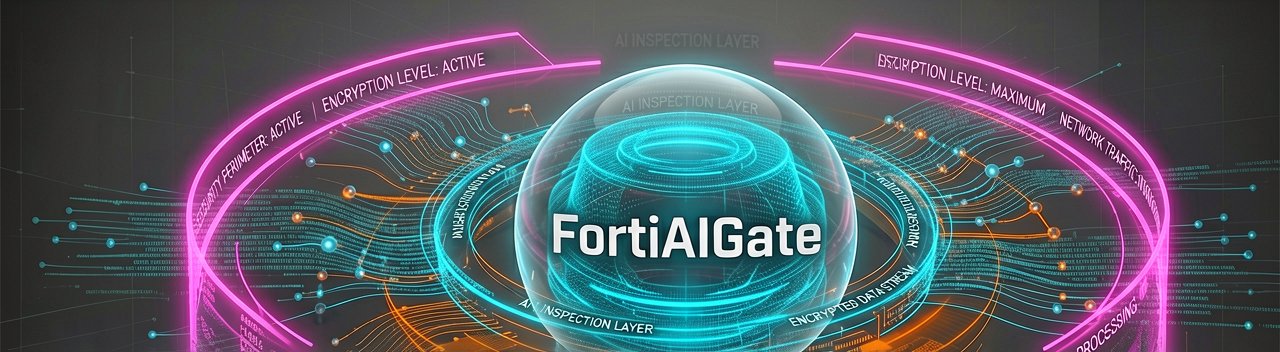
Ultimately, the "NVIDIA inside" strategy works because it validates the technical chops of the partner. It isn't just marketing fluff; it’s about the raw horsepower required to run Large Language Models (LLMs) and advanced heuristics at the edge of the network. If Fortinet can continue to prove that their FortiAIGate can stop a zero-day attack without dropping a single frame of a CEO’s Zoom call, that 7.6% gain might just be the start of a much longer trek upward.
In a world where every tech company is desperate to add an ".ai" suffix to their name, Fortinet is doing the actual legwork of building the plumbing. This partnership proves they’re not just talking about the future of security—they’re building the engine that runs it.
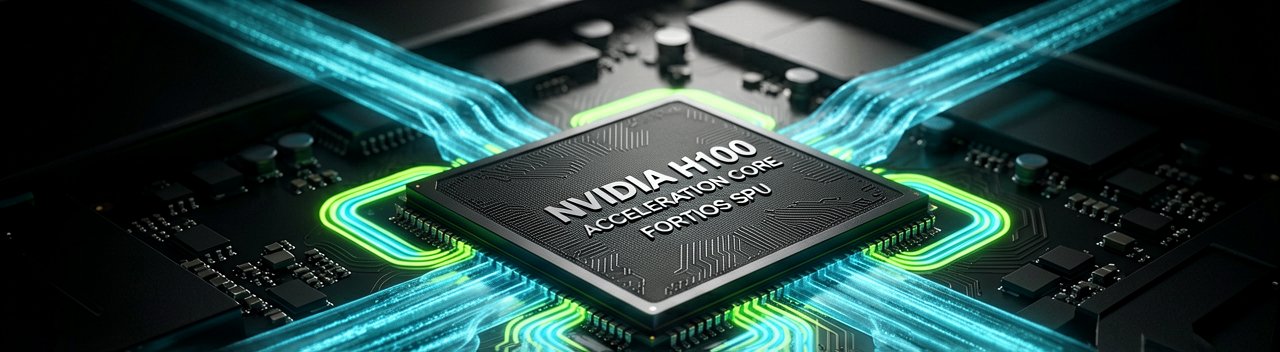
Inside the Silicon Arms Race: While the headline numbers tell a story of market momentum, the real narrative is buried in the architectural shift happening deep inside the data center. For decades, Fortinet built its reputation on custom-designed ASICs (Application-Specific Integrated Circuits), a strategy that allowed them to outpace rivals using off-the-shelf processors. However, the sheer computational hunger of Generative AI has changed the rules of the game. By bringing NVIDIA into the fold, Fortinet isn't abandoning its hardware roots; it’s evolving them to handle "heavy-lift" inference that standard firewalls simply weren't built to touch.
The End of the Hardware Ego
Historically, Fortinet has been fiercely protective of its "proprietary-first" philosophy. Seeing them lean on NVIDIA’s Tensor Core technology is a fascinating admission that the AI era is too big for any one company to tackle in a silo. Industry veterans see this as a pragmatic pivot. By offloading the most intensive AI workloads to NVIDIA’s architecture, Fortinet frees up its own SPU (Security Processing Unit) chips to handle what they do best: networking and classic pattern matching. It’s a hybrid approach that suggests the "not invented here" syndrome is finally dying in Silicon Valley in favor of raw performance.
Stakeholders are also looking closely at the timing of this rollout. Enterprises are currently paralyzed by "AI anxiety"—they want to deploy LLMs but are terrified of data leakage and prompt injection attacks. The FortiAIGate isn't just another firewall; it’s being positioned as a "clean room" for AI traffic. According to industry analysis from Investor's Business Daily, this specific focus on the security of AI models themselves—rather than just using AI to find old-school viruses—is what has the C-suite interested. It transforms security from a "tax" on the network into an enabler for innovation.
The Competitive Chessboard
If you look at the broader landscape, this move puts immense pressure on Palo Alto Networks and CrowdStrike. While those competitors have leaned heavily into cloud-native "platforms," Fortinet is doubling down on the physical edge. For organizations with strict data residency requirements or those running private AI clouds, cloud-based security introduces too much "round-trip" latency. By putting NVIDIA-grade acceleration directly into an on-premises appliance, Fortinet is catering to the world’s most sensitive—and deep-pocketed—customers, including government agencies and high-frequency trading firms.
The 7.6% jump also reflects a relief rally. For much of the past year, critics argued that Fortinet was too tied to a cooling firewall market. This partnership effectively rebrands them as an AI infrastructure play. As noted by Bloomberg, the convergence of networking and security (Secure Networking) is the company's biggest bet. If they can successfully merge the speed of NVIDIA's chips with the depth of FortiOS, they may have just built a moat that software-only competitors will find impossible to cross.
Ultimately, this isn't just about a stock spike; it’s about the "industrialization" of AI security. We are moving past the experimental phase where companies play with chatbots and into a phase where those bots need to be defended like the crown jewels. Fortinet’s gamble is that in this new world, the winner won't be the one with the best marketing, but the one with the fastest silicon.
The Reality Check: Before we crown Fortinet the undisputed king of the AI era, it’s worth asking if this 7.6% surge is a vote of confidence in their strategy or simply the latest symptom of "NVIDIA proximity bias." While the market loves a partnership announcement, the integration of high-end GPUs into security appliances introduces a set of contradictions that Fortinet hasn't fully answered. Specifically, how does a company that built its brand on energy-efficient, custom silicon justify the massive power draw and thermal demands that come with NVIDIA’s high-performance cores?
Hardware Convergence or Hardware Bloat?
There is a fine line between a specialized security tool and a generic server with a firewall badge slapped on the front. By tapping external architecture, Fortinet risks Diluting the very "ASIC advantage" that made them a darling of the infrastructure world. If the heavy lifting is being done by NVIDIA, the intellectual property moat shifts from Fortinet’s proprietary engineering to their ability to manage someone else’s heat sinks. Critics, including those cited in deep-dives by CNBC, suggest that this move might be a defensive play to keep up with the sheer velocity of AI development rather than a proactive leap forward.
Furthermore, the "AI-on-AI" narrative assumes that customers are ready to pay the inevitable "AI tax." These NVIDIA-powered units won't be cheap, and in a macroeconomic environment where CISOs are being asked to consolidate spending, a premium-priced appliance might be a hard sell. We’ve seen this movie before in the tech world: a hardware breakthrough occurs, the stock pops, but the actual sales cycle takes twice as long as the analysts predicted because the mid-market simply can't afford the upgrade. The contradiction here is clear: Fortinet is pitching cutting-edge speed to a market that is currently obsessed with cost-cutting.
The Long-Term Integration Gamble
Projecting forward, the implication is that the firewall is no longer just a gatekeeper; it’s becoming a co-processor. If Fortinet succeeds, they redefine the category. If they fail, they become a high-end reseller for NVIDIA’s ecosystem. According to insights from Forbes, the real test will be the software layer. Throwing chips at a problem is the easy part; ensuring that FortiOS can orchestrate that power without creating new vulnerabilities is where the real work begins. We should maintain a healthy skepticism until we see third-party bake-offs that prove the FortiAIGate can actually outperform a software-defined perimeter at scale.
Ultimately, the market is betting on the *potential* of a Fortinet-NVIDIA synergy, but the tech world is littered with the corpses of "game-changing" partnerships that ended in interoperability nightmares. The 7.6% gain is a nice sugar high for shareholders, but the long-term health of the stock depends on whether this is a foundational shift in how we protect data or just a very expensive way to keep the network fans spinning.
In the tech world, adding NVIDIA to your press release is like adding bacon to a menu—it makes everything sound better and costs five dollars more, but eventually, someone has to figure out if the heart of the network can actually handle all that extra grease.
Artūras Malašauskas is an AI Systems Integrator with 20+ years of production-grade web engineering experience. He has designed, shipped, and scaled enterprise Python/PHP systems for logistics, SaaS, and public-sector clients. For the past year, he has focused exclusively on AI integrations: deploying open-source LLMs, building generative media pipelines (image, audio, video), and engineering multi-agent workflows for real production environments. His standard: reproducibility, security, cost-efficient inference—no vaporware. He documents and evaluates emerging AI tooling, separating verified capabilities from marketing noise. Technical editor at: muza-ai.eu, ai-verslas.lt, ai-naujinos.lt Connect on LinkedIn
Comments