The Billion-Dollar Threshold: Datadog’s Q1 2026 Surge and the AI Concentration Risk

Datadog just crossed a threshold that should silence any remaining skeptics in the cloud observability space. For the first time in its history, the company has broken the billion-dollar revenue mark in a single quarter, reporting Q1 2026 sales of $1.01 billion—a blistering 32% year-over-year increase that handily beat the Street's expectations. This isn't just a minor victory; it’s a full-on sprint. Analysts at Investing.com noted that the 6% sequential growth is the strongest first-quarter performance the company has seen since 2022, signaling that the post-optimization slump in cloud spending is officially in the rearview mirror.
The profitability side of the ledger was equally impressive. Non-GAAP earnings per share (EPS) landed at $0.60, soaring past the consensus estimate of $0.51. According to the latest financial filings from Datadog Investor Relations , the company generated a massive $335 million in operating cash flow. Management was confident enough in the trajectory to lift its full-year revenue guidance to a range of $4.30 billion to $4.34 billion, proving that they expect the current momentum to be more than just a flash in the pan.
What's fueling this engine? It’s a mix of deep enterprise penetration and a "land and expand" strategy that seems to be operating at peak efficiency. Datadog now counts approximately 4,550 customers with an Annual Recurring Revenue (ARR) of over $100,000, representing a 21% jump from the previous year. As reported by The Globe and Mail , the market responded with characteristic enthusiasm, sending the stock up significantly following the release.
What Most Reports Miss: The Silent Power of the AI Cohort
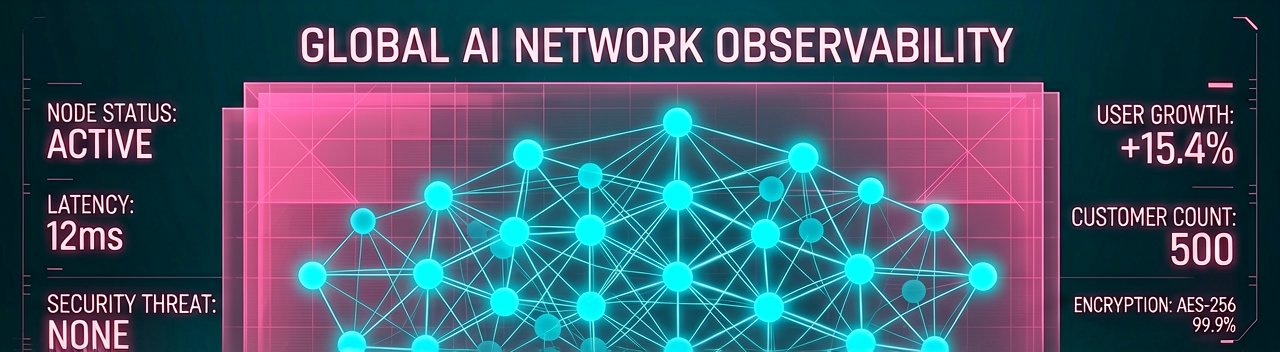
Behind the Scenes: While the headlines focus on the billion-dollar milestone, the real story lies in how Datadog has successfully tethered itself to the AI explosion without falling into the "hype cycle" trap. During the earnings call, CEO Olivier Pomel revealed a startling metric: over 6,500 customers are now using Datadog’s AI integrations. This group represents roughly 20% of the total customer base but accounts for a staggering 80% of the company’s total ARR. This concentration suggests that Datadog isn't just selling to anyone; it’s becoming the essential nervous system for the world’s most sophisticated, high-spending technology firms.
The adoption of multi-product bundles is also reaching a tipping point. Around 20% of Datadog's customers are now using eight or more products, up from just 13% a year ago. Industry observers at Alpha Spread point out that this level of platform stickiness makes Datadog notoriously difficult to displace, even as competitors like Dynatrace and New Relic refine their own AI offerings. By moving up the stack—from basic infrastructure monitoring to LLM observability and security—Datadog is capturing budgets that used to belong to siloed security vendors.
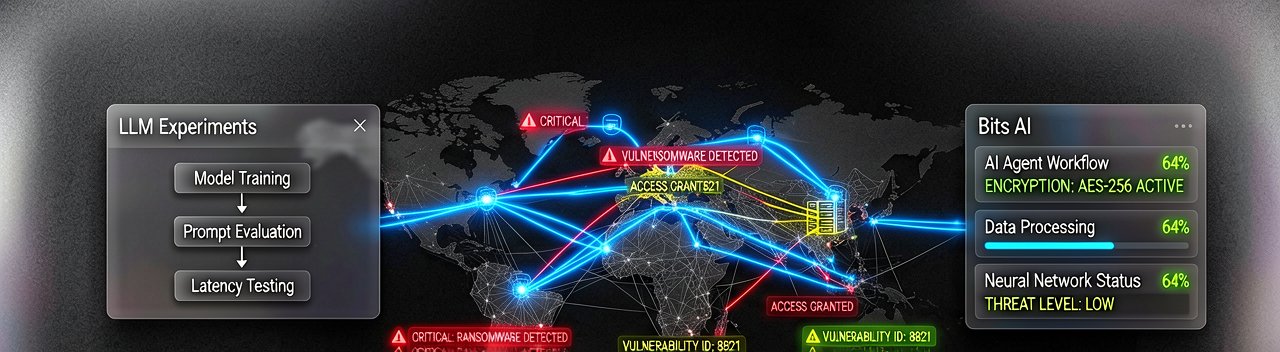
There's also a subtle shift in how the enterprise treats AI workloads. We are moving past the "sandbox" phase where teams were just playing with prompts. According to technical deep-dives on Finterra, Datadog’s newer tools—like Bits AI for autonomous incident response and LLM Experiments for model evaluation—are being baked directly into production pipelines. This isn't just about "seeing" the data anymore; it's about Datadog acting as an active participant in maintaining system uptime in an increasingly complex, AI-driven world.
Looking ahead to the DASH 2026 conference in June, the expectation is that Datadog will double down on its "security-first" observability narrative. With $4.8 billion in cash and marketable securities sitting on the balance sheet, the company has a massive war chest to fund R&D or potentially swallow up smaller innovators in the cloud-native security space. For now, Datadog is playing a high-stakes game of expansion, and if the Q1 numbers are any indication, they are winning by a landslide.
The Hidden Gravity of the Cloud
Reading Between the Lines: For all the celebratory champagne being popped over the billion-dollar milestone, a sober look at the unit economics suggests that Datadog is running a race where the track gets steeper the faster you go. While a 32% growth rate is undeniably impressive for a company of this scale, the law of large numbers is beginning to exert its inevitable pull. We are seeing a shift from the era of "limitless cloud expansion" to one of "surgical precision," where Datadog must work twice as hard to squeeze incremental growth out of an enterprise base that is becoming increasingly cost-conscious and wary of "tool sprawl."
There is also a fascinating contradiction in Datadog’s reliance on the AI cohort. By tethering 80% of its ARR to just 20% of its customers—the AI-early-adopters—the company has essentially hitched its wagon to the most volatile segment of the tech economy. If the AI "bubble" undergoes a correction, or if large-scale language model training shifts toward more efficient, less resource-heavy architectures, Datadog’s revenue engine could face a sudden drag. The company isn't just monitoring the AI revolution; it is leveraged to it, creating a concentration risk that the quarterly "beat and raise" narrative tends to gloss over.
Furthermore, the pivot toward security is a double-edged sword. While it expands the Total Addressable Market, it puts Datadog on a direct collision course with entrenched titans who don't play by the rules of "observability." Entering the security space requires a different kind of trust and a different sales motion than infrastructure monitoring. As Datadog attempts to become the "everything app" for DevOps and SecOps, it faces the classic platform dilemma: the risk of becoming a "jack of all trades, master of none" in a market where specialized niche players are still winning on technical depth.
The guidance raise also feels a bit like a calculated defensive move. By nudging the full-year outlook upward, management is effectively pre-empting any "growth slowdown" whispers before the DASH conference. However, with $4.8 billion in cash, the real question isn't whether they can beat the next quarter, but whether they can buy their way into the next architectural shift. Until we see a major M&A move that genuinely diversifies their revenue away from compute-heavy monitoring, Datadog remains a high-beta bet on the continued complexity of the cloud—a bet that assumes systems will always break in ways only they can see.
"In the end, Datadog has mastered the art of charging us to watch our own chaos; it’s a brilliant business model, provided we never actually figure out how to build software that simply works."
Artūras Malašauskas is an AI Systems Integrator with 20+ years of production-grade web engineering experience. He has designed, shipped, and scaled enterprise Python/PHP systems for logistics, SaaS, and public-sector clients. For the past year, he has focused exclusively on AI integrations: deploying open-source LLMs, building generative media pipelines (image, audio, video), and engineering multi-agent workflows for real production environments. His standard: reproducibility, security, cost-efficient inference—no vaporware. He documents and evaluates emerging AI tooling, separating verified capabilities from marketing noise. Technical editor at: muza-ai.eu, ai-verslas.lt, ai-naujinos.lt Connect on LinkedIn
Comments