The Automated Handshake: HeroHire and the Gamble to Fix the Global Talent Bottleneck
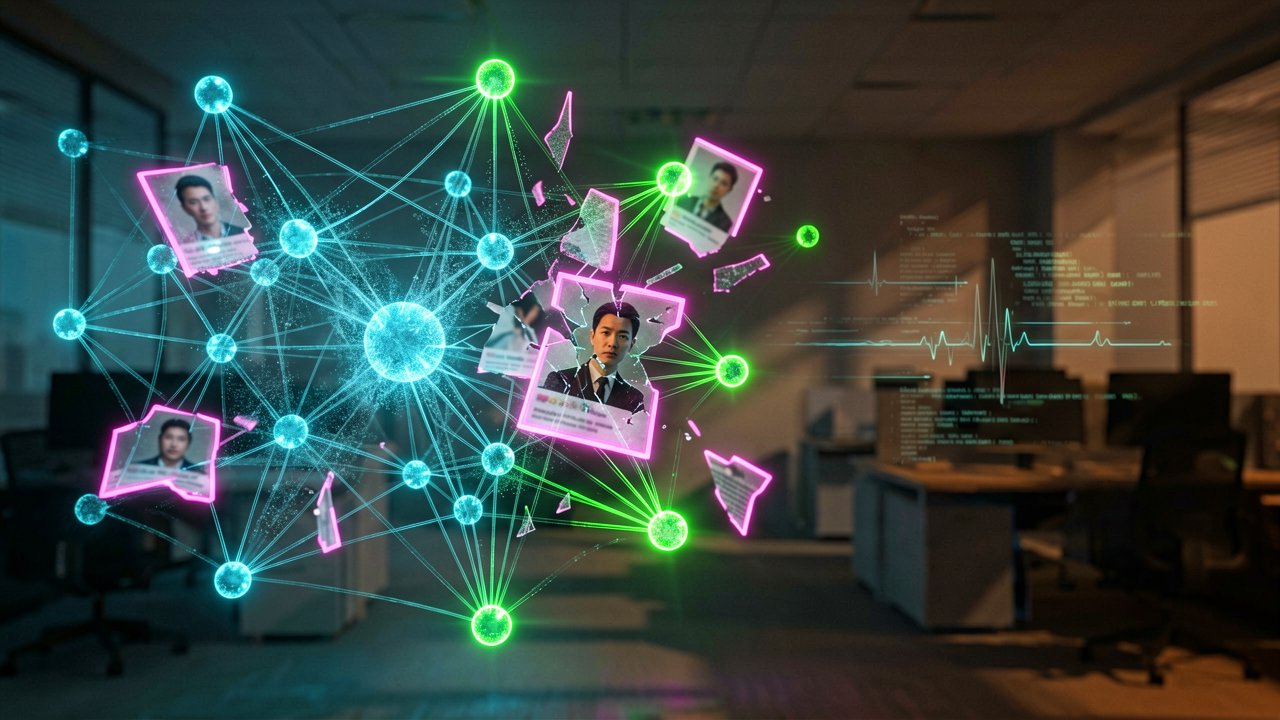
If you've spent any time on the job hunt lately, you know the "black hole" isn’t just a physics concept—it’s where your resume goes to die. Between the algorithmic gatekeepers and the sheer volume of applicants, the traditional hiring process has become a fragmented mess that serves neither the talent nor the overstretched HR departments. Enter HeroHire, a startup that’s decided the solution isn't more filters, but a fundamental shift in how we match people to roles. This week, they’ve officially pulled the curtain back on their Autonomous AI Recruiter, a tool they claim is designed specifically to fix hiring for "the 99%" of workers who feel left behind by the current tech-heavy ecosystem.
Moving Beyond the Keyword Hunt
Most job seekers are used to the grim reality of "optimizing" their CVs for Applicant Tracking Systems (ATS) that care more about buzzwords than actual competency. HeroHire’s new platform, as detailed by TechCrunch, aims to bypass this sterile dance. Instead of just scanning for keywords, the autonomous agent conducts conversational assessments, essentially acting as a first-round screener that actually listens. It’s a bold swing at the dehumanization of the modern job board, promising to give candidates a fairer shake by evaluating potential rather than just pedigree.
The tech itself isn't just another chatbot with a fresh coat of paint. It’s built on a proprietary LLM framework optimized for labor market dynamics. By automating the heavy lifting of sourcing and initial vetting, HeroHire suggests they can reduce the time-to-hire by nearly 60%, a figure that should make any CFO’s ears perk up. But for the 99%—the retail workers, the warehouse staff, and the mid-level managers—the real win is the transparency. According to a report from Forbes, the platform provides immediate feedback to candidates, a radical departure from the standard "don't call us, we'll call you" silence.
The Ethics of an AI Headhunter
Of course, whenever "autonomous" and "hiring" appear in the same sentence, the alarm bells regarding bias start ringing. We’ve seen enough cautionary tales of AI inheriting the prejudices of its creators. HeroHire claims they’ve baked "blind vetting" protocols into the core of the engine to strip away identifiers that trigger unconscious bias. As noted by Wired, the challenge remains whether these algorithms can truly identify the "diamond in the rough" without falling back on the same data patterns that created the problem in the first place.
Ultimately, the success of HeroHire’s Autonomous AI Recruiter won’t be measured in lines of code, but in the quality of the matches it makes. If it can actually bridge the gap between a massive, untapped workforce and companies desperate for reliable talent, it might just be the first piece of "HR tech" that actually feels human. For now, it’s a promising attempt to reclaim the hiring process from the machines—by using a smarter machine to do the job.
The Quiet Revolution in the Cubicle: While the headlines focus on the "autonomous" buzzword, the real story lies in the tectonic shift HeroHire is forcing upon the recruiter-candidate power dynamic. For decades, the recruiting industry has operated on a high-volume, low-empathy model where the "99%" are treated as entries in a database rather than professionals with evolving skill sets. By offloading the logistical drudgery to an AI that doesn't get "recruiter fatigue" at 4:00 PM on a Friday, HeroHire is effectively trying to reintroduce a level of thoroughness that hasn't existed since the days of boutique headhunting firms.
Historically, the bottleneck in hiring wasn't a lack of talent, but a lack of time. Human recruiters, overwhelmed by hundreds of applications per role, spend an average of six seconds looking at a resume before making a binary stay-or-go decision. This "blink test" is where the 99% lose out—vague job titles or non-traditional career paths are discarded in favor of safe, recognizable brands. As highlighted in a recent analysis by Bloomberg, the promise of an autonomous agent is its infinite patience; it can afford to spend thirty minutes "talking" to every single applicant to find the transferable skills that a harried human would miss.
The Middle-Manager Dilemma
There is, however, a simmering tension within the HR departments themselves. Stakeholders are divided on whether this tech represents a liberation from paperwork or a threat to the specialized intuition of a seasoned recruiter. Veteran talent scouts argue that "culture fit" is a vibe, not a data point. Yet, HeroHire’s leadership counters that "vibe" is often just a polite synonym for "someone who looks and thinks like me." By focusing the AI on behavioral data and situational judgment, the platform aims to prove that diversity isn't a checkbox, but a byproduct of a more objective discovery process.
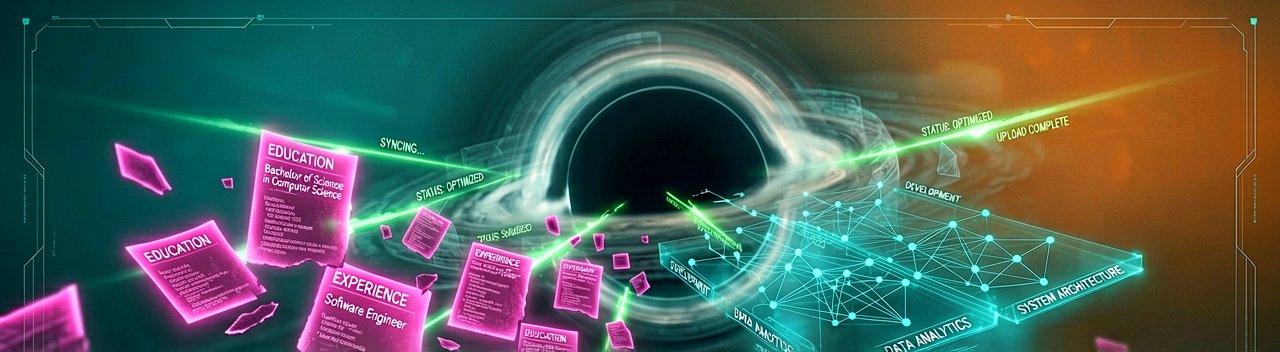
Looking at the broader economic landscape, the timing of this launch is no accident. With the "skills gap" becoming a permanent fixture of executive anxiety, companies can no longer afford to let qualified candidates slip through the cracks of a broken funnel. According to Harvard Business Review, the cost of a bad hire can be three times the position's salary, but the cost of *missing* a great hire is often unquantifiable. HeroHire is betting that the 99% aren't under-qualified; they are simply under-discovered. If this autonomous experiment holds water, the "black hole" of the job market might finally be closing for good.
The Paradox of the Automated Handshake: To believe that more technology is the cure for a crisis caused by technology requires a certain level of Silicon Valley optimism that rarely survives contact with the real world. HeroHire’s central thesis—that an autonomous agent can "fix" hiring for the 99%—rests on the assumption that the problem is one of efficiency rather than intent. We have to ask: if we give companies a faster way to sift through the masses, will they actually hire more diversely, or will they simply use that reclaimed time to find even more specific reasons to say "no"?
There is a glaring contradiction in the "blind vetting" narrative that tech journalists often overlook. While HeroHire strips away names and zip codes to level the playing field, the very nature of Large Language Models means they are trained on the linguistic patterns of the successful. If the AI is trained on the resumes and interview transcripts of Ivy League graduates because those are the "gold standard" data sets, it may inadvertently penalize the 99% for not using the right "corporate-speak," even if their technical proficiency is superior. As explored by The Verge, the risk of "algorithmic monoculture" is real; we might be trading human bias for a standardized, invisible prejudice that is much harder to appeal.
The Ghost in the Hiring Machine
Furthermore, the "Autonomous Recruiter" assumes that the job market is a meritocracy just waiting for a better referee. In reality, hiring is often a chaotic mix of internal politics, shifting budgets, and "who you know" referrals that no AI can navigate. By automating the front-end, HeroHire might just be creating a faster conveyor belt that leads to the same brick wall of human indecision at the final interview stage. If the human manager at the end of the chain hasn't changed their narrow definition of a "perfect candidate," then the AI’s inclusive shortlist is nothing more than a sophisticated exercise in futility.
Projecting forward, the ultimate irony might be the "arms race" this creates for the candidates themselves. If HeroHire’s AI is the one doing the interviewing, it won't be long before job seekers start using their own AI agents to "talk" to the recruiter. We’re rapidly approaching a future where two bots negotiate a salary and a start date while the actual humans involved are still trying to figure out if they even like the sound of each other’s voices. It’s a brave new world, but one has to wonder if the 99% are being invited to the table or just being managed more efficiently by the menu.
Ultimately, the success of this platform hinges on whether "autonomous" means "intelligent" or just "automatic." True disruption in the labor market won't come from a faster filter, but from a tool that can convince a hiring manager that a candidate’s unconventional background is an asset rather than a risk. Until then, HeroHire is a fascinating experiment in whether you can actually code empathy into a workflow that has spent the last two decades trying to eliminate it entirely.
The tech industry’s favorite hobby is trying to solve human messiness with math; we should probably just be grateful that, for now, the AI doesn't ask us where we see ourselves in five years, because the honest answer—'hopefully not being interviewed by an algorithm'—would likely trigger a rejection code.
"We’ve officially reached the point in the digital age where we’re delegating the 'human' in Human Resources to a software package, largely because the actual humans are too busy attending meetings about how to be more human."
Artūras Malašauskas is an AI Systems Integrator with 20+ years of production-grade web engineering experience. He has designed, shipped, and scaled enterprise Python/PHP systems for logistics, SaaS, and public-sector clients. For the past year, he has focused exclusively on AI integrations: deploying open-source LLMs, building generative media pipelines (image, audio, video), and engineering multi-agent workflows for real production environments. His standard: reproducibility, security, cost-efficient inference—no vaporware. He documents and evaluates emerging AI tooling, separating verified capabilities from marketing noise. Technical editor at: muza-ai.eu, ai-verslas.lt, ai-naujinos.lt Connect on LinkedIn
Comments