The Mach-Speed Pivot: REVA University’s High-Stakes Bet on AI and Aerospace
The New Frontier: REVA University’s Bold Play for the Future of Tech
If you’ve been watching the Bengaluru tech scene lately, you’ll know that the conversation has shifted. It’s no longer just about "IT services"; it’s about deep tech, hardware, and the literal frontier of outer space. REVA University recently doubled down on this shift by launching a suite of industry-focused programmes in Artificial Intelligence (AI), Aerospace Engineering, and Advanced Manufacturing. As reported by , these aren't just your standard degree paths—they’re a direct response to a massive talent deficit in the very sectors that are currently redefining India's industrial identity.
Chancellor Dr. P. Shyama Raju isn't mincing words about the timing. During a recent announcement, he noted that India is standing at a technological threshold, yet industry growth is outpacing the supply of qualified professionals. According to The Tribune, the university is pivoting from a multidisciplinary model to what they call a "transdisciplinary" approach. It’s a fancy way of saying they’re breaking down the silos between subjects. Think of it as "Core with AI" rather than "Core versus AI"—an essential distinction when you realize that even a traditional mechanical engineer today needs to understand predictive analytics just to keep a modern factory floor running.
From Avionics to Automation: Bridging the Talent Gap
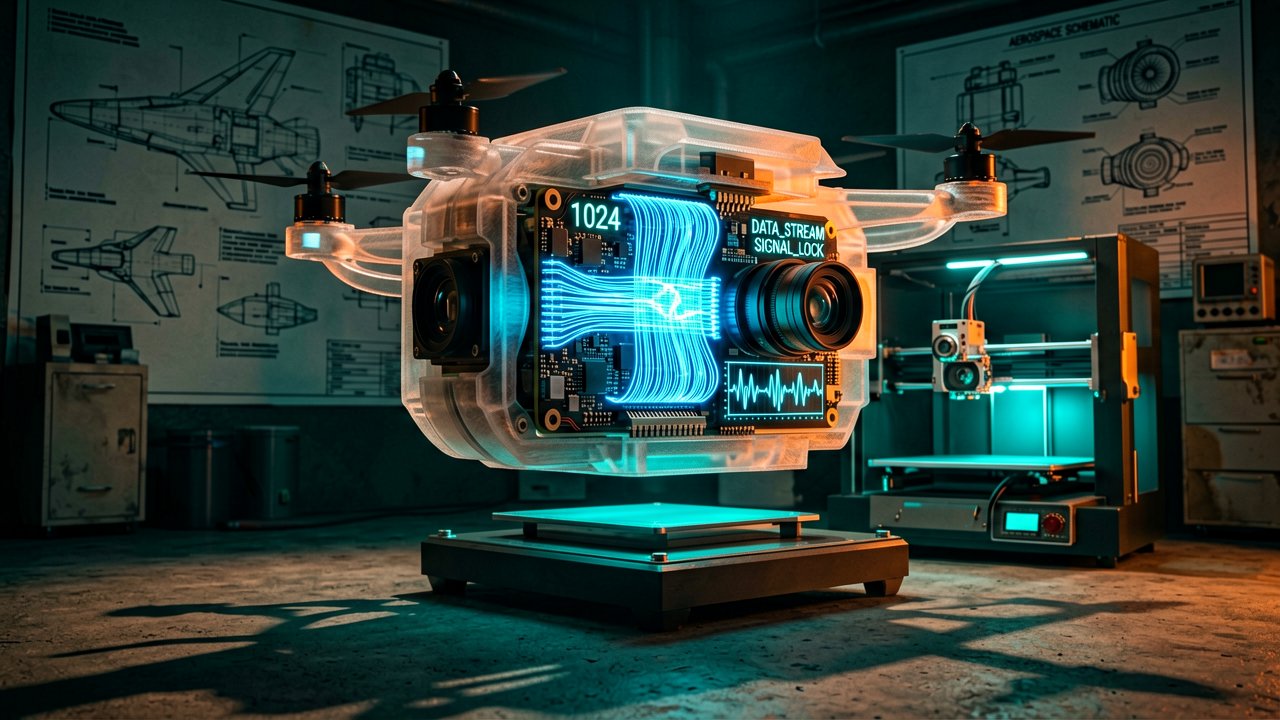
The Aerospace Engineering wing is particularly ambitious. While many universities stick to the theoretical physics of flight, REVA’s curriculum is diving headfirst into practical applications like Unmanned Aerial Vehicles (UAVs), avionics, and intelligent mobility. Per REVA University's program highlights, students aren't just reading about aerodynamics; they’re engaging in "design, build, and fly" capstone projects. It’s exactly the kind of hands-on experience that firms like ISRO or commercial startups are looking for as the global space economy begins to sizzle.
Then there’s the Advanced Manufacturing piece. We’ve seen how "Smart Factories" are becoming the gold standard, and REVA is meeting this with dedicated Centres of Excellence. These hubs—supported by DivyaSree—are focusing on 3D printing and smart technologies. As noted by The Wire, the goal is to equip students with expertise in automation and electric mobility. It’s a smart bet: as India pushes to become a global manufacturing hub, the "labor" of the future won't just be manual; it'll be about managing the AI-driven systems that do the heavy lifting.
Ultimately, these moves suggest that REVA is positioning itself as more than just an academic institution; it’s trying to be an R&D partner for the next industrial revolution. By integrating AI across every discipline—from commerce to healthcare—the university is betting that the most valuable graduates won't just be specialists, but tech-polymaths who can speak the language of code and carbon fiber with equal fluency. If they pull it off, they won't just be filling seats; they'll be fueling the engine of the next great tech boom.
The Industry-Academic Pulse: What Most Reports Miss
Behind the Curtain: It’s easy to look at a press release about "AI integrated learning" and see it as just another marketing buzzword. But if you spend any time on the REVA campus in North Bengaluru, you realize this isn't just a paint job on old curriculum. The real story is the frantic pace of the "Board of Studies" meetings, where industry veterans from the nearby aerospace hubs are literally red-lining textbooks to ensure students aren't learning 2015-era software for 2026-era challenges. There is a palpable sense of urgency here that stems from the "skills gap" reaching a breaking point in India’s Silicon Valley.
Historically, Indian engineering education has been criticized for being too theoretical—producing graduates who need six months of "finishing school" before they can touch a production line. REVA’s pivot toward Advanced Manufacturing is a direct attempt to kill that lag time. By embedding Bosch and Volvo-supported labs directly into the academic ecosystem, as highlighted by The New Indian Express, the university is essentially beta-testing its students in real-world environments before they even don their graduation caps.
The Aerospace initiative, in particular, feels like a strategic nod to the "NewSpace" era. While traditional aeronautics focused on massive commercial jets, the current explosion in low-earth orbit (LEO) satellites and tactical drones requires a different breed of engineer. Insiders suggest that the focus on "intelligent mobility" isn't just about cars; it’s about the navigation systems for the thousands of drones expected to populate Indian skies for logistics by the end of the decade. This is high-stakes training, and the university's partnership with DivyaSree indicates a heavy investment in the physical infrastructure needed to house these sophisticated prototyping labs.
The "Transdisciplinary" Gamble
One of the more nuanced shifts is the move away from rigid departmental lines. In the old world, a Computer Science student and a Mechanical Engineering student lived in different universes. At REVA, the new mandate is "AI for All." According to perspectives shared via The Tribune, the goal is to ensure a commerce student understands blockchain just as well as a mechanical student understands generative design. It’s a gamble on the "T-shaped professional"—someone with deep technical expertise but a broad enough horizontal understanding to talk to stakeholders across the business.
From a journalist's perspective, the most interesting angle is the cultural shift within the faculty itself. Moving from a lecture-heavy model to a "Project Based Learning" (PBL) framework requires professors to act more like industry mentors than traditional lecturers. This friction—between the old guard of academia and the high-velocity demands of the tech industry—is where the real innovation is happening. REVA is essentially trying to run a university like a high-growth startup, leaning into the "Innovation-Driven Academic Ecosystem" that The Wire notes as their core differentiator.
Ultimately, the success of these programmes will be measured not by enrollment numbers, but by the "day-one readiness" of the graduates. If REVA can prove that a student can walk off the stage and directly into a role at a top-tier aerospace firm without an internship bridge, they will have set a new blueprint for private higher education in India. It’s an ambitious, slightly risky, and undeniably necessary evolution for a region that can no longer afford to wait for the future to arrive.
Reading Between the Lines: The Cost of the "Future-Proof" Label
The Reality Check: While it is easy to get swept up in the high-gloss brochures of "AI-integrated" ecosystems, the skeptical observer must ask: can a traditional academic structure truly keep pace with a sector where the "state-of-the-art" changes every six months? There is a persistent tension between the slow, deliberate nature of university accreditation and the breakneck speed of Large Language Models and aerospace materials science. REVA is promising a lot, but the real challenge lies in the "half-life" of this curriculum. If the syllabus isn't updated with the frequency of a software patch, these students risk graduating with knowledge that is already legacy code.
Then there is the question of the "transdisciplinary" label. On paper, having a civil engineer understand neural networks sounds revolutionary; in practice, it risks the "jack of all trades, master of none" trap. As The Tribune reports, the push for innovation-driven ecosystems is heavy on "interdisciplinary" projects, but the industry still largely hires for deep, specialized expertise. There’s a fine line between a well-rounded engineer and one who has spent so much time on "broad horizons" that they’ve missed the core rigors of their primary discipline.
Furthermore, the reliance on industry partners like Bosch or Volvo—while excellent for immediate employability—raises questions about academic independence. When a curriculum is heavily influenced by specific corporate "Centres of Excellence," as noted by The New Indian Express, there is a subtle shift from educating a citizen-scientist to training a high-tier technician for a specific corporate stack. It’s a win for the student’s first paycheck, certainly, but perhaps a more complex trade-off for the long-term flexibility of their career path.
We must also consider the infrastructure. Building a world-class aerospace program isn't just about hiring a few ISRO veterans; it’s about the staggering capital expenditure required for wind tunnels, composite labs, and high-compute clusters. REVA’s partnership with DivyaSree, mentioned by The Wire, suggests they have the hardware backing, but the proof will be in the output. Will we see original patents and disruptive startups emerging from these labs, or just a very efficient pipeline of talent for existing giants? The latter is useful, but only the former is truly "industry-defining."
Ultimately, REVA’s move is a high-stakes experiment in market-driven education. They are betting that by leaning into the "Aerospace and AI" hype, they can leapfrog traditional prestige institutions. It is a bold play, but in the tech world, the "first-mover advantage" only lasts until someone else builds a faster processor or a more efficient rocket. For now, REVA has the momentum, but keeping that engine running at Mach speed will require more than just a few new degree titles—it will require a fundamental, and perhaps uncomfortable, permanent revolution in how they teach.
It’s a bold new world when your university degree comes with as many firmware updates as your smartphone; let’s just hope the students don’t find their skill sets "deprecated" before they’ve even finished paying off the library fines.
Artūras Malašauskas is an AI Systems Integrator with 20+ years of production-grade web engineering experience. He has designed, shipped, and scaled enterprise Python/PHP systems for logistics, SaaS, and public-sector clients. For the past year, he has focused exclusively on AI integrations: deploying open-source LLMs, building generative media pipelines (image, audio, video), and engineering multi-agent workflows for real production environments. His standard: reproducibility, security, cost-efficient inference—no vaporware. He documents and evaluates emerging AI tooling, separating verified capabilities from marketing noise. Technical editor at: muza-ai.eu, ai-verslas.lt, ai-naujinos.lt Connect on LinkedIn
Comments