The Privacy Moat: Apple’s High-Stakes AI Gamble for 2026
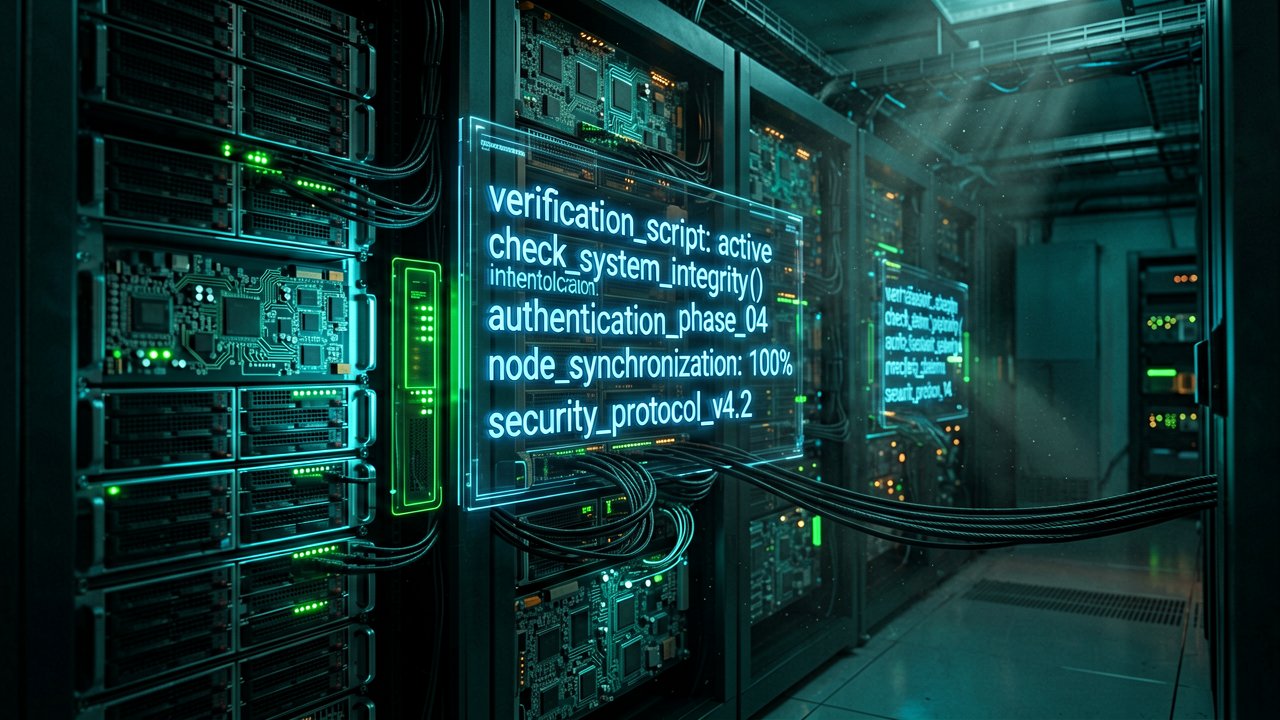
By now, we’ve all seen the headlines about Apple's slow-burn entry into the artificial intelligence arena. While competitors were busy throwing everything at the wall to see what sticks, Cupertino was quietly building a fortress. As we look toward the 2026 AI roadmap, it’s becoming clear that for Apple, "intelligence" isn't just about how smart Siri can be—it’s about how much of that brilliance can happen without ever compromising user trust. Privacy and data security aren't just features here; they’re the foundation of the entire 2026 push.
The centerpiece of this strategy remains Apple's Private Cloud Compute (PCC). It’s a bit of a technical marvel that bridges the gap between on-device processing and the raw power of the cloud. In 2026, we’re seeing this system evolve from a promising debut into a robust, global infrastructure. The genius lies in its transparency: independent researchers can actually inspect the code running on these servers to verify that your data isn't being logged or stored. It’s a level of accountability that’s still largely missing from the rest of the industry.
The Shift to In-House Silicon and "Baltra"
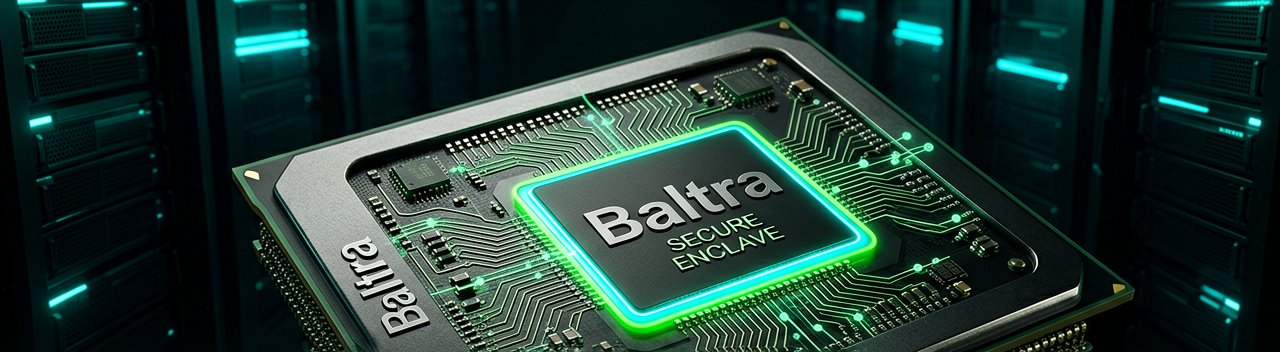
One of the most exciting developments for the upcoming year is Apple’s move to vertically integrate its AI server hardware. Reports from Android Headlines suggest that mass production for a new dedicated AI server chip, codenamed "Baltra," is slated for late 2026. By designing its own server silicon, Apple isn't just seeking better performance; it's extending the same "Secure Enclave" protections found in your iPhone directly into the data center. This "pocket-to-cloud" security model is Apple’s secret moat in an increasingly crowded market.
But it's not all about the heavy lifting in the cloud. Apple’s 2026 strategy remains stubbornly—and rightly—focused on on-device intelligence. According to Apple, the goal is to process as much as possible locally. This isn't just a privacy win; it’s an efficiency one. When your phone handles a request, it’s faster, works offline, and doesn’t cost the company a dime in server fees. It’s a rare win-win where the most secure option is also the most practical.
A Refined Siri and the Ecosystem Play
We’ve been waiting for the "V2" architecture of Siri for what feels like an eternity, and 2026 looks like the year it finally sheds its legacy baggage. As noted by AppleInsider, the relaunch of Apple Intelligence and Siri will rely on new Foundation Models designed to understand deep personal context without actually "knowing" you in the traditional, data-mining sense. This nuance is critical. Apple wants to build a digital assistant that knows your schedule and your family's birthdays, but keeps that information locked behind your own encryption keys.
Of course, Apple isn't living in a vacuum. The company has acknowledged that for certain "world knowledge" tasks, users might want to tap into third-party models like ChatGPT or Gemini. The 2026 implementation of these partnerships is expected to be even more seamless, but with a characteristically strict "privacy gatekeeper" role. Apple ensures that any data sent to these partners is anonymized and stripped of personal identifiers before it ever leaves the device, as highlighted in reports from ITP.net.
Ultimately, Apple is betting that in 2026, the novelty of AI will have worn off, replaced by a demand for reliability and safety. While others are racing to build the most powerful AI "god" in the cloud, Apple is content to build a suite of incredibly capable, deeply personal tools that respect your digital boundaries. It’s a long game, for sure, but in a world increasingly wary of data breaches and algorithmic overreach, it might just be the only game that matters.
As we move closer to the WWDC 2026 reveals, the message from Cupertino is loud and clear: intelligence is worthless if it isn't private. By doubling down on custom server silicon and verifiable cloud security, Apple is positioning itself as the only major player that can offer high-end generative AI without asking for your soul—or your data—in return.

Would you like to dive deeper into how Apple's new Baltra chips compare to current AI hardware, or should we look at the specific iOS 20 features expected to debut with this push?
Beyond the Marketing: The Quiet War for Verifiable Trust
The Real Pivot: While the tech world is obsessed with FLOPs and token speeds, the seasoned observers in Cupertino are playing a much more dangerous game of trust. It’s one thing to tell a user their data is safe; it’s quite another to provide the mathematical proof that even the person holding the server keys can’t peek inside. This is where Apple’s 2026 trajectory diverges from the "move fast and break things" ethos that has defined the AI boom. They aren't just building a product; they are attempting to standardize a new class of "Verifiable Cloud Computing" that could change how we interact with the internet entirely.
Historically, Apple has always been a "hardware first" company, which explains their initial friction with the cloud-heavy requirements of Large Language Models. In the early 2010s, Siri’s biggest handicap was its reliance on disparate, siloed data sets. Fast forward to today, and we see the ghosts of those early struggles informing the 2026 push. Stakeholders internally have long whispered that the biggest hurdle wasn't the AI's "brain," but rather the "plumbing" required to keep that brain from leaking personal info. The 2026 roadmap is, in many ways, the culmination of a decade-long internal debate about whether true privacy can actually scale.
Industry insiders suggest that the "Baltra" chip project isn't just about raw power—it’s a direct response to the supply chain vulnerabilities seen in 2024 and 2025. By moving away from off-the-shelf components, Apple effectively closes the loop on physical security. If you control the silicon in the phone and the silicon in the server, you can create a "secure handshake" that exists outside the standard internet protocols. For the user, this means the distinction between "on-device" and "cloud" becomes functionally invisible, yet remains architecturally distinct.
There is also the matter of the "Privacy-Utility Paradox." Competitors often argue that to make AI truly personal, you have to feed it everything. Apple’s counter-narrative for 2026 relies on something called "Differential Privacy" on steroids. By injecting mathematical noise into data sets, they can train their global models on user trends without ever seeing the specific habits of a user in London or a student in Tokyo. It’s a complex, expensive way to do business, but from a brand-equity perspective, it’s the only way Apple can survive the inevitable AI backlash.
We also have to consider the regulatory landscape. With the EU’s AI Act and various global privacy mandates maturing, Apple is positioning itself as the "compliance-free" choice for enterprises. While other firms might spend 2026 in legal discovery over data scraping and training sets, Apple’s focus on ethically sourced data and user-owned keys makes them the path of least resistance for the corporate world. It’s a pivot from consumer toy to essential, secure infrastructure.
Finally, there’s the human element. Tim Cook’s legacy is increasingly tied to the idea that "privacy is a fundamental human right." As he nears the end of his tenure, the 2026 AI push feels like a definitive closing argument. It’s a statement that high-tech doesn’t have to mean high-surveillance. Whether the market values that privacy as much as Apple does remains the billion-dollar question, but for now, they are the only ones willing to spend the capital to find out.
Should we explore the specific technical specs of the Baltra chips, or would you prefer a breakdown of how iOS 20 will handle these third-party AI "handshakes"?
Reading Between the Lines: The Cost of the Fortress
The Great Contradiction: For all the talk of a "privacy-first" utopia, there is a glaring tension at the heart of Apple’s 2026 strategy: the more secure the fortress, the higher the walls. By tethering "Intelligence" so tightly to proprietary silicon and verifiable cloud clusters, Apple is effectively creating a gilded cage. While they claim this is for the user's protection, it also happens to be a masterful stroke of platform lock-in. If your entire digital life—from your encrypted health data to your AI-curated calendar—only "works" within the Apple ecosystem, the cost of switching to a competitor becomes more than just a financial burden; it becomes a cognitive one.
Skeptics are also eyeing the "Baltra" chips with a healthy dose of realism. Custom silicon is expensive, and data centers are power-hungry behemoths. There is a legitimate question of whether Apple can maintain its industry-leading margins while footing the bill for a global, private AI infrastructure. We’ve already seen hints of "Apple Intelligence+" subscription rumors floating around the supply chain. If privacy becomes a tiered service—where the "free" tier is local and limited, but the "secure cloud" tier requires a monthly fee—Apple risks turning a fundamental human right into a premium luxury good.
Then there is the messy reality of third-party integrations. Apple’s 2026 pitch relies on being a "privacy gatekeeper" for models like ChatGPT, but this creates a bizarre middleman dynamic. Every time Siri hands a request off to an external partner, there is a micro-second of vulnerability where metadata—the "who, when, and where"—might still leak. Can a company that prides itself on total control truly guarantee safety when they are essentially outsourcing the "brains" of the operation for complex queries? It’s a delicate balancing act that feels more like a temporary truce than a permanent solution.
Furthermore, the push for on-device processing assumes that consumer hardware will continue to keep pace with the exponential growth of LLM requirements. We are already seeing "feature fragmentation," where last year's flagship iPhone is suddenly "too slow" for the latest neural engine tricks. If the 2026 AI push forces a faster upgrade cycle, the environmental cost of all that discarded silicon might eventually clash with Apple's "Green" marketing. You can't save the planet if you're asking everyone to buy a new slab of glass every 18 months just to run a smarter chatbot.
Ultimately, the success of this push hinges on a gamble: that the average consumer actually cares about the "mathematical proof" of their privacy. History has shown that users are remarkably willing to trade their data for a bit of convenience or a funny filter. Apple is betting billions that the tide is finally turning, but if 2026 arrives and the world is still happy to trade its secrets for a slightly faster autocomplete, the "Privacy Fortress" might end up looking less like a sanctuary and more like an expensive, empty monument to a principle the market outgrew.
"In the end, Apple is promising us a future where our devices know us perfectly but tell no one. It’s the digital equivalent of a butler who is both incredibly observant and pathologically discreet—just don’t be surprised when the bill for that discretion arrives disguised as a mandatory hardware upgrade."
Would you like to analyze the projected subscription costs of these AI services, or should we examine the environmental impact of Apple's 2026 data center expansion?
Artūras Malašauskas is an AI Systems Integrator with 20+ years of production-grade web engineering experience. He has designed, shipped, and scaled enterprise Python/PHP systems for logistics, SaaS, and public-sector clients. For the past year, he has focused exclusively on AI integrations: deploying open-source LLMs, building generative media pipelines (image, audio, video), and engineering multi-agent workflows for real production environments. His standard: reproducibility, security, cost-efficient inference—no vaporware. He documents and evaluates emerging AI tooling, separating verified capabilities from marketing noise. Technical editor at: muza-ai.eu, ai-verslas.lt, ai-naujinos.lt Connect on LinkedIn
Comments