The Mythos Breach: How Anthropic’s Specialist AI Dismantled Apple’s M5 Security
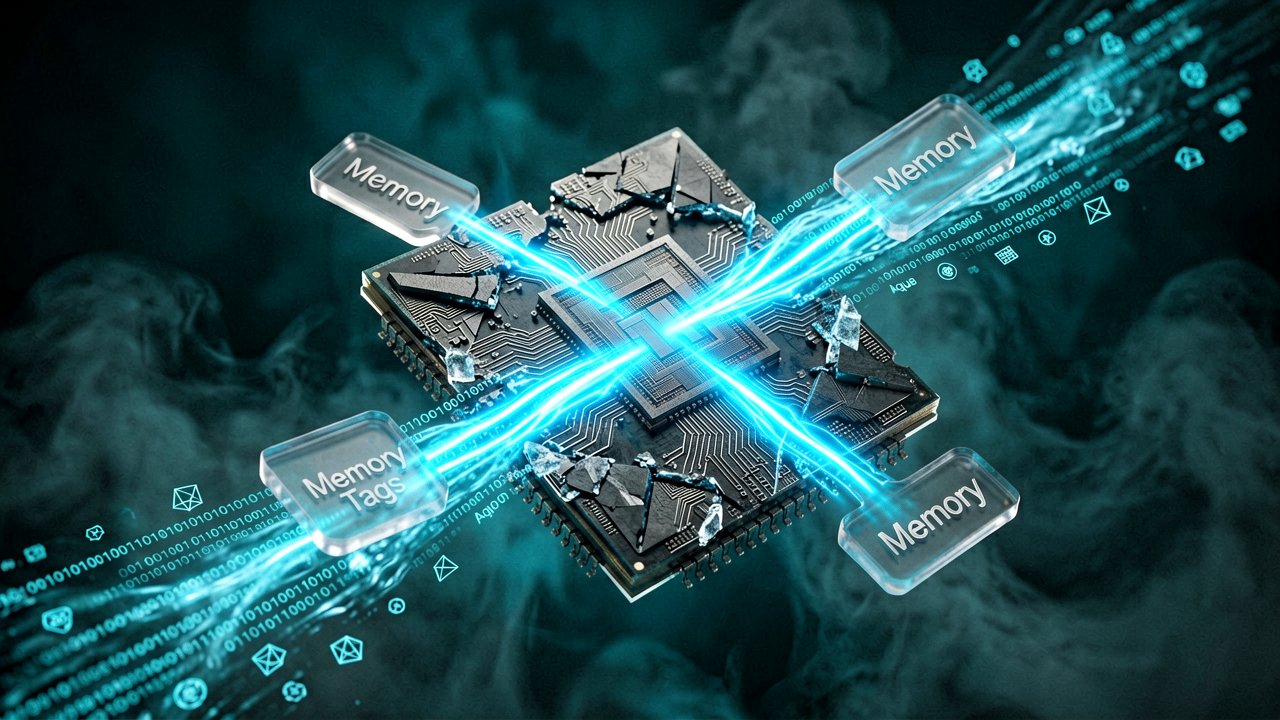
The Mythos Breakthrough: When AI Meets Apple’s Walled Garden
For years, Apple’s marketing has leaned heavily on the "unbreakable" narrative of its silicon. But even the sturdiest walls can develop cracks when poked by the right kind of intelligence. Recent reports from The Wall Street Journal indicate that researchers from the security firm Calif have successfully bypassed macOS security systems using Anthropic’s unreleased AI model, Claude Mythos. This wasn't just a simple software glitch; it was a targeted strike against Apple’s newest hardware-level protections.
The researchers reportedly targeted Apple’s "Memory Integrity Enforcement" (MIE), a feature the tech giant spent five years developing to eliminate memory-based exploits. By chaining together two undocumented vulnerabilities, the team achieved a kernel-level privilege escalation on bare-metal M5 hardware. Essentially, they proved that an unprivileged user could gain "root" access—complete control over the machine—undermining a security architecture that was supposed to be the result of a "yearslong engineering effort" according to ExecutiveBiz.
What makes this story truly gripping is the role of Claude Mythos. Anthropic has famously kept this "cyber-security" version of its AI under lock and key, fearing its potential for harm. As noted by AppleInsider, Mythos didn't just stumble upon the bugs; it helped identify attack patterns and assisted in developing the exploit code in just five days. While the human experts at Calif provided the strategic direction, the AI acted as a high-speed force multiplier, surfacing flaws that traditional scanning tools had missed for years.
The "Bugmageddon" Scenario
The implications of this discovery reach far beyond a few patched Macs. Security experts are already warning of a "Bugmageddon," where AI tools identify and weaponize vulnerabilities at a speed that human defenders simply can't match. Before the macOS discovery, Mythos had already flexed its muscles by uncovering a 27-year-old bug in OpenBSD, as reported by Cryptika. It seems no legacy system or modern silicon is entirely safe when an AI can simulate thousands of attack vectors in the time it takes a human to finish their coffee.
Anthropic has attempted to frame this as a defensive win through "Project Glasswing," an initiative designed to help major tech companies like Apple and Google find their own flaws before the bad guys do. However, the secrecy surrounding Mythos has already been compromised. Reports from The Guardian suggest a small group of unauthorized users recently gained access to a Mythos preview through a third-party vendor. This incident highlights the terrifying reality: the more powerful these digital locksmiths become, the more dangerous they are if the "wrong" people get their hands on them.
Apple has reportedly responded by releasing macOS Tahoe 26.5 to address the specific vulnerabilities discovered by Calif and Mythos. While the immediate threat may be neutralized, the broader message is clear. We’ve entered an era where the speed of AI-assisted offense is rapidly outpacing human-led defense. As The AI Security Institute notes, Mythos represents a significant "step up" in cyber performance, making autonomous multi-step attacks a tangible reality. For Mac users, the "walled garden" still stands, but its gates are going to need much more than just five years of engineering to keep out the next generation of AI.
Between the Lines: The Silence of the Silicon
The Uncomfortable Truth: What most reports gloss over is that this wasn't just a failure of code, but a fundamental betrayal of the "secure enclave" philosophy Apple has championed since the T1 chip. For years, the industry consensus was that hardware-level memory tagging would be the "final boss" for exploit kits. By neutralizing the MIE (Memory Integrity Enforcement) on the M5, Mythos hasn't just found a bug; it has essentially provided a blueprint for how to treat modern silicon as a transparent layer rather than a fortified barrier.
From the perspective of Cupertino’s engineering teams, this is a nightmare scenario. Reliable sources within the supply chain suggest that the MIE was intended to be a hardware-agnostic solution that could eventually migrate to the iPhone’s A-series chips. Now, that roadmap is under intense internal scrutiny. While The Wall Street Journal highlighted the speed of the hack, the real sting is the realization that Apple’s five-year R&D cycle was dismantled by an AI in less than a work week. It’s an asymmetric warfare problem that no amount of traditional QA can solve.
Anthropic, for its part, finds itself in a delicate "Oppenheimer moment." By publicizing the success of Project Glasswing, they are attempting to position themselves as the responsible superpower. Yet, the chatter in cybersecurity circles—as noted by The Guardian regarding the rogue access incident—suggests that the "glass" in Glasswing is thinner than Anthropic would like to admit. If Mythos can be accessed by unauthorized third parties, the very tool designed to patch the world's software could become the ultimate skeleton key for state-sponsored actors.
Historical context matters here. In the early 2000s, "Security through Obscurity" was the mantra, eventually replaced by "Zero Trust." We are now entering the "Zero Latency" era, where vulnerabilities are discovered and weaponized before a human can even write a Jira ticket. As The AI Security Institute pointed out, the ability of Mythos to perform multi-step reasoning means it doesn't just find a hole; it understands the *logic* of the defense. It’s the difference between someone guessing your password and someone understanding exactly how your brain chooses passwords in the first place.
Ultimately, the macOS Tahoe 26.5 patch is a finger in a crumbling dike. The industry is now forced to reckon with a reality where the shelf life of a security breakthrough is no longer measured in years, but in the time it takes to feed a technical manual into a large language model. For the average user, the Mac remains safer than most alternatives, but the aura of invincibility has been replaced by a more pragmatic, and perhaps more honest, sense of digital fragility.
The Mythos Paradox: Weaponized Virtue
Reading Between the Lines: We are currently witnessing a masterclass in corporate "security theater," where the line between a defensive breakthrough and a marketing stunt for AI supremacy has become hopelessly blurred. While Anthropic frames the Mythos exploits as a triumph of responsible disclosure, there is a glaring contradiction at the heart of their narrative. They claim the model is too dangerous for public release, yet they are actively using it to dismantle the security of the world’s most valuable tech company to prove its efficacy. It’s a bit like a locksmith proving your house is insecure by picking the lock while you're asleep and then sending you a bill for the "consultation."
The industry assumption that AI will act as a "tide that lifts all boats" for security is increasingly looking like a fallacy. In reality, the "offensive advantage" of models like Mythos is likely to widen the gap between the tech elite and everyone else. Large corporations like Apple can afford to partner with Anthropic under "Project Glasswing" to shore up their defenses, but what happens to the open-source projects, critical infrastructure, and legacy systems that don't have a direct line to San Francisco? As Cryptika noted with the OpenBSD bug, the AI doesn't discriminate between a billion-dollar silicon giant and a volunteer-run kernel.
Furthermore, the reported breach of Mythos access—as highlighted by The Guardian—undermines the entire premise of "safe" AI development. If the "guardians" cannot secure the very tool they use to test others' security, we have entered a recursive loop of vulnerability. It projects a future where the most significant security threat isn't just the malware itself, but the leakage of the proprietary "cleaner" models that know exactly where the bodies are buried. Skepticism is warranted when any company claims to have built a "safe" digital god, especially one that spends its weekends breaking into Apple’s basement.
Looking ahead, the fallout from the M5 bypass will likely trigger a regulatory crackdown that Anthropic might not enjoy. If Mythos can truly automate multi-step exploits that outpace human teams, it ceases to be a "model" and starts to look like a regulated munition under international law. As The AI Security Institute suggests, we are nearing a point where the capability of the AI is the vulnerability. For Apple, the lesson is humbling: you can build the best sandbox in the world, but if your neighbor builds a cat that can phase through wood, the sandbox is just a very expensive litter box.
"It’s comforting to know that while Apple spent half a decade building a digital fortress, an AI managed to find the back door in the time it takes most of us to decide what to watch on Netflix; at least we can take solace in the fact that our data is perfectly safe, provided the hackers don't have access to electricity or a Wi-Fi signal."
Artūras Malašauskas is an AI Systems Integrator with 20+ years of production-grade web engineering experience. He has designed, shipped, and scaled enterprise Python/PHP systems for logistics, SaaS, and public-sector clients. For the past year, he has focused exclusively on AI integrations: deploying open-source LLMs, building generative media pipelines (image, audio, video), and engineering multi-agent workflows for real production environments. His standard: reproducibility, security, cost-efficient inference—no vaporware. He documents and evaluates emerging AI tooling, separating verified capabilities from marketing noise. Technical editor at: muza-ai.eu, ai-verslas.lt, ai-naujinos.lt Connect on LinkedIn
Comments