The Great Wall of Compute: DeepSeek-V4 Pivots to Huawei Silicon
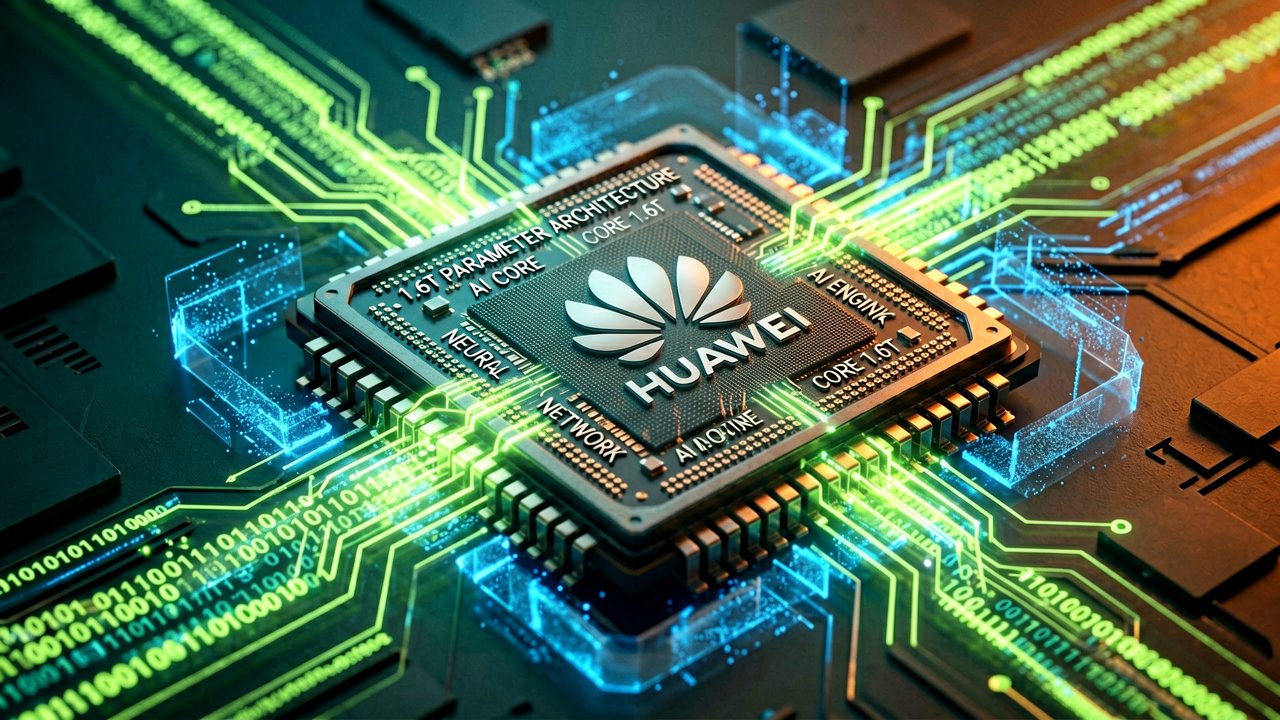
In the high-stakes game of global AI dominance, the spotlight just shifted back to Hangzhou. DeepSeek, the scrappy startup that famously shook the market with its budget-friendly V3, has finally pulled the curtain back on DeepSeek-V4. But this isn't just another incremental update; it's a loud, clear statement about technical sovereignty. For the first time, DeepSeek’s flagship intelligence is running natively on Huawei’s Ascend hardware, signaling that China’s domestic "tech stack" is finally ready for prime time, as reported by Huawei Central .
The release strategy is a two-pronged attack on the current AI status quo. We’ve got DeepSeek-V4-Pro, a massive 1.6-trillion-parameter Mixture-of-Experts (MoE) beast designed to trade blows with the likes of GPT-4 and Gemini. Then there’s the V4-Flash, a leaner 284-billion-parameter model built for speed and efficiency. According to CNBC, both variants arrive with a staggering one-million-token context window right out of the gate—a feature that was once a luxury reserved for the most expensive enterprise tiers.
The Huawei Integration: A Full-Stack Pivot
The real story, however, is what's happening under the hood. For years, the industry narrative has been that you can’t build world-class AI without Nvidia’s CUDA ecosystem. DeepSeek is challenging that head-on. By migrating to Huawei’s CANN architecture, V4 is optimized to squeeze every drop of performance out of the Ascend 950PR chips. This move isn't just about avoiding export bans; it’s about deep-level hardware-software co-design. Skywork notes that this transition allowed DeepSeek to achieve nearly 60% of an Nvidia H100’s inference performance at a mere fraction of the cost.
If you're wondering how they managed to make a 1.6T parameter model run without breaking the bank, look at the architecture. V4 utilizes a hybrid attention mechanism that combines Compressed Sparse Attention (CSA) and Heavily Compressed Attention (HCA). This wizardry reduces the memory footprint for KV caches to just 10% of what was required for V3.2, as highlighted by Lightning AI. It’s the kind of ruthless optimization that makes a million-token context window economically viable for everyday developers.
Speaking of economics, the price tags on these models are downright aggressive. DeepSeek-V4-Flash is priced at just $0.14 per million input tokens, which point out is nearly 99% cheaper than competitive offerings like Claude Opus 4.7. By pricing their Pro model at roughly $1.74 for input, DeepSeek is effectively inviting every developer on a budget to ditch the closed-source giants and come play in their sandbox.
There's a political subtext here that's impossible to ignore. The launch happened just as tensions between Washington and Beijing over AI IP and hardware exports reached a fever pitch. By granting early access to domestic suppliers like Huawei while bypassing US chipmakers for performance tuning, DeepSeek is leaning hard into its role as the vanguard of Chinese AI independence. Reuters suggests this pivot reveals "tangible progress" toward a self-sufficient AI ecosystem that no longer fears being cut off from Silicon Valley.
So, where does this leave us? While some benchmarks suggest V4-Pro still narrowly trails GPT-5.4 in "extended thinking" tasks, the gap is closing fast. DeepSeek has proven that you don't need a hundred-million-dollar training budget if you have the engineering talent to rethink the fundamental plumbing of your models. With Huawei providing the heavy lifting and DeepSeek providing the brains, the duo has just fired a massive salvo across the bow of the traditional AI establishment.
Beyond the Spec Sheet: While the headlines are busy tallying up parameter counts and token costs, the real story lies in the quiet engineering coup DeepSeek has staged within the "walled garden" of Chinese hardware. For years, the dirty secret of the AI world was that even China’s most patriotic labs were secretly running their heavy workloads on smuggled or pre-ban Nvidia chips. DeepSeek-V4 changes that narrative by proving that the "Huawei tax"—the performance penalty typically associated with switching away from Nvidia’s polished CUDA software—has been largely neutralized through brute-force engineering and architectural cleverness.
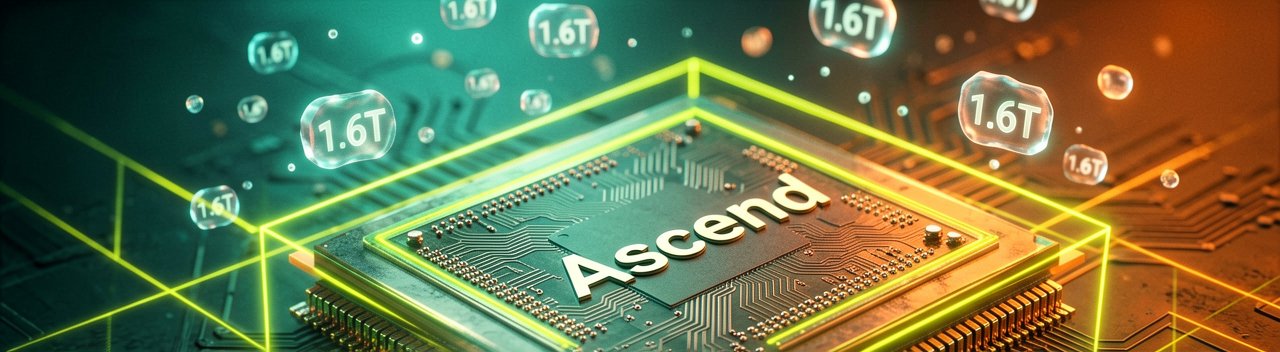
Insiders suggest that the collaboration between DeepSeek and Huawei’s chip division was far more intimate than a standard vendor-client relationship. Reportedly, DeepSeek engineers were embedded within Huawei’s labs for months, rewriting the kernels for the Ascend 950PR from the ground up to support their unique Mixture-of-Experts (MoE) routing logic. This level of vertical integration is something we haven’t seen since the early days of Apple’s M-series silicon transition. As noted by Reuters, this "full-stack" approach is China’s strategic answer to the "compute-divide" created by Western export controls.
The "Flash" Strategy and the Edge-AI Gambit
Most reports overlook the specific genius of the V4-Flash model. While everyone is chasing the "God Model" (V4-Pro), the Flash variant is where the actual money is being made. By optimizing Flash specifically for Huawei’s hardware, DeepSeek is positioning itself to dominate the burgeoning market for local, on-device AI in China. We’re talking about AI integrated into domestic EVs, smart cities, and government infrastructure where data privacy and hardware sovereignty aren't just preferences—they are legal requirements. Skywork highlights that this efficiency isn't just about speed; it's about the thermal and power constraints of edge computing.
From a stakeholder perspective, this launch is a massive sigh of relief for Beijing’s industrial planners. There was a lingering fear that Chinese LLMs would eventually hit a "performance ceiling" because they couldn't access the latest H200 or Blackwell chips from Nvidia. DeepSeek-V4 effectively shatters that ceiling. By utilizing Multi-head Latent Attention (MLA) to reduce memory overhead, they’ve managed to get "American-tier" performance out of "domestic-tier" hardware. It’s a classic case of software innovation compensating for hardware scarcity, a theme Lightning AI has frequently explored in its technical teardowns.
Historically, this move mirrors the 1970s mainframe wars, where software portability was the ultimate weapon. DeepSeek isn't just building a model; they are building a bridge. By making V4 highly compatible with the Ascend architecture, they are incentivizing the entire Chinese developer ecosystem to stop waiting for Nvidia and start building on Huawei. This shift could create a "gravity well" effect: as more developers move to the DeepSeek-Huawei stack, the community-driven optimizations grow, eventually making the platform as robust as the one it seeks to replace.
Finally, we have to talk about the culture of "DeepSeek Minimalism." Unlike the lavish, party-like atmosphere of Silicon Valley product launches, DeepSeek’s rollout was clinical and data-heavy. This reflects a shift in the Chinese tech identity—moving away from the "copycat" era and into a phase of high-efficiency, high-pressure engineering. As CNBC pointed out, the competitive pressure this places on Western labs is immense; they aren't just fighting a model, they are fighting a whole new, lower-cost economic model for AI development.
The Reality Check: Beneath the triumphant press releases and the nationalistic fervor, there is a fundamental question that DeepSeek-V4 hasn't quite answered yet: Is this a genuine leap forward, or a masterclass in architectural "smoke and mirrors"? While the benchmarks look dazzling, the transition to Huawei’s Ascend 950PR hardware introduces a layer of friction that the developer community isn't entirely used to. We are essentially watching a high-speed engine being rebuilt while the car is driving at 100 mph, and as any veteran sysadmin will tell you, hardware-specific optimization is a double-edged sword that often cuts the hand that feeds it.
The contradiction at the heart of this launch is the "Open Source" branding versus the "Domestic Hardware" reality. DeepSeek markets itself as a champion of open weights, yet by tying the V4’s peak performance so tightly to the Huawei CANN architecture, they are effectively creating a regional silo. If you aren't running on an Ascend cluster in a Tier-1 Chinese data center, are you even getting the DeepSeek-V4 experience? For the global research community, this move looks less like a gift to the open-source world and more like a tactical retreat into a localized ecosystem where Western sanctions can’t reach.
The Hidden Costs of Efficiency
Then there is the matter of the "1.6 Trillion Parameters" claim. In the world of Mixture-of-Experts (MoE), parameter counts have become the new "megapixels"—a flashy number that doesn't always correlate to actual utility. Skeptics point out that while V4-Pro boasts a massive total capacity, the "active" parameters used during any single inference cycle are significantly lower. As Lightning AI has hinted, the aggressive compression techniques used to fit these models onto Huawei’s memory-constrained chips might lead to "knowledge brittleness"—a phenomenon where the model excels at benchmarks but hallucinates wildly when faced with edge cases that weren't in the training set.
We also have to consider the long-term viability of this Huawei partnership. By hitching their wagon so firmly to one hardware provider, DeepSeek is betting that Huawei can maintain its pace of chip innovation despite being cut off from the world’s most advanced lithography machines at TSMC and ASML. If Huawei’s hardware roadmap hits a snag, DeepSeek’s software optimizations become a legacy burden rather than a competitive advantage. It is a high-stakes gamble on a "China-only" supply chain that assumes domestic ingenuity can permanently outrun global physics.
Finally, the price war initiated by the V4-Flash feels like a race to the bottom that could cannibalize the very industry it aims to lead. If AI tokens become as cheap as water, the margins for sustaining massive compute clusters disappear. We may be entering an era where the "intelligence" isn't the product anymore, but rather the hardware sales or government subsidies that keep the lights on in the data centers. CNBC notes that this deflationary pressure is great for startups today, but it raises uncomfortable questions about who survives the inevitable AI winter when the venture capital dries up.
"In the end, DeepSeek has successfully proven that if you can't buy the best chips in the world, you can simply rewrite the laws of physics until the chips you have look like geniuses—just don't ask to see the electricity bill or the cooling fans required to keep the 'sovereignty' from melting."
Artūras Malašauskas is an AI Systems Integrator with 20+ years of production-grade web engineering experience. He has designed, shipped, and scaled enterprise Python/PHP systems for logistics, SaaS, and public-sector clients. For the past year, he has focused exclusively on AI integrations: deploying open-source LLMs, building generative media pipelines (image, audio, video), and engineering multi-agent workflows for real production environments. His standard: reproducibility, security, cost-efficient inference—no vaporware. He documents and evaluates emerging AI tooling, separating verified capabilities from marketing noise. Technical editor at: muza-ai.eu, ai-verslas.lt, ai-naujinos.lt Connect on LinkedIn
Comments