Beyond the Black Box: How AI Really Works in Patent Practice
Beyond the Black Box: How AI Really Works in Patent Practice
For years, the legal world treated Artificial Intelligence like a mysterious magic trick—drop an invention disclosure into the slot, and a polished patent application pops out the other side. But as we move through 2026, that "black box" narrative has finally crumbled. According to experts at IPWatchdog, we’ve shifted from a phase of wide-eyed experimentation to one of rigorous operationalizing. Today’s patent practice isn't about AI replacing the attorney; it’s about a sophisticated "human-plus-AI" workflow where the machine handles the heavy lifting of pattern matching while the human provides the "mountain guide" strategy that algorithms still can't touch.
The most visible shift is in prior art searching. Gone are the days of laboriously constructing complex Boolean queries that inevitably missed critical references. Tools now use semantic understanding to interpret invention disclosures, identifying the core "problem-solution" nexus rather than just matching keywords. As noted by Jenova AI, the global patent landscape has grown far beyond the reach of traditional search methods, with the AI patent search market projected to skyrocket to over $5 billion by 2035. These systems don't just find documents; they highlight relevant text and explain why a specific reference matters, allowing examiners and attorneys to spend their time analyzing legal nuances instead of digging through digital haystacks.
Drafting has undergone a similar transformation. Specialized platforms like DeepIP now run natively within standard word processors, helping practitioners generate well-structured drafts and explore alternative claim strategies in real-time. This isn't just about speed; it's about consistency. By training on specific firm templates and jurisdictional standards—from the USPTO to the EPO—AI ensures that a patent drafted in London meets the technical requirements of an examiner in Virginia. However, the legal weight remains firmly on human shoulders. The USPTO recently reiterated that only natural persons can be named as inventors, reinforcing the idea that AI is a powerful tool, not an autonomous creator.
Efficiency gains are even reaching the halls of the patent offices themselves. The 2026 EPO Guidelines officially recognize the role of AI in supporting more accurate and human-centric workflows, such as using AI-assisted solutions to prepare minutes for oral proceedings. This transparency is crucial. While the machine might generate the first draft of a summary or a search report, the human examiner remains the final arbiter of patentability. This "AI-friendly" stance at major offices suggests that the technology is no longer an outsider—it is a core component of the global IP infrastructure.
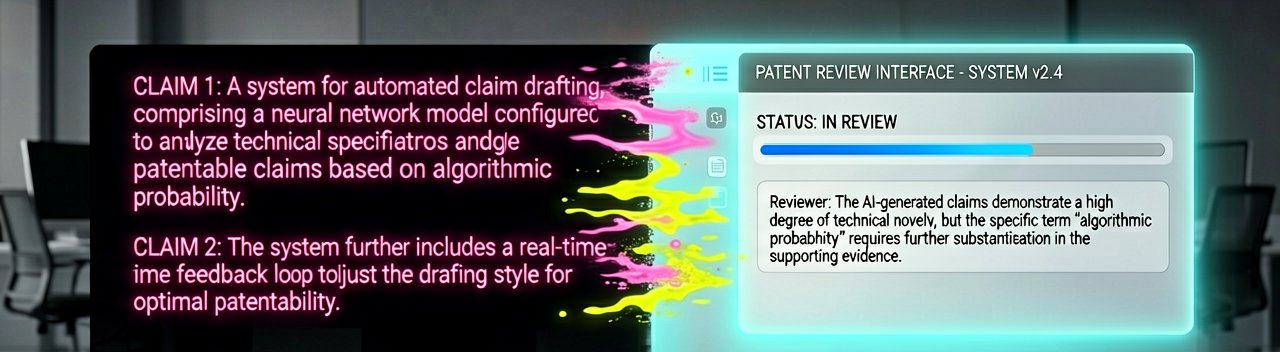
Ultimately, the "secret sauce" of 2026 isn't just having access to the best AI—it's knowing how to use it safely and strategically. As Legartis points out, the real competitive advantage lies in "AI competence"—the ability to critically assess machine output and know when human review is non-negotiable. As the lines between human and machine contribution continue to blur, the most successful firms will be those that treat AI not as a black box, but as a transparent, high-octane engine for human ingenuity.
The Practitioner’s Reality: Hard-Won Lessons from the Trenches
The View from the Cubicle: What most reports miss is that the transition to AI hasn’t been a seamless upgrade; it’s been a radical rethinking of what it means to "practice law." While the headlines scream about 50% time savings in drafting, seasoned practitioners know that the first 20% of that saved time is often reinvested into "de-hallucinating" the output. AI is a brilliant but sometimes overconfident junior associate. It can map a claim to a specification with surgical precision, but it occasionally hallucinates a technical embodiment that defies the laws of thermodynamics. The real skill in 2026 isn't just prompting; it’s the high-stakes auditing of a machine’s logic before it hits the examiner’s desk.
Historical context matters here. In the early 2010s, "patent automation" meant basic spell-checkers and cross-reference validators. Moving from those rigid, rule-based systems to today’s Large Language Models (LLMs) required a psychological shift. We went from telling computers exactly how to do something to telling them what we want to achieve. This shift has created a generational divide within firms. Junior associates who grew up with generative AI are often more efficient, but senior partners remain the essential "sanity check," catching the subtle legal nuances—like the specific interpretation of "consisting essentially of"—that an AI might gloss over in favor of grammatical flow.
The stakeholder perspective is also shifting at the corporate level. In-house counsel at tech giants are no longer just looking for the lowest billable hour; they are demanding "AI-transparency reports." They want to know which parts of their multi-million dollar portfolio were touched by an algorithm and whether that AI was trained on "clean" data. There is a growing anxiety that if a foundation model was trained on infringing or non-public data, the resulting patent might face "originality" challenges in future litigation. This has birthed a new niche in legal tech: data provenance auditing for patent assets.
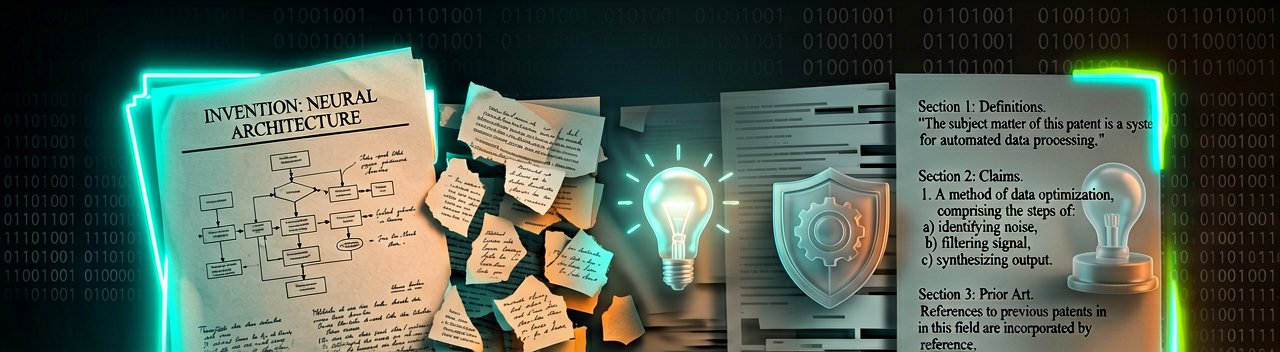
Furthermore, the interaction between the applicant and the Patent Office has become a game of "AI vs. AI." When an examiner uses an AI tool to reject a claim based on an obscure Japanese utility model found via semantic search, the attorney responds using an AI tool to analyze the examiner’s historical grant patterns. We are entering an era of "computational prosecution," where the strategic "chess match" of patent law is played out across vast datasets. It’s no longer just about the law; it’s about who has the better data-driven insight into the other side’s likely next move.
Ultimately, the human-curated element remains the final line of defense against the "commoditization" of intellectual property. If every firm uses the same AI to draft patents, the resulting documents will eventually start to look suspiciously similar—a phenomenon some are calling "model collapse" in legal writing. The standout practitioners of the next decade will be those who use AI to handle the mundane, but deliberately inject human creativity, idiosyncratic technical descriptions, and "non-obvious" legal arguments that a machine, by its very nature, would never think to suggest.
The Paradox of Automated Innovation
Reading Between the Lines: We are currently witnessing a profound contradiction in the patent world: we are using highly standardized algorithms to protect the "non-obvious" and the "novel." There is a growing, uncomfortable irony in the fact that the more we lean on AI to draft patent applications, the more we risk homogenizing the very inventions we claim are unique. If every attorney uses the same three or four dominant LLMs to "optimize" claim language, we aren't just gaining efficiency; we are potentially creating a massive, standardized target for future infringers to navigate around with equally standardized ease.
There is also the myth of the "unbiased" AI examiner. While proponents argue that machine-led prior art searches eliminate human oversight, they ignore the inherent bias of the training data. If an AI is trained primarily on US and European patents, it may remain functionally blind to groundbreaking technical disclosures in emerging markets or non-traditional academic journals. This creates a "filtered" version of the state of the art, where the "black box" doesn't just hide how it thinks, but actively dictates what technical history is allowed to exist in the eyes of the law. We might find ourselves in a loop where we only "invent" what the algorithm can easily categorize.
Furthermore, the promise of lower costs for clients is, so far, largely a mirage. While the manual labor of drafting has decreased, the insurance and liability costs of overseeing AI-generated IP are skyrocketing. Firms are finding that the "human-in-the-loop" isn't a cost-saving measure—it’s an expensive necessity. The "expert auditor" required to verify an AI’s technical claims often bills at a higher rate than the associate who used to write them from scratch. We aren't necessarily making patents cheaper; we are simply shifting the budget from "creation" to "risk mitigation."
Projecting forward, the true crisis may not be a loss of jobs, but a crisis of "patent quality." If the barrier to filing a patent becomes effectively zero thanks to generative automation, patent offices will be flooded with "noise"—technically competent but strategically hollow patents that serve only to clog the gears of innovation. We risk a future where the patent system is no longer a catalyst for progress, but a high-speed digital arms race where the winner is simply the one with the most compute power and the most aggressive auto-filing script.
"In the end, we’ve reached a fascinating milestone in legal history: we finally have machines that can write a twenty-page patent in thirty seconds, which is perfect, because we also have machines that can ignore them just as quickly."
Artūras Malašauskas is an AI Systems Integrator with 20+ years of production-grade web engineering experience. He has designed, shipped, and scaled enterprise Python/PHP systems for logistics, SaaS, and public-sector clients. For the past year, he has focused exclusively on AI integrations: deploying open-source LLMs, building generative media pipelines (image, audio, video), and engineering multi-agent workflows for real production environments. His standard: reproducibility, security, cost-efficient inference—no vaporware. He documents and evaluates emerging AI tooling, separating verified capabilities from marketing noise. Technical editor at: muza-ai.eu, ai-verslas.lt, ai-naujinos.lt Connect on LinkedIn
Comments