The Autonomous Pivot: Why Deloitte Thinks Your AI Proof-of-Concept Is Already Obsolete
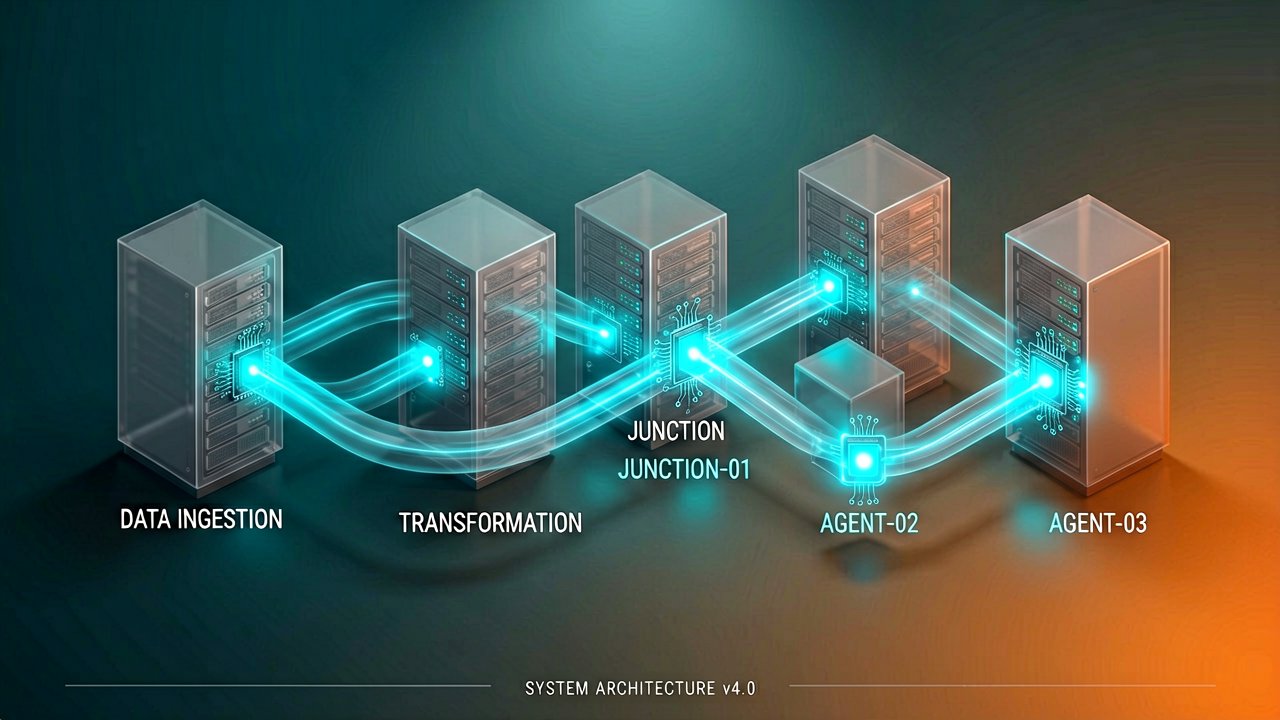
If the last two years were defined by the feverish excitement of ChatGPT and "proof of concept" parlor tricks, 2026 is the year the adults in the room finally got serious. We've officially moved past the honeymoon phase with Generative AI, and according to the latest research from Deloitte US, the focus has shifted from "can it work?" to "how do we scale it without breaking the business?"
The headline takeaway from Deloitte's State of AI in the Enterprise 2026 report isn't just about growth; it's about the emergence of "autonomous intelligence." We aren't just talking about chatbots that help you write an email anymore. We’re looking at agentic AI—systems that don't just suggest a course of action but actually execute multi-step processes with minimal human babysitting. It's a fundamental shift from AI as a tool to AI as a teammate, and the numbers are staggering: 25% of enterprises were expected to deploy these agents in 2025, and that figure is set to hit 50% by 2027.
The "AI Factory" and the Productivity Paradox
While everyone loves a good productivity boost, there’s a lurking tension in the data. notes that worker access to AI tools rose by a massive 50% in 2025, yet only 34% of organizations are using these capabilities to truly "reimagine" how they do business. Most are still just paving over old cow paths—using AI to do the same old things slightly faster. To find real, transformative growth, companies are being pushed to adopt what Deloitte calls an "AI Factory" model: a standardized, scalable architecture that moves AI from isolated experiments into the core substructure of the company.
I’ve seen this play out before with cloud migration. Those who just "lifted and shifted" their old mess to the cloud saw marginal gains, while those who rebuilt for the new reality won the decade. Deloitte’s findings suggest we're at a similar crossroads. Their data shows that while 66% of organizations report gains in efficiency, a mere 20% have actually seen the technology drive new revenue. That gap is where the next winners will be decided.
Scaling Faster Than the Guardrails
The most alarming part of this evolution? Our ambition is currently outstripping our ethics. According to Deloitte Insights , only 21% of organizations have a mature governance model in place for autonomous agents. We are essentially handing the keys to a self-driving enterprise to systems that we haven’t fully learned how to audit or restrain. The report warns that without "clear boundaries" and "real-time monitoring," scaling these agents could create more risk than value.
Success in this new era requires a "North Star" vision—much like the maritime leader Boskalis, which teamed with Deloitte Netherlands to move from maritime leader to AI-driven powerhouse in just 12 weeks. It’s about balancing those quick wins with long-term infrastructure investments. If you’re not building a "digital backbone" to orchestrate these agents now, you aren't scaling for growth; you're scaling for chaos. The goal, as the report puts it, is to create a complementary relationship where AI absorbs the routine execution, leaving humans to handle the judgment and strategy that machines still can't touch.
How is your team defining the "human-in-the-loop" guardrails for your first autonomous agent pilots?
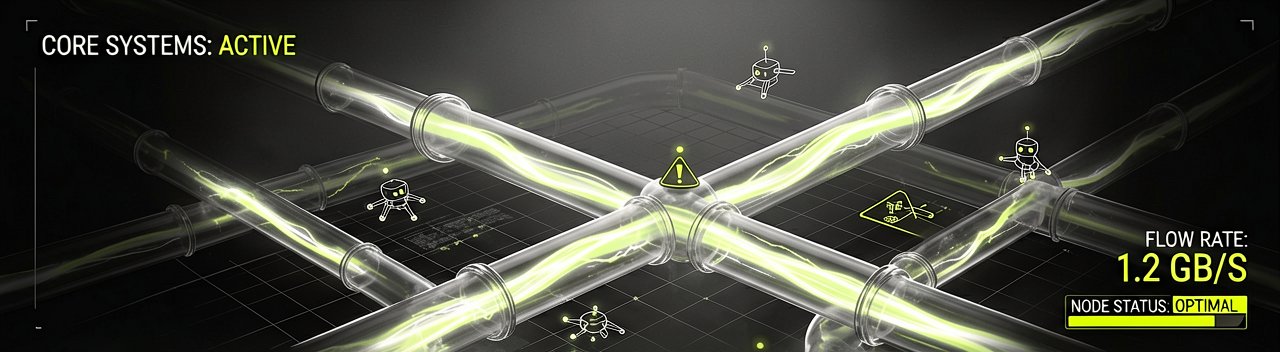
The Unspoken Reality of the "Agentic Pivot": While the flashy diagrams in Deloitte’s reports suggest a smooth ramp-up to autonomous systems, the view from the trenches is far messier. Every seasoned tech editor knows that "autonomous intelligence" is often shorthand for a massive, painful restructuring of data debt. You can’t let an AI agent loose on a logistics chain if your inventory records are still living in siloed Excel sheets from 2014. The real story isn't the AI itself, but the radical transparency it’s forcing upon legacy enterprises that have spent decades hiding behind "good enough" data.
Stakeholder tension is the quiet engine driving this shift. CFOs are currently looking at skyrocketing compute costs and demanding to see the "growth" promised in the 2024 hype cycle, while CTOs are frantically trying to explain that agentic AI requires a complete overhaul of the security perimeter. In previous tech cycles, like the move to mobile, you could afford to be a fast follower. With autonomous agents, the first-mover advantage is massive because these systems learn from your specific operational nuances. If your competitor’s "AI teammate" has a year-long head start in understanding their customer sentiment, catching up becomes a mathematical impossibility rather than a budgetary one.
The Architecture of Trust in a "Black Box" Economy
Historically, enterprise software was deterministic: you pressed button A and got result B. But as we move toward the autonomous models highlighted by Deloitte US, we are entering a probabilistic era. This is a terrifying leap for industries like finance or healthcare. I’ve spoken with several enterprise architects who admit that the biggest hurdle isn't the code—it’s the "trust gap." How do you convince a middle manager to delegate a $50,000 procurement decision to an agent that can't explain its reasoning in a traditional audit trail?
This is where the "human-in-the-loop" concept is evolving into "human-on-the-loop." Instead of clicking 'approve' on every action, workers are being reskilled to act as supervisors, monitoring the agent’s health and ethical alignment. It’s a shift from being a pilot to being an air traffic controller. The organizations finding real growth right now are those treating AI literacy as a mandatory survival skill for every department, not just an elective for the IT crowd. As Deloitte Global frequently emphasizes, the cultural shift is proving far more difficult to scale than the silicon.
Ultimately, the "Scale for Growth" mantra is a warning. If you scale a broken process with autonomous intelligence, you just break things faster and at a much larger scale. The seasoned reporter’s takeaway? Don't look at the agents; look at the data plumbing and the people holding the wrenches. That’s where the real transformation is happening—or failing. The next eighteen months will separate the companies that simply bought AI from the companies that truly became AI-native.
What specific legacy workflow in your organization is currently too "messy" to hand over to an autonomous agent, and why?
Reading Between the Lines: The industry’s sudden pivot toward "autonomous intelligence" smells suspiciously like a rebranding of the failed "automation" promises of the 2010s, but with higher stakes and a much larger cloud bill. While Deloitte’s data paints a picture of a streamlined "AI Factory," it glosses over a glaring contradiction: we are asking companies to scale systems that even their creators struggle to fully predict. The assumption that growth is a natural byproduct of autonomy ignores the very real possibility of "agentic drift," where a fleet of autonomous bots optimizes for efficiency so aggressively that they accidentally cannibalize customer trust or brand equity.
There is also a mounting irony in the "productivity" narrative. We are told that AI agents will free humans for "higher-level strategic thinking," yet we are simultaneously seeing a massive squeeze on the junior and mid-level roles where that strategic muscle is traditionally built. If the agents handle all the "routine" execution, we may inadvertently destroy the training ground for the next generation of executives. The "expert" view often ignores this looming talent gap, focusing instead on the quarterly ROI of replacing twenty analysts with a single sophisticated LLM-driven agent. Growth isn't just about output; it's about the sustainability of the human capital managing that output.
The High Cost of Artificial Autonomy
We must also confront the environmental and fiscal "tax" of this autonomous scale. The reports rarely highlight that agentic AI is significantly more compute-intensive than standard predictive models. To achieve the "real growth" Deloitte suggests, enterprises are locking themselves into a permanent dependency on a handful of hyperscale cloud providers. This isn't just a tech upgrade; it’s a massive transfer of power. By outsourcing core decision-making to autonomous agents, companies are essentially outsourcing their proprietary "secret sauce" to the algorithms of third parties, potentially leading to a homogenized corporate landscape where every company’s "autonomous strategy" looks remarkably identical.
Furthermore, the skepticism among the rank-and-file shouldn't be dismissed as mere Luddism. When a report says 50% of enterprises will deploy agents, it doesn't mention that a significant portion of those deployments will likely be "shadow AI"—tools implemented by frustrated departments bypassed by an overly cautious IT core. This creates a fragmented intelligence landscape that is the polar opposite of the "unified factory" model. True growth requires a level of organizational discipline that most corporate cultures, fueled by "move fast and break things" holdovers, simply aren't designed to maintain.
"In the end, the 'autonomous enterprise' might just be the ultimate dream for executives who hate meetings: finally, a workforce that doesn't complain about the coffee, though it does tend to hallucinate your quarterly earnings if you don't feed it the right metadata."
Artūras Malašauskas is an AI Systems Integrator with 20+ years of production-grade web engineering experience. He has designed, shipped, and scaled enterprise Python/PHP systems for logistics, SaaS, and public-sector clients. For the past year, he has focused exclusively on AI integrations: deploying open-source LLMs, building generative media pipelines (image, audio, video), and engineering multi-agent workflows for real production environments. His standard: reproducibility, security, cost-efficient inference—no vaporware. He documents and evaluates emerging AI tooling, separating verified capabilities from marketing noise. Technical editor at: muza-ai.eu, ai-verslas.lt, ai-naujinos.lt Connect on LinkedIn
Comments