The Credibility Gap: Can a Political Fixer Tame a Digital Hurricane?
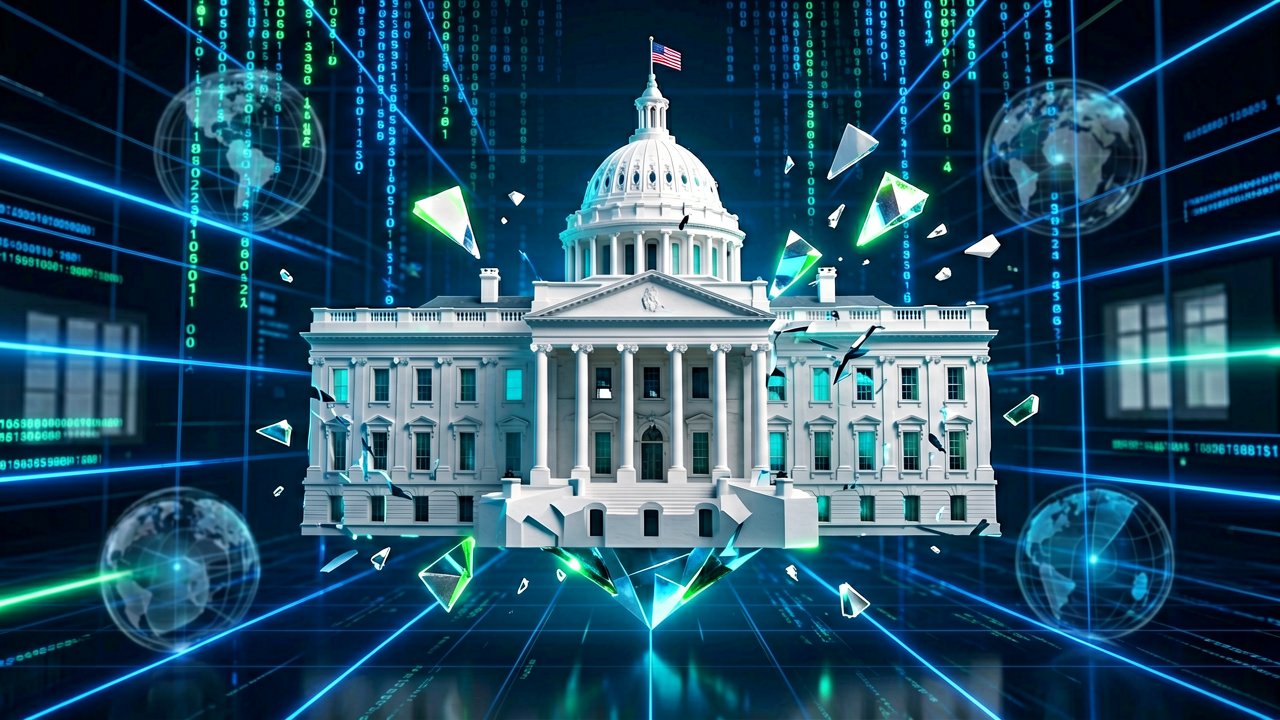
The "Mythos" Problem: A Political Fixer in a Technical Firestorm
In the high-stakes theater of Washington, D.C., credentials are usually the currency of power. But as the White House stares down the barrel of a new, hyper-accelerated cyber threat landscape, the appointment of Sean Cairncross as National Cyber Director has set off alarm bells from the West Wing to Silicon Valley. According to insiders who spoke with Politico , there is a growing, palpable fear that Cairncross—a trusted political operator and former RNC executive—simply lacks the technical "scar tissue" needed to wrangle the latest generation of AI models currently upending global security.
The catalyst for this anxiety isn't just theoretical. It has a name: Mythos. Released (and then quickly restricted) by Anthropic, this model represents a "step change" in capability, reportedly able to identify security vulnerabilities in every major operating system and web browser in seconds—tasks that used to take human teams weeks. As Treasury Secretary Scott Bessent noted in an interview with KXAN Austin , the math is changing; the barrier to entry for devastating cyberattacks is effectively dissolving. When a model can unearth a 27-year-old bug that everyone else missed, the person in charge of the nation’s defense needs to understand the "how" just as well as the "who."
Critics argue that the administration is treating a code-level crisis like a standard policy negotiation. Cairncross was tapped for his skill as a "political fixer," a role he honed as the COO of the Republican National Committee and a senior advisor to Reince Priebus. While that might help navigate the "knife fight" currently occurring between the Department of Commerce and various spy agencies, it doesn’t necessarily help when GPT-5.5-Cyber starts generating zero-day exploits. As one official put it, "You don't want someone who doesn't know what they're doing at the helm" of a model that upends everything we know about digital defense.
A Policy Pivot in Real-Time
This expertise gap is becoming harder to ignore as the White House shifts from its "hands-off" regulatory stance to something far more interventionist. The administration is now weighing a federal vetting regime that would require giants like OpenAI and Google to submit models for government approval before they ever see the light of day. It’s a stunning 180-degree turn for a president who vowed to slash AI regulations on day one, as highlighted by The Hill. But without a technical heavyweight leading the charge, industry leaders worry this vetting process will become a bureaucratic bottleneck rather than a security shield.
The tension is reaching a boiling point. While the CNBC reports that companies like Microsoft and Elon Musk’s xAI have agreed to some pre-deployment evaluations, there’s a sense that the government is building the plane while flying it. The departure of David Sacks, the former "AI Czar," has left a vacuum that Bessent and other economic advisors are trying to fill, but the core issue remains: if the person leading the National Cyber Office can’t parse the difference between a statistical hallucination and a genuine security exploit, the U.S. might be walking into a digital ambush with its eyes wide shut.
Ultimately, the "Cairncross dilemma" reflects a broader struggle for the modern state. Can political loyalty ever be a substitute for technical mastery when the threat is evolving at the speed of silicon? For now, the White House is sticking by its man, with spokespeople defending his record as a skilled manager. But in the world of cybersecurity, the code doesn't care about your resume; it only cares about whether you're fast enough to stop it. And right now, the clock is ticking.
The Hidden Fault Lines: Silicon Valley vs. the Beltway
What Most Reports Miss: This isn't just a squabble over a resume; it is a fundamental clash of civilizations between the "move fast and break things" ethos of the West Coast and the "measure twice, cut once" risk-aversion of the D.C. security establishment. To the engineers at labs like Anthropic or OpenAI, the nuances of a model’s weights and its susceptibility to "jailbreaking" are visceral, mathematical realities. To a political operative, they often look like bargaining chips. The danger in appointing a career fixer like Cairncross is that the administration might mistake a successfully negotiated memorandum for actual digital safety.
Historical context suggests we’ve been here before. Veterans of the early 2000s "Crypto Wars" remember when the government tried to mandate backdoors in encryption—a policy pushed by legal minds who didn't grasp the technical impossibility of securing a door that only "good guys" could use. Today, the stakes are exponentially higher. If the White House implements a vetting regime led by someone without a deep understanding of Reinforcement Learning from Human Feedback (RLHF), they risk creating a "security theater" that slows down American innovation while failing to stop adversaries who aren't playing by the same rules.
Behind closed doors, the "shadow cabinet" of tech advisors—including Treasury Secretary Scott Bessent and influential figures like Elon Musk—are reportedly pushing for a more decentralized approach. They argue that centralized government vetting is inherently "brittle." As noted in the broader discourse surrounding the CNBC report, there is a legitimate fear that a non-technical lead will over-rely on a handful of corporate partners, effectively letting the "foxes guard the henhouse" under the guise of public-private partnership.
Furthermore, the departure of David Sacks has stripped the administration of its most direct line to the venture capital world, where the next generation of "offensive AI" is being monitored. Cairncross now finds himself in a position where he must earn the trust of a skeptical developer community that views him as a "political minders" rather than a peer. In the high-pressure environment of a zero-day exploit breakout, that lack of street cred can lead to communication breakdowns that cost billions.
Ultimately, the "Mythos" incident has proven that AI safety is no longer a fringe academic concern; it is the new frontline of national defense. Whether a strategist can pivot to become a technologist in the heat of a crisis remains the administration’s biggest gamble. If Cairncross fails to bridge the gap between policy and the reality of autonomous agentic workflows, the U.S. might find itself holding a paper shield against a digital hurricane.
The Paradox of Political Oversight in a Post-Logic World
Reading Between the Lines: The central tension of the Cairncross appointment isn't just about what he doesn't know—it’s about the dangerous assumption that AI safety can be "managed" through traditional executive power. We are witnessing a collision between the slow, deliberate machinery of the federal government and the light-speed evolution of recursive self-improvement. By installing a political loyalist to oversee a technical existential threat, the administration is effectively bringing a legal brief to a drone fight. The measured skepticism within the intelligence community suggests that while a "fixer" can align departments, they cannot intuit the subtle, emergent behaviors of a model like Mythos before it crosses a critical threshold.
There is a glaring contradiction in the White House's current posture. On one hand, the administration champions American "AI dominance" and deregulation to outpace global rivals; on the other, it is scrambling to build a regulatory fortress that requires the kind of granular technical oversight it has spent months dismissing as "bureaucratic overreach." This pivot feels less like a calculated strategy and more like a panicked reaction to the sheer capability of the latest models. As noted by The Hill, the 180-degree turn toward a federal vetting regime suggests that even the most ardent hawks have finally realized that code doesn't respect national borders or political ideologies.
The long-term implication is a potential "brain drain" of trust. If the National Cyber Office becomes a place where technical warnings are filtered through a political lens to protect an administration’s narrative, the actual experts—the "cyber-red-teamers" and the silicon architects—will simply stop talking. We risk creating a vacuum where the only voices the President hears are those of optimistic CEOs and "yes-men" who lack the technical literacy to identify a looming catastrophe. In this scenario, the vetting process becomes a rubber-stamp exercise that offers a false sense of security while the real vulnerabilities continue to propagate in the dark.
Moreover, the focus on Cairncross’s background obscures a deeper, more uncomfortable truth: perhaps no single "Czar" or "Director" is actually capable of taming this beast. By focusing the debate on one man's credentials, we avoid the terrifying possibility that our institutional structures are fundamentally incompatible with the speed of AI. If a model can rewrite its own defensive protocols in milliseconds, a director who needs a three-paragraph briefing to understand a buffer overflow is already obsolete. The White House is treating this as a staffing problem, but it might actually be a hardware-level failure of modern governance.
"We’ve reached the point where the government’s plan to protect us from superintelligent code relies on a guy who likely still has 'Password123' on his home Wi-Fi; at least if the AI takes over the power grid, it’ll be because of a bipartisan lack of understanding."
Artūras Malašauskas is an AI Systems Integrator with 20+ years of production-grade web engineering experience. He has designed, shipped, and scaled enterprise Python/PHP systems for logistics, SaaS, and public-sector clients. For the past year, he has focused exclusively on AI integrations: deploying open-source LLMs, building generative media pipelines (image, audio, video), and engineering multi-agent workflows for real production environments. His standard: reproducibility, security, cost-efficient inference—no vaporware. He documents and evaluates emerging AI tooling, separating verified capabilities from marketing noise. Technical editor at: muza-ai.eu, ai-verslas.lt, ai-naujinos.lt Connect on LinkedIn
Comments