The View from the Fog: San Francisco’s Uneasy Truce with AI

The View from the Fog: San Francisco’s Uneasy Truce with AI
If you spent any time on Valencia Street lately, you’ve likely felt it: that familiar, jittery energy that only a San Francisco tech boom can produce. But this isn’t the 2010s "there’s an app for that" gold rush. This time, the gold is invisible, algorithmic, and—depending on who you ask at the neighborhood coffee shop—either the city’s savior or its final wrecking ball. According to recent reporting from the SF Standard, residents are caught in a state of "fretful optimism," a kind of anxious hopefulness that the AI revolution won't just eat their jobs and spit out a digital husk of a city.
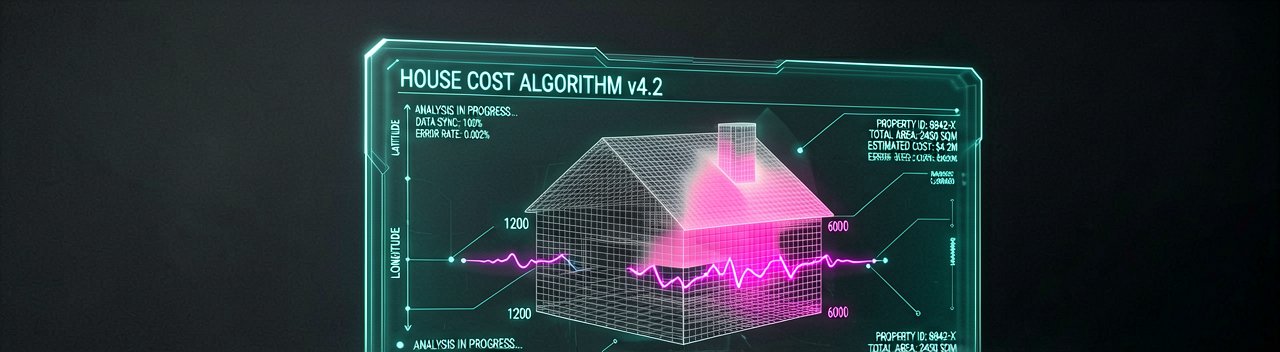
For the average San Franciscan, the AI boom is less about the philosophical "existential risk" discussed in Palo Alto boardrooms and more about the very real risk of being priced out of a two-bedroom in the Richmond. The numbers tell a story of a city splitting at the seams. While luxury home prices have skyrocketed, with the median home price hitting a staggering $2.15 million in early 2026, affordable neighborhoods are stagnating, as noted by Redfin. It’s a two-tier reality: 22-year-old AI researchers are dropping $500,000 signing bonuses on condos in Hayes Valley, while long-term residents watch the "computer systems design" sector shed jobs—down 13% from its 2022 peak, according to The Economist.
The Robotaxi Litmus Test
Nowhere is this tension more visible than on the asphalt. Waymo’s white Jaguars have become the city’s unofficial mascots—or targets, depending on the day. Remember when people were putting traffic cones on their hoods? That vibe has shifted dramatically. A May 2026 poll by the San Francisco Chronicle shows that 42% of residents now view self-driving cars as a "good thing," a massive jump from just a few years ago. It turns out that once you realize the robot doesn't text while driving or get road rage, you start to prefer it to the guy in the beat-up sedan who just cut you off.
Yet, the acceptance of AI on the roads doesn't mean San Franciscans have signed over their souls to the machines. There's a lingering fear that this technology is being "shoved down our throats way before it’s ready," as one 60-year resident told reporters. People worry about more than just job displacement; they worry about the erosion of "critical thinking and creativity." It’s one thing to have a car drive you home; it’s another to have a chatbot write your daughter's college essay or manage your family's savings. The city that built the future is now deeply suspicious of what that future looks like when it’s fully automated.
Ultimately, San Francisco’s relationship with AI is complicated because it’s personal. It’s the hope that "Cerebral Valley" will fill the empty office towers downtown, mixed with the dread that 15% unemployment is just one "GPT-6" update away. We aren't luddites—we're just the beta testers of a new world, and we're starting to wonder if we'll be able to afford the subscription fee when the trial period ends. As the Stanford HAI 2026 AI Index points out, there's a 50-point gap between how tech experts and the public view AI’s impact. In San Francisco, we live right in the middle of that gap.
The Human Toll of the Algorithm: What Most Reports Miss
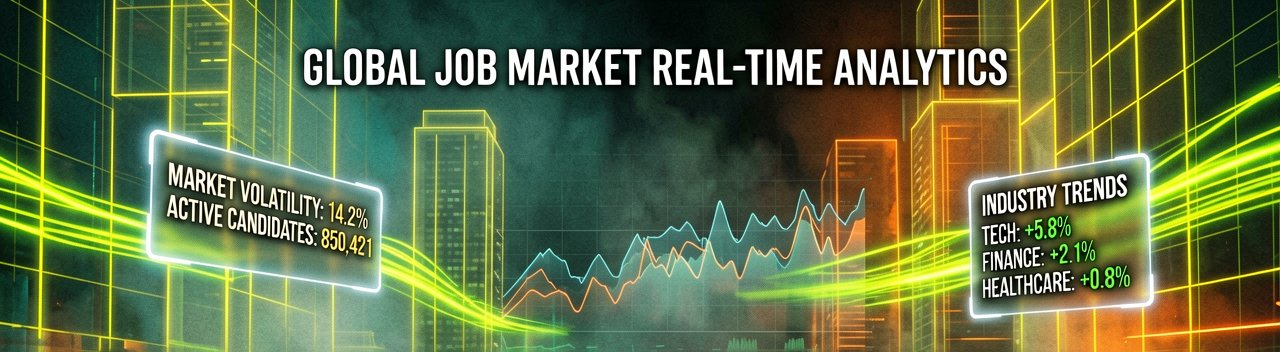
Beyond the Boardrooms: While the global narrative focuses on OpenAI’s latest compute clusters or Anthropic’s safety protocols, the ground truth in San Francisco is far more granular and, frankly, a lot messier. There is a specific kind of "AI fatigue" settling into the Sunset and Richmond districts—neighborhoods historically insulated from the high-octane pivots of South of Market. For the veteran barista or the public school teacher, AI isn't a tool for productivity; it’s a phantom presence that feels like it’s slowly sucking the oxygen out of the room, making an already expensive city feel like an exclusive laboratory for the elite.
The "Cerebral Valley" phenomenon, centered largely in Hayes Valley, has created a bizarre micro-climate of optimism that doesn't translate three blocks away. Seasoned reporters who have lived through the dot-com bust and the social media surge notice a distinct lack of "public utility" in this cycle. In the 2010s, tech gave us better ways to get around (Uber) or find a place to stay (Airbnb). Today, AI’s primary output feels internal to the tech stack. As noted by analysts at MIT Technology Review, much of the current boom is "tech-for-tech," leaving the average resident wondering when the efficiency gains will actually lower their grocery bill or fix the Muni delays.
There is also the historical ghost of "The Great Displacement" haunting these conversations. Long-time activists point out that every time San Francisco "reinvents" itself, it sheds another layer of its creative soul. The concern isn't just about jobs; it’s about the displacement of the "unoptimized" life. In a city where AI can now predict everything from foot traffic patterns to optimal rental yields, there is a growing pushback against the "quantified city." Residents are beginning to crave the friction and the "analog accidents" that once made San Francisco a bohemian haven, fearing that a city optimized by algorithms will eventually become a sterile, predictable campus.
Stakeholders in the local government are walking a razor-thin wire. On one hand, they are desperate for the tax revenue that AI companies bring to offset a projected $780 million budget deficit, as highlighted in recent reports from SF.gov. On the other, they face a constituency that is increasingly hostile toward any corporate entity that doesn't pay its fair share toward the crumbling social infrastructure. The "doom loop" narrative might have faded, but the "equity gap" has only sharpened, leaving the city’s political soul in a state of permanent tension.
Ultimately, if you talk to the people who actually keep the city running—the janitors, the bus drivers, the nurses—the feeling isn't one of hatred, but of profound wariness. They’ve seen this movie before. They know that in San Francisco, "disruption" usually means the people at the top get a new yacht while the people at the bottom get a new set of challenges. The real test for the AI era won't be whether a chatbot can pass the Bar exam, but whether it can help a middle-class family afford to stay in the 7x7. Until that happens, the city's "fretful optimism" will remain heavily weighted toward the fretful side.
The Great Efficiency Paradox
Reading Between the Lines: We’ve been sold a bill of goods that suggests AI will liberate the San Franciscan worker from the drudgery of the mundane, yet the early returns suggest we’re simply working faster to stay in the same place. There is a glaring contradiction in the "Cerebral Valley" manifesto: the promise of infinite productivity is colliding head-on with the physical reality of a city that cannot build housing fast enough to accommodate the people tasked with automating the rest of the world. We are witnessing a high-speed race where the software is moving at light speed, but the hardware—the bridges, the zoning laws, and the power grid—is stuck in the 1970s.
There’s a quiet irony in watching the world’s most advanced minds gather in a city that often struggles to keep its own streetlights on. Skeptics point out that if AI were the panacea its proponents claim, we would see its effects in the municipal gears first. Instead, the "efficiency" seems to be siloed within the profit margins of a few dozen firms in the Mission District. As discussed by critics in The Atlantic, the danger isn't that AI will become sentient and take over; it’s that it will be used to perfectly optimize a status quo that is already failing the majority of the population. We risk creating a "hyper-efficient" city that remains functionally broken for anyone earning less than six figures.
Projecting forward, the skepticism isn't just about economic displacement—it's about the erosion of the "San Francisco Brand." Historically, this city was the world’s headquarters for the weird, the experimental, and the counter-cultural. If we hand the keys to the city to a suite of algorithms designed to maximize engagement and minimize "friction," we may find that we’ve successfully deleted the very soul that made the city worth living in. The measured reality is that San Francisco is currently a beta test for a future where humans are the "lag," and the city's residents are starting to realize that being the most productive person in a dying neighborhood isn't much of a prize.
"In the end, San Francisco will likely survive the AI revolution the same way it survived the Gold Rush and the dot-com bubble: by charging the newcomers twenty dollars for a sourdough toast and pretending we aren't all just NPCs in someone else's simulation."
Artūras Malašauskas is an AI Systems Integrator with 20+ years of production-grade web engineering experience. He has designed, shipped, and scaled enterprise Python/PHP systems for logistics, SaaS, and public-sector clients. For the past year, he has focused exclusively on AI integrations: deploying open-source LLMs, building generative media pipelines (image, audio, video), and engineering multi-agent workflows for real production environments. His standard: reproducibility, security, cost-efficient inference—no vaporware. He documents and evaluates emerging AI tooling, separating verified capabilities from marketing noise. Technical editor at: muza-ai.eu, ai-verslas.lt, ai-naujinos.lt Connect on LinkedIn
Comments