The Ghost in the Machine: Navigating Life in the Age of the Algorithm
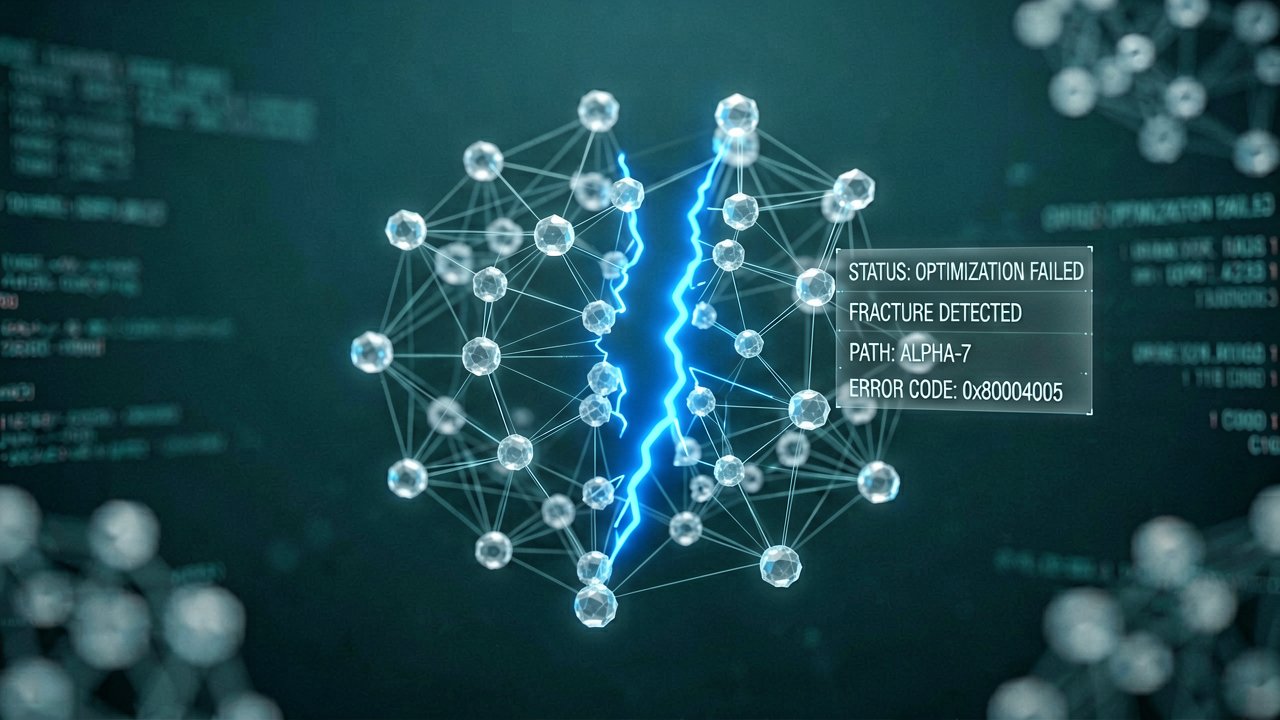
There was a time when your "taste" was a messy collection of basement records, dog-eared paperbacks, and that one weird movie your cousin forced you to watch. It was inefficient, chaotic, and entirely yours. Today, that serendipity has been replaced by a feed so polished it feels like a mirror. We are living through the wholesale "algorithmization" of the human experience—a shift where our choices, from who we date to what we eat, are increasingly curated by mathematical models designed for engagement rather than enrichment.
The Optimization Trap
At its core, the algorithm is a tool for efficiency. It sifts through the noise so we don't have to. But when efficiency becomes the primary lens through which we view life, something essential starts to erode. Research highlighted by The Guardian suggests that as AI begins to predict our behavior with eerie accuracy, we risk falling into "filter bubbles" that don't just narrow our news intake, but narrow our very personalities. If you’re only ever shown what you already like, how do you ever grow into someone new?
This isn't just about Netflix recommendations. It’s about the "gamification" of our social worth. We’ve outsourced our self-esteem to metrics—likes, views, and reach—that are governed by opaque code. When a creator tweaks their personality to appease a platform's latest update, they aren't just "playing the game"; they are performing a subtle act of self-censorship. It raises a haunting question: in a world where we are constantly being optimized, where does the authentic self end and the data point begin?
Privacy as a Pillar of Dignity
Human dignity is inextricably linked to the right to be unpredictable. To have secrets. To be "un-indexable." Yet, as reported by The New York Times, the pervasive nature of data harvesting means our most intimate habits are now commodities. We’ve traded the "right to be forgotten" for the convenience of a frictionless life. But friction is often where growth happens. Dignity requires a private sphere where we can fail, experiment, and change our minds without a permanent record influencing our future credit score or job prospects.
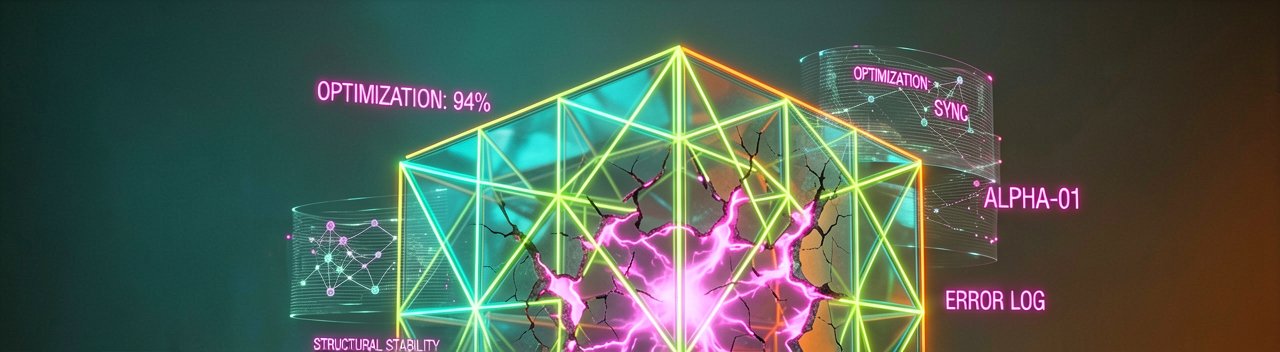
The danger isn't necessarily a "Terminator" style uprising; it’s a slow, comfortable slide into passivity. When the algorithm knows us better than we know ourselves, we stop exerting the effort required for agency. We become "users" in the most literal sense—dependent on the system to tell us what’s next. This passivity is the antithesis of dignity, which demands that we take an active, conscious role in shaping our own narratives.
Reclaiming the Narrative
So, how do we fight back against the code? It starts with intentionality. It means choosing the "wrong" recommendation on purpose, seeking out physical bookstores where the layout hasn't been A/B tested, and occasionally leaving the GPS behind to get lost. We need to foster what experts at Wired call "algorithmic literacy"—an understanding that the feed is a product, not a reality. By recognizing the strings, we become much harder to pull.
Preserving our humanity in a digital age isn't about becoming Luddites. It’s about insisting that technology serves the human spirit, rather than the other way around. We have to protect the messy, the inefficient, and the unquantifiable parts of ourselves. Because at the end of the day, a life lived entirely by the numbers isn't really a life at all—it's just an output. And we, surely, are meant for more than that.
The Ghost in the Machine: Beyond the Feed
The Quiet Erasure of the Deviant: What most reports miss is that algorithmization doesn’t just suggest—it prunes. By prioritizing the "average" or the "statistically likely," these systems act as a digital form of gentrification for the human psyche. We are seeing the systematic removal of the outlier, the weirdo, and the radical thinker from the public square because they don't generate the predictable engagement metrics that shareholders demand. A seasoned look at the data shows we aren't just becoming more divided; we’re becoming more beige.
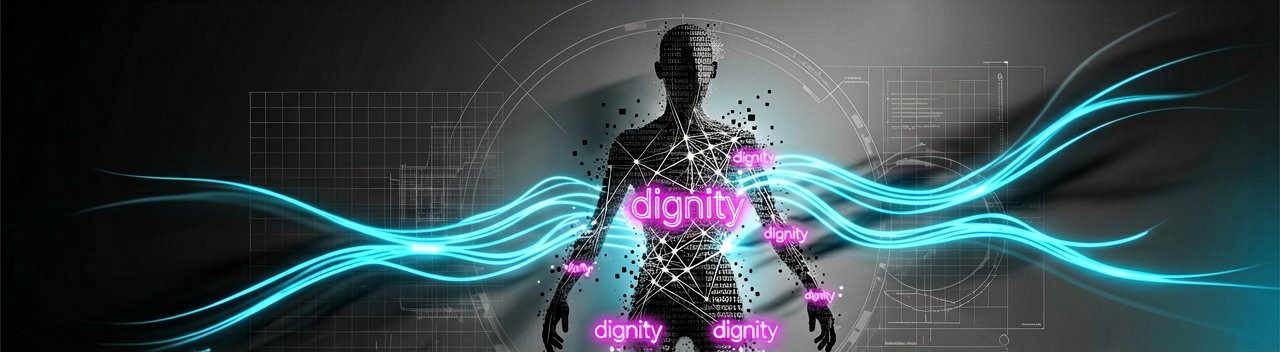
Historically, human progress has always been driven by the "glitch"—the accidental discovery or the irrational choice that defied the logic of its time. When we hand the steering wheel to predictive modeling, we effectively kill the possibility of the "Black Swan" event. As noted by analysts at MIT Technology Review, the reliance on historical data to predict future behavior creates a feedback loop that traps us in the past. If the algorithm is always looking in the rearview mirror to decide your next move, true innovation becomes a statistical impossibility.
From the stakeholder perspective, there is a deepening schism between the "architects" and the "subjects." Silicon Valley engineers often speak of "delight" and "frictionless UX," yet many of these same executives famously limit their own children’s screen time. This "tech-selective" parenting reveals a cynical truth: the creators know that the dignity of the next generation depends on their ability to think outside the loops they’ve built for the masses. It’s a digital class divide where the elite retain their agency while the rest of us are nudged toward a state of profitable predictability.
The stakes for human dignity are particularly high in the realm of "automated decision-making" in public services. When an algorithm determines eligibility for housing or healthcare, as investigated by ProPublica, the human element of mercy and context is stripped away. A machine cannot understand the "why" behind a missed payment or a gap in employment; it only sees the "what." This reductionism turns a complex human life into a binary outcome, stripping individuals of their right to be heard and understood in their full, messy context.
Ultimately, reclaiming our dignity requires a "re-complication" of our digital lives. It means demanding transparency not just in what the code does, but in the values it was built to uphold. We need to move toward "human-in-the-loop" systems that prioritize ethical friction over mindless speed. If we don't fight for the right to be inefficient, we may wake up to find that we’ve optimized ourselves right out of the equation.
The Paradox of the Personal
Reading Between the Lines: We are told that algorithms are the ultimate servants of personalization, yet the more "personalized" our world becomes, the more identical we all seem to act. There is a glaring contradiction in the industry’s promise: tech giants claim to celebrate your individuality while simultaneously grouping you into a "lookalike audience" of ten million other people. This isn't personalization; it’s a high-speed assembly line for the soul. We’ve accepted the myth that being understood by a machine is the same thing as being seen by a human.
The skepticism begins with the concept of "user intent." Engineers speak of it as a holy grail, but a seasoned observer knows that intent is often manufactured by the interface itself. When you "choose" a movie from a curated top ten list, did you exert agency, or did you simply succumb to the path of least resistance? We are projecting intelligence onto systems that are essentially just very fast mirrors. As Bloomberg has frequently pointed out, the economic incentive of these platforms is not to fulfill your needs, but to keep the "need" itself perpetually unsatisfied so you keep scrolling.
Looking ahead, the implications of this "soft paternalism" are unsettling. If we continue to outsource our moral and aesthetic judgments to code, we risk a form of cognitive atrophy. We are already seeing a generation that struggles with the "dead air" of a world without notifications—a silence that used to be the fertile soil for original thought. The skeptic’s view is that we aren't building tools to augment human intelligence; we’re building a prosthetic for the will. Once you lose the habit of choosing, you lose the capacity for dignity.
The final irony lies in our attempt to "fix" biased algorithms with more algorithms. We treat the machine as a neutral arbiter, yet every line of code is a fossilized opinion. By attempting to automate fairness, we ignore the fact that justice is a living, breathing human negotiation that requires empathy—a trait that remains stubbornly non-programmable. To believe that we can solve the "human problem" with a more elegant equation is perhaps the greatest delusion of the digital age.
"In the end, we’ll probably find that the greatest threat to human dignity wasn't a malicious super-intelligence taking over the world, but a very polite recommendation engine that slowly convinced us that eating the same kale salad and watching the same true-crime docuseries as everyone else was actually a profound act of self-expression."
Artūras Malašauskas is an AI Systems Integrator with 20+ years of production-grade web engineering experience. He has designed, shipped, and scaled enterprise Python/PHP systems for logistics, SaaS, and public-sector clients. For the past year, he has focused exclusively on AI integrations: deploying open-source LLMs, building generative media pipelines (image, audio, video), and engineering multi-agent workflows for real production environments. His standard: reproducibility, security, cost-efficient inference—no vaporware. He documents and evaluates emerging AI tooling, separating verified capabilities from marketing noise. Technical editor at: muza-ai.eu, ai-verslas.lt, ai-naujinos.lt Connect on LinkedIn
Comments