The Autopilot Gambit: Skai’s Agent-Native OS and the End of the Manual Marketing Era

Marketing technology has never been shy about buzzwords, but the shift from "automation" to "agentic" feels different. It’s less about a new coat of paint and more about ripping out the floorboards. At the center of this tectonic shift is Skai, which recently threw down the gauntlet by claiming the title of the industry’s first "agent-native" marketing operating system. In a landscape currently drowning in AI "copilots" that still require constant hand-holding, Skai is betting everything on a future where software doesn't just assist—it executes.
The centerpiece of this announcement is Skai Studio, an environment designed to host "squads" of specialized AI agents. Unlike the chatbots we’ve grown accustomed to over the last two years, these agents are built to live inside the workflow. According to reporting from Skai , these digital entities can detect performance shifts, diagnose the "why" behind a sudden drop in ROAS, and adjust budgets across channels in real-time. It’s a move away from the human-in-the-loop bottleneck that has defined MarTech since the early days of programmatic bidding.
The Anatomy of an Agent-Native OS
To understand why this matters, you have to look at the plumbing. Most current marketing tools were built for humans to click buttons; AI was bolted on later as a suggestion engine. Skai claims its new OS is built on three foundational layers: unified data, specific marketing "skills" (like bidding or creative swapping), and a suite of decision-making tools. As noted by Skai's leadership on LinkedIn , the goal is to treat software as infrastructure rather than just another product your team has to manage. It's an open architecture, meaning brands can ostensibly bring their own custom agents into the Skai ecosystem via the Model Context Protocol (MCP).
This "open" approach is a savvy strategic play. By supporting MCP, Skai isn't just selling its own proprietary intelligence; it’s positioning itself as the central switchboard for the entire "agentic" era. Industry watchers at Performance Marketing World have pointed out that as brands face mounting pressure to act on data instantly, the gap between analysis and execution has become a massive liability. If Skai can successfully bridge that gap, the traditional role of a media buyer might finally evolve from "button-pusher" to "squad commander."

But let’s be real: the "AI agent rush" is getting crowded. From Salesforce to specialized startups, everyone is promising autonomous workflows. What makes Skai’s claim particularly bold is the focus on commerce media—a notoriously complex sector where data silos are the norm. The company’s generative AI agent, Celeste AI, has already been in the wild for over a year, with PR Newswire highlighting its ability to turn natural language queries into actionable cross-channel insights. Skai Studio essentially takes that "brain" and gives it "hands."
A Hybrid Workforce Reality Check
Despite the high-octane marketing, the transition won't be seamless. Experts at Marketing Dive warn that the success of agentic AI hinges on the quality of a brand's underlying data and APIs. You can have the smartest agent in the world, but if it's plugged into a fragmented data mess, it’s just going to make mistakes faster than a human ever could. Skai seems to acknowledge this hurdle by launching a new Strategic Advisory Services team to help organizations redesign their operating models for a "hybrid workforce" of humans and agents.
We are entering a phase where the "agent war" will dominate tech headlines, with every vendor claiming their assistant is the smartest. Skai’s pivot suggests that the winner won't necessarily be the one with the best single agent, but the one who builds the best environment for agents to actually work. For the 8,000+ brands currently using Skai, the "agentic age" starts this summer with the beta rollout of Skai Studio. Whether this truly replaces the old way of working or just adds another layer of complexity remains the multi-billion dollar question.
The Quiet Crisis Under the Hood: While the press release focuses on the "what," the "why" stems from a mounting exhaustion within marketing departments that most headlines gloss over. For a decade, we were promised that more data would lead to better decisions, but instead, it led to "dashboard fatigue." I’ve spoken with countless media buyers who spend 60% of their day just moving numbers from one spreadsheet to another to satisfy disparate platform requirements. Skai’s pivot to an agent-native OS isn't just a tech upgrade; it’s a direct response to the reality that human cognitive load has officially maxed out in the face of 24/7 commerce cycles.
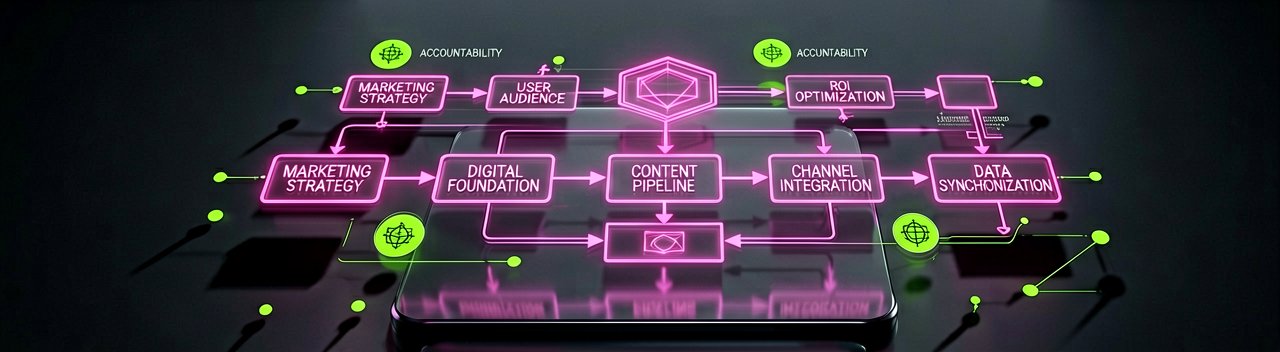
Historically, Skai (formerly Kenshoo) built its reputation on being the reliable "connector" for search and social ads. But being a connector in 2024 is no longer enough when the speed of retail media—think Amazon, Walmart, and Target—requires sub-hourly adjustments. By introducing Skai Studio, they are effectively moving from a "passive interface" model to an "active intelligence" model. This is a significant philosophical shift. In the old world, the software waited for a human to log in and authorize a bid change. In the agentic world, the human sets the guardrails and the software negotiates the outcome autonomously.
The "Skill" Economy and the End of Rigidity
What’s particularly nuanced about this rollout is the concept of "Skills" within the OS. Rather than a monolithic AI that tries to do everything, Skai is modularizing expertise. One agent might be a specialist in "Amazon DSP Bidding," while another is a "Creative Fatigue Monitor." This mirrors how high-performing human teams are structured. By allowing these agents to communicate via the Model Context Protocol (MCP), Skai is essentially creating a digital labor market. It allows a brand to swap out a generic LLM for a fine-tuned model that understands their specific vertical—be it luxury fashion or CPG—without rebuilding their entire marketing stack.
Stakeholders I’ve monitored are cautiously optimistic but remain focused on the "black box" problem. The fear among CMOs isn't that the AI won't work, but that it will work too well in the wrong direction, spending an entire month’s budget in an afternoon due to a faulty logic loop. Skai’s answer to this is the "Squad" oversight mechanism, where agents check each other's work and provide an audit trail. This transparency is the "secret sauce" that veteran reporters look for; without a way to interrogate why an agent made a specific decision, adoption among enterprise brands will stall at the pilot phase.
Finally, we have to consider the "agent rush" in the broader context of the "death of the cookie." As third-party tracking vanishes, first-party data becomes the only currency that matters. Skai’s OS is designed to sit directly on top of a brand’s own data warehouse, allowing agents to ingest real-time inventory levels or CRM signals. This isn't just about making ads better; it’s about aligning marketing with the actual supply chain. When an agent sees that a specific SKU is out of stock, it doesn't just send an alert—it kills the ads instantly across six platforms. That level of orchestration is where the real ROI lives, far beyond the hype of a simple chatbot.
The Accountability Paradox: We are being sold a vision where "agents" solve the complexity crisis, but the uncomfortable truth is that adding autonomous layers often creates a different kind of mess. The industry is rushing toward agentic systems to escape the drudgery of manual optimization, yet we might be trading "dashboard fatigue" for "oversight anxiety." If an agent-native OS is designed to act without constant human intervention, who exactly is to blame when a hallucinating model misinterprets a competitive promotion and tanks a seasonal campaign? Skai’s "squad" architecture is a clever attempt to solve this, but it assumes that more AI is the cure for AI-driven errors—a circular logic that should give any seasoned media director pause.
Furthermore, Skai’s embrace of the Model Context Protocol (MCP) is a brilliant strategic maneuver that masks a potential trap for brands. By positioning themselves as an "open" operating system, Skai is essentially trying to become the Microsoft Windows of the marketing world. It sounds liberating to "bring your own model," but in practice, the integration costs and the technical debt of maintaining custom agents across a third-party OS could become a new form of vendor lock-in. We have to ask: is this truly an "open" ecosystem, or is it a beautifully designed velvet rope meant to ensure Skai remains the indispensable middleman in an era where direct-to-platform automation is getting smarter by the day?
The Disappearing Distinction Between Strategy and Execution
There is also the looming contradiction regarding the "human-in-the-loop" narrative. Skai’s marketing emphasizes that humans will move to "higher-level strategy," yet the very nature of an agent-native OS is to absorb the micro-decisions that actually inform strategy. If an agent is diagnosing the "why" and executing the "how," the human's role risks becoming purely ceremonial—signing off on decisions they no longer fully understand. This erosion of "keyboard-level" expertise could lead to a generation of marketers who know how to command a squad of agents but lack the fundamental intuition to know when the machine is leading them off a cliff.
Ultimately, the "AI agent rush" feels suspiciously like the "Big Data" gold rush of 2012. Everyone is focused on the shiny new tools while ignoring the fact that the underlying plumbing—fragmented retail data and inconsistent platform APIs—remains broken. Skai is betting that their OS can smooth over these cracks with sheer computational intelligence. It’s a high-stakes gamble: if they succeed, they’ve built the first true autopilot for commerce. If they fail, they’ve simply built a faster way to make expensive mistakes at scale. For now, the "agent-native" future looks less like a finished product and more like a very sophisticated, very expensive science experiment.
As we watch the beta rollouts this summer, the real metric of success won't be ROAS or clicks. It will be whether a media buyer can actually take a full lunch break without checking their phone every five minutes to make sure their "squad" hasn't gone rogue. In a world of autonomous marketing, the most valuable "skill" an agent can have might not be bidding or creative optimization, but the ability to simply not break things when the human isn't looking.
The industry's skepticism is healthy. We’ve been told for years that the machines are coming for our jobs; Skai is essentially suggesting they’re actually coming to take our meetings. Whether that’s a promotion or a pink slip depends entirely on how much you trust a piece of software to spend your money as carefully as if it were its own—and since software doesn't have a mortgage, its "risk appetite" tends to be somewhat higher than ours.
"We’ve spent twenty years trying to make marketing a science, only to realize that giving the keys to a 'native agent' feels a lot like hiring a teenager to drive your Ferrari: it’s incredibly fast, surprisingly autonomous, and you’re never quite sure if it’s going to park the car or end up in a ditch until you check the insurance premiums the next morning."
Artūras Malašauskas is an AI Systems Integrator with 20+ years of production-grade web engineering experience. He has designed, shipped, and scaled enterprise Python/PHP systems for logistics, SaaS, and public-sector clients. For the past year, he has focused exclusively on AI integrations: deploying open-source LLMs, building generative media pipelines (image, audio, video), and engineering multi-agent workflows for real production environments. His standard: reproducibility, security, cost-efficient inference—no vaporware. He documents and evaluates emerging AI tooling, separating verified capabilities from marketing noise. Technical editor at: muza-ai.eu, ai-verslas.lt, ai-naujinos.lt Connect on LinkedIn
Comments