The Ghost in the Trunk Factory: A Night Inside OpenAI’s Fortified Eden
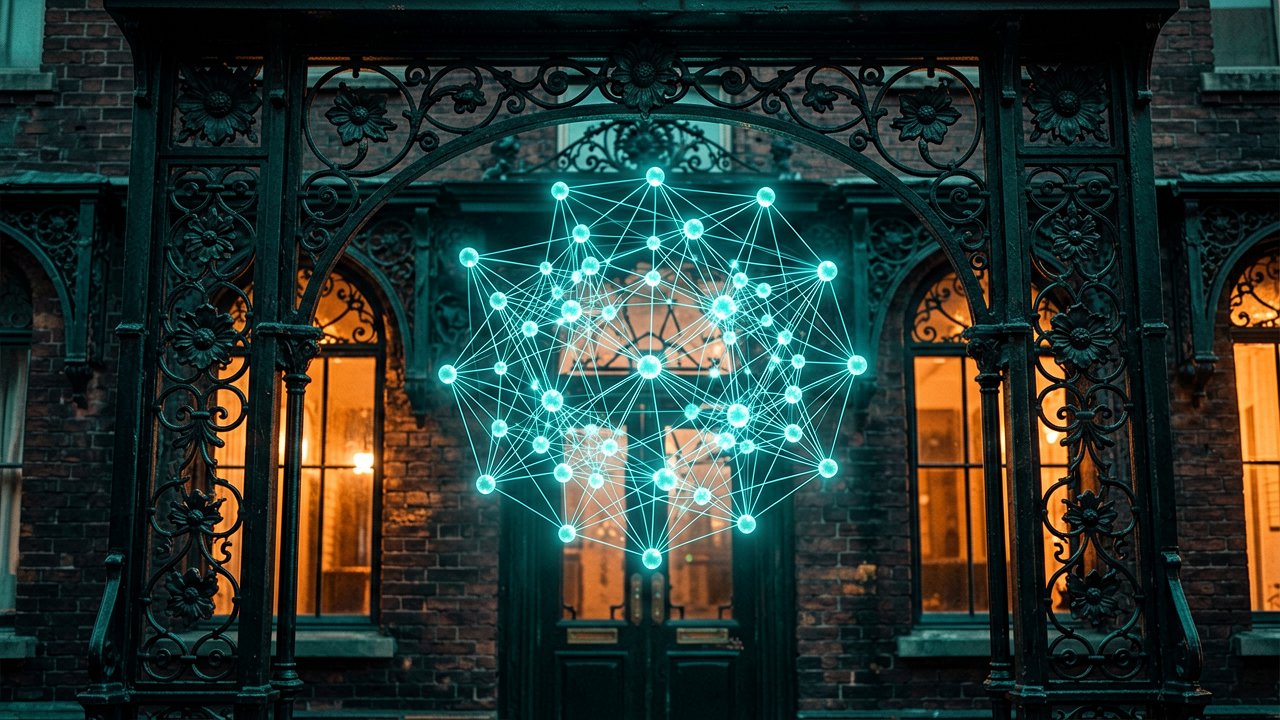
Stepping into OpenAI’s headquarters feels less like entering a tech titan’s war room and more like wandering into the lobby of a boutique hotel that specializes in high-stakes existentialism. Located in the Mission District, the "Pioneer Building"—a historic former trunk factory—serves as the nerve center for a company currently rewriting the rules of human labor and creativity. While neighbors like Uber broadcast their presence with shimmering glass, OpenAI’s exterior is famously quiet, guarded by subtle security and a vibe that suggests they’d really rather you didn't look too closely at the windows SFGATE .
The interior is a different story. The lobby is a carefully curated "cabinet of curiosities" designed to hit you with a specific brand of intellectual gravity. I spotted a 1950s metal robot figurine and a vintage camera, all placed with the kind of precision that screams intentionality. It’s an aesthetic that merges Victorian charm with mid-century sci-fi, anchored by a copy of Stephen Hawking’s On the Origin of Time left casually open on a reading chair. It’s as if they want you to know that while they’re building the future, they’re deeply steeped in the history of human inquiry SFGATE .
A Library for the End of the World (or the Beginning)
Nothing captures the OpenAI ethos quite like its library. In an age where digital information is the ultimate currency, the company has leaned into the physical permanence of the written word. The shelves are lined with suggestions from its 1,200+ employees, ranging from the Pulitzer-winning American Prometheus—the biography of J. Robert Oppenheimer—to Ernest Shackleton’s Endurance The New York Times . The parallels aren't subtle: OpenAI clearly views itself as a project of similar historical magnitude, a group of explorers sailing toward an unknown, potentially hazardous, new world.
Beyond the books, the office layout is designed to keep the hype machine well-oiled while maintaining a "heads-down" research focus. The "walk in the park" area features live indoor trees and glass walls, a design touch meant to foster the kind of organic collaboration you can’t get on a Zoom call. It’s a stark contrast to the gritty industrial history of the building, which was once characteristic of the large wooden structures in the Mission Business Insider . Today, the only "trunks" being made here are the data architectures supporting models like GPT-4o.
Despite the high-minded atmosphere, there’s an undeniable tension in the air. The "secretive" label isn't just marketing; neighbors describe the presence of private security roaming the sidewalks in plain clothes, and the company has increasingly restricted access to its most capable models The San Francisco Standard . It’s a fortress of innovation where the staff reportedly flocks to nearby Tartine for $15 breakfast sandwiches, blending in with the local tech elite while the systems they build threaten to disrupt the very economy that sustains them.
The Expansion into Mission Bay
OpenAI isn’t staying put, though. The company is currently spearheading a massive expansion into Mission Bay, having recently signed the city’s largest office lease at the former Old Navy headquarters. This nearly 1-million-square-foot footprint signals a "bet on San Francisco" during a time of record office vacancies The San Francisco Standard . Walking through their current halls, you get the sense that the Pioneer Building is already too small for their ambitions, serving as the launching pad for what Sam Altman views as the most opportune era in technological history .
Leaving the headquarters, you're struck by the silence of the street outside compared to the sheer computational noise happening within. OpenAI is a company that has mastered the art of the "mysterious neighbor"—present enough to be felt, but private enough to keep its most transformative secrets behind a very heavy, very historic door. Whether this "AI capital" they’re building will benefit all of humanity remains the central question on every shelf of that library.
The Quiet Crisis of the "Open" Brand: While the leather-bound books and indoor foliage paint a picture of intellectual serenity, the true pulse of OpenAI's headquarters is found in the friction between its non-profit roots and its hyper-capitalist trajectory. Early employees often mention a shift in the building’s "soul" since the 2019 pivot to a "capped-profit" model. What was once a scrappy research lab operating out of a shared space has transformed into a high-security vault, where the mission of "benefitting humanity" is constantly negotiated against the pressure to deliver for investors like Microsoft The New York Times.
Inside the halls, the hierarchy isn't just about job titles; it’s about compute access. I spoke with people familiar with the internal culture who describe a palpable "haves and have-nots" dynamic regarding who gets to play with the latest, unreleased iterations of the "Strawberry" or "Orion" models. This internal exclusivity creates a pressure cooker environment where the brightest minds in the world are sequestered in "war rooms" for weeks at a time, fueled by gourmet catering and the belief that they are mere months away from Artificial General Intelligence (AGI).
The Ghost of the Trunk Factory
There is a delicious irony in OpenAI occupying the Pioneer Building. In the late 19th century, this structure was a hub for manufacturing physical trunks—vessels for human belongings during travel. Today, the "vessels" being built here are digital, designed to carry the sum total of human knowledge. Long-time Mission District residents often peer at the frosted windows with a mix of awe and resentment, noting that the building which once supported blue-collar manufacturing now houses a company whose primary product could automate those very types of jobs into extinction SFGATE.
From a stakeholder perspective, the headquarters serves as a physical manifestation of Sam Altman’s "Age of Abundance" philosophy. When investors visit, they aren't just shown code; they are shown a lifestyle. The contrast between the grit of 18th Street and the hyper-refined, climate-controlled interior of OpenAI is a calculated display of power. It’s a signal that while San Francisco may be struggling with urban decay, the future is being insulated and perfected within these specific four walls The San Francisco Standard.
Security protocols have also reached a level of intensity that rivals government contractors. It’s not just the plainclothes guards; it’s the digital hygiene. Staff members are reportedly discouraged from discussing specific project milestones even in the "collaborative" park areas, fearing that the very open-plan design meant to foster creativity might also facilitate accidental leaks. This paradox—a company named "Open" operating with the secrecy of a stealth bomber program—is the defining characteristic of the daily experience for those who walk these halls every morning.
Ultimately, the headquarters is less an office and more a temple to a new religion of data. Every vintage artifact and carefully placed succulent is part of a narrative intended to humanize a technology that many find deeply dehumanizing. As they prepare to migrate to the massive Mission Bay campus, the Pioneer Building remains the "sacred site" where the genie was first pulled from the bottle, leaving the rest of the world to wonder what happens when the doors finally open for good The San Francisco Standard.
The AGI Mirage in the Mission: There is a profound dissonance in OpenAI’s obsession with physical artifacts—the leather-bound books, the vintage cameras, the mid-century furniture—while they simultaneously work to make the physical reality of human labor obsolete. This curated "human" aesthetic feels less like an homage and more like a taxidermy project. By surrounding themselves with the ghosts of 20th-century analog life, OpenAI’s leadership creates a comforting, if perhaps deceptive, narrative: that the silicon-based intelligence they are birthed will be as warm and noble as a first-edition Hemingway. It is a brilliant bit of corporate theater that masks the cold, staggering scale of the server farms doing the actual heavy lifting miles away from this boutique aesthetic The New York Times.
Skepticism arises when you look at the "capped-profit" structure through the lens of their real estate footprint. You don't sign the largest office lease in San Francisco history—nearly a million square feet in Mission Bay—if your goals are purely academic or non-commercial. The sheer scale of their expansion suggests a trajectory toward a massive, vertically integrated tech conglomerate, regardless of the high-minded rhetoric found in their mission statement The San Francisco Standard. It raises the question: can a company maintain its status as a "benefit to humanity" when it is effectively locked into a trillion-dollar arms race that requires ever-increasing secrecy and centralized power?
The Security Theater of Innovation
The contradiction of OpenAI is most visible on the sidewalk. For a company that advocates for global governance and "democratic" AI, the fortress-like secrecy of the Pioneer Building is telling. The presence of plainclothes security and the intense vetting of even casual visitors suggest that "openness" is a brand name, not a business practice The San Francisco Standard. This creates a feedback loop where the elite few inside are convinced they are the only ones capable of handling the fire they’ve sparked, a sentiment that often bleeds into a messianic complex that tech journalists have seen many times before, from Theranos to WeWork—though OpenAI actually has a product that works.
Ultimately, the move to Mission Bay will likely strip away the last of the "garage startup" charm that the Mission District office still clings to. As they transition from a historic trunk factory to a sprawling corporate campus, the irony will be complete. They will have replaced the craft of making physical containers for luggage with the craft of making digital containers for consciousness, all while maintaining a security perimeter that ensures the "humanity" they are saving stays exactly on the other side of the glass SFGATE.
The projection for the next five years isn't just about better chatbots; it’s about the institutionalization of AI. When the "world's smartest office" becomes a standard corporate headquarters, we will know the revolution has ended and the era of the new establishment has begun. The library will still be there, the books will still be curated, but the revolutionary spark will have been successfully IPO'd and archived.
As the sun sets over the Mission, the Pioneer Building glows with an amber light that feels almost nostalgic. It is the glow of a future being built by people who seem very afraid of what that future looks like if they aren't the ones holding the keys. We are told to trust the process, but as any San Francisco local will tell you, when the real estate gets this big and the security gets this tight, the "benefit" usually starts at the top and trickles down very, very slowly.
"It is truly comforting to know that while the machines are being trained to replace our cognitive functions, the people building them have the foresight to keep a copy of 'Endurance' on the shelf—presumably so they’ll know what to do when the power grid finally realizes it’s being asked to simulate the entire human experience for the sake of a better email drafter."
Artūras Malašauskas is an AI Systems Integrator with 20+ years of production-grade web engineering experience. He has designed, shipped, and scaled enterprise Python/PHP systems for logistics, SaaS, and public-sector clients. For the past year, he has focused exclusively on AI integrations: deploying open-source LLMs, building generative media pipelines (image, audio, video), and engineering multi-agent workflows for real production environments. His standard: reproducibility, security, cost-efficient inference—no vaporware. He documents and evaluates emerging AI tooling, separating verified capabilities from marketing noise. Technical editor at: muza-ai.eu, ai-verslas.lt, ai-naujinos.lt Connect on LinkedIn
Comments