Notion’s Agentic Ambition: Breaking the Workspace Bubble
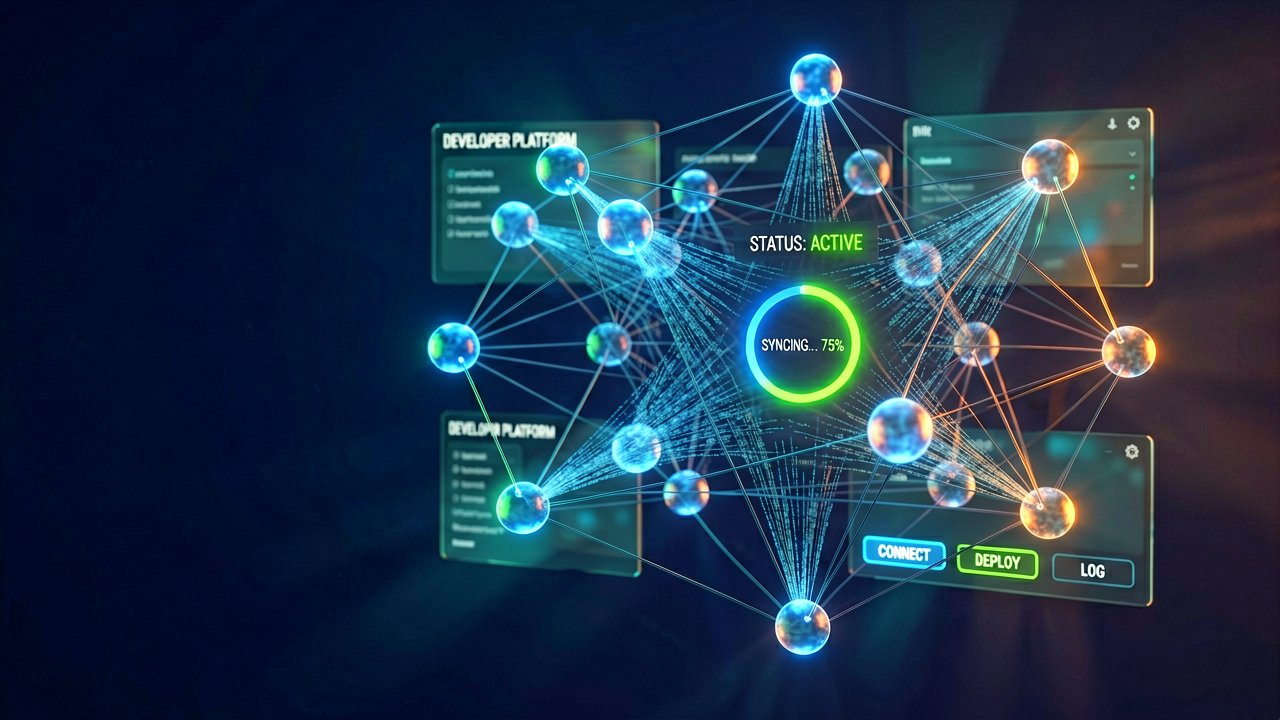
For a long time, Notion felt like a beautiful, walled garden. It was the place where you meticulously organized your life and work, but if you wanted to actually do anything elsewhere, you had to jump the fence yourself. That changed this week. During a livestreamed event, co-founder Ivan Zhao unveiled a massive expansion to the platform’s intelligence, effectively turning Notion into a central hub for autonomous AI agents that can now reach far beyond the confines of a single workspace. This isn't just about writing better notes; it’s about a new developer platform that lets AI "break out of the bubble" and interact with the tools we actually use to get stuff done.
The centerpiece of this update is the launch of Notion Workers and an External Agent API. According to , this new infrastructure allows teams to deploy custom code directly within Notion's secure cloud, giving agents the ability to perform complex, multi-step actions across different apps. Imagine an agent that doesn't just summarize a Slack thread but actually creates a Jira ticket, updates a project timeline in Notion, and then sends a confirmation email via Notion Mail . It’s a shift from "AI as a consultant" to "AI as a collaborator."
The End of the Manual Handoff
The update specifically targets the "context gap" that plagues modern work. Most of us live in a fragmented world where our specs are in Notion, our conversations are in Slack, and our code is in GitHub. By introducing "Database Sync" and deeper AI connectors, Notion is positioning itself as the connective tissue. As noted by The Crunch , the latest version of their AI agents can now autonomously navigate these silos, pulling live data from external APIs to keep everything in sync without a human having to copy-paste between tabs.
What’s truly interesting here is the move toward "External Agents." Notion isn't just trying to build the best AI itself; it’s opening the door for other specialized agents to live inside its interface. We’re talking about heavy hitters like Claude, Cursor, and Decagon. According to Notion , users can now bring these external tools directly into their workflow, allowing a coding agent to review a pull request or a support agent to pull customer quotes right into a product spec page. It’s an "open-door policy" for intelligence that many of its competitors are still hesitant to adopt.

A Paid Path to Autonomy
Of course, this level of automation isn't free. Notion has moved to a credit-based billing model for these "Custom Agents." As reported by eesel , while the personal AI assistant remains part of the standard add-on, these proactive, 24/7 agents will consume credits based on their activity. It’s a pragmatic move—running these models constantly costs money, and Notion is betting that businesses will find enough value in the time saved to justify the extra spend.
We’ve seen plenty of "AI assistants" that can draft an email or summarize a meeting. But by giving agents the tools to actually act on that information across a company’s entire software stack, Notion is making a play for something much bigger. It wants to be the operating system for the agentic era. If they pull it off, the days of being the "human router" for data between your various apps might finally be coming to an end.
Do you think the convenience of "all-in-one" AI agents outweighs the potential security risks of giving one platform access to your entire tech stack?
The Real Power Play: While the headlines focus on the shiny new buttons, the strategic undercurrent of this launch is a calculated bid to solve the "Agentic Cold Start" problem. For years, AI agents have been stranded in a state of paralysis because they lacked a high-fidelity map of a company’s internal logic. Notion realizes that because it already houses the "brain" of thousands of organizations—the wikis, the roadmaps, and the meeting notes—it is uniquely positioned to provide the grounding data these agents crave. It’s not just a platform; it’s a proprietary knowledge graph that makes an agent actually useful instead of just generically smart.

Industry insiders have long whispered about the "fragmentation tax" paid by knowledge workers, and Ivan Zhao’s vision seems to be a direct assault on that hidden cost. By allowing Notion Workers to run custom logic, the company is effectively transitioning from a No-Code tool to a "Low-Code AI Engine." Historically, Notion won over the tech crowd by being flexible enough to build anything; now, they are betting that the next generation of builders won't be writing layouts, but orchestrating behaviors. It’s a transition from documenting work to delegating it, a shift that Notion believes will redefine the workspace category entirely.
The "Operating System" Ambition
There is a distinct historical parallel here to the early days of the iOS App Store. Just as Apple provided the hardware and the API for others to build the "Uber for X," Notion is providing the workspace and the "Agent API" for developers to build specialized employees. We are moving past the era of the "Chatbot" where you have to prompt a box to get a result. As highlighted by technical breakdowns from BetaNews, these agents are designed to be "proactive." They don't wait for you; they trigger based on database changes or schedule-based events. This turns Notion from a passive repository into an active participant in the business.
However, the stakeholder perspective isn't all sunshine and productivity gains. Enterprise CIOs are notoriously wary of "shadow AI"—the phenomenon where employees connect various third-party agents to sensitive internal data. Notion is attempting to preempt this friction by baking "Notion-native" security into the agent platform. By hosting the code on their own infrastructure via Notion Workers, they are promising a "walled garden" level of security with "wild west" levels of connectivity. It’s a delicate balancing act: giving an agent the keys to your Jira and Slack without accidentally leaking the roadmap to the public internet.
Finally, we have to look at the competitive landscape. With Salesforce and Microsoft pushing their own "Agentic" futures, Notion’s edge is its cult-like following among startups and creative teams. These users don't want a clunky legacy system; they want a sleek, unified interface where the AI feels like a natural extension of the page. By integrating tools like Notion Mail into this ecosystem, they are closing the loop. You can now draft, discuss, execute, and communicate without ever leaving the workspace. The bubble hasn't just broken; it has expanded to encompass the entire workflow.
As these agents begin to move data autonomously across your tools, how much oversight will you personally require before a "done" notification is enough for you to trust the result?
The Skeptic’s Lens: Beneath the sleek marketing of an "agentic future" lies a fundamental contradiction that Notion has yet to fully resolve: the trade-off between autonomy and chaos. The tech industry loves to sell the dream of a "self-driving workspace," but anyone who has ever managed a shared Notion database knows that even human-curated systems tend toward entropy over time. By letting agents "break out of the bubble," Notion is essentially introducing a fleet of automated editors into an environment that is already prone to clutter. The danger isn't just that the AI might hallucinate; it’s that it might be too efficient at generating technical debt and organizational noise across five different platforms simultaneously.
There is also the matter of "Agentic Lock-in." While Notion pitches the External Agent API as an open ecosystem, the reality of the credit-based billing model creates a high-walled garden of a different sort. As enterprises begin to rely on custom Notion Workers to bridge their workflows, the cost of switching away from Notion becomes astronomical—not just because of the data, but because of the proprietary "logic" living in those agents. We are moving from a world of data silos to a world of logic silos. If your entire project management workflow is dependent on a specific chain of Notion-hosted agents talking to GitHub, leaving the platform becomes a technical nightmare that no "Export to CSV" button can fix.
The Human-in-the-Loop Fallacy
Furthermore, we need to talk about the "oversight tax." Notion suggests these agents will save us time, but history suggests that automation often just shifts the nature of our labor. Instead of doing the work, we become the auditors of the work. If an agent autonomously updates a Jira ticket and sends a Slack message, a human still needs to verify that the context was right and the tone was appropriate. If we spend as much time "sanity-checking" our agents as we did doing the manual tasks, the productivity gains are a wash. The industry is betting that LLMs have reached a level of reliability where we can stop hovering, but in a high-stakes corporate environment, "mostly accurate" is often another word for "unusable."
Finally, there is the question of the developer experience. Notion is competing with established giants like AWS Lambda and specialized AI middleware. For a developer to choose "Notion Workers" over a generic cloud provider, the integration benefits have to be massive. If the API is too restrictive or the credit pricing too aggressive, we may see a repeat of the early "platform wars" where third-party developers ultimately retreat to more neutral territory. Notion’s success depends on it being a great place for code to live, not just a great place for text to sit, and that is a hurdle the company has only just begun to clear.
"We’ve spent decades trying to get humans to follow the company wiki, so naturally the next logical step is to give the wiki its own credit card and the keys to the office, then hope the AI has better attention to detail than the intern it’s replacing."
Artūras Malašauskas is an AI Systems Integrator with 20+ years of production-grade web engineering experience. He has designed, shipped, and scaled enterprise Python/PHP systems for logistics, SaaS, and public-sector clients. For the past year, he has focused exclusively on AI integrations: deploying open-source LLMs, building generative media pipelines (image, audio, video), and engineering multi-agent workflows for real production environments. His standard: reproducibility, security, cost-efficient inference—no vaporware. He documents and evaluates emerging AI tooling, separating verified capabilities from marketing noise. Technical editor at: muza-ai.eu, ai-verslas.lt, ai-naujinos.lt Connect on LinkedIn
Comments