The Machine-Speed Gap: Why Your Security Stack is Failing the AI Litmus Test
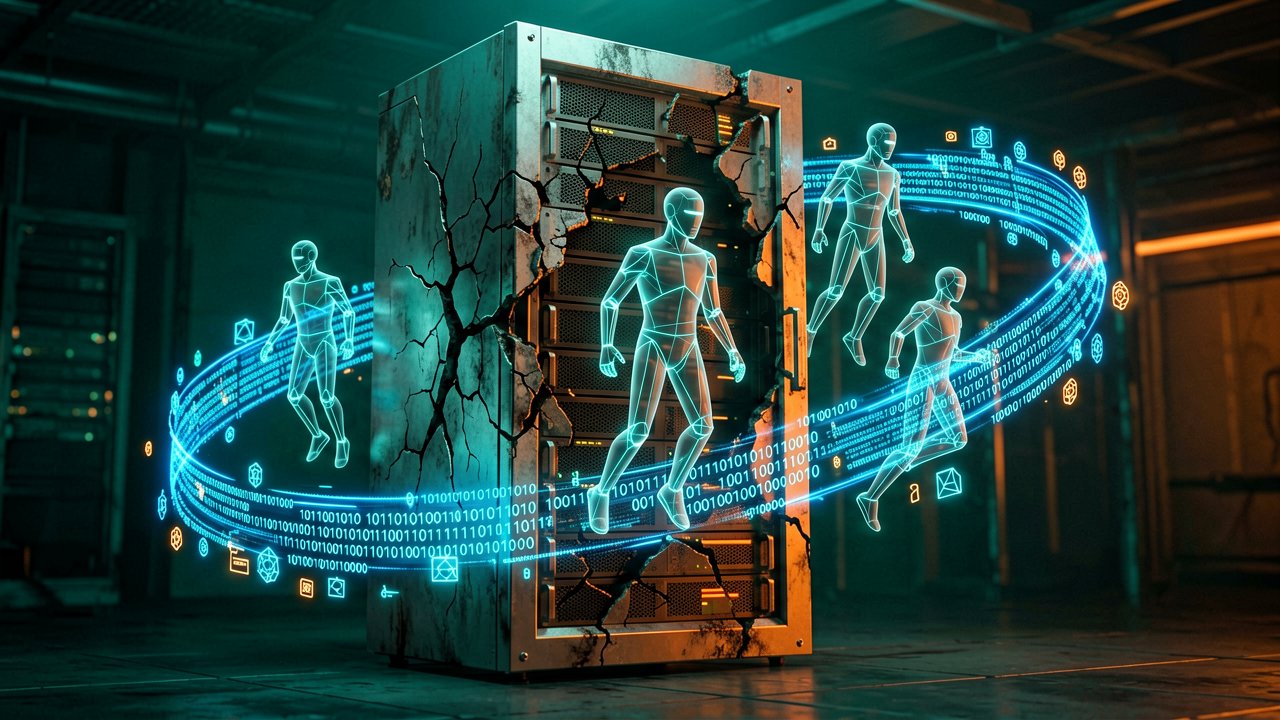
If you walked through the halls of RSAC 2026 this year, you probably noticed a frantic energy that hasn't been there since the early days of the cloud transition. Everyone is talking about "agentic AI," but beneath the marketing buzz, there’s a sobering reality: our current defensive playbooks are bringing a knife to a railgun fight. We’ve spent decades building walls based on static rules and human reaction times, but the adversary has moved on to autonomous, self-correcting code that doesn’t sleep or wait for a committee to approve its next move.
The numbers coming out of the industry aren’t exactly comforting. According to the 2025 Cisco Cybersecurity Readiness Index , a staggering 96% of organizations are planning to overhaul their IT infrastructure because they know what they have isn’t cutting it. It’s an admission that the "patch and pray" model is dead. When an AI agent can find an 18-year-old remote code execution flaw in minutes—as recently reported by CSO Online—your traditional monthly vulnerability scan starts to look like a historic relic.
The Speed Gap is Widening
The real problem isn't just that the attacks are smarter; it’s that they’re faster than our ability to think. We’re seeing the rise of "Shadow Agents"—autonomous scripts that can pivot, escalate privileges, and exfiltrate data in the time it takes a human analyst to finish their first cup of coffee. As noted in the Google Cloud Cybersecurity Forecast 2026 , threat actors are now leveraging AI to escalate the speed and scope of attacks to a level where manual intervention is effectively useless.
It’s not just about speed, though; it’s about the "pliability" of these new systems. We’re moving into an era where "Agentic AI" becomes the primary attack surface. Experts at Darktrace point out that these agents don't need to be bribed or socially engineered like a human insider; they just need to be prompted creatively. We've spent years hardening the human element, only to build a new class of digital "employees" that are infinitely more susceptible to manipulation.
Legacy Baggage in a Real-Time World
Why are we so behind? Because most enterprises are still dragging around "decades-old" legacy systems that were never designed for a world where code writes code. As SentinelOne highlights, the integration of these ancient applications with modern AI-driven security tools creates massive blind spots. You can't put a high-tech lock on a cardboard door and expect it to hold against a professional locksmith, let alone a superintelligent one.
Moreover, we’re facing a massive talent crunch. Cybersecurity Ventures predicts roughly 3.5 million unfilled jobs through 2025. We're trying to defend against automated, scalable threats with a workforce that is burned out and spread too thin. If we don’t start treating AI as a first-class identity that needs its own specific governance and monitoring, we’re just building a bigger haystack for the needles to hide in.
The takeaway for 2026 is clear: resilience isn't about having the biggest firewall anymore; it’s about "crypto-agility" and real-time behavioral monitoring. We have to stop thinking of cybersecurity as a defensive shield and start seeing it as a strategic, adaptive lever. If our systems can’t think and adapt as fast as the software trying to break them, we’ve already lost the game before it’s even begun.
The Real Friction Point: While the headlines scream about "AI vs. AI" in a sort of digital arms race, what most reports miss is the quiet collapse of the "Trust, but Verify" model within the corporate boardroom. We aren't just facing a technical deficit; we are facing a philosophical one. For the last twenty years, the industry’s North Star has been visibility—knowing every device and user on the network. But when an autonomous agent behaves exactly like a senior admin, right down to the keystroke patterns and time-of-day habits, visibility becomes a hall of mirrors.

I recently spoke with a handful of CISOs at a closed-door event in London, and the sentiment was unanimous: the "Identity" problem has mutated. Historically, we secured people. Then we secured service accounts. Now, we are tasked with securing millions of ephemeral, autonomous agents that spin up, execute a task, and vanish. These "synthetic identities" are currently operating in a Wild West environment where traditional Multi-Factor Authentication (MFA) is essentially a speed bump. If the agent is compromised at the prompt level, it brings its legitimate credentials with it, and your logs will show nothing but a "perfect" employee doing their job.
The Architecture of Yesterday
The historical context here is vital. We are currently trying to bolt AI-driven defense onto "flat" networks that were designed when the biggest threat was a worm spreading via an unpatched Windows XP machine. As noted in recent analysis from Darktrace, the lateral movement of an AI-powered threat doesn't follow the predictable patterns of a human hacker. It doesn't pause to think; it calculates every possible path simultaneously. Our infrastructure is simply too rigid to respond to that kind of fluid, non-linear aggression.
There is also a massive disconnect between the "AI Optimists" in the C-suite and the "AI Realists" in the SOC (Security Operations Center). Management sees AI as a way to trim headcount and automate away the talent gap mentioned by Cybersecurity Ventures. However, the boots-on-the-ground analysts will tell you that every new AI tool adds a layer of "black box" complexity. When an automated system makes a defensive decision, the human analyst often can't explain *why* it happened, leading to a dangerous "accountability vacuum" during a breach.
The Governance Debt
We’re also ignoring the supply chain of intelligence. Much like the open-source vulnerabilities that led to the Log4j crisis, today’s cybersecurity systems rely on Large Language Models that are, themselves, vulnerable. If an attacker poisons the training data or the fine-tuning set of a security-specific AI, as highlighted in research shared by CSO Online, the very tool you bought to protect your perimeter becomes the ultimate Trojan Horse. It’s not just about the code anymore; it’s about the integrity of the weights and biases inside the model.
The transition to an "AI-ready" posture will likely be the most expensive and painful upgrade cycle in the history of computing. It’s not just a software update; it’s a total reimagining of what it means to have a "secure" perimeter. We are moving toward a "Zero Trust Architecture" on steroids, where even the security tools themselves must be constantly re-authenticated by other independent agents. It’s a complex, nested reality that most current systems aren't even remotely equipped to handle.
Ultimately, the industry is waking up to the fact that you cannot solve an AI problem with a human-centric solution. The "human in the loop" is becoming the bottleneck, not the safeguard. Until we can build defensive systems that have the same level of autonomy and creative problem-solving as the threats they face, we are effectively just spectators in a high-speed collision we can't quite see coming.
The Great Automation Paradox: We are currently witnessing a bizarre contradiction in corporate strategy: boards are pouring billions into "AI-driven defense" while simultaneously clinging to risk-assessment frameworks that haven't changed since the 2010s. There is a dangerous assumption that adding a layer of machine learning to a legacy stack magically creates "intelligence." In reality, we are often just making our existing mistakes happen at machine speed. If your underlying data governance is a mess, an AI security tool won’t fix it; it will simply automate the chaos.
There’s also a growing skepticism regarding the "vendor-led" solution to this crisis. Security companies are incentivized to sell us more "magic boxes," but as SentinelOne often notes, the complexity itself is becoming a vulnerability. We’ve reached a point where the average enterprise security stack is so bloated with disconnected "intelligent" tools that the primary job of the human analyst is no longer hunting threats, but merely managing the conflicting alerts generated by their own AI. It’s a circular dependency that does more for the vendor’s bottom line than it does for the actual defense of the network.
The Illusion of the "Air Gap"
Perhaps the most persistent myth being challenged right now is the idea of the "contained" AI. Many organizations believe they can deploy internal agents within a "walled garden" to mitigate risk. However, the Google Cloud Cybersecurity Forecast suggests that the boundaries between internal and external AI are increasingly porous. Through "prompt injection" and "data exfiltration via inference," an attacker doesn't need to break into your network if they can trick your internal AI into leaking the keys. We are building systems that are designed to be helpful, and in cybersecurity, "helpful" is often just another word for "exploitable."
The long-term implication is a total erosion of the "Security ROI" (Return on Investment). For years, CISOs have had to justify every penny of spend. But in an AI-first world, security isn't a line item; it's the electricity that keeps the lights on. If you aren't ready to invest in the constant retraining and red-teaming of your defensive models, you aren't actually "secure"—you're just renting a false sense of security until the next major breach hits the wires. The skepticism in the room isn't about whether AI works; it's about whether we have the institutional discipline to manage it once the initial excitement fades.
Looking ahead, we may find that the most effective cybersecurity system isn't the one with the most advanced neural network, but the one with the simplest, most boring architecture. There is a growing, quiet movement among some elite researchers to return to "deterministic" security—systems that simply cannot do anything other than what they are programmed to do. In our rush to make our networks "think," we might have forgotten that sometimes, we just need them to obey. The contradiction of 2026 is that the more "human-like" our security becomes, the more prone it is to the very human flaws of distraction, manipulation, and fatigue.
"We’re essentially trying to build a digital bodyguard that’s smarter than the assassin, cheaper than the intern, and capable of predicting the future—yet we still can’t get the office printer to recognize a basic Wi-Fi signal without a three-day support ticket."
Artūras Malašauskas is an AI Systems Integrator with 20+ years of production-grade web engineering experience. He has designed, shipped, and scaled enterprise Python/PHP systems for logistics, SaaS, and public-sector clients. For the past year, he has focused exclusively on AI integrations: deploying open-source LLMs, building generative media pipelines (image, audio, video), and engineering multi-agent workflows for real production environments. His standard: reproducibility, security, cost-efficient inference—no vaporware. He documents and evaluates emerging AI tooling, separating verified capabilities from marketing noise. Technical editor at: muza-ai.eu, ai-verslas.lt, ai-naujinos.lt Connect on LinkedIn
Comments