The SHAP Playbook: Mastering the Art of Model Transparency

The Unbearable Opacity of Being an AI: A Guide to SHAP Workflows
Machine learning models have a bit of a PR problem. We’ve spent years building these magnificent "black boxes" that predict everything from credit scores to the next viral TikTok dance, but we’re often left scratching our heads when they go rogue. This is where reminds us that Explainable AI (XAI) isn’t just a luxury; it’s the intellectual oversight we need to ensure our algorithms aren't just making lucky guesses. SHAP (SHapley Additive exPlanations) has emerged as the gold standard here, grounding model interpretability in the rigorous math of game theory.
Implementing a SHAP workflow isn't just about calling explainer.shap_values() and hoping for a pretty plot. You’ve got to pick your fighter: the TreeExplainer for your XGBoost or Random Forest models, or the KernelExplainer for when you’re dealing with a true black-box model. While TreeExplainer is lightning-fast thanks to its model-specific optimizations, KernelExplainer is the agnostic workhorse that treats your model like a mysterious monolith, perturbing inputs to see what sticks. Choosing the wrong one is like bringing a spoon to a knife fight; you'll get the job done, but it’ll be messy and take way too long.
Then there’s the matter of Maskers . If you're working with tabular data, you might just use a median or mean background dataset, but image or text data requires more finesse. Maskers essentially tell SHAP how to "hide" features during the evaluation process. It sounds trivial, but how you hide information significantly changes the model’s baseline. If your masker doesn't reflect the actual distribution of your data, your explanations will be as skewed as a biased dataset. It’s all about creating a realistic "counterfactual" for the model to react to.
Interactions, Drift, and the Reality of Production
One of the coolest—and most underutilized—features in the SHAP library is SHAP Interaction Values . Most global importance plots tell you that "Feature A" is important, but they miss the spicy details of how "Feature A" and "Feature B" dance together. Interaction values peel back the curtain on these dependencies, showing you if a feature’s impact is amplified or negated by another. It’s the difference between knowing that salt is a key ingredient and understanding how it interacts with chocolate to make a salted caramel—the context changes everything.
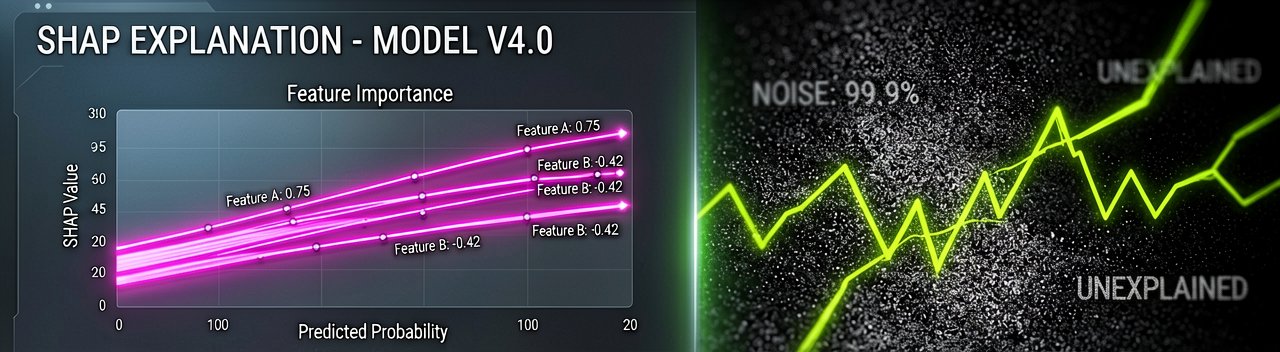
But what happens when the world changes? Model drift is the silent killer of production AI. You might have a perfectly explainable model today, but if the underlying data distribution shifts, those explanations start to rot. Integrating SHAP into your monitoring workflow allows you to track "explanation drift." If the features your model suddenly finds "important" don't align with your domain expertise or historical norms, you’ve likely got a data shift on your hands. It's an early warning system that goes beyond simple accuracy metrics.
At the end of the day, a Wikipedia -defined workflow is about orchestration and repeatability. By standardizing your SHAP implementations—comparing explainers, using appropriate maskers, and auditing interactions—you move from "guessing why it works" to "knowing why it doesn't." In a world where notes that technical success often breeds opacity, SHAP is the flashlight that keeps us from being blinded by our own creations.
The Hidden Architecture: What Most Reports Miss
Under the Hood: While most tutorials treat SHAP as a plug-and-play visualization library, seasoned data scientists know the real battle is won in the background distribution. When you're dealing with a black-box model, the KernelExplainer doesn't actually see your model's code; it’s essentially poking the beast with a stick to see how it flinches. The "background dataset" you pass to it isn't just a technical requirement—it represents the "ignorance" of the model. If you pick a poor background set, you aren't explaining the model's logic; you’re explaining how it reacts to garbage noise. This is where many production SHAP implementations fail before they even start.
The historical friction between "accuracy" and "interpretability" has long been a boardroom headache. Stakeholders often view XAI as a regulatory checkbox rather than a diagnostic tool. However, the shift toward SHAP interactions has changed the conversation from "why did the model fail?" to "how is the model learning?" By mapping feature dependencies, developers are discovering that models often pick up on "leakage" variables—those sneaky features that shouldn't be there but correlate perfectly with the target. SHAP doesn't just explain; it audits, acting as a high-fidelity smoke detector for logical fallacies in your training set.

Transitioning from local explanations (why did this user get denied?) to global drift monitoring is the next frontier. Most reporting misses the fact that SHAP values are additive, meaning they sum up to the difference between the actual prediction and the average prediction. This mathematical property is what allows us to aggregate local insights into a global health report. When the "Shapley value sum" starts diverging significantly from your model’s expected output range over time, you aren't just seeing a drop in performance—you're seeing a fundamental breakdown in the model's internal map of reality. It’s the ultimate metric for technical debt.
Finally, we have to talk about the "Masker" dilemma in high-stakes environments like healthcare or finance. A common mistake is using an independent masker that ignores feature correlations. In the real world, "Age" and "Income" are rarely independent. If your SHAP masker treats them as such, it will create "Frankenstein" data points—combinations that could never exist in reality—to test the model. A human expert knows that your explanation is only as valid as the data points used to generate it. Without a correlation-aware masker, you might be explaining how a model handles impossible scenarios rather than real-world risks.
Ultimately, the SHAP ecosystem is moving toward a more holistic integration within the Wikipedia defined MLOps lifecycle. It’s no longer enough to have a static notebook with a few beeswarm plots. The pros are building automated explainability pipelines that trigger alerts when the top-contributing features shift. This is the difference between being a "model builder" and a "model steward." As the industry moves toward stricter Wikipedia compliance, these workflows will become the primary bridge between the engineering floor and the C-suite.
The Skeptic’s Ledger: Deconstructing the SHAP Hegemony
Reading Between the Lines: For all the praise heaped upon SHAP as the "honest broker" of machine learning, there is a lingering, uncomfortable truth that most practitioners whisper but few publish: SHAP values are only as "truthful" as the model they are explaining. We have reached a point of circular logic where we use SHAP to validate a model, but we validate the SHAP output based on our own preconceived notions of how the model should behave. If a SHAP plot shows an unexpected feature interaction, our first instinct isn't usually to marvel at a new discovery; it’s to assume the explainer is hallucinating or the data is bugged. This creates a dangerous "interpretability paradox" where we only trust explanations that confirm our existing biases.
Furthermore, the computational tax of these workflows is often glossed over in the quest for transparency. While TreeExplainer is a marvel of efficiency, scaling KernelExplainer to high-dimensional "black-box" ensembles often requires more compute power than the original model training itself. We are essentially building a second, more expensive machine just to watch the first machine work. This raises a cynical but necessary question: at what point does the cost of explainability outweigh the marginal utility of a complex model? In many enterprise use cases, a slightly less accurate but inherently interpretable GLM (Generalized Linear Model) might actually be more "ethical" than a massive ensemble tethered to a shaky, sampled SHAP approximation.
There is also the looming threat of "explanation hacking." Research has already demonstrated that it is possible to create "adversarial" models—networks designed specifically to hide their biases from SHAP-style probes while still making discriminatory decisions. By saturating the model with noise or non-linear dependencies that the masker fails to capture, a clever developer can effectively "camouflage" the model’s true drivers. As we move toward a future of automated compliance, we must remain measured in our skepticism. SHAP is a phenomenal flashlight, but it is not a window; it shows us where the light bounces, not necessarily the substance of what lies behind the glass.
"At the end of the day, giving a human a SHAP plot is a bit like giving a toddler a map of the Large Hadron Collider—they’ll certainly appreciate the colors, and they might even point at something important, but you probably shouldn’t let them decide when to flip the switch."
Artūras Malašauskas is an AI Systems Integrator with 20+ years of production-grade web engineering experience. He has designed, shipped, and scaled enterprise Python/PHP systems for logistics, SaaS, and public-sector clients. For the past year, he has focused exclusively on AI integrations: deploying open-source LLMs, building generative media pipelines (image, audio, video), and engineering multi-agent workflows for real production environments. His standard: reproducibility, security, cost-efficient inference—no vaporware. He documents and evaluates emerging AI tooling, separating verified capabilities from marketing noise. Technical editor at: muza-ai.eu, ai-verslas.lt, ai-naujinos.lt Connect on LinkedIn
Comments