The Silicon Headmaster: Whitehall’s High-Stakes Hunt for a Digital Architect

Let’s be honest: England’s Department for Education (DfE) isn't exactly the first place you’d look for cutting-edge tech innovation. For years, the sector has been a patchwork of legacy systems and "good enough" spreadsheets. But the winds are shifting. Whitehall is currently hunting for a digital chief to lead a revolution in England's schools, and if you’re the type of person who finds beauty in a clean dataset and gets a thrill from solving concrete, messy problems, this might be the most consequential gig in the country.
The AI Elephant in the Classroom
We’ve moved past the "is AI a fad?" phase of the conversation. According to recent reporting from The Guardian, the government is increasingly focused on how generative models can slash the soul-crushing administrative burden on teachers. We aren't talking about robots replacing tutors; we’re talking about automating the drudgery of lesson planning and marking so that educators can actually, you know, educate. The new digital chief won't just be managing servers; they’ll be architecting the ethical guardrails for AI implementation across thousands of institutions.
It’s a massive undertaking. The DfE has been vocal about its "digital functional strategy," aiming to modernize the infrastructure that supports nearly 9 million students. As noted by Computer Weekly, the push for digital transformation in the public sector is no longer just about moving to the cloud—it’s about interoperability. The goal is a system where data flows seamlessly between schools, local authorities, and central government, replacing the current siloed chaos with something approaching efficiency.
Data as the New Curriculum
The successful candidate needs to enjoy the "concrete." It’s easy to talk about "innovation" in a vacuum, but it’s much harder to ensure a rural primary school has the same digital capabilities as a multi-academy trust in London. The DfE’s own official updates emphasize that closing the "digital divide" is a top priority. This isn't just about hardware; it's about building a data culture where insights into student performance and attendance can be used for early intervention rather than just retrospective finger-pointing.
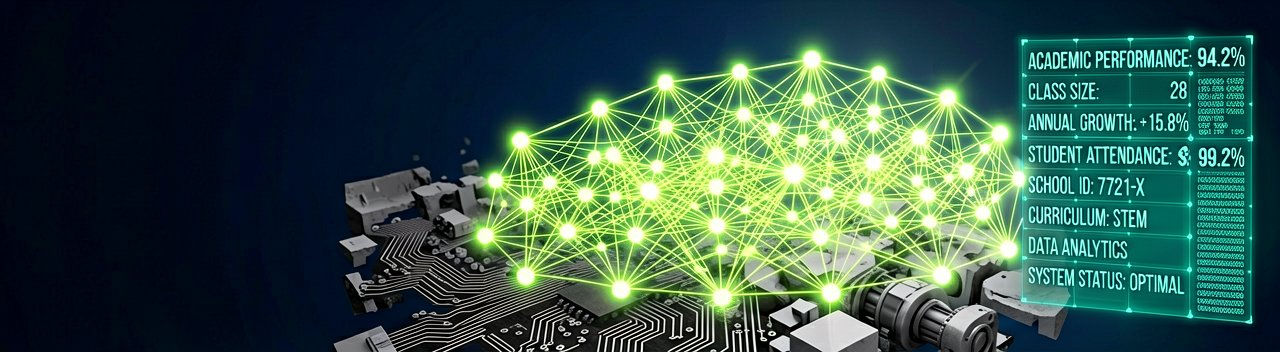
Expect a fair amount of political heat, too. Privacy advocates are—rightly—nervous about how student data is handled. A digital chief in this role has to be part diplomat, part engineer. They need to convince skeptical parents and overworked headteachers that these tools are safe and effective. As BBC News has often highlighted, public trust in government algorithms is fragile at best. One botched rollout, and the whole "EdTech" dream could be set back a decade.
The Verdict
This isn't a role for the faint of heart or those seeking a quiet life in a tech campus. It’s a job for a pragmatist who understands that technology is only as good as the problem it solves. If you can navigate the bureaucracy, survive the committee meetings, and keep your eyes on the prize—a smarter, more equitable school system—then England’s classrooms are waiting for you. Just don't expect the Wi-Fi to work perfectly on day one.
The Quiet Crisis in the Server Room: While the flashy headlines focus on AI-generated lesson plans and futuristic classrooms, the real battle for the future of English education is being fought in the unglamorous trenches of technical debt. A seasoned observer knows that the Department for Education isn't just looking for a visionary; they are looking for a digital salvage expert. Decades of decentralized "academy-fication" have created a fragmented landscape where some schools are running on fiber-optic dreams while others are literally held together by aging copper wires and Windows 10 machines past their prime.
The Interoperability Nightmare
What most reports miss is the sheer complexity of the "data plumbing" involved. Every school in England uses a Management Information System (MIS), but because the market was left to its own devices for so long, these systems often don't talk to each other. As Schools Week has frequently pointed out, the friction in moving student records from a primary school to a secondary school can result in weeks of lost data. The new digital chief’s first "concrete problem" isn't AI—it's establishing a unified data standard that doesn't trigger a revolt among the private software vendors who currently guard their proprietary silos.

There is also the historical ghost of the "Building Schools for the Future" program, a billion-pound initiative that many veterans remember as a cautionary tale of over-promising and under-delivering on tech. Stakeholders within the teaching unions are understandably weary. They’ve seen "revolutionary" platforms come and go, often leaving more work in their wake. For a digital chief to succeed, they have to win the "staff room vote" by proving that new tools won't just be another tab to keep open, but a genuine reduction in the 50-plus hour work weeks that are currently driving teachers out of the profession in record numbers.
Safety Beyond the Firewall
Beyond efficiency lies the murky world of safeguarding. In an era where cyberattacks on educational institutions are rising, the stakes for data security have never been higher. According to analysis by TES (Times Educational Supplement), schools are increasingly being targeted by ransomware. This isn't just a technical glitch; it’s a child protection issue. The incoming chief will need to bake security into the curriculum itself, ensuring that "digital" isn't just a department in Whitehall, but a robust shield protecting the identity and wellbeing of every student in the system.
Ultimately, the job is about managing human expectations as much as cloud architecture. The DfE’s push toward a "digital-first" mindset requires a cultural pivot that respects the traditional autonomy of headteachers while demanding the consistency of a national network. It is a tightrope walk between central control and local empowerment. The person who takes this seat isn't just filling a vacancy; they are attempting to rewrite the operating system of British social mobility, one data packet at a time.
The Great Algorithmic Gamble: To suggest that a single "Digital Chief" can untangle the Gordian knot of England’s educational bureaucracy is a comforting fiction we like to tell ourselves in the tech press. The assumption at the heart of this recruitment drive is that the Department for Education’s problems are technical in nature, solvable with better code and cleaner APIs. In reality, the Department is attempting to layer 21st-century silicon over 19th-century structures. We are effectively asking a CTO to build a skyscraper on top of a shifting swamp of policy flip-flops and localized autonomy.
The Efficiency Paradox
There is a glaring contradiction in the promise of AI-driven efficiency. While the DfE aims to use generative models to reduce teacher workload, history suggests that "time-saving" technology in the public sector rarely results in more free time; it simply raises the baseline for productivity. If a tool allows a teacher to mark an essay in half the time, the systemic pressure won't be for that teacher to go home early, but to assign twice as many essays or generate more granular data reports. As noted by The Economist, the "Jevons Paradox" often applies to efficiency: as we make a resource more efficient, we end up consuming more of it. The risk is that we don't save the teaching profession; we just industrialize its burnout.
Furthermore, the reliance on private-sector "solutions" for public-sector "concrete problems" creates a dangerous path of vendor lock-in. The digital chief will be walking into a room full of EdTech salespeople, each promising that their proprietary black box is the silver bullet for student attainment. Measured skepticism is required here: if the government builds its digital future on proprietary platforms, it cedes control of its pedagogical data to companies whose primary fiduciary duty is to shareholders, not schoolchildren. As Wired often observes in its civil service critiques, today’s "innovative partnership" is often tomorrow’s expensive legacy contract that no one knows how to cancel.
Projecting the Human Cost
Projecting forward, the real test of this new leadership won't be found in a dashboard, but in the digital divide. If the DfE doubles down on high-tech solutions without addressing the fact that some families are still doing homework on a shared smartphone with a prepaid data plan, the "digital revolution" will only serve to bake existing inequality into the source code. The digital chief must be willing to be the most unpopular person in the room—the one who points out that a shiny new AI tutor is useless if the student’s home has no reliable internet. Without a "hardware-first" social policy, this digital transformation is merely a luxury upgrade for the already advantaged.
"Ultimately, the goal is to find a genius who can convince ten thousand schools to use the same password format, while simultaneously ensuring that an AI doesn't accidentally hallucinate a new period of Tudor history—all on a budget that wouldn't cover the coffee tabs at a mid-sized Silicon Valley startup."
Artūras Malašauskas is an AI Systems Integrator with 20+ years of production-grade web engineering experience. He has designed, shipped, and scaled enterprise Python/PHP systems for logistics, SaaS, and public-sector clients. For the past year, he has focused exclusively on AI integrations: deploying open-source LLMs, building generative media pipelines (image, audio, video), and engineering multi-agent workflows for real production environments. His standard: reproducibility, security, cost-efficient inference—no vaporware. He documents and evaluates emerging AI tooling, separating verified capabilities from marketing noise. Technical editor at: muza-ai.eu, ai-verslas.lt, ai-naujinos.lt Connect on LinkedIn
Comments