The Grid’s New Digital Guard: Google’s AI Gambit for Energy Security
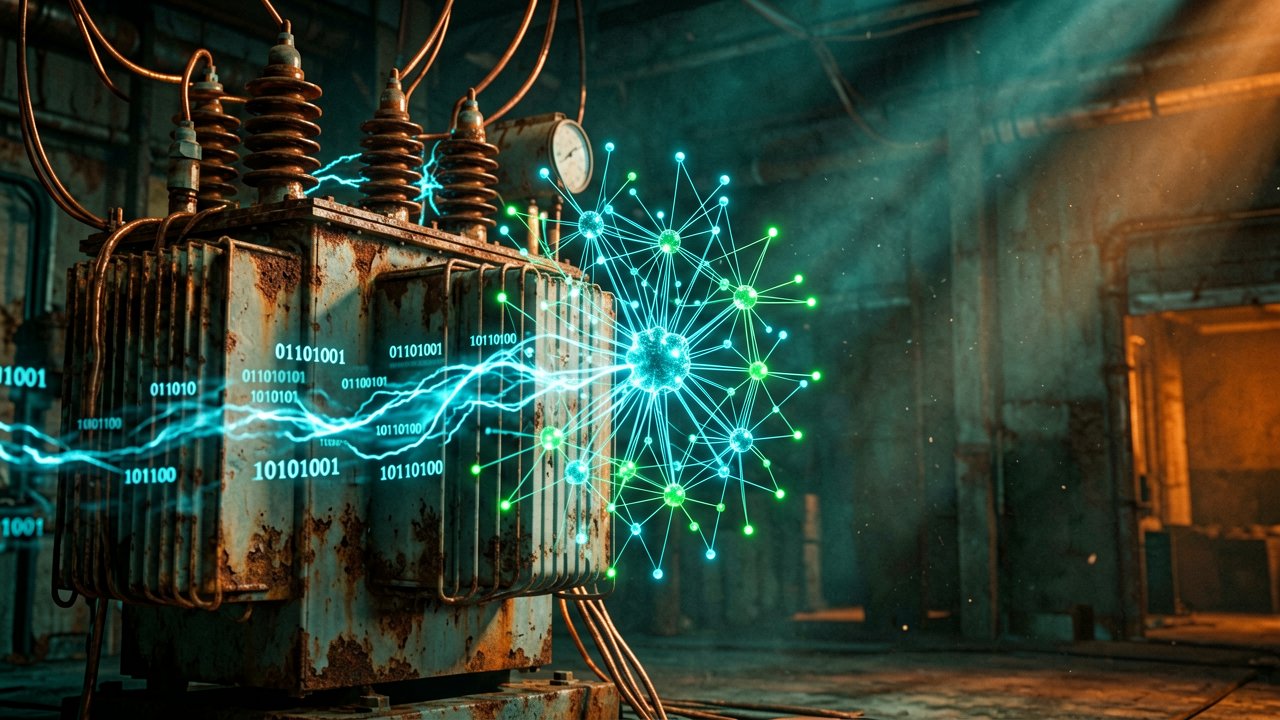
If you’ve been tracking the tech giant’s recent moves, it’s clear that Google isn’t just looking to organize the world’s information anymore—it’s trying to keep the lights on while doing it. The latest Google for Startups Accelerator: AI for Energy cohort has officially landed, and the focus is sharp: using artificial intelligence to patch up a global energy grid that is, frankly, showing its age.
It’s no secret that our appetite for power is surging. Between the massive compute requirements of generative AI and the steady march toward electrifying everything from kitchens to cars, the world’s electricity demand is projected to jump nearly 50% in the next five years. As Sustainability Magazine notes, Google’s latest support initiative is specifically designed to empower startups building the future of "sustainable energy security" through advanced AI tools like Gemini.
The Grid’s New Digital Guard
The 2025-2026 cohort isn’t just a collection of idealistic green-tech firms; it’s a group of pragmatists tackling the unsexy, high-stakes infrastructure bottlenecks. Take Mercury Computing , for instance. They’re working on flexible utility interconnection for data centers, essentially trying to speed up the "time to power" in a world where waiting for a grid connection can take years. Then there’s Pravāh , which uses machine learning to optimize grid operations and slash power costs for utilities—a vital mission when aging infrastructure is struggling to handle the intermittent nature of renewables.
What’s fascinating is how these startups are moving beyond simple "efficiency" and into the realm of active grid management. Companies like Delfos Energy are leveraging AI to make renewable generation more predictable, while reLi energy focuses on the lifeblood of the transition: batteries. By providing advanced analytics for battery operators, they’re helping turn volatile storage assets into reliable components of a secure energy system, as highlighted by reports from Google’s own blog .

Solving the Interconnection Nightmare
The "energy security" label here isn't just marketing fluff. Security in the 21st century means resilience—the ability for a grid to absorb shocks, whether they come from a heatwave or a sudden drop in wind speed. Startups like Pila are building modular battery meshes to create "intelligent grid assets" that act as a safety net. This shift toward decentralized, smart infrastructure is what industry veterans call "grid-edge" innovation, and it's where the most significant gains are currently being found.
Google’s strategy with this 12-week program is pure "equity-free" acceleration. By giving these founders access to Google Cloud credits and technical mentorship, they’re effectively subsidizing the R&D for technologies that Google itself might one day rely on to meet its ambitious 24/7 carbon-free energy goals. As Adam Elman, Google EMEA’s Sustainability Director, recently put it via ESG News , "No single company can solve the energy crisis alone." It’s a rare moment of corporate humility that underscores just how much work there is to be done.
Ultimately, this latest cohort represents a bridge between the digital and physical worlds. While we’ve spent a decade optimizing pixels, the next decade is clearly about optimizing electrons. If these startups can use AI to cut through the permitting red tape and balance the load of a million EV chargers, they won't just be successful businesses—they’ll be the architects of a stable, modern economy.
The High-Stakes Calculus of the "Energy-AI Paradox": While the headlines focus on the shiny new software, the real story here is the existential race to solve a problem that tech itself helped accelerate. We are witnessing a fascinating feedback loop: Google is using AI to solve the massive energy demands caused, in large part, by AI. For a veteran observer, this isn't just another corporate social responsibility play; it’s a strategic hedge against a future where power scarcity becomes the ultimate ceiling for Silicon Valley’s growth.
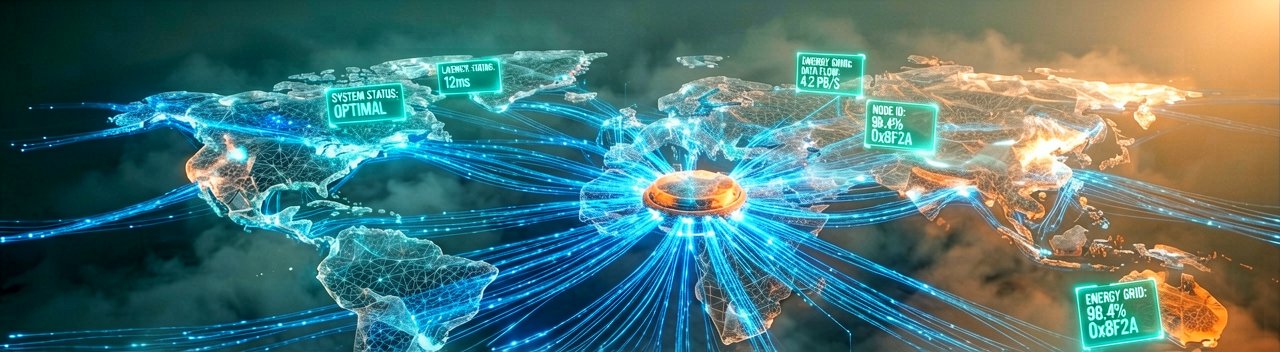
Historically, energy security was the domain of massive, centralized utility monopolies and government regulators who moved at a glacial pace. But the "interconnection queue"—the waiting list for new energy projects to plug into the grid—has become the industry's biggest bottleneck. In some regions, a wind farm or a data center might wait five to seven years just to get permission to turn on. The startups in this cohort, like Mercury Computing , are effectively trying to "hack" this bureaucracy with digital twins and real-time thermal modeling, proving that the grid has more capacity than the old-school paper-and-pen calculations suggest.
The Decentralization Gamble
What most reports miss is the shift in power dynamics—literally. For decades, the "grid" was a one-way street: power flowed from a big coal or gas plant to your house. The startups Google is backing, such as Pila and reLi energy , are betting on a "mesh" future. This is a world where every battery in a basement and every solar panel on a warehouse acts as a tiny, intelligent node. By aggregating these assets using AI, these companies are creating "Virtual Power Plants" (VPPs) that can stabilize the grid during a peak-demand heatwave without burning more carbon.
From a stakeholder perspective, this is a delicate dance. Traditional utility companies are notoriously risk-averse—and for good reason, as they manage critical infrastructure. However, the pressure from massive energy consumers like Google is forcing a cultural shift. As noted by analysts at IEA, the integration of renewables requires a level of "system flexibility" that human operators simply cannot manage manually. This is where Google’s mentorship becomes a Trojan horse for modernization; they aren't just teaching startups how to pitch, they are helping them speak the technical language of utility engineers to build trust.
Finally, there is the human element that often gets buried under talk of "smart meters" and "load balancing." Energy security is ultimately about affordability and equity. If AI can squeeze 20% more efficiency out of existing wires, that’s 20% less cost passed down to the consumer for infrastructure upgrades. By fostering a cohort that spans from Europe to Israel, Google is casting a wide net to find solutions that work in different regulatory environments, acknowledging that a "one-size-fits-all" approach to the global energy crisis is a fantasy. It's a long-game strategy: fix the grid today, so you can run the trillion-parameter models of tomorrow.
Reading Between the Lines: For all the optimistic talk of AI as the "savior" of the grid, there is a glaring contradiction sitting at the heart of this initiative. Google is essentially grooming a fleet of startups to fix a problem that its own core product is making exponentially worse. It’s a bit like a fire department training arsonists to design better sprinklers. While these startups are working to optimize every last electron, the industry’s shift toward power-hungry generative AI models is moving the goalposts faster than any 12-week accelerator program can keep up with.
We also need to cast a skeptical eye on the "AI for everything" narrative. In the energy sector, the biggest hurdles are rarely computational; they are physical and political. You can have the most sophisticated Gemini-powered predictive model in the world, but if a local planning committee refuses to permit a transmission line, or if the physical copper in the ground is literally melting, the software is sidelined. There is a risk that by focusing so heavily on digital "optimization," we are distracting ourselves from the massive, messy, and expensive task of physical infrastructure replacement that no algorithm can bypass.
The Data Center Dilemma
Furthermore, there’s the question of who these "energy security" tools actually serve. If a startup like Mercury Computing succeeds in streamlining "utility interconnection," does that benefit the local community’s energy resilience, or does it simply allow Google and its peers to jump to the front of the line for limited power capacity? The tension between corporate energy needs and public grid stability is only going to tighten. If these AI tools are used primarily to carve out "private lanes" on the grid for data centers, the broader promise of energy security for the masses starts to look more like a specialized service for the tech elite.
However, if we look past the skepticism, the measured implication is that Google is successfully shifting the "cleantech" conversation away from just generation and toward management. For years, the market was obsessed with making cheaper solar panels. Now, the industry has realized that we have plenty of power—we just don't know where it is or how to move it. By treating the grid like a data network, Google is applying its native logic to a 19th-century machine. It’s a high-stakes experiment in whether Silicon Valley's "move fast and break things" ethos can survive contact with a sector where "breaking things" results in a regional blackout.
Ultimately, the success of this cohort won’t be measured in successful exits or IPOs, but in whether they can move the needle on the "interconnection queue." If these startups can prove to skeptical, old-guard utility regulators that AI-driven management is as safe as a physical fuse, they will have cleared the path for the entire energy transition. But until we see these models operating at scale during a mid-winter supply crunch, it remains a very sophisticated, very expensive "maybe."
The coming years will reveal if this is a genuine leap forward or just a very clever way for Big Tech to ensure its own servers never go dark, even if the rest of the neighborhood is flickering.
"It’s comforting to know that while we’re building AI that consumes enough power to run a small nation, we’re also building AI to tell us exactly why the grid is screaming. It’s the ultimate high-tech feedback loop: we provide the fever, and then we sell the thermometer."
Artūras Malašauskas is an AI Systems Integrator with 20+ years of production-grade web engineering experience. He has designed, shipped, and scaled enterprise Python/PHP systems for logistics, SaaS, and public-sector clients. For the past year, he has focused exclusively on AI integrations: deploying open-source LLMs, building generative media pipelines (image, audio, video), and engineering multi-agent workflows for real production environments. His standard: reproducibility, security, cost-efficient inference—no vaporware. He documents and evaluates emerging AI tooling, separating verified capabilities from marketing noise. Technical editor at: muza-ai.eu, ai-verslas.lt, ai-naujinos.lt Connect on LinkedIn
Comments