The Post-Human Helpdesk: Inside the Launch of Intercom 2
Intercom—or as they’d prefer you call them now, Fin —has finally pulled the curtain back on "Intercom 2." It’s not just a facelift; it’s a full-scale structural rethink of what a helpdesk actually does when half of your "staff" doesn't have a pulse. For years, support teams have been duct-taping AI chatbots onto legacy ticketing systems, but this latest release aims to kill the "franken-stack" once and for all by treating AI and humans as a single, unified workforce.
The centerpiece of this update is a natively integrated Workforce Management (WFM) suite. If you’ve ever managed a support queue, you know the headache of trying to forecast headcount when a bot is absorbing 60% of the volume. Usually, that involves three different spreadsheets and a lot of finger-crossing. According to TipRanks , Intercom 2 solves this by baking demand forecasting and scheduling directly into the platform. It differentiates between what the AI agent, Fin, can handle and what needs a human touch, giving managers a realistic look at their staffing needs in real-time.
The Rise of the "Agent for the Agents"
Perhaps the most "meta" addition to the suite is Fin Operator. It’s essentially an AI agent whose only job is to manage your other AI agents. As reported by VentureBeat , this tool acts as a data analyst, knowledge manager, and debugger. It can spot why a bot got stuck in a loop with a customer, propose a fix, and even draft the necessary updates to your help articles. It’s a clear nod to the growing "invisible crisis" where support ops teams are drowning in the manual labor required to keep their AI systems from hallucinating or going rogue.
What makes Intercom’s approach interesting is the "proposal system." Unlike some of the more aggressive "autonomous" AI startups, Fin Operator doesn't just change things on the fly. It functions more like a software pull request—it suggests a fix, shows you the "diff" of what’s changing, and waits for a human to click "Apply." This keeps the human in the loop, which is a big deal for enterprise compliance and, frankly, for the peace of mind of support leads who aren't quite ready to hand over the keys to the kingdom just yet.

Closing the Quality Gap
Beyond the high-level management tools, Intercom 2 packs over 60 product enhancements aimed at the day-to-day grind. We’re talking about real-time issue detection that flags spikes in specific customer complaints before they become a full-blown PR crisis, and a unified Quality Assurance (QA) system. Historically, you’d have one process for grading human calls and a totally different tool for auditing bot transcripts. Now, Intercom is putting both under one roof, allowing for a consistent standard of "good service" regardless of who—or what—provided it.
There’s also a bit of practical magic for the human agents still in the trenches. The new "side conversations" feature allows support reps to loop in teammates via Slack without ever leaving the Intercom inbox. And for those of us who have accidentally sent a half-finished reply to a grumpy customer, they’ve finally added a "delay and undo send" button. It’s a small, human touch in a release that is otherwise very focused on the silicon side of the business.
Ultimately, Intercom 2 feels like a bet on a hybrid future. By rebranding the parent company to Fin while keeping the "Intercom" name for the helpdesk, CEO Eoghan McCabe is signaling that while AI is the engine of growth, the human helpdesk isn't going away—it’s just getting a massive upgrade. In a market crowded by legacy giants like Zendesk and Salesforce, Intercom is betting that the winning platform won't be the one with the most features, but the one that makes the AI-human handoff feel invisible.
The Real Shift Under the Hood: While the press release headlines focus on the shiny new scheduling widgets, the true story here is Intercom’s aggressive pivot from being a "messenger company" to a "platform infrastructure" play. For a decade, Intercom was the cool, chatty bubble in the corner of your screen—a tool for engagement. With Intercom 2, they are effectively trying to become the operating system for the entire customer service department. It’s a high-stakes gamble that they can out-engineer legacy giants by proving that AI isn’t a feature you add to a database, but a foundation you build a database upon.
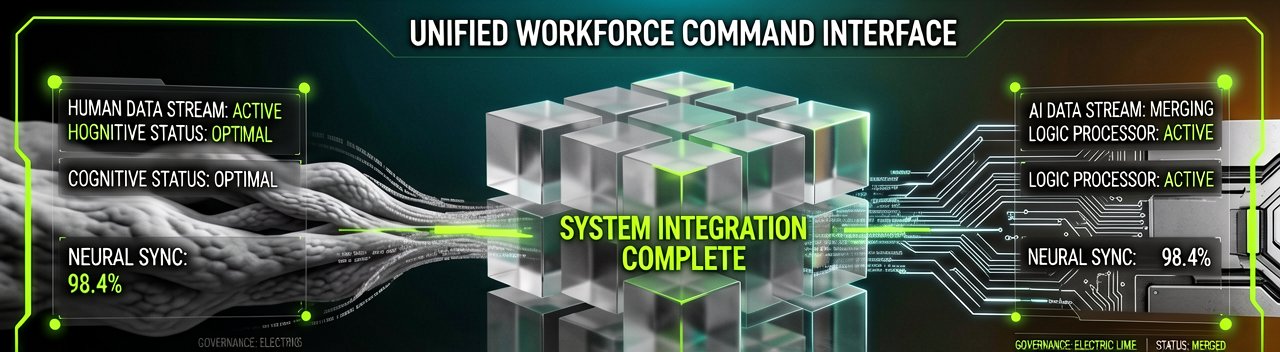
Historically, the "Intercom way" was often criticized by enterprise-level support leads for being too lightweight. If you had 500 agents, you needed the heavy-duty reporting of a Salesforce or a Zendesk. By baking Workforce Management (WFM) directly into the stack, Intercom is finally addressing that "sophistication gap." They aren't just letting you chat with customers; they’re telling you exactly how many humans you need to hire based on how well your AI is performing. This creates a powerful lock-in effect: if your staffing model is tied to your AI’s success rate, moving to a competitor becomes a logistical nightmare.
The "Hallucination Insurance" Strategy
There is a subtle, almost defensive genius in the Fin Operator’s "human-in-the-loop" workflow. In early 2023, the industry was obsessed with "fully autonomous" agents. We quickly learned that an unmonitored LLM can accidentally promise a customer a free car or offer a $1 refund for a $1,000 mistake. Intercom 2’s proposal system acts as a form of "hallucination insurance." By forcing the AI to show its work—highlighting exactly which knowledge base article it used to generate an answer—Intercom is shifting the human agent's role from "writer" to "editor."
This shift in labor is something seasoned support veterans are watching closely. We are seeing the birth of a new job title: the "AI Operations Manager." These aren't just support leads; they are part data scientist and part librarian. They spend their days auditing Fin’s performance and refining the "source of truth" documentation. Intercom 2 is the first major platform to give these specialists a dedicated set of tools, acknowledging that an AI is only as smart as the PDF you fed it three months ago.
The Brand Gamble: From Intercom to Fin
The rebranding of the corporate entity to "Fin" is more than just a name change; it’s a psychological marker. It tells investors and customers that Intercom no longer views itself as a human-to-human communication tool. By naming the company after their AI agent, they are signaling that the AI is the primary product, and the helpdesk is simply where that product works. It’s a gutsy move that risks alienating long-time users who valued the "human touch" that defined the brand’s early years.
However, the market reality is that "human-only" support is becoming a luxury service. By integrating quality assurance and scheduling into one view, Intercom is betting that companies will trade a bit of brand personality for a massive reduction in "cost per ticket." The question that remains is whether mid-market companies will trust a single vendor to handle their AI, their staffing, and their customer data all at once, or if they’ll prefer the flexibility of a best-of-breed approach where they can swap out their AI provider without rebuilding their entire workforce schedule.
Reading Between the Lines: For all the talk of a "seamless AI-human workforce," there is a glaring tension at the heart of Intercom 2: the more successful Fin becomes, the less "intercom" there actually is. The company built its legacy on the revolutionary idea of making business-to-customer communication feel like a personal chat between friends. Now, they are selling a system designed to ensure that those two humans never have to speak to each other. It is a pivot from connection to deflection, and it raises the question of whether the "human-in-the-loop" is a permanent philosophy or merely a transitional safety net while the models finish cooking.
The introduction of integrated Workforce Management (WFM) also suggests a pivot toward the "bean counter" demographic. Traditionally, Intercom won over designers and product-led growth teams with its slick UI. But WFM is a tool for the efficiency hawks—the VPs of Support who view every second of human talk-time as a line-item cost to be optimized. By consolidating these tools, Intercom is effectively challenging the "best-of-breed" software movement. They are betting that managers will choose a "good enough" native scheduler over a superior third-party tool simply to avoid the data silos that usually plague AI reporting.
The Paradox of Knowledge Management
There is also a functional contradiction in the "Fin Operator" role. Intercom 2 promises that the AI will help manage its own knowledge base, spotting gaps and suggesting updates. However, we know that LLMs are notorious for "echo chamber" effects. If an AI is auditing the very content it uses to generate answers, there is a non-zero risk of a feedback loop where errors become entrenched rather than corrected. While the proposal system keeps a human fingerprint on the final "Publish" button, the sheer volume of AI-generated suggestions may eventually lead to "approval fatigue," where human editors begin rubber-stamping changes they haven't fully vetted.
Furthermore, the move to a unified Quality Assurance (QA) system for both bots and humans is a double-edged sword. On one hand, it creates parity; on the other, it risks devaluing the nuance of human interaction. If you grade a human agent using the same rigid scorecard designed for a bot, you optimize for speed and accuracy while potentially penalizing empathy and creative problem-solving—the very things that make humans worth the higher salary. Intercom 2 provides the data to make these decisions, but it doesn't provide the wisdom to know when to ignore the data in favor of a better customer experience.
Finally, we have to look at the economic reality of the "AI-Era Helpdesk." Intercom's shift toward an "outcome-based" pricing model—charging for successful resolutions—aligns their incentives with the customer's, but it also creates a conflict. If a human agent fixes a problem, is that an "outcome" or just overhead? As the lines between human and machine labor blur, the billing department is going to have a much harder time explaining what, exactly, the customer is paying for: the software, the bot's "brain," or the human's time.
"We spent twenty years trying to teach bots to sound like humans, and now we’re spending billions on software to make sure our humans are as efficient as bots. It’s the circle of life, provided that life is lived entirely within a browser tab and nobody asks for a refund."
Artūras Malašauskas is an AI Systems Integrator with 20+ years of production-grade web engineering experience. He has designed, shipped, and scaled enterprise Python/PHP systems for logistics, SaaS, and public-sector clients. For the past year, he has focused exclusively on AI integrations: deploying open-source LLMs, building generative media pipelines (image, audio, video), and engineering multi-agent workflows for real production environments. His standard: reproducibility, security, cost-efficient inference—no vaporware. He documents and evaluates emerging AI tooling, separating verified capabilities from marketing noise. Technical editor at: muza-ai.eu, ai-verslas.lt, ai-naujinos.lt Connect on LinkedIn
Comments