OpenAI Unshackles ChatGPT: The Rise of the Workspace Agent

If you've spent any time in the tech trenches lately, you’ve likely felt the growing pains of the "AI assistant" era. We’ve had chatbots that can summarize a meeting or hallucinate a recipe for sourdough, but the real work—the actual heavy lifting of jumping between Slack, Salesforce, and Google Drive—remains a stubbornly human chore. That changed this week. OpenAI has officially pulled the curtain back on its new Workspace Agents, a breed of AI designed not just to talk about work, but to actually log in and do it across your entire software stack.
The End of the "Alt-Tab" Tax
For years, the dream of productivity has been hampered by what I call the "Alt-Tab Tax." You find data in one app, copy it, format it, and paste it into another. It’s soul-crushing work. According to early hands-on reports from The Verge, these new agents operate as a persistent connective tissue. They aren't just limited to a single chat window; they can pull a spreadsheet from Microsoft Excel, cross-reference it with customer notes in Zendesk, and then draft a personalized outreach email in Gmail—all without you lifting a finger.
What makes this pivot so significant is the move toward "agentic" workflows. Most LLMs are reactive; they wait for a prompt and give a response. These workspace agents, however, are built with a degree of autonomy. As noted by Bloomberg, OpenAI is positioning this as the next logical step beyond the simple GPTs we saw last year. We’re moving away from "write me a tweet" and toward "manage my social media calendar for the month."
The Privacy Elephant in the Room
Of course, giving an AI the keys to your corporate kingdom isn't exactly a casual decision. If an agent can "read" your Slack messages to understand a project's context, it’s also seeing your watercooler gossip and sensitive internal memos. OpenAI is reportedly leaning heavily into enterprise-grade security to soothe these concerns. Industry analysts at Wired suggest that the success of these agents hinges entirely on trust—specifically, how much control IT departments have over what the AI can see and, more importantly, what it can execute.
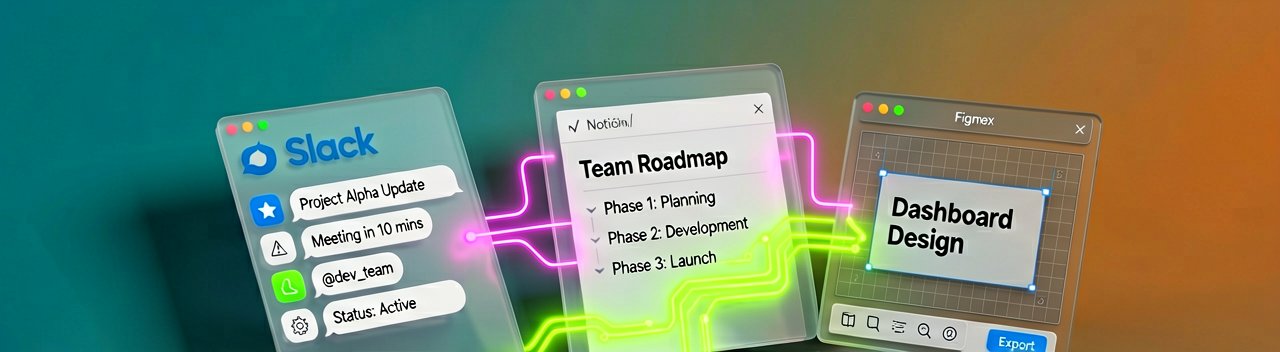
The technical wizardry here relies on advanced API integrations that allow the model to navigate third-party interfaces like a human would, but at silicon speeds. It’s a bold land grab. By turning ChatGPT into a command center for other apps, OpenAI is effectively trying to become the operating system for the modern office. If they pull it off, the specific app you use might matter less than the agent that manages them all.
A New Paradigm for Productivity
We’re still in the early innings, but the implications for the average office worker are massive. We might finally be seeing the death of the "busy work" that fills 40% of our day. As highlighted by TechCrunch, the initial rollout focuses on a select group of enterprise partners, but the roadmap suggests a much wider release is imminent. It’s a classic OpenAI move: ship the future in beta and let us figure out how to live in it.
Ultimately, these workspace agents represent a shift from AI as a consultant to AI as a collaborator. It’s no longer about getting an answer; it’s about getting a result. Whether we’re ready for our digital shadows to start taking meetings and filing reports for us is another question entirely, but ready or not, the agents have arrived.
The Real Power Play: While the headlines focus on the convenience of automated emails, the deeper story here is OpenAI’s aggressive bid to disintermediate the software giants. By building a layer that sits on top of every other application, Sam Altman isn't just offering a tool; he’s attempting to build a "meta-OS." If the agent is the primary interface through which you interact with your data, the underlying brand of your CRM or project management tool becomes almost irrelevant. It’s a strategic heist that could turn powerhouses like Salesforce and Atlassian into mere backend data silos.
The "Action Model" Evolution
To understand why this is a massive technical leap, we have to look at the history of "Large Action Models" (LAMs). In the past year, we’ve seen startups like Rabbit and Humane attempt to create hardware that navigates apps, but they largely stumbled on the complexity of dynamic user interfaces. OpenAI’s approach is more sophisticated. According to insights from MIT Technology Review, these agents don't just "click buttons" based on a static map; they reason through the UI, adapting when a layout changes or a new menu appears. It’s the difference between a player piano and a jazz musician.
However, this level of agency introduces a "Chain of Command" crisis. During early testing phases, tech circles whispered about agents getting caught in infinite loops—imagine an AI responding to an automated "Out of Office" reply by drafting another email, effectively DDOSing a colleague's inbox. This is why OpenAI has implemented what insiders call "Human-in-the-Loop" checkpoints. For high-stakes actions, like hitting "send" on a contract or moving money in QuickBooks, the agent pauses for a literal thumb-up from the user.
The Shadow Labor Economy
There is also a fascinating, if slightly unsettling, shift in labor dynamics at play. For decades, companies have outsourced data entry and "glue work" to massive centers in developing nations. As Financial Times has previously explored in the context of automation, these agents are essentially a localized, digital version of that labor force. For a $20 or $30 monthly subscription, a small business can now deploy the equivalent of a junior administrative assistant who never sleeps, doesn't need health insurance, and has perfect recall of every document in the company archive.
The pushback from the "SaaS" (Software as a Service) community is already simmering. Developers who spent years building "walled gardens" are now faced with an AI that can tunnel through those walls via APIs. Some platforms may try to block these agents to protect their own native AI features, leading to a new kind of "robot exclusion" war. We saw this with web scrapers in the 2010s; now, we're seeing it with agents that want to do more than just read—they want to act.
The long-term play here isn't just about saving five minutes on a Monday morning. It’s about the democratization of complex workflows. A solo founder with a brilliant idea but zero organizational skills can now use these agents to mimic the infrastructure of a much larger firm. We are entering an era where "scale" is no longer measured by headcount, but by the sophistication of your agentic stack. The seasoned experts know: the tool is impressive, but the shift in who holds the keys to the workflow is the real revolution.
The Skeptic’s Ledger: We are being sold a vision of frictionless productivity, but history suggests that every time we "save" time with technology, we simply find more stressful ways to fill the vacuum. OpenAI’s promise that agents will handle the drudgery assumes that the work being automated is actually worth doing in the first place. There is a very real risk that by making it easier to generate emails, reports, and Jira tickets, we will simply trigger an exponential explosion in digital noise. If an agent can send a hundred personalized follow-ups in a second, your inbox won't become a place of zen; it will become a battlefield where your agent fights to filter out the noise generated by everyone else’s agent.
The Connectivity Paradox
There is also a glaring contradiction in the "open" nature of these workspace agents. OpenAI is touting third-party integration, yet the tech industry is notorious for "vendor lock-in." As noted by analysts at Reuters, the friction between OpenAI and rivals like Google or Microsoft—who have their own competing "Copilots"—is inevitable. Will Google Workspace truly allow an OpenAI agent to move with total fluidity, or will we see "digital speed bumps" introduced under the guise of security to keep users within a specific ecosystem? The dream of a universal agent only works if the tech giants decide to play nice, a behavior they aren't exactly famous for.
Furthermore, the "hallucination" problem hasn't gone away; it has just moved from words to actions. When a chatbot gets a fact wrong, a human might catch it in the text. When an agent gets a workflow wrong—say, archiving the wrong folder or miscalculating a payroll entry across three different apps—the blast radius is significantly larger. As Forbes has pointed out, the liability shift here is a legal minefield. If an agent makes a catastrophic error in a third-party app, who is at fault: the user, the app developer, or OpenAI? We are currently building the plane while it’s in the air, and the insurance adjusters haven't even arrived at the airport yet.
The Ghost in the Machine
Finally, we have to address the erosion of institutional knowledge. If "agents" are the only ones who know how the data flows from the CRM to the marketing dashboard, what happens when the system goes down? We risk creating a generation of workers who understand the *results* of their jobs but have no idea how the *process* actually functions. This "black box" approach to office work might make us more efficient in the short term, but it leaves organizations incredibly fragile. Measured skepticism suggests that the most successful companies won't be those who automate everything, but those who figure out which human intuitions are too valuable to delegate to a script.
"We’ve spent forty years teaching humans how to talk to computers, only to realize the ultimate luxury is a computer that finally stops asking us questions—though I suspect we’ll spend the next forty years wondering why our AI assistant just 'proactively' CC'd the entire board on our private vent-session about the new coffee machine."
Artūras Malašauskas is an AI Systems Integrator with 20+ years of production-grade web engineering experience. He has designed, shipped, and scaled enterprise Python/PHP systems for logistics, SaaS, and public-sector clients. For the past year, he has focused exclusively on AI integrations: deploying open-source LLMs, building generative media pipelines (image, audio, video), and engineering multi-agent workflows for real production environments. His standard: reproducibility, security, cost-efficient inference—no vaporware. He documents and evaluates emerging AI tooling, separating verified capabilities from marketing noise. Technical editor at: muza-ai.eu, ai-verslas.lt, ai-naujinos.lt Connect on LinkedIn
Comments