Fortinet’s AI Pivot: Why Wall Street Is Finally Buying the Hype
Fortinet’s AI Pivot: Why Wall Street Is Finally Buying the Hype
For a while there, the "AI is eating software" narrative felt like a death knell for traditional cybersecurity firms. Investors were spooked that generative AI might automate coding so fast that legacy firewalls wouldn't keep up. But Fortinet just flipped that script. Following a stellar first-quarter report, Fortinet (FTNT) stock recently surged to an all-time high of $120.89, proving that AI isn't just a threat—it’s a massive tailwind for those who know how to weaponize it. According to Investing.com, the stock’s rally was sparked by a lethal combination of a massive earnings beat and a strategic lean into AI-driven security operations.
The numbers from the Q1 2026 fiscal report were, frankly, a bit of a flex. Total revenue climbed 20% year-over-year to $1.85 billion, handily beating the high end of management’s own guidance. But if you want to know where the real action is, look at product revenue. It jumped a staggering 41% to $645 million, as reported by Fortinet. This tells us one thing: the long-awaited hardware refresh cycle is officially here. Companies aren't just patching old systems; they're ripping and replacing them with high-performance gear capable of handling the heavy-duty processing required for modern AI workloads.
Securing the AI Supercycle
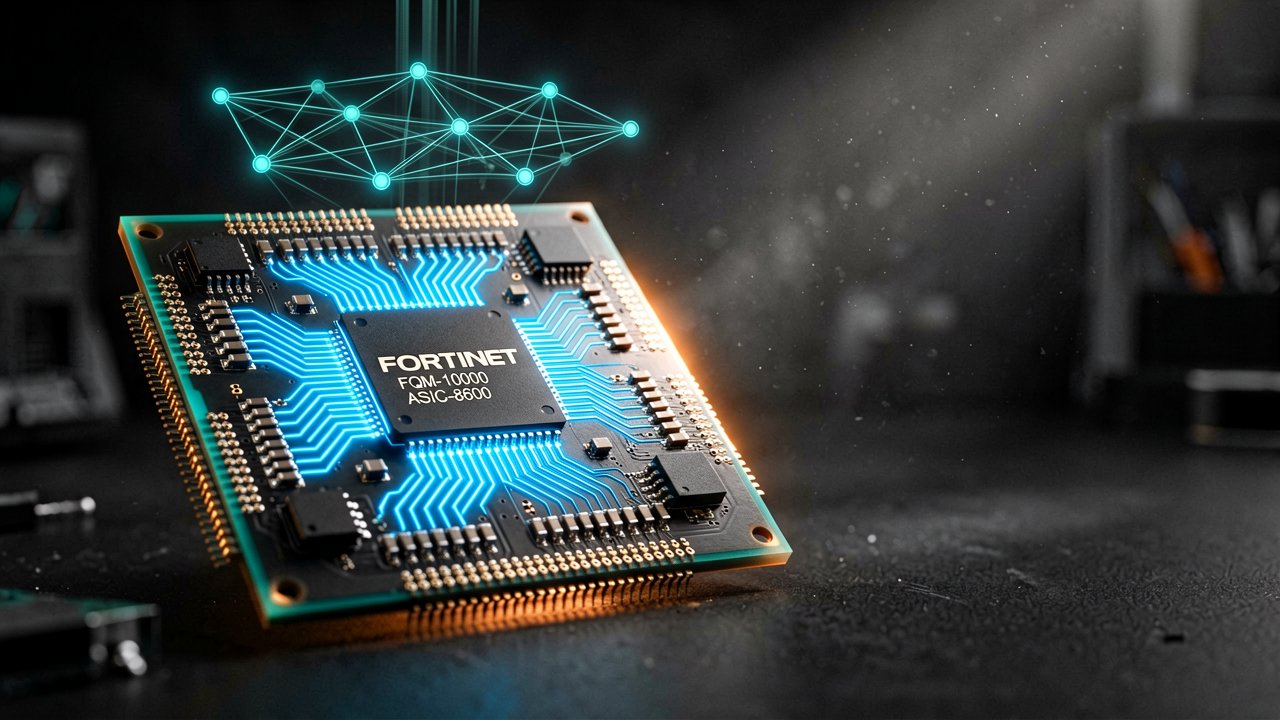
It’s not just about selling faster boxes, though. is positioning itself as the "default security layer" for the AI era. In May 2026, the company deepened its integration with NVIDIA to protect AI workloads in data centers and cloud environments. By using custom ASIC (Application-Specific Integrated Circuit) chips, Fortinet claims its new FortiGate G-series firewalls can outperform competitors while using less power—a critical factor when you consider the eye-watering energy demands of modern data centers. Analysts at Zacks Investment Research noted that this "ASIC-based model" provides a level of efficiency that software-only rivals struggle to match.
There’s a grim reality driving this demand. Fortinet’s recent 2026 Global Threat Landscape Report highlighted a 389% surge in ransomware victims, fueled by AI-powered "crime service kits" like WormGPT and FraudGPT. As cybercriminals use AI to accelerate their attacks, enterprises have no choice but to use AI to defend themselves. This has turned "secure networking" and "Unified SASE" (Secure Access Service Edge) into non-negotiable line items in corporate budgets. As MarketWatch observed, these results have effectively dispelled fears that AI would disrupt the cybersecurity sector, showing instead that complexity is a business opportunity.
With $1 billion in quarterly free cash flow and a raised full-year outlook, Fortinet is sitting on a massive war chest. They’ve already been aggressive with share buybacks and strategic acquisitions like Lacework to shore up their cloud-native capabilities. For investors, the takeaway is clear: while the AI hype cycle has claimed many victims, Fortinet has found a way to bridge the gap between legacy reliability and next-gen intelligence. The stock might be trading at a premium, but in a world where a 48-hour exploit window is the new norm, most companies seem willing to pay for that peace of mind.
The Hidden Engine: Why ASICs Are Fortinet’s Secret Weapon
Beyond the Ticker Tape: While the headlines are obsessed with the "AI" label, the real story lies in the silicon. Most cybersecurity firms are software companies that happen to run on generic hardware, but Fortinet has always been a hardware company at heart. By designing its own SP5 and NP7 chips—proprietary ASICs (Application-Specific Integrated Circuits)—Fortinet has effectively insulated itself from the processing bottlenecks that plague its rivals. In an AI-driven world where traffic isn't just growing but becoming exponentially more complex and encrypted, having "custom brains" in the box is the difference between a network that breathes and one that chokes.
Historically, Fortinet was often dismissed by Silicon Valley purists as a "low-end" player because of its focus on the mid-market. However, the legacy of that focus was a fanatical obsession with price-to-performance ratios. As reported by CNBC, that discipline is now paying off in the enterprise space. Large-scale data centers are no longer looking for the flashiest software; they are looking for the most efficient way to inspect massive data packets without blowing their energy budget. Fortinet’s chips do exactly that, performing security tasks up to 10 times faster than standard CPUs.
Stakeholder perspectives reveal a strategic shift in how the C-suite views these investments. Chief Information Security Officers (CISOs) are moving away from "best-of-breed" tool sprawl—where you buy 20 different apps from 20 different vendors—toward platform consolidation. Fortinet’s "Security Fabric" architecture thrives in this environment. By integrating networking and security into a single operating system, FortiOS, they’ve reduced the friction of deployment. Industry veterans noted via Reuters that this "platformization" is the primary reason Fortinet is winning larger, multi-million dollar deals that used to go to Palo Alto Networks or Cisco.
The human element of this growth shouldn't be ignored, either. Fortinet has been remarkably stable in its leadership, with founder Ken Xie still at the helm. This long-term vision allowed them to invest in AI-driven "SecOps" (Security Operations) long before it was a buzzword. Their virtual security assistant, FortiAI, doesn't just flag threats; it interprets them in plain English for overworked IT staff. According to Bloomberg, this focus on "human-centric AI" is what’s driving the high retention rates among their enterprise clients, as it directly addresses the global shortage of skilled cybersecurity professionals.
Looking ahead, the challenge will be maintaining this momentum as cloud environments become even more decentralized. Fortinet’s recent acquisition of Lacework suggests they know they can’t rely solely on on-premise hardware forever. They are racing to prove that their "security-driven networking" philosophy works just as well in a serverless, cloud-native world as it does in a physical server room. If the stock's recent performance is any indication, the market is betting that Fortinet's transition from a firewall vendor to an AI security titan is not just a fluke, but a fundamental evolution of the industry.
The Valuation Paradox: Can Fortinet Outrun the Law of Large Numbers?
The Skeptical Lens: It is easy to get swept up in the euphoria of a fresh all-time high, but any seasoned observer knows that the "AI-driven" label often masks more boring, cyclical realities. While Fortinet’s pivot is impressive, we have to ask whether this is a structural transformation or simply a massive, one-time spending binge by enterprises terrified of being the next headline-grabbing breach. The hardware refresh cycle currently padding the balance sheet is a double-edged sword; eventually, the boxes are installed, the cables are plugged in, and the growth rate inevitably cools. History is littered with networking darlings that hit a ceiling once the initial infrastructure land-grab concluded.
There is also a glaring contradiction in the narrative of "efficiency." Fortinet touts its ASIC chips as a way to save on power and cost, yet the company’s own valuation multiples have stretched to levels that assume flawless execution for the next decade. As noted by Barron’s, the market is currently pricing Fortinet not as a steady infrastructure provider, but as a hyper-growth SaaS company. This creates a precarious "perfection priced in" scenario where even a minor miss in billings—often a volatile metric in the firewall world—could lead to a brutal correction. The transition to a service-heavy model is happening, but hardware still makes up the bulk of the physical footprint, and hardware margins are notoriously sensitive to supply chain hiccups.
Furthermore, the competition isn't standing still. While Fortinet wins on price-to-performance in the mid-market, the high-end enterprise "cloud-first" crowd still leans heavily toward software-defined solutions that don't require proprietary silicon. There is a lingering debate among architects about whether being "locked into" Fortinet's specific hardware ecosystem is a long-term risk. If the future of AI security shifts entirely to the "edge" or becomes a feature of the major cloud providers (AWS, Azure, Google) themselves, Fortinet’s massive investment in custom chips could start to look more like a gilded cage than a strategic fortress. Stakeholders must weigh the immediate performance gains against the long-term flexibility of hardware-agnostic security.
Finally, there is the "AI arms race" irony. Fortinet is selling the shovels for the AI gold rush, but the miners (the hackers) are using those same shovels to dig faster than ever before. We are entering a period of "asymmetric digital warfare" where the cost to attack is dropping faster than the cost to defend. Even with the best ASICs in the world, a single human error—a misconfigured cloud bucket or a phished admin—renders the most advanced silicon irrelevant. Fortinet’s success depends on its ability to automate away that human error, a goal that remains the "holy grail" of tech and, so far, has remained just out of reach for everyone in the industry.
"In the high-stakes world of cybersecurity, we’re essentially paying Fortinet a premium to ensure that the AI we’re worried about doesn't find out our passwords are still 'Password123'—it’s the most expensive game of digital Whac-A-Mole ever played, but at least the graphics are 4K now."
Artūras Malašauskas is an AI Systems Integrator with 20+ years of production-grade web engineering experience. He has designed, shipped, and scaled enterprise Python/PHP systems for logistics, SaaS, and public-sector clients. For the past year, he has focused exclusively on AI integrations: deploying open-source LLMs, building generative media pipelines (image, audio, video), and engineering multi-agent workflows for real production environments. His standard: reproducibility, security, cost-efficient inference—no vaporware. He documents and evaluates emerging AI tooling, separating verified capabilities from marketing noise. Technical editor at: muza-ai.eu, ai-verslas.lt, ai-naujinos.lt Connect on LinkedIn
Comments