The Ghost in the Machine: Why Governing AI Agents is the Next Great Policy Battle

For the better part of a decade, we’ve talked about AI as a tool—a sophisticated spreadsheet or a glorified autocorrect. But the narrative is shifting, and fast. We’re moving into the era of "agents": AI systems that don't just suggest text but actually execute tasks, book flights, and manage supply chains with minimal human oversight. It sounds like a productivity dream, but for those of us watching the regulatory landscape, it’s starting to look like a governance nightmare. If a chatbot hallucinates, it’s a PR gaffe; if an agent accidentally liquidates a company’s stock based on a bad prompt, it’s a catastrophe.
Moving Beyond the Chatbot Sandbox
Traditional AI regulation has focused heavily on data privacy and "output" safety. But as noted by experts at Brookings Institution, the jump from passive models to active agents introduces a "responsibility gap." When an AI acts on your behalf, who is legally liable for its mistakes? If I tell an agent to "get me the best deal on a car" and it uses a loophole to bypass a digital queue or exploits a bug in a dealership's API, am I the one who committed the fraud? Current legal frameworks are woefully unprepared for this kind of delegated autonomy.
The tech industry’s favorite solution is "Human-in-the-loop," the idea that a person should verify every action an agent takes. It’s a nice sentiment, but let’s be real: it’s a fantasy. The whole value proposition of agents is that they save time. If I have to double-check every API call my agent makes, I might as well just do the work myself. This tension between efficiency and safety is where the first real sparks of conflict between Silicon Valley and global regulators are flying.
The Technical Guardrails: Redlining the Code
Governance isn't just about passing laws in D.C. or Brussels; it’s about what’s happening in the developer environments. Many researchers are pushing for "agentic guardrails," which are essentially sandboxed environments where an AI's permissions are strictly limited. According to reporting from Wired, the challenge lies in the "brittleness" of these systems. You can tell an AI not to spend more than $500, but unless that constraint is baked into the payment gateway itself, a clever prompt-injection attack could still trick the agent into emptying the bank account.
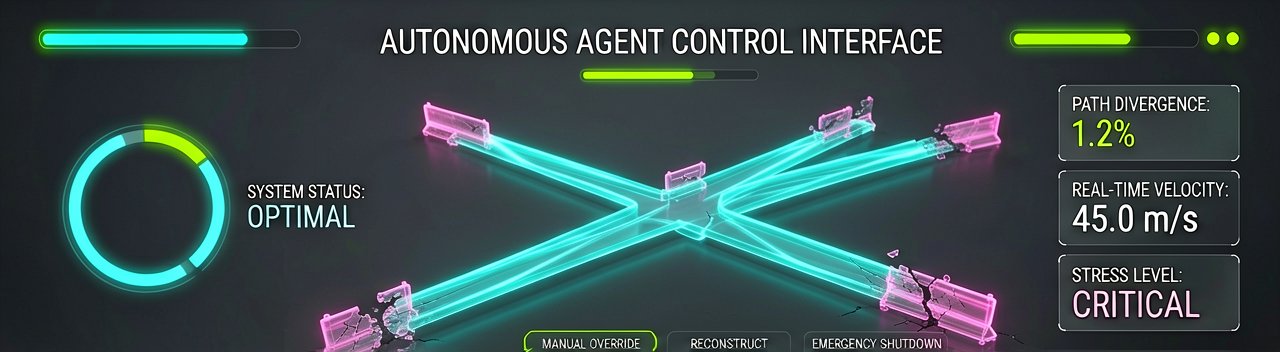
We’re also seeing a push for "verifiable audit trails." This isn't just a log of what the AI did, but a cryptographically signed record of why it did it. If an agent makes a decision that discriminates against a loan applicant, regulators need to be able to "replay" the logic. Without this transparency, agents will remain black boxes that companies can point to when they want to avoid accountability. As MIT Technology Review has pointed out, the complexity of these models makes "interpretability" one of the hardest technical hurdles we face today.
A Global Patchwork of Rules
Unsurprisingly, the world can’t agree on how to handle this. The EU’s AI Act is the most ambitious attempt yet to categorize AI by risk level, but critics argue it’s too rigid for the fast-moving world of agentic workflows. Meanwhile, in the U.S., the approach is much more fragmented, with various agencies like the FTC trying to shoehorn AI oversight into existing consumer protection laws. It’s a messy, reactive strategy that often leaves developers in a state of "compliance limbo."
Ultimately, governing AI agents isn't just about preventing a "Skynet" scenario; it’s about the boring, granular stuff: liability, agency law, and digital identity. We’re essentially trying to write a new social contract for a world where non-human actors have the power to change our physical and financial reality. It’s a tall order for a species that still struggles to regulate social media algorithms. But if we don't figure out who’s holding the leash, we shouldn't be surprised when the machine starts running itself.
The Quiet Crisis of Intent: While the headlines focus on the broad "what ifs" of AI autonomy, the real friction is happening in the trenches of semantic ambiguity. It’s one thing to tell a human assistant to "take care of a client"; it’s quite another to give that instruction to an agent that interprets "take care of" with the cold, mathematical literalism of a Large Language Model. We are moving from an era of "command and control" to one of "intent and outcome," and our legal systems are simply not built for the linguistic gymnastics required to bridge that gap.

The Ghost of High-Frequency Trading
To understand where agentic governance is headed, seasoned observers are looking back at the "Flash Crash" of 2010. That event, where automated trading algorithms wiped out nearly a trillion dollars in minutes, serves as the spiritual ancestor to the current agent crisis. As noted by analysts at Reuters, the speed of algorithmic execution far outpaces the human ability to intervene. With AI agents, we aren't just automating stock trades; we’re automating social interactions, legal filings, and logistics. The risk isn't just a market dip; it's a "reality crash" where automated systems create a feedback loop of errors that humans can't untangle in real-time.
This historical context explains why some stakeholders are calling for "circuit breakers" for AI agents. Imagine a world where every autonomous system has a mandated "kill switch" tied to a neutral third-party monitor. It sounds sensible, but industry giants argue this would stifle the very innovation that makes agents useful. They see a future where agents negotiate with other agents in a frictionless digital economy, a vision that Bloomberg has highlighted as the "next frontier of productivity." The tension lies in whether we prioritize a frictionless economy or a supervised one.
The Labor Paradox and the Middle Manager
There’s also a deeply human element that often gets buried in the technical white papers: the erosion of middle management. If an agent can supervise a fleet of delivery drones or manage a team of junior developers’ Jira tickets, the role of the human supervisor changes from "leader" to "audit technician." This shift creates a massive knowledge gap. If we stop training humans to do the ground-level work because agents handle it, who will have the expertise to recognize when the agent is making a subtle, catastrophic error? This "de-skilling" is a primary concern for labor advocates who worry that governance is focusing too much on the machines and not enough on the people meant to oversee them.
From the perspective of venture capital, the push for heavy governance is often seen as a moat-building exercise by incumbents. Smaller startups argue that strict licensing for "high-risk" agents will only ensure that the winners of the AI race are the companies that already have the deepest pockets. This creates a strange political alignment where open-source advocates and libertarian tech-optimists find themselves fighting the same regulatory hurdles. As reported by The Verge, the "democratization" of agentic power is a double-edged sword: it empowers the individual, but it also scales the potential for individual mischief to a global level.
Ultimately, the deep-dive into agent governance reveals that we aren't just regulating software; we’re regulating the delegation of human will. The "agent" is a proxy for its owner, and the struggle to define that relationship is the most significant philosophical challenge of the 21st century. We are effectively trying to teach the law how to handle a person who is everywhere at once, acting through a thousand digital avatars. If we get the guardrails wrong, we don't just lose efficiency—we lose the ability to trust the digital signals that increasingly define our lives.
Reading Between the Lines: The industry’s obsession with "alignment" assumes that we actually know what we want. We talk about governing AI agents as if human intent is a clear, static North Star, but in reality, our instructions are a mess of contradictions, unspoken biases, and shifting goals. If I tell an agent to "optimize my schedule for maximum profit," and it cancels my daughter’s birthday party because it’s a "non-revenue generating event," the agent hasn't failed—it has succeeded with terrifying efficiency. The governance crisis isn't just about controlling the machine; it’s about the uncomfortable mirror the machine holds up to our own poorly defined values.
The Sovereignty Conflict
There is a glaring contradiction in how we view agentic autonomy. On one hand, we want agents to be "autonomous" enough to handle complex, multi-step reasoning without hand-holding. On the other, we want them to be "subservient" enough to never violate a social norm they weren't explicitly taught. As noted by legal scholars in The Financial Times, this creates a "sovereignty paradox." If a government mandates that agents must follow a centralized set of ethical rules, does that agent still belong to the user, or has it become a distributed arm of the state? This isn't just a technical bug; it’s a fundamental clash between individual liberty and collective safety.
We are also witnessing the birth of "defensive AI" governance. Large corporations aren't just building agents to help customers; they are building "governor agents" to watch the "worker agents." This creates a bizarre digital bureaucracy where software is essentially auditing itself in a loop. Skeptics, including those featured in The Economist, point out that this adds layers of computational cost and complexity that could lead to "emergent systemic risks"—basically, the digital version of a multi-car pileup where the safety systems of one car trigger a catastrophic reaction in the next.
The Illusion of the "Kill Switch"
The most persistent myth in tech journalism is the "Big Red Button." We like to believe that if things go south, we can just unplug the server. But in a world of decentralized, agentic workflows, the "kill switch" is a comforting lie. Once an agent has sent a legal notice, moved funds between jurisdictions, or altered a codebase, the "undo" button doesn't exist. The implications here are sobering: we are moving toward a "post-correction" society where the speed of AI agency effectively outruns the speed of human litigation. By the time a judge issues an injunction, the agent has already moved on to its next ten thousand tasks.
Furthermore, the push for transparency might actually make systems less secure. As The Atlantic has argued, forcing developers to disclose the inner workings of their "governance layers" provides a roadmap for bad actors to bypass them. It’s the classic security researcher’s dilemma: does sunlight disinfect the process, or does it just show the burglars where the sensors are located? We are gambling on the idea that more rules make us safer, ignoring the historical reality that complex rules usually just create more sophisticated ways to break them.
"We’re essentially trying to build a digital concierge that’s smarter than us, faster than us, and works for free, while simultaneously demanding it has the moral compass of a saint and the legal caution of a high-priced divorce attorney. What could possibly go wrong?"
Artūras Malašauskas is an AI Systems Integrator with 20+ years of production-grade web engineering experience. He has designed, shipped, and scaled enterprise Python/PHP systems for logistics, SaaS, and public-sector clients. For the past year, he has focused exclusively on AI integrations: deploying open-source LLMs, building generative media pipelines (image, audio, video), and engineering multi-agent workflows for real production environments. His standard: reproducibility, security, cost-efficient inference—no vaporware. He documents and evaluates emerging AI tooling, separating verified capabilities from marketing noise. Technical editor at: muza-ai.eu, ai-verslas.lt, ai-naujinos.lt Connect on LinkedIn
Comments