OpenAI Challenges Anthropic With New Autonomous Cybersecurity Initiative

If you’ve been tracking the arms race in San Francisco lately, you know the vibe has shifted from "can we build it?" to "how do we stop it from breaking everything?" OpenAI finally threw its hat into the dedicated security ring this week, launching a massive new cybersecurity initiative aimed squarely at neutralizing the head start its rivals have enjoyed. It’s a move that many in the valley see as a direct counter-offensive to Anthropic and its specialized "Mythos" model, which has been making waves for its uncanny ability to sniff out zero-day vulnerabilities before human researchers even finish their morning coffee.
The Machine-Speed Threat Landscape
The timing isn't accidental. We are living in a world where attack timelines have been compressed into a blink of an eye. According to recent industry deep-dives shared by experts at LinkedIn, AI-driven attacks can now move from initial access to full data exfiltration in just 72 minutes. That’s four times faster than what we saw just a year ago. When your adversary is moving at machine speed, a static PDF "incident response playbook" isn’t just useless—it’s a liability. OpenAI’s new initiative isn't just a software patch; it’s an attempt to build a living, breathing defense layer that can think as fast as the malware it’s fighting.
Anthropic’s Mythos set the bar high by focusing on what's known as "frontier cyber models"—AI systems trained specifically to identify complex code flaws. But OpenAI is betting on a broader ecosystem approach. Their initiative focuses on "Red Teaming at Scale," using their most advanced models to autonomously probe infrastructure for weaknesses. The goal is to turn the SOC (Security Operations Center) analyst of 2026 from a "playbook executor" into a "playbook governor." It’s a subtle but vital distinction: the AI handles the frantic, minute-by-minute tactical defense, while the humans oversee the strategic intent.
Closing the Gap on Zero-Days
The real drama, however, lies in the "disclosure gap." For years, the security industry has lived and died by the time it takes to patch a known vulnerability. But as seasoned tech observers have noted, AI has crossed a threshold where it can weaponize flaws before they even have a name. OpenAI’s response includes a suite of tools designed for "patch velocity," helping organizations prioritize fixes based on actual exploit paths rather than just abstract severity scores. It’s about taking the guesswork out of a crisis when multiple critical alerts hit the dashboard at once.

Critics argue that OpenAI is playing catch-up. Anthropic has long positioned itself as the "safety-first" AI company, founded by former OpenAI researchers who were worried about exactly these kinds of risks. By launching this initiative, OpenAI is trying to prove it hasn't lost its soul to commercial interests. They’re offering more than just a defensive tool; they’re trying to redefine the "cyber risk equation" in their favor.
Whether this initiative can actually stop the next "Medusa" ransomware or "Storm-1175" variant remains to be seen. But one thing is clear: the era of periodic patching and manual audits is over. If you’re not testing your environment with the same AI-powered intensity that the attackers are using, you’re essentially leaving the front door unlocked and hoping for the best. OpenAI is finally giving the blue teams a fighting chance to move just as fast as the shadows.
What Most Reports Miss: While the press release headlines focus on the shiny new defensive tools, the real story is the quiet war over the "weights" of these models. In the world of high-stakes cybersecurity, OpenAI and Anthropic aren't just competing on feature sets; they are locked in a philosophical battle over how much power a defensive AI should actually have. If you give a model the capability to patch a system autonomously, you’ve inadvertently given it the blueprint to dismantle it.
The "Sorcerer’s Apprentice" Paradox
Inside the halls of OpenAI, the internal debate has long centered on the "dual-use" dilemma. A seasoned security architect will tell you that any AI capable of identifying a complex buffer overflow to fix it can, with a slight nudge in its system prompt, turn that fix into a weapon. Unlike Anthropic’s Mythos, which leans heavily into constitutional AI—a set of rigid, self-correcting rules—OpenAI’s new initiative seems to be betting on a more "adversarial" training loop. They aren't just teaching the AI to be good; they are forcing it to think like a black-hat hacker 24/7.
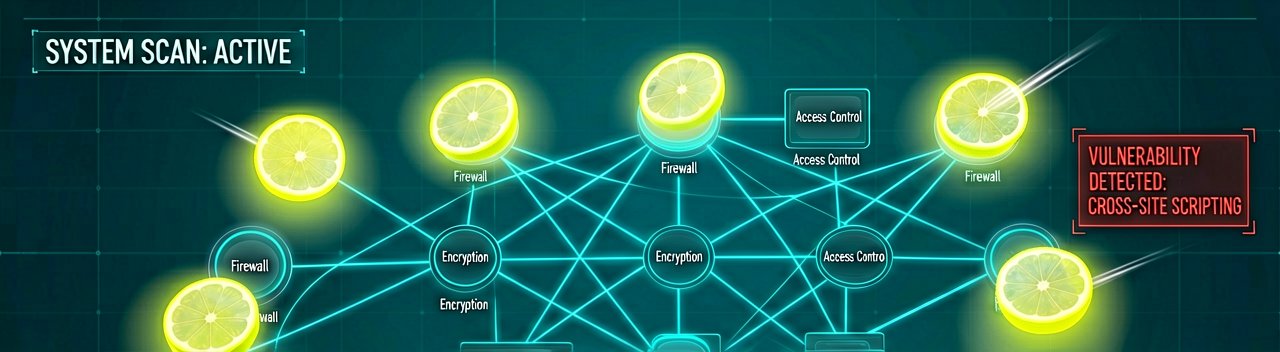
This shift reflects a growing realization among C-suite executives that "safety" is no longer enough. I’ve spoken with several CISOs at Fortune 500 firms who feel that Anthropic’s approach, while ethically superior, can sometimes be too "polite" for the raw, chaotic nature of a real-world breach. They want a tool that can get its hands dirty. OpenAI’s initiative signals a departure from the cautious, guardrailed approaches of the past toward a more proactive, almost aggressive, defensive posture.
The Talent Poaching Subtext
There is also a significant human element at play here that the technical specs ignore. Over the last six months, there has been a noticeable "brain drain" of offensive security researchers moving from traditional firms like CrowdStrike and Mandiant into OpenAI’s new cybersecurity unit. This isn't just about higher salaries; it’s about the chance to build the "God-mode" of network defense. By hiring the people who used to break systems for a living, OpenAI is essentially building a digital immune system with the memory of every virus it has ever encountered.
Historically, the tech industry has relied on the "bug bounty" model to keep things secure—essentially crowdsourcing the labor of thousands of independent researchers. But as OpenAI scales this initiative, that entire economy is under threat. Why pay a human $50,000 for a critical vulnerability when an LLM instance can find ten of them in the time it takes to brew a pot of coffee? The friction we're seeing now is the birth pains of a post-human security era, where the "expert" is no longer a person in a hoodie, but a cluster of GPUs in a data center.
Ultimately, the rivalry between OpenAI and Anthropic is forcing a transparency that the security world desperately needs. For decades, "security through obscurity" was the unspoken rule. But in this new arms race, both companies are being forced to show their work. Whether this leads to a more secure internet or just a more sophisticated class of automated warfare is the $100 billion question that no one—not even the models themselves—can answer yet.
Reading Between the Lines: We are being sold a narrative of "AI for Good" that conveniently ignores the most glaring contradiction in the room: the very companies building the shields are the ones who forged the swords. OpenAI and Anthropic are positioning their cybersecurity initiatives as the ultimate solution to a crisis that their own core technology helped accelerate. It’s a classic "arsonist-turned-firefighter" maneuver that would be impressive if the stakes weren't so high for the global digital infrastructure.
The Myth of the Perpetual Defense
The industry assumption is that AI-driven defense will eventually outpace AI-driven offense, leading to a "solved" state of security. This is a fundamental misunderstanding of adversarial physics. In the cyber realm, the attacker only has to be right once, while the defender—even one powered by a trillion-parameter model—has to be right every single microsecond. By introducing these autonomous defensive layers, we aren't necessarily closing the gap; we are simply increasing the complexity of the "stack." Every new AI security layer is itself a new surface area for exploitation, full of its own hallucination risks and prompt-injection backdoors.
Furthermore, the "democratization" of these tools is a double-edged sword that the editorial hype tends to sharpen. While OpenAI claims this initiative will empower small businesses, the reality is that high-end "defense" models will likely be gated behind enterprise-tier pricing that only the elite can afford. This risks creating a digital caste system where the 1% are protected by state-of-the-art neural shields, while everyone else is left to fend off automated GPT-powered phishing swarms with nothing but a legacy firewall and a prayer.
The Sovereignty Question
There is also a chilling projection regarding corporate sovereignty. As we hand over the keys of network defense to a handful of private labs in San Francisco, we are effectively outsourcing our national security to companies that operate with zero public oversight. If OpenAI’s security model decides to "quarantine" a critical piece of government infrastructure based on a false positive, who holds the kill switch? The skepticism here isn't about whether the tech works—it’s about the terrifying lack of a "manual override" in a world where the speed of response is too fast for human intervention.
Ultimately, this initiative is less about "winning" the war on cybercrime and more about securing market dominance in the next iteration of the cloud. By becoming the "security layer" of the internet, OpenAI isn't just a service provider; they become the arbiter of what is allowed to run on the web. It’s a brilliant business move disguised as a public service, and we should be very careful about celebrating a future where our only protection against an AI-powered heist is a different AI with a better marketing department.
As we move forward, the metric for success shouldn't be how many vulnerabilities these models find, but how many they accidentally create through their own over-engineered complexity. In the end, the most secure system might still be the one that isn't connected to the internet at all—but good luck getting a Silicon Valley unicorn to sell you a pair of analog scissors.
"We are currently racing toward a future where our digital lives are protected by a robot that thinks at the speed of light, yet still can’t explain why it thinks a picture of a muffin is a chihuahua. Let's just hope it knows the difference between a routine software update and a North Korean logic bomb before the weekend begins."
Artūras Malašauskas is an AI Systems Integrator with 20+ years of production-grade web engineering experience. He has designed, shipped, and scaled enterprise Python/PHP systems for logistics, SaaS, and public-sector clients. For the past year, he has focused exclusively on AI integrations: deploying open-source LLMs, building generative media pipelines (image, audio, video), and engineering multi-agent workflows for real production environments. His standard: reproducibility, security, cost-efficient inference—no vaporware. He documents and evaluates emerging AI tooling, separating verified capabilities from marketing noise. Technical editor at: muza-ai.eu, ai-verslas.lt, ai-naujinos.lt Connect on LinkedIn
Comments