Architecting the Archive: The Strategic Transition of DSpace Repositories to AWS
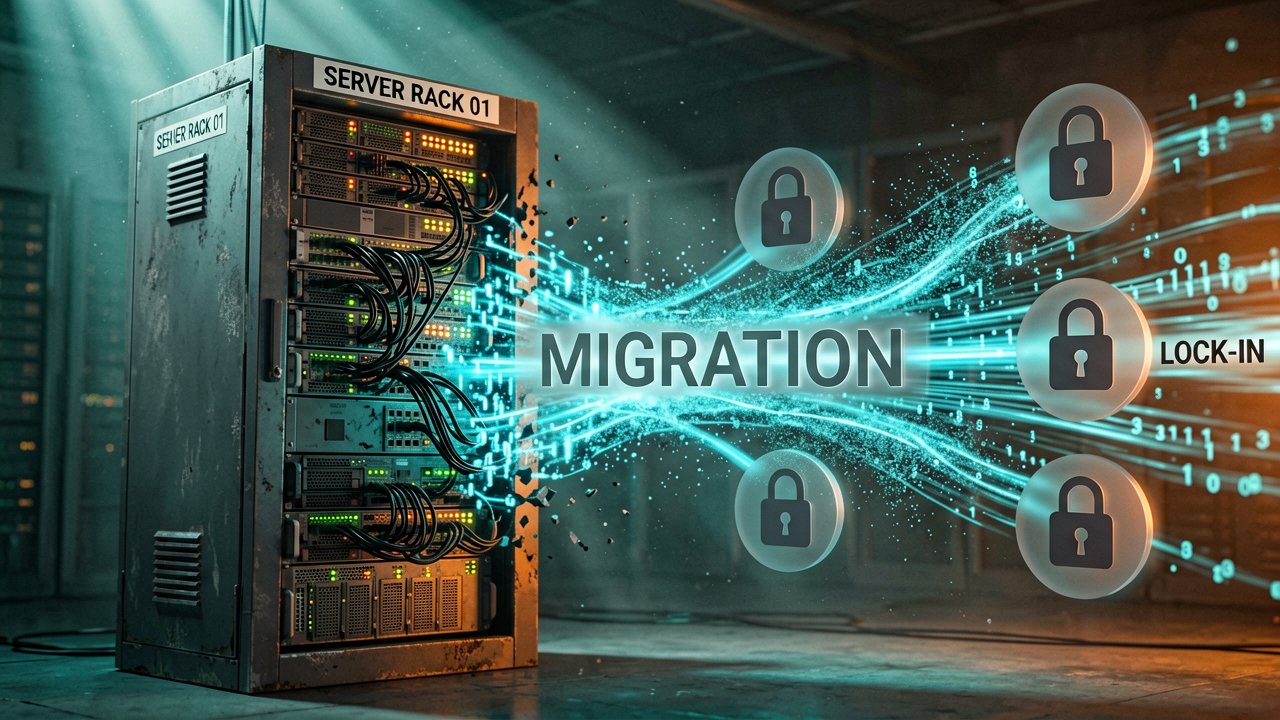
For years, the humble digital repository has been the unsung hero of academia and heritage, quietly housing everything from rare manuscripts to breakthrough research papers. But let’s be honest: the traditional way of hosting DSpace—on a dusty server in a basement or a cramped on-premise data center—is starting to feel like trying to run a modern library out of a garden shed. It’s clunky, hard to scale, and one hardware failure away from a minor catastrophe. That’s why we’re seeing a massive shift toward Amazon Web Services (AWS), as institutions trade their server racks for the elasticity of the cloud.
Migrating DSpace to AWS isn't just about moving files from Point A to Point B; it’s about a total architectural glow-up. When you’re running DSpace on-site, you’re usually stuck with fixed resources. If a sudden surge of traffic hits—say, a specific thesis goes viral—your server might just curl up and die. By moving to a platform like Amazon EC2, you gain the ability to scale vertically or horizontally in minutes, ensuring your repository stays snappy regardless of the load.
Breaking Down the Monolith
The real magic happens when you stop thinking of DSpace as a single "box" and start leveraging managed services. Take the database, for instance. Managing PostgreSQL on your own is a full-time job of patches and backups. Offloading that to Amazon RDS means AWS handles the heavy lifting of maintenance, high availability, and automated snapshots. It’s the kind of "set it and forget it" peace of mind that IT directors dream about, allowing the team to focus on metadata quality rather than database vacuuming.
Then there’s the issue of storage. Digital repositories are, by definition, hoarders. They grow relentlessly. On-premise storage arrays are expensive and a pain to expand. Transitioning your asset store to Amazon S3 provides virtually infinite room to grow. Plus, S3 is famous for its "eleven nines" of durability, meaning the chances of losing a file are astronomically low. For an archivist whose job depends on preservation, that’s a pretty compelling insurance policy.
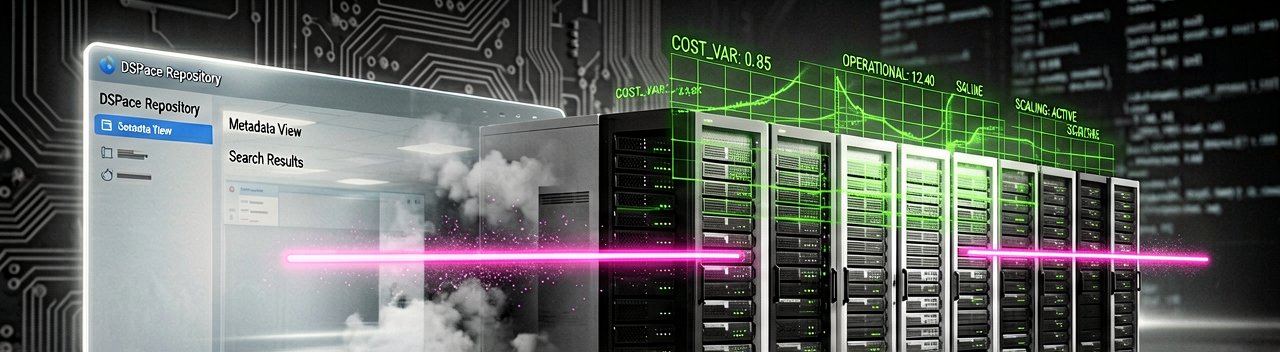
Building for Resilience
Resilience is the buzzword of the decade, but in the cloud, it actually means something tangible. In a traditional setup, if your data center loses power, your repository goes dark. In the AWS ecosystem, you can distribute your DSpace instance across multiple Availability Zones. If one goes offline, the other picks up the slack without the user ever noticing. It’s a level of "always-on" reliability that used to be reserved for tech giants with bottomless pockets, but now it’s accessible to your average university library.
Of course, the migration journey isn't without its speed bumps. You’ve got to think about networking, security groups, and how to securely sync your existing data without a week of downtime. Many teams find success using the AWS Database Migration Service to keep things moving smoothly. It’s a bit like performing an engine swap while the car is still rolling down the highway—tricky, but entirely doable with the right tools and a bit of caffeine.
Ultimately, the move to AWS is about future-proofing. As DSpace continues to evolve with more media-rich content and complex search requirements, the underlying infrastructure needs to be as agile as the software itself. We’re moving away from the era of "buying a bigger server" and into an era of "architecting for the future." If your repository is still tethered to a physical rack, it might be time to look up—the cloud is looking better than ever.
The Quiet Revolution in the Stacks: What most high-level migration reports miss is that moving DSpace to the cloud isn't just a technical checkbox—it’s a fundamental shift in institutional culture. For decades, the "server room" was a physical manifestation of an institution’s digital legacy. Breaking that tether to physical hardware often meets resistance from stakeholders who feel that if they can’t see the flashing lights of a rack, they don’t truly own their data. But as any seasoned sysadmin will tell you, physical proximity to a server is often a false sense of security.

From the perspective of a Digital Initiatives Librarian, the migration often solves a chronic "resource bottleneck" that plagued on-premise setups for years. In the old world, requesting a simple memory upgrade for a DSpace instance could involve months of budget approvals, hardware procurement, and scheduled downtime. In the AWS environment, that same librarian can watch an engineer adjust an instance type in the console during a coffee break. This agility transforms the repository from a stagnant archive into a dynamic platform capable of supporting new, data-heavy research methods like text and data mining.
The Hidden Cost of "Free" Infrastructure
There is a persistent myth in academia that on-premise hosting is "free" because the building and power already exist. However, veteran tech journalists have seen this fallacy debunked repeatedly. When you factor in the "human cost"—the hours spent by specialized staff troubleshooting RAID controllers or managing HVAC failures—the cloud’s subscription model starts to look remarkably economical. By leveraging AWS Lambda for background tasks like thumbnail generation or media transcoding, institutions can move away from monolithic processing and pay only for the milliseconds of compute time they actually use.
Historically, DSpace was built as a robust but heavy Java application. Running it effectively in the cloud requires a "Cloud Native" mindset that early adopters often lacked. Those who simply "lift and shift" their exact local configuration often find themselves frustrated by costs. The real winners are those who refactor their approach, utilizing services like Amazon CloudFront. By caching research papers at edge locations globally, a university in London can serve a PDF to a researcher in Tokyo with minimal latency, truly fulfilling the "Open Access" mission on a global scale.
The Security Paradox
Security is the final frontier where the human element and technical architecture collide. Critics often worry that the cloud is less secure, but the reality is frequently the opposite. A local server is often only as secure as the last time a busy IT staffer remembered to run apt-get upgrade. On AWS, security becomes a shared responsibility model. Using AWS IAM (Identity and Access Management), administrators can enforce "least privilege" access with surgical precision—something that was notoriously difficult to manage in sprawling campus networks.
As we look toward the next decade of digital preservation, the migration to AWS represents a maturing of the field. It’s a move away from the "hobbyist" era of digital repositories toward a professionalized, resilient infrastructure. The institutions that make this leap aren't just saving themselves from hardware headaches; they are ensuring that the world’s collective knowledge remains accessible, searchable, and safe, even if the basement floods or the power goes out. It’s about building a digital legacy that is as permanent as the stone libraries of old, but with the speed of light.
The Reality Check: Reading between the lines of the cloud-marketing brochure reveals a fundamental tension that many institutions are hesitant to voice: we are effectively trading local control for a high-stakes dependency on a single provider. While the technical perks of AWS are undeniable, there is a lingering irony in the Open Access movement—which champions decentralization and public ownership—migrating its most precious assets into the proprietary "walled garden" of a global corporate giant. It’s a pragmatic surrender, perhaps, but a surrender nonetheless.
There’s also the uncomfortable truth about "unlimited" scalability. In theory, your DSpace repository can handle any traffic spike; in practice, your finance department might not be able to handle the resulting bill. The cloud introduces a variable-cost model that can be terrifying for institutions used to fixed annual budgets. Without rigorous monitoring and "kill switches" on auto-scaling groups, a sudden surge of interest in a high-resolution image collection can translate into a budget-busting invoice before the first morning meeting.
The Complexity Trap
Furthermore, we must address the "Skill Gap" contradiction. The move to AWS is often sold as a way to reduce the burden on IT staff, but it actually replaces one set of problems with another, more complex set. You might not be swapping out failed hard drives anymore, but you are now managing VPC peering, IAM roles, and S3 bucket policies. The expertise required to maintain a highly available cloud architecture is often more expensive and harder to find than the generalist skills needed for on-premise maintenance. For smaller libraries, this can create a "technical debt" that is just as stifling as an old server rack.
Finally, we have to look at the long-term implications of data gravity. Once you have several petabytes of research data sitting in S3, moving it elsewhere becomes a logistical and financial nightmare due to egress fees. This "lock-in" isn't just a technical hurdle; it’s a strategic risk. If AWS were to pivot its pricing or sunset a specific service, the "resilient" repository might find itself in a very expensive corner. Measured skepticism isn't about avoiding the cloud, but about entering it with eyes wide open—recognizing that we are solving today’s hardware headaches by taking out a long-term mortgage on tomorrow’s infrastructure.
"Ultimately, migrating to the cloud is a lot like joining a gym: it’s statistically better for your health, but you’ll find yourself paying a monthly fee for equipment you only half-understand, all while wondering if it was actually cheaper to just keep lifting those heavy servers in your own basement."
Artūras Malašauskas is an AI Systems Integrator with 20+ years of production-grade web engineering experience. He has designed, shipped, and scaled enterprise Python/PHP systems for logistics, SaaS, and public-sector clients. For the past year, he has focused exclusively on AI integrations: deploying open-source LLMs, building generative media pipelines (image, audio, video), and engineering multi-agent workflows for real production environments. His standard: reproducibility, security, cost-efficient inference—no vaporware. He documents and evaluates emerging AI tooling, separating verified capabilities from marketing noise. Technical editor at: muza-ai.eu, ai-verslas.lt, ai-naujinos.lt Connect on LinkedIn
Comments