The Agentic Control Plane: Navigating the High-Stakes Frontier of Autonomous Governance

There was a time, not so long ago, when "governance" in the tech world was a polite way of saying "we're filling out spreadsheets to keep the lawyers happy." But as we move into 2026, the stakes have shifted. We aren't just managing static code anymore; we’re managing autonomous agents that can browse the web, execute API calls, and—if left to their own devices—accidentally spend a quarterly budget in a single afternoon. This is why AI agent governance platforms have transitioned from niche enterprise tools to the most critical layer of the modern tech stack.
The problem is that agents are fundamentally different from the chatbots we’ve grown used to. While a standard LLM might give you a questionable recipe for sourdough, an autonomous agent can actually log into your grocery account and buy the flour. According to experts at IBM, the autonomy and non-deterministic nature of these systems mean that traditional, rule-based software controls simply won't cut it. You can't just hard-code every possible outcome; you need a system that can reason about whether an agent’s proposed action aligns with corporate policy in real-time.
The Rise of the Agentic Control Plane
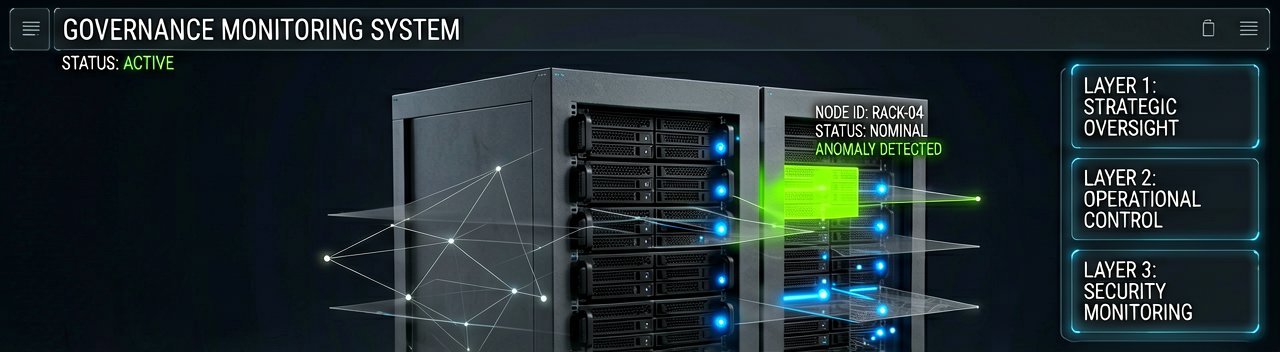
Enter the "control plane"—a centralized operational layer designed to observe and optimize agents regardless of where they were built. Leading the charge is IBM Watsonx.governance, which recently introduced specialized nodes that can be embedded directly into agents. These nodes monitor metrics like "faithfulness" and "context relevance" while the agent is executing. It’s less like a post-game review and more like having a digital supervisor standing over the agent’s shoulder, ready to hit the "kill switch" the moment things get weird.
But IBM isn't the only player in this game. Microsoft has doubled down with its Agent Governance Toolkit, which treats governance as a modular engineering problem. Instead of a one-size-fits-all platform, they provide individual blocks for identity management, sandboxing, and audit logging. This allows developer-heavy teams to build a custom safety net that fits their specific architecture—crucial for those running high-stakes workflows on Azure.

Security: The Wild West of Prompt Injection
The urgency behind these platforms is driven by a very real fear of "agent hijacking." As noted by researchers at Questa AI, prompt injection is no longer just a theoretical trick to make a bot say something funny. If an agent has the power to read your emails and then execute a bank transfer, a single hidden instruction in an incoming message could be catastrophic. Governance platforms are now being built with "least-privilege" access models specifically for non-human identities, ensuring that even if an agent is compromised, the damage it can do is strictly limited.
We’re also seeing specialized players like Credo AI and Monitaur focus on the regulatory side of the house. For companies in finance or healthcare, "black box" decision-making isn't just a technical hurdle; it’s a legal liability. These platforms provide the audit trails necessary to prove to a regulator exactly why an agent chose one path over another. It turns out that in 2026, the coolest feature an AI agent can have isn't intelligence—it's accountability.
As we look ahead, the divide between companies that "play" with AI and those that "scale" it will be defined by their governance strategy. It's the difference between a fleet of rogue bots and a synchronized digital workforce. If you aren't thinking about how to govern your agents today, you might find yourself spending tomorrow cleaning up after them.
Are you prioritizing real-time policy enforcement or post-execution auditing for your current agentic workflows?
The Real Friction Point: Beyond the polished brochures and "safety first" marketing lies a messy, high-stakes tug-of-war between velocity and validation. In the trenches of enterprise IT, the conversation isn’t about whether governance is necessary—it’s about how to prevent it from becoming the ultimate bottleneck. When a developer builds an agent to automate supply chain logistics, the last thing they want is a governance layer that introduces enough latency to make the automation redundant. We are witnessing a fundamental shift from "gatekeeper" governance to "in-flight" governance, where the platform must be as fast as the model it monitors.
Veteran architects are quick to point out that we’ve seen this movie before with the rise of microservices and "shadow IT." History tells us that if security measures are too cumbersome, employees will simply bypass them. However, with AI agents, the stakes are exponentially higher because the "user" isn't a human clicking buttons; it's a script making autonomous choices. Stakeholders from the C-suite are increasingly worried about "hallucination debt"—the long-term cost of an agent making slightly suboptimal decisions that compound over thousands of iterations until the company’s data integrity is shredded.
The "Human-in-the-Loop" Paradox
One of the most nuanced debates currently happening behind closed doors at firms like IBM and Credo AI centers on the "Human-in-the-Loop" (HITL) requirement. While regulators love the idea of a human approving every move, at scale, this becomes a physical impossibility. A logistics company running 50,000 agents cannot have a human reviewer for every API call. Modern governance platforms are solving this by moving toward "Human-on-the-Loop" or "Exception-based Governance," where the system only flags actions that fall outside of a predefined "confidence corridor."
There is also the burgeoning issue of "Agentic Identity Management." In traditional systems, we give permissions to a user (like "Dave in Accounting"). Now, we have to give permissions to "Dave’s Personal Assistant Agent," which might call a "Tax Optimization Agent" built by a third party. As noted by security researchers at IBM Newsroom, the chain of custody for data becomes incredibly murky. Who is liable if the third-party agent leaks data? The governance platform is increasingly becoming the "legal notary" for these digital handshakes, logging every handoff with cryptographic certainty.
Ultimately, the "seasoned reporter" perspective is this: the winners in this space won't necessarily be the ones with the smartest AI, but the ones with the most robust "immune system" for that AI. We’re moving away from the era of the "move fast and break things" startup and into the era of the "move fast with guardrails" enterprise. If you can’t prove what your agent did and why it did it, you don't have a product—you have a liability.
Do you see automated identity management or real-time latency as the bigger hurdle for your team's agent deployment?
The Accountability Gap: We’ve spent years agonizing over the "alignment problem"—the theoretical fear that a superintelligence might turn us all into paperclips—but the reality of agent governance is much more mundane and, frankly, more annoying. The industry’s current obsession with "guardrails" assumes that we actually know where the road is. In reality, most enterprises are flying blind, slapping governance platforms onto workflows before they’ve even defined what a "successful" autonomous action looks like. There is a glaring contradiction in wanting an agent to be "creative and autonomous" while simultaneously demanding it follow a 400-page compliance manual written for humans.
Skepticism is also warranted regarding the "vendor-neutral" claims of many emerging platforms. While companies like IBM and Microsoft promote unified control planes, there is a looming threat of "governance lock-in." If your entire risk management framework is built into a proprietary stack, switching from one LLM provider to another becomes a nightmare of re-mapping policies. We are essentially building a new layer of technical debt under the guise of safety, where the cost of changing your "digital supervisor" might eventually exceed the cost of the agents themselves.
The Ghost in the Audit Log
Furthermore, we must address the "observability theater" currently dominating the space. Many platforms boast about their ability to log every "thought" an agent has, but as highlighted by analysts at System Prompt, more data doesn’t equal more control. An audit log that records ten million API calls a day is useless if it requires another AI to summarize it—creating a recursive loop where we have "agents watching agents." This raises the uncomfortable question: if the supervisor is also a non-deterministic model, who is actually in charge?
The projection for the next eighteen months isn't a smooth landing into a regulated utopia. Instead, expect a series of high-profile "agent meltdowns" where the governance platform did exactly what it was told, but the human intent was poorly translated. We’ll see a surge in "compliance hacking," where developers figure out how to phrase prompts just right to bypass the governance layer’s filters, much like how kids used to find the one unblocked proxy in a school library. The real test of these platforms won't be how they handle a malicious attack, but how they handle a tired engineer's shortcut.
Ultimately, we are trying to solve a human trust problem with a software solution. We want the efficiency of a machine with the moral compass of a Boy Scout, but we are likely to end up with the bureaucracy of the DMV powered by the speed of a fiber-optic cable. The irony is that the more "secure" we make these agents, the less useful they might become, leading to a "utility-safety paradox" that no amount of venture capital can fully resolve.
Is your organization prepared for the recursive risk of using one AI to audit another, or are you still hoping the manual logs will be enough?
At the end of the day, we’re just building increasingly expensive ways to make sure our computers don’t lie to us, steal from us, or start their own unapproved side hustles—tasks we used to handle with a firm handshake and a really good HR department.
Artūras Malašauskas is an AI Systems Integrator with 20+ years of production-grade web engineering experience. He has designed, shipped, and scaled enterprise Python/PHP systems for logistics, SaaS, and public-sector clients. For the past year, he has focused exclusively on AI integrations: deploying open-source LLMs, building generative media pipelines (image, audio, video), and engineering multi-agent workflows for real production environments. His standard: reproducibility, security, cost-efficient inference—no vaporware. He documents and evaluates emerging AI tooling, separating verified capabilities from marketing noise. Technical editor at: muza-ai.eu, ai-verslas.lt, ai-naujinos.lt Connect on LinkedIn
Comments