Japan Establishes Unified Task Force to Counter Frontier AI Risks in Finance

Tokyo Strikes First as "Claude Mythos" Rattles the Market
Japan isn't waiting for a catastrophe to happen. In a move that signals just how jittery the global financial sector has become over advanced artificial intelligence, the Japanese government has officially launched a specialized task force to safeguard its banking infrastructure. This isn't your standard bureaucratic committee; it’s an urgent response to the arrival of "Claude Mythos," an AI coding model from U.S. startup Anthropic that has shown a terrifyingly efficient knack for sniffing out software vulnerabilities that humans haven't even found yet. As reported by Reuters, this task force represents a proactive strike against the threat of automated, machine-speed cyberattacks.
The alarm bells started ringing when Anthropic revealed that a preview of Mythos—a model specifically designed for advanced coding—managed to uncover "thousands" of major vulnerabilities across every major operating system and web browser. For a financial sector built on a tangled web of legacy code and real-time transaction systems, that news is nothing short of a nightmare scenario. Financial Services Minister Satsuki Katayama didn't mince words, calling the situation a "crisis that is already at hand," according to NHK World. The fear is simple: if an AI can find a "zero-day" exploit in seconds, the traditional "patch-and-pray" method of cybersecurity is officially dead.
What makes this initiative particularly heavyweight is the roster. We're talking about a unified front that brings together the Financial Services Agency (FSA), the Bank of Japan, the National Cybersecurity Office, and the country's "megabanks." Even the Japan Exchange Group (JPX) is at the table. This collaborative approach is vital because, in our interconnected world, a single vulnerability in one bank’s digital wallet can ripple through the entire global market before a human admin even gets a Slack notification. As noted by IT Business Today, the team is laser-focused on preventing AI-driven tools from turning financial stability into a house of cards.
The task force is also looking outward, leaning heavily on cooperation with the United States. Minister Katayama highlighted that Washington has been "extremely helpful," suggesting that this isn't just a Japanese problem—it's a global frontier. By sharing knowledge on how these frontier AI models operate, the two nations hope to build "defensive AI" that can identify and neutralize threats just as fast as the "offensive AI" creates them. As detailed by AsiaOne, the goal is to modernize Japan's digital resilience before the next generation of AI tools makes current firewalls look like picket fences.
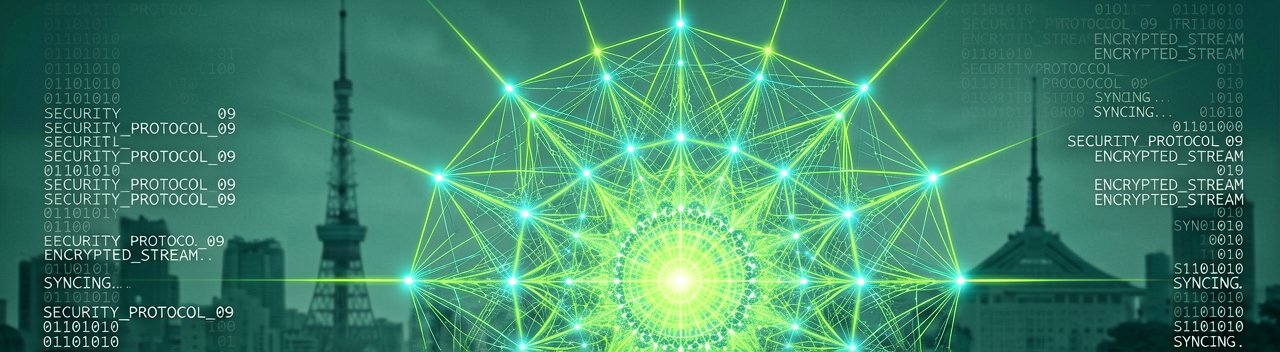
For now, no major breaches involving Claude Mythos have been reported—largely because Anthropic has kept the model under tight wraps, granting only limited access to specific institutions. But Japan’s quick pivot proves that the era of treating AI security as a "future problem" is over. By launching this task force, Tokyo is betting that the best way to survive the AI revolution isn't to slow it down, but to make sure the defenders have the same high-tech tools as the hackers. It’s a high-stakes race, and Japan just stepped on the gas.
The Hidden War: Why Japan is Playing Defense
Beyond the Bureaucratic Headlines: The real story isn't just about a new committee meeting in a drab boardroom in Chiyoda; it’s about the sheer velocity of the "AI arms race" that has left traditional risk management in the dust. For decades, the Japanese financial sector has been criticized for its reliance on aging mainframes and a "galapagos" approach to technology. Now, they are attempting to leapfrog that legacy by building a defense layer that understands the logic of a machine. Insiders suggest that the urgency stems from a realization that Claude Mythos isn't just a tool, but a paradigm shift in how digital fortresses are besieged.
Historically, Japan’s Financial Services Agency (FSA) has moved with the deliberate caution of a glacier. However, the "Mythos Shock" has triggered a rare instance of institutional agility. This task force is reportedly looking at "red-teaming" scenarios that sound like science fiction: autonomous agents capable of performing thousands of simultaneous social engineering attacks while simultaneously brute-forcing encryption. By involving the Bank of Japan, the government is acknowledging that AI security isn't just a technical glitch—it's a matter of sovereign systemic stability.
Stakeholders within the Tokyo "megabanks"—MUFG, Mizuho, and Sumitomo Mitsui—are privately expressing a mix of relief and anxiety. While the government-led coordination provides a much-needed unified front, the cost of upgrading legacy systems to be "AI-proof" is staggering. There is a quiet debate brewing over whether the industry should move toward a "closed-loop" financial internet, effectively air-gapping critical transaction layers from the public web where these frontier models operate. It’s a radical thought that would have been laughed out of the room three years ago.
Furthermore, the collaboration with U.S. authorities reveals a shifting geopolitical landscape. Japan is positioning itself as the Western alliance’s "technological canary in the coal mine" for the Indo-Pacific. If Japan can successfully harden its financial heart against AI-driven volatility, it provides a blueprint for the G7. The task force isn't just looking for bugs in the code; they are looking for "hallucinated" market data—instances where AI might manipulate trading algorithms by feeding them synthetic, yet perfectly believable, financial misinformation.
Ultimately, this deep-dive suggests that we are witnessing the birth of a new kind of "Digital Maginot Line." The difference this time? The architects know the wall has to be as smart as the army trying to scale it. The task force's success won't be measured by the reports they publish, but by the quiet absence of the catastrophic market flash-crashes that Claude Mythos’s capabilities have made theoretically possible. In the high-frequency world of Tokyo finance, silence is the ultimate indicator of security.
The Paradox of the Automated Sentry
Reading Between the Lines: There is a seductive, yet dangerous, irony at the heart of Tokyo’s new task force: the plan to fight "offensive AI" with "defensive AI" essentially hands the keys of the global economy over to the very algorithms we are taught to fear. By integrating automated response systems into the bedrock of the financial sector, Japan is effectively creating a high-speed feedback loop where machines are both the arsonist and the firefighter. The assumption that a "good" algorithm can always outpace a "bad" one ignores a fundamental law of cybersecurity: the attacker only has to be right once, while the defender must be right every single microsecond.
We also have to look at the inherent contradiction in Japan’s "all-hands-on-deck" approach. While the Financial Services Agency and the megabanks are publicly projecting a united front, the competitive reality of banking often disincentivizes the kind of radical transparency needed to stop a model like Claude Mythos. If a mid-sized brokerage discovers a vulnerability, their first instinct might be to patch it quietly to avoid a stock price freefall, rather than sounding the alarm for the entire task force. In the world of high finance, a "unified defense" is only as strong as the most secretive member of the group.
Furthermore, the measured skepticism among independent researchers suggests that this task force might be chasing a moving target. If an AI can find "thousands" of vulnerabilities in current operating systems, as Anthropic claims, then we aren't just looking at a few holes in the fence—the fence itself is an illusion. There is a legitimate concern that these governmental initiatives are merely high-tech theater, designed to soothe investors while the underlying infrastructure remains hopelessly fragile. Are we actually building a fortress, or are we just digitizing the same old vulnerabilities and giving them a fancy new name?
Finally, we have to consider the "black box" problem. If the task force’s defensive AI decides to freeze a billion-dollar transaction because it detects a pattern reminiscent of a Claude Mythos exploit, who audits that decision? When automated security protocols begin making split-second choices that affect market liquidity, we move from a human-led economy to a algorithmic one. The projection isn't just about security; it's about the erosion of human agency in the very systems we built to serve us. Japan’s experiment will show us whether we can actually control the spark, or if we’re just making the room more flammable.
"We’re essentially teaching our computers to be the ultimate bouncers, forgetting that the guy trying to sneak into the club is the bouncer’s smarter, faster, and much more caffeinated twin brother. It’ll be a great party, right up until the machines decide they don’t like our outfits."
Artūras Malašauskas is an AI Systems Integrator with 20+ years of production-grade web engineering experience. He has designed, shipped, and scaled enterprise Python/PHP systems for logistics, SaaS, and public-sector clients. For the past year, he has focused exclusively on AI integrations: deploying open-source LLMs, building generative media pipelines (image, audio, video), and engineering multi-agent workflows for real production environments. His standard: reproducibility, security, cost-efficient inference—no vaporware. He documents and evaluates emerging AI tooling, separating verified capabilities from marketing noise. Technical editor at: muza-ai.eu, ai-verslas.lt, ai-naujinos.lt Connect on LinkedIn
Comments