The Algorithm Arms Race: Bank of Spain Warns of AI-Accelerated Financial Contagion

The Bank of Spain isn’t just watching the AI revolution from the sidelines anymore; it’s sounding a high-decibel alarm. In its latest Reuters-reported financial stability report, the central bank made a case that’s as much about defense as it is about innovation. The core of the argument? If the "bad guys" are using next-gen AI to break into vaults, the "good guys" need the exact same caliber of tech to keep them out.
It’s a classic arms race, but with a digital-first twist. The regulator specifically pointed to models like Anthropic’s Mythos, which cybersecurity experts fear could be a double-edged sword. While these engines are designed to spot software vulnerabilities, in the wrong hands, they become highly efficient maps for exploitation. The bank warns that this could "sharply reduce" the window between a bug being found and a malicious actor hitting the "attack" button.
But this isn't just about localized glitches. The Bank of Spain is looking at the big picture—the systemic risk. We’re talking about "synchronized cyberattacks" that could ripple across the global financial sector simultaneously. To prevent a domino effect that could destabilize the economy, the bank is calling for wider access to "protective" AI, like Anthropic’s limited-access Glasswing program, to level the playing field.
The Defensive Playbook: Why Access Matters
Why the sudden urgency? Because the status quo is no longer enough. Traditional cybersecurity is often reactive, but AI-driven threats move at machine speed. As highlighted by Yahoo Finance, the ability to withstand these threats will depend entirely on how fast vulnerabilities are patched. If regulators and banks are stuck using yesterday’s tools to fight tomorrow’s bots, they’ve already lost the battle.
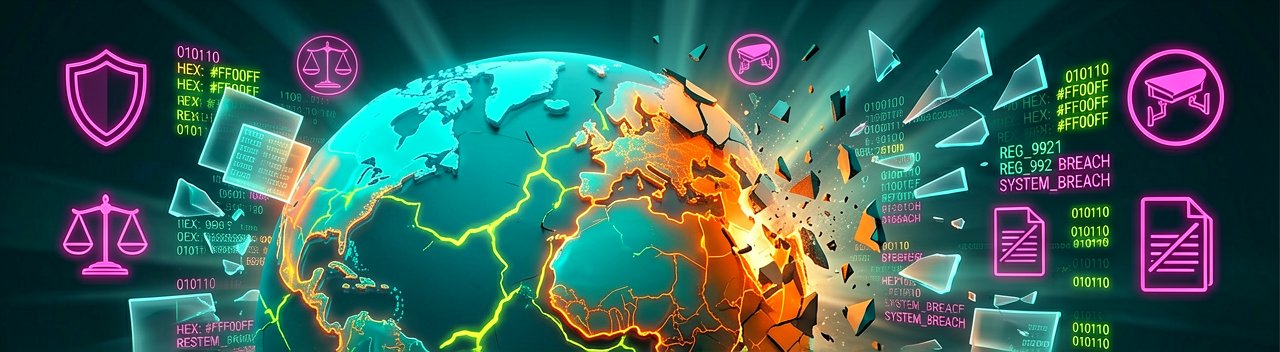
This push for "international coordination" is a subtle nudge to tech providers and global regulators. The Bank of Spain is essentially saying that safety shouldn't be a premium feature or a restricted asset for a select few. If the tools exist to fortify the global financial backbone, they need to be in the hands of those responsible for keeping it upright.
Ultimately, this is a call for a unified front. Financial Stability Director Daniel Pérez Cid has already been in talks with Spanish lenders about these specific AI-linked risks. While the specifics of those conversations remain behind closed doors, the public message is clear: the era of "wait and see" with AI is officially over for the banking world.
Behind the Scenes: The Invisible Arms Race in the Eurozone
What most reports miss is the growing friction between the "speed of code" and the "speed of law." While the EU AI Act provides a high-level framework for safety, the Bank of Spain’s plea highlights a pragmatic reality: a regulation is only as good as the tools available to enforce it. For seasoned reporters watching the Eurozone, this isn't just about one bank; it's a signal that the European Central Bank (ECB) and its subsidiaries are feeling the heat of a "digital divide" where attackers leverage open-source or leaked models while defenders are slowed by procurement cycles and safety restrictions.

The mention of specific models like Mythos and Glasswing isn't accidental. It marks a shift in how regulators communicate—moving away from vague warnings about "technology" and toward specific, actionable intelligence on AI capabilities. By name-dropping these tools, the Bank of Spain is effectively pressuring tech giants to prioritize the "protective" side of the equation. Stakeholders in the Spanish banking sector are increasingly worried that being a "high-risk" sector under the EU AI Act shouldn't mean they are the last to get their hands on the latest defensive innovations.
Historically, Spanish banks have been early adopters of digital transformation, but that agility has made them a prime target. As the industry moves toward "synchronized" attacks—where a single vulnerability in a common cloud provider or a shared API could compromise dozens of institutions at once—the concept of "individual security" is becoming obsolete. The Bank of Spain is championing a shift toward collective, AI-augmented resilience, signaling that in the near future, a bank’s "capital adequacy" might be measured as much by its algorithm access as its cash reserves.
The Paradox of the Automated Vault
Reading Between the Lines: There is a profound irony in a central bank begging for more AI to solve the problems created by AI. It’s the digital equivalent of a homeowner asking for a high-powered flamethrower to fight a fire because the arsonists have upgraded their torches. While the Bank of Spain’s call for "leveling the playing field" sounds logical, it glosses over a messy reality: by demanding access to hyper-advanced tools like Glasswing, regulators are effectively asking to join a high-stakes beta test for tech that even its creators don't fully control.
We have to question the assumption that more tech is the ultimate prophylactic. If the window for patching vulnerabilities is shrinking to near-zero, the bottleneck isn't just a lack of AI—it’s human bureaucracy. You can have an AI model that identifies a breach in milliseconds, but if that finding has to clear three committees and a compliance officer before a patch is deployed, the "speed of AI" becomes a moot point. The central bank is flagging technical risks, but the real failure point might still be the analog speed of institutional decision-making.
Furthermore, there’s a quiet contradiction in the bank’s stance on "international coordination." Historically, central banks are notoriously protective of their domestic stability protocols. Pushing for a unified, AI-driven defensive front requires a level of transparency and data-sharing that most financial institutions find allergic. If every bank is using the same "protective" AI to shield themselves, they’ve essentially created a monoculture. In nature, a monoculture is one mutation away from extinction; in finance, a single "hallucination" or logic flaw in a shared defensive AI could theoretically provide a skeleton key to the entire sector.
Projecting forward, this move might signal the end of the "human-in-the-loop" era for financial security. If the Bank of Spain gets its wish, we are looking at a future where financial stability is maintained by two competing algorithms playing a high-frequency game of chess in the dark. It’s a pragmatic evolution, perhaps, but one that replaces the risk of human error with the risk of "black box" systemic failure. We are trading the clumsy thief for a ghost in the machine that we hope is on our side.
Ultimately, the Bank of Spain’s plea is a confession of vulnerability. It’s an admission that the traditional regulatory toolkit—audits, stress tests, and capital buffers—is increasingly irrelevant against a script that can rewrite itself. The skepticism lies in whether the "good" AI will actually be better than the "bad" AI, or if we’re just building a taller pedestal for the eventual fall.
In the end, we’re racing toward a future where our money is guarded by machines we don't quite understand, to protect us from other machines we understand even less. It’s comforting to know that while the robots fight over our bank accounts, humans will still be required for the most important job of all: explaining to the board exactly why the "unhackable" algorithm just gave the keys to the building to a chatbot.
Artūras Malašauskas is an AI Systems Integrator with 20+ years of production-grade web engineering experience. He has designed, shipped, and scaled enterprise Python/PHP systems for logistics, SaaS, and public-sector clients. For the past year, he has focused exclusively on AI integrations: deploying open-source LLMs, building generative media pipelines (image, audio, video), and engineering multi-agent workflows for real production environments. His standard: reproducibility, security, cost-efficient inference—no vaporware. He documents and evaluates emerging AI tooling, separating verified capabilities from marketing noise. Technical editor at: muza-ai.eu, ai-verslas.lt, ai-naujinos.lt Connect on LinkedIn
Comments