The Fortified Core: Navigating the AI Server Security Arms Race
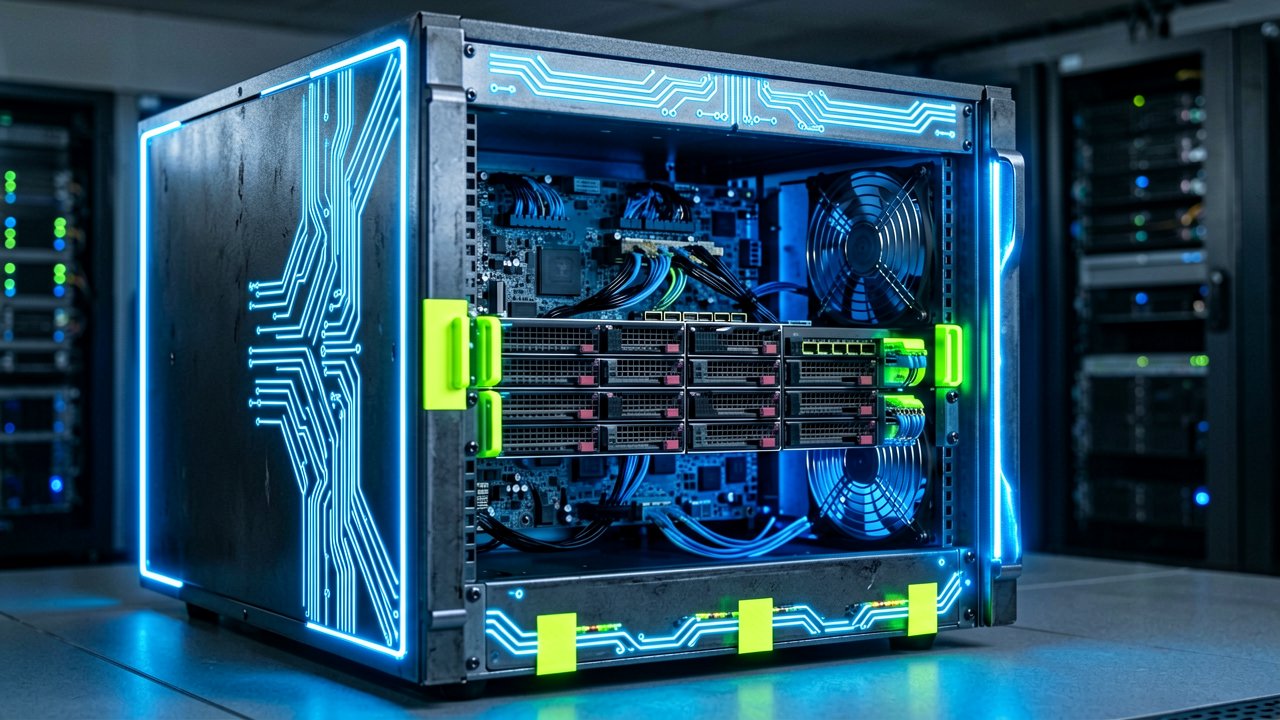
If you've been watching the data center space lately, you know it's no longer just about who has the most teraflops. We've entered an era where the silicon itself is a fortress. The AI server security market is currently undergoing a massive transformation, moving from a niche concern to a multi-billion dollar juggernaut. According to latest industry figures from Market.us , this sector is projected to explode from roughly $7.8 billion in 2024 to a staggering $616.3 billion by 2034. That’s a compound annual growth rate (CAGR) of nearly 55%, reflecting a world that’s finally realizing that "smart" doesn't always mean "safe."
The "why" behind this surge isn't hard to find. As enterprises pour their most sensitive proprietary data into Large Language Models (LLMs), the servers hosting those models become the ultimate prize for bad actors. It's not just about stopping a hack anymore; it's about protecting the "weights" of the model—the secret sauce that makes an AI valuable. We're seeing a shift where security is baked into the hardware layer rather than just being a software afterthought. North America currently leads the charge, holding over 41% of the market share, but the demand for "sovereign AI"—infrastructure that keeps data within specific national borders—is driving global interest to fever pitch.
The Rise of Confidential Computing
One of the most significant trends I'm tracking is the move toward "Confidential Computing." Historically, we’ve been good at protecting data at rest (on a hard drive) and data in transit (moving over the web). But data *in use*—the moment it’s being crunched by a GPU—has always been the weak link. As noted by Grand View Research, the confidential computing market is set to skyrocket, with projections hitting over $153 billion by 2030. This tech uses hardware-based Trusted Execution Environments (TEEs) to create "enclaves" where data can be processed in total isolation. Even if a hacker has root access to the server, they can't peek inside the enclave.
Shadow AI and the Regulatory Squeeze
Beyond the hardware, there's a cultural shift happening. Experts at IBM are sounding the alarm on "Shadow AI"—employees using unsanctioned, third-party AI tools that bypass company security protocols. In response, 2025 is becoming the year of AI Governance. We're seeing a flurry of new regulations, akin to a "GDPR for AI," requiring companies to prove exactly how their AI processes and protects user data. This is forcing a massive upgrade in server-side monitoring tools that can detect behavioral anomalies in real-time, effectively using AI to police other AI.
The Key Players Shaping the Infrastructure
So, who’s actually building these digital fortresses? It’s a mix of the classic hardware titans and the cloud giants. According to Research and Markets, the leader board includes familiar names like Dell Technologies, Hewlett Packard Enterprise (HPE), and Lenovo, all of whom are integrating deeper security features into their rack-mounted AI servers. On the cloud side, Microsoft Azure, AWS, and Google Cloud are in an arms race to offer the most secure "AI factories."
The synergy between hardware and software is where the real magic (and money) is. NVIDIA has become a central player here, not just for their chips, but for their collaborations with companies like Supermicro to co-develop next-gen servers with enhanced data integrity. Meanwhile, cybersecurity specialists like Palo Alto Networks, Fortinet, and CrowdStrike are pivoting their entire platforms to offer AI-native security that can keep up with the speed of automated threats. It's a crowded, high-stakes game, and as the "AI factory" concept goes mainstream, the line between an "AI server" and a "security appliance" is going to get very, very blurry.
Behind the Silicon Curtain: While market cap charts and CAGR percentages tell a story of growth, they often gloss over the sheer engineering desperation currently defining the data center floor. As an observer of this space for a decade, I’ve seen the industry move from simple firewalls to what is essentially a "Zero Trust" model applied to the motherboard. We aren't just talking about passwords anymore; we are talking about a physical arms race where the server chassis itself is designed to self-destruct—digitally speaking—if it detects an unauthorized probe.
The real friction point that most analysts miss is the "Security vs. Performance" tax. In the early days of AI, security was often disabled because it throttled throughput. If you're paying $40,000 for a single GPU, you want every ounce of its power dedicated to inference, not encryption overhead. However, the stakes have shifted. I’ve spoken with CTOs who admit that a single leaked model weight—the numerical values that define an AI's "intelligence"—could effectively bankrupt a startup by allowing a competitor to "clone" their billion-dollar research for the price of a few cloud credits.

The Hardware Root of Trust
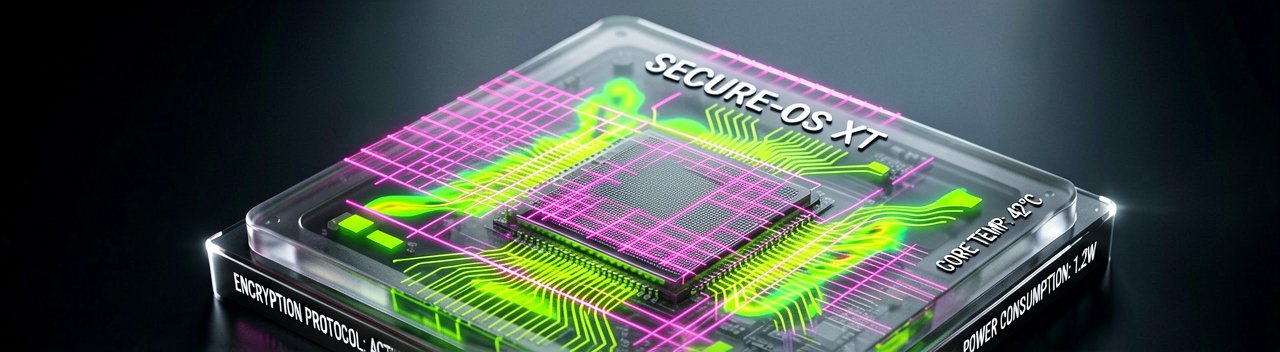
This has led to the rise of the "Silicon Root of Trust" (RoT). This isn't just marketing fluff; it’s a dedicated, immutable piece of hardware that verifies every single line of code before the server even boots. Companies like HPE have pioneered this at the logic-gate level, ensuring that if the firmware has been tampered with by a sophisticated state actor, the server simply refuses to turn on. It’s a scorched-earth policy for data integrity that has become the baseline requirement for government and defense contracts.
The Geopolitical Tug-of-War
There is also a fascinating, somewhat tense historical context to where these servers are physically assembled. For years, the supply chain was optimized for cost, leading to a heavy reliance on a few global hubs. But as highlighted by CSIS, the "clean" supply chain has become a matter of national security. We are seeing a massive "re-shoring" effort where AI servers destined for sensitive work are being built in high-scrutiny facilities in North America and Europe to prevent "interdiction"—the practice of intercepting hardware during shipping to plant physical "bugs" or malicious chips.
The Human Element: The "Prompt Injection" Pivot
Finally, we have to talk about the shift in the threat model. Historically, server security was about keeping people *out*. Now, because of the way LLMs work, the threat often comes from the *inside* via the user interface. "Prompt injection" attacks can trick an AI into dumping its system configuration or bypassing its own security layers. This is forcing server manufacturers to integrate "firewalls for prompts"—specialized chips that sit between the user and the GPU to sanitize inputs. It’s a layer of the stack that didn't exist three years ago, proving that in the AI era, the hardware must be as adaptive as the software it runs.
Ultimately, the "winners" in this market won't just be the ones with the fastest processors, but the ones who can prove their systems are impenetrable. In the high-stakes world of enterprise AI, trust is the only currency that actually scales. We are moving toward a future where "Verified Secure" is a more important label than "Intel Inside" or "NVIDIA Powered."
Reading Between the Lines: The industry’s obsession with "unbreakable" AI hardware often feels like building a ten-foot steel door on a house with cardboard walls. We are currently witnessing a massive capital expenditure cycle where companies are buying into the "confidential computing" dream, but there is a glaring contradiction at the heart of this movement. While the silicon might be hardened against physical tampering and memory snooping, the AI models themselves remain fundamentally "leaky" by design. You can have the most secure server in the world, but if your model is susceptible to training data extraction, the hardware fortress becomes a moot point.
There is also a significant amount of "security washing" occurring in the server marketing landscape. Every vendor now claims their rack is "AI-Ready and Zero-Trust Native," but the reality is that the management software layer—the BMC (Baseboard Management Controller)—remains one of the most vulnerable and bug-ridden parts of the modern data center. Projections from Gartner suggest that through 2026, the majority of successful attacks on AI infrastructure won't involve exotic side-channel exploits of GPUs, but rather the exploitation of "boring" unpatched vulnerabilities in the very management tools meant to keep the servers running.
The Sustainability Paradox
Then there is the uncomfortable intersection of security and the environment. All this real-time encryption, hardware attestation, and multi-layered monitoring requires a non-trivial amount of electricity. In an era where data centers are already under fire for their carbon footprints, the "security tax" is adding another layer of energy consumption. As reported by IEA, data center electricity consumption could double by 2026, driven largely by AI. We are rapidly approaching a crossroads where organizations may have to choose between their ESG (Environmental, Social, and Governance) goals and their "Zero Trust" security mandates. You can't run a green data center if every bit of data has to be encrypted and decrypted six times by power-hungry security co-processors.
The Illusion of Sovereignty
Finally, we need to address the myth of "Sovereign AI." Many nations are investing in localized AI server clusters to ensure data doesn't cross borders, yet the underlying security intellectual property—the microcode, the root-of-trust logic, and the hypervisors—is still concentrated in the hands of a few global giants. This creates a psychological safety net rather than a technical one. True independence in AI security would require a ground-up redesign of the silicon stack that most countries simply aren't equipped to execute. For the foreseeable future, "national security" in the AI space will likely remain a high-end subscription service provided by American or specialized East Asian hardware firms.
"We are currently spending billions to ensure that nobody can steal our AI models, which is ironic considering we still haven't quite figured out how to stop the AI itself from confidently hallucinating our own trade secrets to anyone who asks it nicely enough."
Artūras Malašauskas is an AI Systems Integrator with 20+ years of production-grade web engineering experience. He has designed, shipped, and scaled enterprise Python/PHP systems for logistics, SaaS, and public-sector clients. For the past year, he has focused exclusively on AI integrations: deploying open-source LLMs, building generative media pipelines (image, audio, video), and engineering multi-agent workflows for real production environments. His standard: reproducibility, security, cost-efficient inference—no vaporware. He documents and evaluates emerging AI tooling, separating verified capabilities from marketing noise. Technical editor at: muza-ai.eu, ai-verslas.lt, ai-naujinos.lt Connect on LinkedIn
Comments