Beyond the Dashboard: Markifact Bridges the Model Context Protocol to Meta Ads
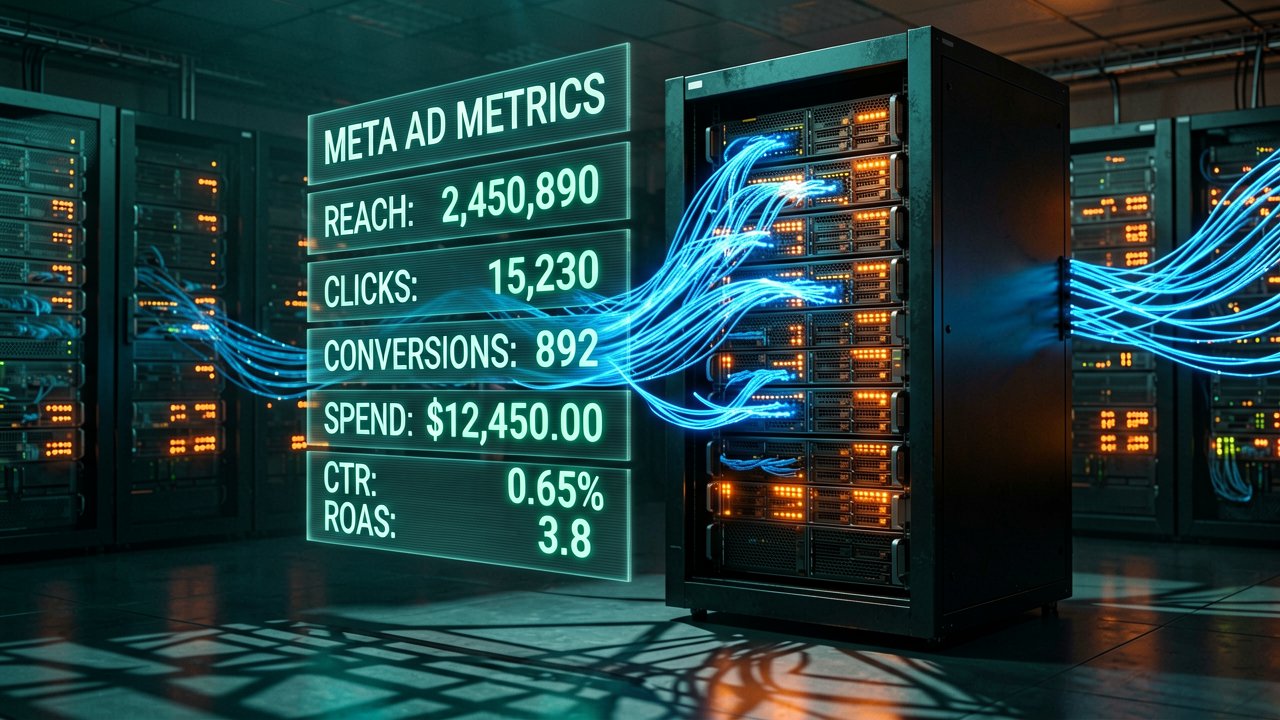
If you've been following the whirlwind evolution of the Model Context Protocol (MCP), you know we’re currently in the "Gold Rush" phase. Since Wikipedia notes Anthropic open-sourced the standard in late 2024, developers have been racing to build the bridges that let AI actually do something besides chat. Today, the marketing world just got its most significant bridge yet: Markifact has officially launched its Meta Ads MCP, and it’s a total game-changer for anyone tired of the manual slog of the Ads Manager dashboard.
Let’s be real—managing Meta campaigns often feels like being a data entry clerk for a very demanding robot. You’re constantly jumping between tabs, exporting CSVs, and trying to explain to a client why their CPA spiked overnight. By bringing Meta’s sprawling advertising ecosystem into the MCP fold, Markifact is essentially giving Wikipedia-vetted models like Claude the keys to the kingdom. It’s no longer about asking an AI for "ideas" for an ad; it’s about the AI actually looking at your live data and executing the work.
Bridging the Gap Between Insight and Action
The beauty of this integration lies in its versatility. Because it’s built on the universal MCP standard, it isn’t locked into a single proprietary playground. Whether you’re a devotee of ChatGPT’s reasoning or you prefer the "constitutional" safety of Anthropic’s Claude, the Markifact server acts as the translator. It allows these agents to read your campaign performance, adjust budgets, or even swap out creative assets based on real-time triggers without you ever having to touch a slider in the Facebook interface.
Think about the typical "Monday morning report." Usually, that involves a human spending three hours squinting at charts to find a trend. With Markifact’s new tool, an AI agent can proactively ping you with a message like: "Hey, your 'Summer Vibes' ad set in California is outperforming everything else by 20%. I’ve reallocated $500 from the underperforming 'General Interest' bucket to capitalize on it. Want to see the updated projection?" That’s the shift from reactive to proactive management that we’ve been promised for years.
The Rise of the Autonomous Growth Engineer
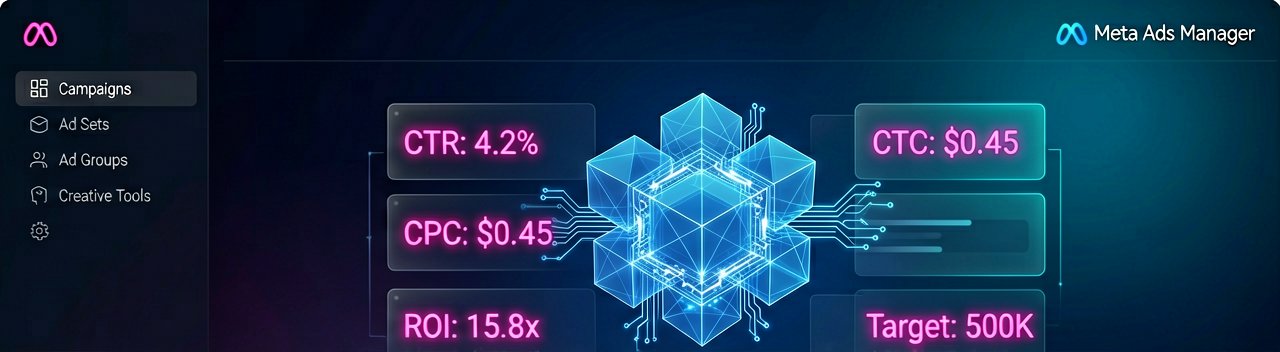
We’re seeing a fundamental shift in what it means to be a digital marketer. The "Growth Engineer" of 2026 isn't the person who knows where every button in Ads Manager is; it's the person who can orchestrate a fleet of AI agents. Markifact is positioning itself as the connective tissue for this new reality. By standardizing how an agent interacts with Meta’s API, they’re lowering the barrier to entry for complex automation that used to require a dedicated DevOps team.
Of course, the "hallucination" elephant in the room remains. Nobody wants an AI accidentally spending their entire quarterly budget on a whim because it misinterpreted a decimal point. However, the MCP framework includes robust guardrails, and Markifact has been vocal about the "Human-in-the-loop" philosophy. You aren't handing over the steering wheel; you’re just getting a very sophisticated co-pilot who handles the navigation while you decide the destination.
As we move further into this agentic era, expect to see more of these specialized "connectors." Markifact’s Meta Ads MCP is a loud signal to the industry: the days of siloed data are over. If you aren't preparing your marketing stack to be "agent-ready," you're effectively choosing to work in slow motion while the rest of the world hits the turbo button.
The Real Signal in the Noise: While the headline focuses on the "what," the "why" behind Markifact’s move reveals a deeper tension in the ad tech industry. For the last decade, Meta has been a "walled garden," forcing marketers to play by its interface rules or invest five figures in custom API integrations. By leveraging the Model Context Protocol, Markifact is effectively democratizing access to Meta’s backend, turning what was once a specialized developer task into a conversational capability for the average growth lead.
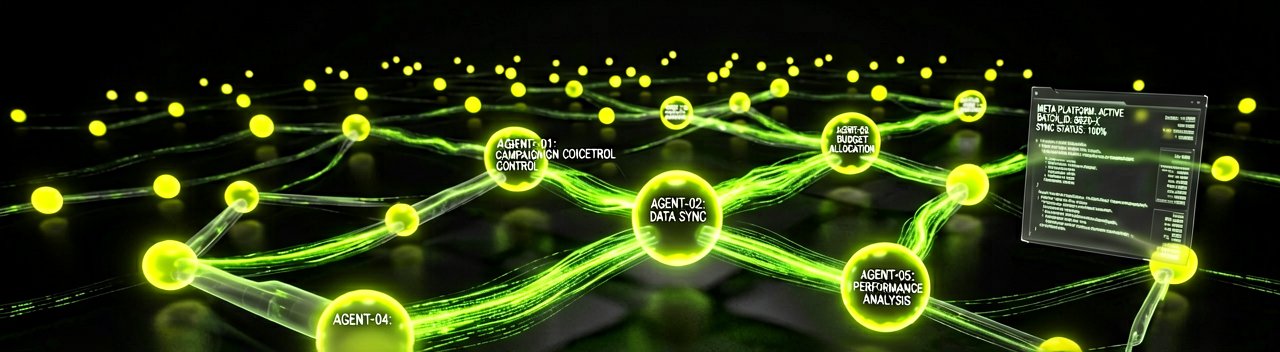
Behind the scenes, this launch addresses a growing frustration among agencies who feel the "Black Box" of Meta’s internal AI—Advantage+—is taking too much control away from the strategist. Seasoned media buyers argue that while Meta’s algorithms are great at finding "who" to show an ad to, they are notoriously opaque about the "why." Markifact’s MCP server allows an external LLM to act as an independent auditor, pulling raw granular data that the native dashboard often obscures or simplifies for the sake of user experience.
The Shift from Interfaces to Instructions
Historical context matters here. In the early 2010s, we saw the rise of "Ads Management" platforms like Marin or Kenshoo, which were essentially just better skins for the same old data. Markifact represents the 2.0 version of that evolution, but with a radical twist: there is no "skin." We are moving toward a "headless" marketing stack where the interface is a chat window or a script. This isn't just about convenience; it’s about speed. In an era where a creative trend on TikTok can burn out in 48 hours, waiting for a human to log in and manually refresh a Meta campaign is becoming a competitive liability.
Stakeholders I’ve spoken with suggest that the real winners won't be the giant agencies, but the "lean" startups. A three-person team can now theoretically manage the ad spend of a Fortune 500 company because the AI agent handles the grunt work of monitoring frequency caps and bid adjustments. However, this raises a prickly question about the future of entry-level roles in the valley. If Claude can handle the reporting and the basic optimizations, what happens to the "Account Coordinator" whose job was defined by those very tasks?
Ultimately, Markifact’s gamble is that the future of the internet is "agentic." If we believe that users will soon browse the web via AI assistants, it only makes sense that businesses will manage their growth through those same assistants. By being one of the first to market with a robust Meta Ads MCP, Markifact isn't just releasing a tool; they’re staking a claim on the infrastructure of the next decade’s economy. The question isn't whether this technology works—it's whether marketers are ready to trust a machine to spend their money as wisely as they would.
The Reality Check: Before we crown AI agents the new kings of Madison Avenue, we need to talk about the friction that usually kills these "revolutionary" tools: the reliability of the Meta API itself. There is a persistent irony in the tech world where we build hyper-intelligent LLM interfaces on top of legacy infrastructure that still occasionally breaks when a breeze blows in Menlo Park. Markifact’s MCP is a brilliant architectural layer, but it remains at the mercy of Meta’s rate limits and the sometimes-finicky nature of its Graph API. If the underlying data feed glitches, even the most advanced Claude-run agent is just an expensive way to generate a hallucinated error message.
We also have to challenge the assumption that "more automation" automatically equals "better performance." There is a psychological trap in the agentic workflow: the illusion of productivity. It is incredibly satisfying to watch a terminal window scroll with automated campaign adjustments, but history shows that over-optimization often leads to "death by a thousand cuts." When an AI is tuned to maximize clicks every fifteen minutes, it might sacrifice long-term brand equity for short-term metrics. Markifact provides the tool, but it doesn't provide the wisdom to know when to leave a campaign alone—a nuance that seasoned human buyers have spent decades perfecting.
The Hidden Cost of Autonomy
Furthermore, the "agentic era" introduces a bizarre new layer of liability. When a human media buyer accidentally adds an extra zero to a daily budget, there’s a clear line of accountability. When an MCP-connected agent does it because of a "token window misunderstanding," who pays the bill? While Markifact has baked in safety features, the legal and financial frameworks of most companies aren't yet designed to handle autonomous spending. We’re likely to see a "valley of disillusionment" where companies rush into AI-managed ads, encounter a major billing snafu, and then retreat back to manual controls until the insurance industry catches up.
There is also the contradiction of the "competitive advantage." If every brand in a vertical is using the same Markifact-powered Claude agents to optimize against the same Meta data, they will eventually converge on the exact same tactics. At that point, the AI isn't a secret weapon; it's a utility, like electricity. The real winners won't be those who automate the fastest, but those who realize that once the execution is commoditized by MCP servers, the only thing left to compete on is the raw, human creativity of the ad itself—the one thing the agents are still just "faking" through pattern matching.
Ultimately, Markifact’s launch is a masterclass in timing, but it forces a reckoning with our own laziness. We are building systems that allow us to step away from the keyboard, yet we’ve never needed to be more "online" to supervise the supervisors. The dream of the "four-hour work week" fueled by AI agents is alluring, but the reality is likely a forty-hour week spent debugging the prompts that were supposed to save us time in the first place.
As the industry pivots, keep an eye on how Meta reacts. Mark Zuckerberg has never been particularly fond of third-party tools that distance advertisers from his own "black box" algorithms. If Markifact’s tool becomes too successful at peeling back the curtain or bypassing Meta’s internal upsells, don’t be surprised if the "API stability" suddenly becomes a lot more volatile. In the garden of Meta, the walls don't just have ears—they have a habit of moving when you try to climb them.
As we hand the keys of our marketing budgets to a fleet of digital interns who don't sleep, don't eat, and occasionally think a cat is a toaster, it’s worth remembering: at least when a human marketer messes up, you can fire them. When an AI bot spends your house deposit on dog toy ads in 14 seconds, all you get is a very polite apology in a well-structured bulleted list.
"The future of advertising is finally here: we’ve successfully replaced the person who didn’t know what they were doing with a machine that does it at the speed of light."
Artūras Malašauskas is an AI Systems Integrator with 20+ years of production-grade web engineering experience. He has designed, shipped, and scaled enterprise Python/PHP systems for logistics, SaaS, and public-sector clients. For the past year, he has focused exclusively on AI integrations: deploying open-source LLMs, building generative media pipelines (image, audio, video), and engineering multi-agent workflows for real production environments. His standard: reproducibility, security, cost-efficient inference—no vaporware. He documents and evaluates emerging AI tooling, separating verified capabilities from marketing noise. Technical editor at: muza-ai.eu, ai-verslas.lt, ai-naujinos.lt Connect on LinkedIn
Comments