Engineering Biology: Benchling Unveils Model Hub and Specialized Tools to Standardize AI in the Lab
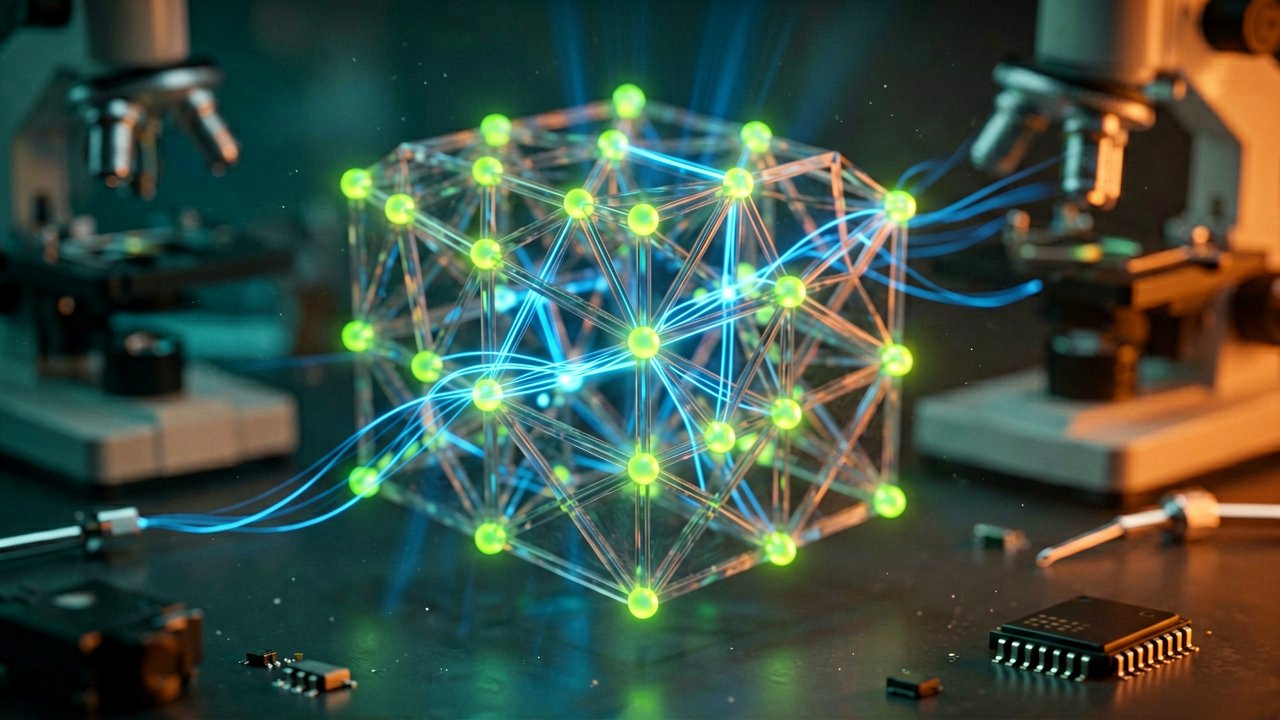
For years, the biotech world has been wrestling with a "data silo" problem that would make any IT manager lose sleep. Scientists spend more time massaging spreadsheets and manually moving DNA sequences between tools than actually curing diseases. But this week, Benchling decided to stop talking about the problem and start coding its way out of it. By launching the Model Hub and Benchling Biologics, the company is effectively trying to build the "operating system" for the modern, AI-driven lab.
The headline act here is the Model Hub, a new infrastructure layer that finally lets scientists run heavy-duty AI models without leaving their experimental notes. According to PR Newswire, this isn't just about sticking a chatbot in a sidebar; it’s about embedding predictive tools like protein structure models directly into the R&D workflow. It’s a smart move—if you make the AI as easy to use as a "Save" button, researchers might actually use it.
Closing the Gap Between Wet Labs and Dry Labs
There’s always been a frustrating wall between the "wet lab" folks who handle the test tubes and the "dry lab" computational teams who crunch the numbers. Benchling Biologics, unveiled at the PEGS Boston Summit, aims to tear that wall down. As reported by BioPharma APAC, the platform introduces a "no-code" antibody format designer. This allows scientists to configure complex antibody architectures in minutes—something that used to take weeks of custom engineering work.
What makes this interesting isn't just the speed; it’s the data quality. Every time a scientist registers a protein, the system automatically handles the boring stuff—annotating regions, identifying mutations, and checking for liabilities. This means the data is "AI-ready" the moment it’s born. As noted by SynBioBeta, this structural foundation is critical as the industry shifts from simple discovery to highly complex, multi-specific antibody design.
The "AI Scientist" Vision Moves Closer
Benchling’s CEO, Sajith Wickramasekara, has been vocal about his "AI Scientist" vision, where AI acts as a collaborator rather than just a tool. This week's releases are the building blocks for that reality. By integrating models from partners like Lilly TuneLab and NVIDIA, Benchling is positioning itself as the central hub for scientific intelligence. According to Benchling, the Model Hub even supports GPU-accelerated Multiple Sequence Alignment (MSA), turning what used to be a coffee-break-length wait into a near-instant result.
It’s clear Benchling is playing the long game. By unifying everything from sequence design to robotic execution—as seen in their recent partnership with HighRes—they're making it very hard for a biotech startup to justify using anything else. If these tools deliver on the promise of letting scientists "direct the science rather than managing infrastructure," the next generation of breakthroughs might arrive a lot sooner than we expected.
For an industry that has historically been slow to digitize, these updates feel like a much-needed adrenaline shot. Whether you're a startup or a giant like Sanofi, the message is clear: if your data isn't structured and your models aren't integrated, you're basically working with one hand tied behind your back.
The Real-World Friction Point: While the marketing gloss focuses on the shiny new AI models, the veteran R&D reporter knows the real battle is won in the trenches of data interoperability. For years, the biotech industry has been plagued by "data debt"—the accumulation of messy, unstructured experimental results that are effectively invisible to machine learning. Benchling’s pivot toward a unified Model Hub isn't just a feature drop; it’s an admission that the industry’s greatest bottleneck isn't a lack of AI algorithms, but the lack of a standardized "clean room" for data to live in.

The Infrastructure of Scientific Trust
The stakes here go beyond simple efficiency. When a computational biologist at a firm like Gilead or Regeneron pulls a protein structure from a public database, there is often a disconnect between that digital model and the physical reality of the "wet lab" freezer. By embedding the Model Hub directly into the electronic lab notebook (ELN), Benchling is attempting to close the trust gap. Scientists can now see the lineage of a model's prediction alongside the physical batch of cells used to validate it, creating a "single source of truth" that has eluded the sector for decades.
From a stakeholder perspective, this move signals a shift in power. Historically, AI in drug discovery was the playground of specialized "Bio-IT" teams who acted as gatekeepers. According to Benchling, the new Biologics solution is designed to democratize this power. By offering "no-code" tools for complex antibody design, they are putting high-level engineering capabilities into the hands of bench scientists who may not know a line of Python but deeply understand the biology of a disease.
A Historical Pivot from "Record-Keeping" to "Design-Thinking"
To understand why this matters, you have to look at where Benchling started. A decade ago, the platform was essentially a digital replacement for paper notebooks—a way to stop losing data in coffee-stained binders. Today’s launch represents the final transition from a system of record to a system of design. As noted by PR Newswire, the integration of GPU-accelerated workflows means that the software is now actively suggesting what the scientist should do next, rather than just documenting what they already did.
This shift isn't without its critics. Skeptics in the academic community often worry about the "black box" nature of AI-driven discovery. If the Model Hub suggests a specific mutation for an antibody, will the scientist understand why? Benchling’s response has been to focus on "contextual AI"—ensuring that every prediction is tethered to the experimental parameters that birthed it. It’s a sophisticated play to satisfy both the speed-hungry C-suite and the naturally cynical research scientist.
Ultimately, the launch of these tools at the PEGS Boston Summit highlights a broader trend: the industrialization of biology. We are moving away from the era of "artisanal" drug discovery, where breakthroughs were the result of individual genius and a bit of luck, and into an era of high-throughput, AI-augmented engineering. By providing the plumbing for this new architecture, Benchling is making itself indispensable to the next decade of pharmaceutical history.
Reading Between the Lines: For all the talk of a "seamless AI revolution," there is a glaring tension at the heart of Benchling’s expansion. The company is betting that biology can be standardized like silicon, yet the "wet lab" remains a notoriously messy place where biological replicates fail for no apparent reason and contamination doesn't care about your model's confidence interval. By building a Model Hub, Benchling is effectively trying to domesticate the chaos of life sciences, but the risk of "garbage in, garbage out" has never been higher. If the underlying experimental data is flawed, these high-speed AI tools will simply help scientists reach the wrong conclusion faster than ever before.
The Paradox of Democratized AI
There is also a subtle contradiction in the promise of "democratizing" AI through no-code interfaces. While Benchling Biologics makes it easier for a traditional biologist to design a complex multi-specific antibody, it simultaneously risks distancing the researcher from the underlying mechanics of the tool. In the old world, the friction of manual design forced a certain level of rigorous scrutiny. In a world where a "Model Hub" suggests the optimal sequence at the click of a button, we have to wonder if the industry is trading deep intuition for algorithmic convenience. History is littered with "automated" solutions that led to a decline in fundamental troubleshooting skills when the system eventually hit a corner case.
Furthermore, Benchling’s push to become the "central nervous system" of the lab creates a significant platform-lock-in dilemma for biotech leadership. As reported by SynBioBeta, the integration of proprietary models alongside open-source ones creates a powerful ecosystem, but it also means that moving your data elsewhere becomes a Herculean task. For a startup, the efficiency gains are undeniable; for a global pharma giant, the prospect of handing the "keys to the kingdom" to a single SaaS provider requires a level of institutional trust that usually takes decades, not product cycles, to build.
Projecting the Silicon-Carbon Collision
Looking ahead, the success of these launches won't be measured by how many models are hosted, but by whether they actually shorten the decade-long slog of clinical trials. The industry has seen "computational revolutions" before—remember the early 2000s hype around rational drug design?—that ultimately hit a wall when faced with the sheer complexity of human physiology. Benchling is betting that this time is different because the data is finally structured. However, if the Model Hub fails to account for the "dark data" of failed experiments that scientists rarely bother to record, the AI will remain fundamentally biased toward what we think we know, rather than what is actually happening in the cell.
Ultimately, Benchling is attempting to solve a human problem with a technical solution. The real hurdle isn't just the lack of a Model Hub; it’s the cultural shift required for a scientist to trust a black-box prediction as much as they trust a petri dish. If Benchling can bridge that psychological gap, they won't just be a software company; they’ll be the architects of a new scientific method. If they can’t, they might just end up providing the world's most expensive and sophisticated digital filing cabinet.
"We’ve officially reached the era where a computer can design a life-saving molecule in seconds, which is truly incredible—right up until the moment a lab technician accidentally leaves the incubator door open and the 'future of medicine' turns into an expensive puddle of lukewarm soup."
Artūras Malašauskas is an AI Systems Integrator with 20+ years of production-grade web engineering experience. He has designed, shipped, and scaled enterprise Python/PHP systems for logistics, SaaS, and public-sector clients. For the past year, he has focused exclusively on AI integrations: deploying open-source LLMs, building generative media pipelines (image, audio, video), and engineering multi-agent workflows for real production environments. His standard: reproducibility, security, cost-efficient inference—no vaporware. He documents and evaluates emerging AI tooling, separating verified capabilities from marketing noise. Technical editor at: muza-ai.eu, ai-verslas.lt, ai-naujinos.lt Connect on LinkedIn
Comments