The Lone Star Algorithm: Texas Deploys AI to Shred State Red Tape
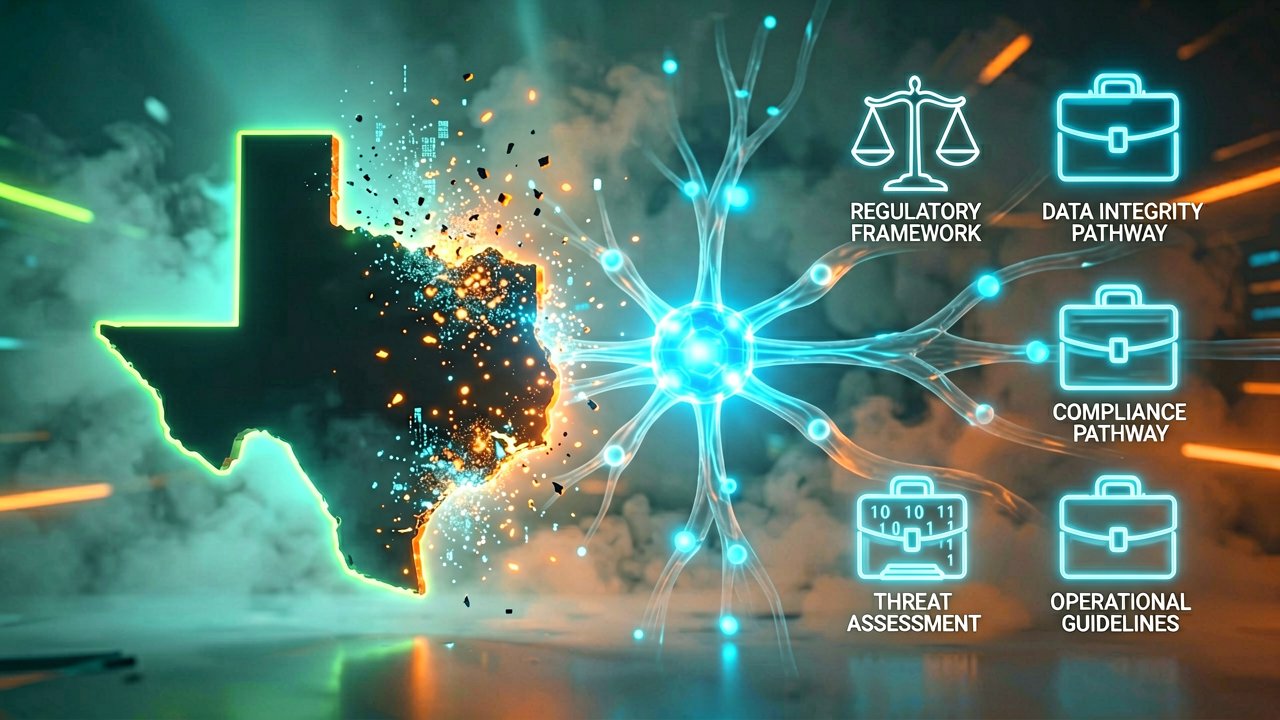
Texas Puts AI on the Front Lines of Bureaucracy
Navigating state government has long been a masterclass in patience, often involving dense PDFs and circular phone menus. However, the Texas Office of Government Efficiency is looking to change that narrative. The state has officially launched a new AI-powered chatbot designed specifically to help the public cut through the "red tape" of state regulations and professional licensing requirements, as reported by Austin American-Statesman.
The initiative stems from a broader push by Texas leadership to streamline how citizens interact with the capital. By leveraging large language models, the tool acts as a digital concierge, capable of parsing thousands of pages of state code to provide direct answers about everything from barber licenses to environmental permits. According to Government Technology, the goal isn't just speed—it’s about accessibility for small business owners who don't have the budget for regulatory consultants.
A Scalable Solution for Regulatory Clarity
What makes this rollout particularly interesting is its focus on "regulatory clarity." For years, Texas has marketed itself as a business-friendly environment, but even friendly states have complex rules. This AI tool is the first major project from the newly formed efficiency office, which was tasked with identifying bottlenecks in state workflows. As noted by The Texas Tribune, the office believes that by automating routine inquiries, state employees can focus on more complex, high-level casework that requires human judgment.
Security and accuracy remain the top concerns for any government-led AI project. To mitigate the risk of "hallucinations"—where an AI confidently provides incorrect information—the Texas office has built the bot on a "grounded" data set, meaning it is restricted to pulling information only from verified state documents. Bloomberg reports that this approach is becoming the gold standard for public sector AI, ensuring that a user doesn't accidentally follow a fake law suggested by a wayward algorithm.

The Future of the Digital Town Square
While the chatbot is currently focused on licensing and regulations, insiders suggest this is merely a pilot for a much broader digital transformation. If successful, we could see similar interfaces rolled out for tax filings, veteran benefits, and even public health queries. This move puts Texas in direct competition with other tech-forward states like California and Utah, which are also racing to integrate generative AI into their digital infrastructure, according to analysis by WIRED.
Ultimately, the success of this AI assistant will be measured by the "hassle factor." If the public finds it easier to start a business or renew a professional certification without a headache, it could serve as a blueprint for federal agencies. As we move further into 2026, the intersection of public policy and machine learning is no longer a futuristic concept—it’s the new standard for how a state serves its people.
The Engine Under the Hood: The launch of this AI-driven regulatory navigator isn't just a win for public relations; it represents a significant technical collaboration between the state and several private-sector giants. Central to this rollout is the involvement of Palantir Technologies, which has been increasingly aggressive in securing government contracts for its AIP (Artificial Intelligence Platform). According to reports from Reuters, the platform allows the Texas Office of Government Efficiency to integrate disparate data silos—ranging from the Department of Licensing and Regulation to the Secretary of State’s records—into a unified, searchable intelligence layer.
Cloud Infrastructure and Ethical Guardrails
The heavy lifting of the generative processing is being supported by Microsoft Azure Government, a specialized cloud environment designed to meet the strict security requirements of public sector entities. By utilizing Azure’s OpenAI Service, Texas is able to leverage the power of GPT-4 while keeping all data within a sovereign cloud perimeter. As highlighted by Forbes, this partnership is a strategic move to ensure that sensitive citizen data never migrates into public training sets, addressing one of the primary privacy concerns raised by tech advocates and privacy watchdogs.

Beyond the software, the "human in the loop" strategy is being managed through a consultancy partnership with Deloitte. Their role involves auditing the chatbot’s responses for compliance with the Texas Administrative Code. This rigorous testing phase is critical, as a single error in licensing advice could lead to legal liabilities or financial loss for local entrepreneurs. The Wall Street Journal notes that the Texas model is unique because it employs a "red team" of legal experts to intentionally stress-test the AI against obscure regulatory edge cases before the full statewide rollout.
Scaling a "Business-First" Digital Economy
The timing of this launch coincides with a massive influx of tech companies moving their headquarters to the Austin and Dallas-Fort Worth areas. Leaders at the Texas Office of Government Efficiency have made it clear that this AI tool is a direct response to the needs of a rapidly expanding corporate landscape. By reducing the "regulatory tax"—the time and money spent simply figuring out how to comply with laws—Texas is positioning itself as a more efficient alternative to traditional tech hubs. This strategy has been closely watched by the U.S. Chamber of Commerce, which has praised the move as a blueprint for modernizing state-level commerce, according to CNBC.
Looking ahead, the collaboration between these tech firms and the state government is expected to evolve into a more predictive model. Instead of just answering questions, future iterations of the bot might proactively notify business owners of upcoming filing deadlines or changes in the law that specifically affect their industry. This shift from reactive service to proactive governance is what many industry analysts at Gartner believe will be the defining characteristic of "Government 2.0" over the next decade.
Artūras Malašauskas is an AI Systems Integrator with 20+ years of production-grade web engineering experience. He has designed, shipped, and scaled enterprise Python/PHP systems for logistics, SaaS, and public-sector clients. For the past year, he has focused exclusively on AI integrations: deploying open-source LLMs, building generative media pipelines (image, audio, video), and engineering multi-agent workflows for real production environments. His standard: reproducibility, security, cost-efficient inference—no vaporware. He documents and evaluates emerging AI tooling, separating verified capabilities from marketing noise. Technical editor at: muza-ai.eu, ai-verslas.lt, ai-naujinos.lt Connect on LinkedIn
Comments