The Security Pivot: Ethereum Tackles Phishing, Jito Scales Up, and the Great Cross-Chain Migration
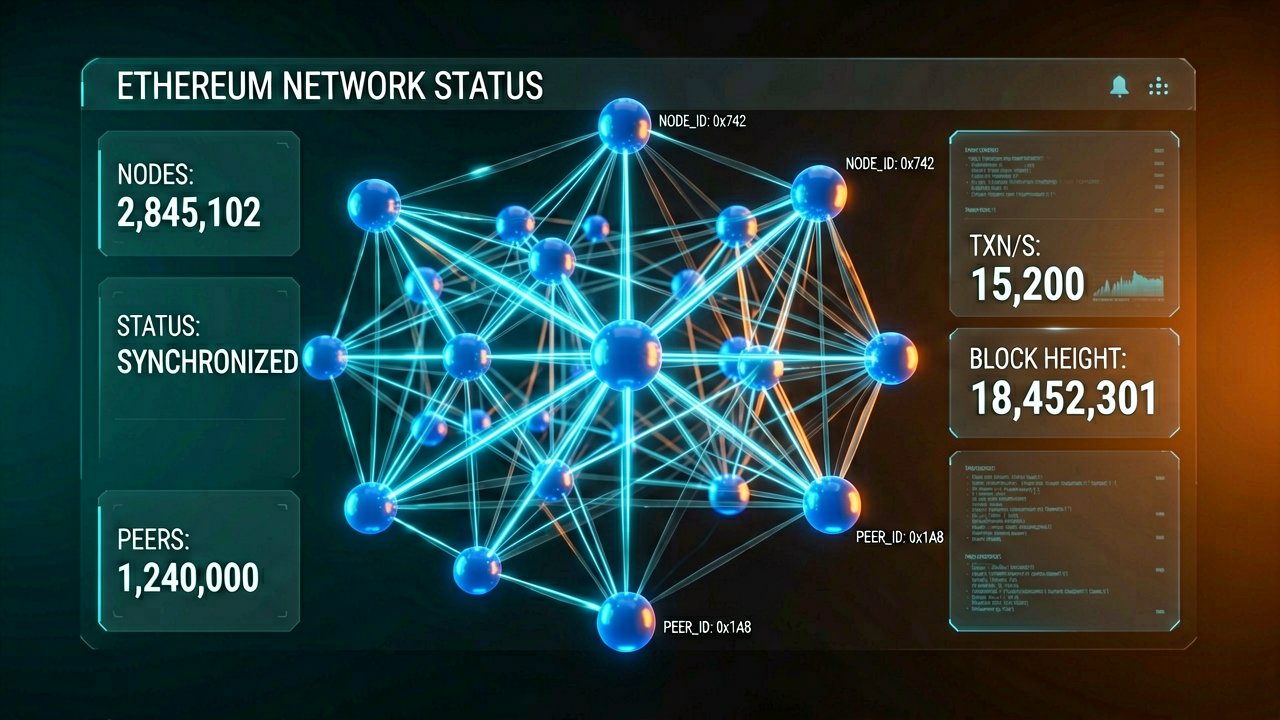
The Backstory: As the blockchain ecosystem matures, the focus has shifted from raw scalability to the "user-readability" of the infrastructure itself. The Ethereum Foundation recently spearheaded the Clear Signing initiative, a coordinated effort alongside industry leaders like Ledger, Trezor, and MetaMask. This move addresses a "structural flaw" known as blind signing, which has historically forced users to approve transactions represented by unreadable hexadecimal strings. By implementing the ERC-7730 and ERC-8176 standards, the network is transitioning to a "What You See Is What You Sign" model, aimed at curbing the billions in losses attributed to phishing and malicious smart contract interactions, as reported by BITmarkets and MEXC.
Jito’s Evolution: From Backend to Front-End
Meanwhile, in the Solana ecosystem, Jito Labs is undergoing a significant strategic pivot. Known primarily for its block engine and liquid staking solutions, the company is moving toward consumer-facing products with the launch of the JTX trading terminal. According to WuBlockchain, Jito CEO Lucas Bruder believes the market is entering a "new phase" where users are looking for a unified experience that handles spot trading, perpetuals, and even prediction markets under one roof. The JTX platform, which is slated for a summer rollout, aims to replicate the speed and advanced order types of centralized exchanges while maintaining a self-custodial framework on-chain, as detailed by RootData.
The Interoperability Shake-up
The cross-chain landscape is also witnessing a major reshuffle as several high-profile protocols distance themselves from LayerZero. This migration trend gained momentum following a series of security incidents, including the high-profile attack on Kelp DAO's rsETH bridge which resulted in nearly $3 billion in losses, as highlighted by Binance Square. In response, protocols like Lombard, Solv Protocol, and Re have begun migrating over $4 billion in assets to Chainlink's Cross-Chain Interoperability Protocol (CCIP). Analysts from PANews suggest that while LayerZero remains a dominant force, the industry's shift toward "risk-averse migration" underscores a growing demand for audited, independent node infrastructure in the quest for ultimate security.
Market Outlook and Institutional Shifts
These updates reflect a broader trend of institutional-grade professionalization across the board. Whether it is Ethereum's push for human-readable security or Jito's attempt to bridge the gap between retail traders and sophisticated on-chain liquidity, the goal is clear: making crypto more accessible and secure for the next wave of mainstream adoption. As noted by CoinDesk, the success of these initiatives will likely depend on how quickly the wider developer community adopts these new standards and how effectively the infrastructure can handle the rising volume of real-world assets (RWAs) moving onto the blockchain.

Reading Between the Lines: The current reshuffling of the modular stack suggests a definitive end to the "growth-at-all-costs" era, replaced by an uncompromising "security-first" mandate. The mass exodus of over $4 billion in assets from LayerZero—led by heavyweights like Bankless favorites Lombard and Solv Protocol—is not merely a reaction to the $292 million Kelp DAO exploit; it is a fundamental market repricing of risk. While LayerZero is pivoting toward its own "Zero" Layer-1 to recapture utility, the "flight to quality" toward Chainlink CCIP highlights that protocols are no longer willing to gamble on single-verifier configurations. As reported by KuCoin and CoinMarketCap, the industry is effectively voting with its liquidity, favoring audited, decentralized oracle networks over more flexible but potentially "fragile" messaging layers.
The Vertically Integrated Future
Jito’s strategic shift with the JTX terminal signals the rise of "Protocol Sovereignty," where infrastructure providers stop waiting for third-party developers and start "dogfooding" their own tech. By integrating 80% of revenue back to JTO holders, Jito is attempting to solve the "valueless governance token" problem that has plagued DeFi. According to Fortune, this move forces other infrastructure firms to either evolve into full-stack consumer apps or risk becoming invisible utilities. The market’s enthusiastic reaction, which saw JTO surge 45%, confirms that investors are hungry for "real yield" derived from actual trading volume rather than just inflationary rewards, a sentiment echoed in analysis by Binance Square.
Ethereum's Last Line of Defense
At the same time, Ethereum’s Clear Signing rollout is the most significant UI-layer upgrade since the merge, shifting the responsibility of security from the user’s intuition to the wallet’s code. By standardizing ERC-7730 and ERC-8176, the Ethereum Foundation is acknowledging that billions in losses cannot be fixed by education alone—they must be fixed by architecture. This "human-readable" shift is essential for the next wave of institutional adoption, as no serious fund manager will sign a transaction they cannot verify in plain English. This coordinated effort between Ledger, MetaMask, and Fireblocks effectively turns every wallet into a rigorous gatekeeper, as noted by MEXC and Xangle.
A Fragmented Yet Fortified Landscape
Ultimately, these updates describe a blockchain landscape that is becoming more fragmented at the chain level but more unified at the security level. The competition for the "canonical" cross-chain bridge is narrowing, while the competition for the "home" trading terminal is just beginning. As Jito expands Solana’s reach and Ethereum hardens its user experience, the industry is slowly shedding its "Wild West" reputation. According to Everstake, the focus for late 2026 is no longer just about whether a transaction *can* happen, but whether the user *meant* for it to happen and whether the bridge *guarantees* it will arrive safely.

"In the end, we’re all just trying to build a world where clicking 'Confirm' doesn't feel like a high-stakes game of Russian Roulette. If Jito can make trading fun and Ethereum can make signing readable, maybe—just maybe—we’ll finally spend less time staring at hexadecimal strings and more time actually enjoying our ‘generational wealth’ (or at least what’s left of it after gas fees)."
Artūras Malašauskas is an AI Systems Integrator with 20+ years of production-grade web engineering experience. He has designed, shipped, and scaled enterprise Python/PHP systems for logistics, SaaS, and public-sector clients. For the past year, he has focused exclusively on AI integrations: deploying open-source LLMs, building generative media pipelines (image, audio, video), and engineering multi-agent workflows for real production environments. His standard: reproducibility, security, cost-efficient inference—no vaporware. He documents and evaluates emerging AI tooling, separating verified capabilities from marketing noise. Technical editor at: muza-ai.eu, ai-verslas.lt, ai-naujinos.lt Connect on LinkedIn
Comments