The Soul in the Silicon: Pope Francis Establishes AI Study Group Ahead of Historic Encyclical
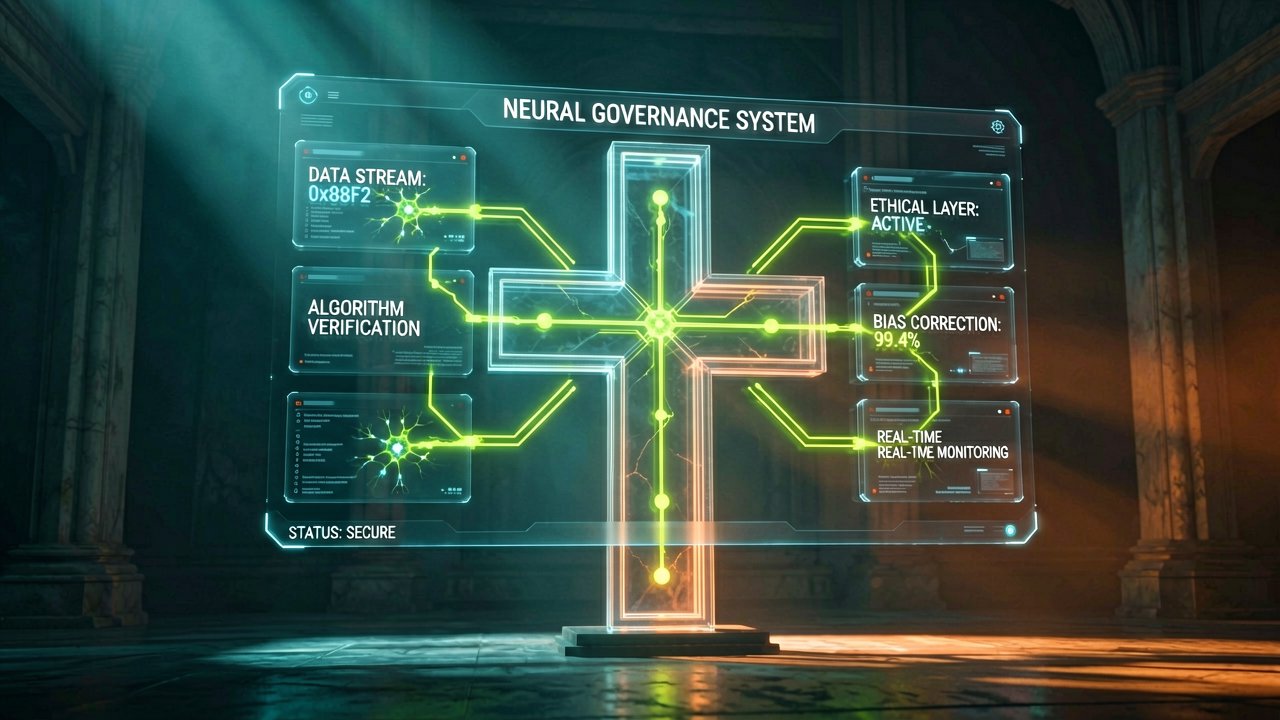
The Vatican is officially entering the Silicon Valley fray. In a move that bridges ancient theology with cutting-edge computation, Pope Francis has established a dedicated artificial intelligence study group. This initiative comes as the Holy See prepares to release a seminal document—the Pope’s first encyclical specifically addressing the ethical and social implications of AI—signaling that the Church views algorithmic governance as one of the defining moral challenges of the 21st century.
This isn't just a symbolic gesture. The formation of this group, as reported by Vatican News, underscores a "pro-tech but pro-human" stance. The Pope has long been a vocal advocate for "algor-ethics," a term coined within the Roman Curia to describe the intersection of ethics and algorithms. The goal is to ensure that AI development remains "human-centric" and doesn't exacerbate global inequality or social isolation.
Bridging the Digital and the Divine
The new study group is expected to serve as a high-level advisory board, pulling in experts from the Dicastery for Culture and Education. According to insights from The Pillar, the group will look beyond simple data privacy, focusing instead on the existential risks and the potential for AI to displace labor in ways that strip individuals of their dignity. It’s a sophisticated pivot from a 2,000-year-old institution trying to remain relevant in a world of LLMs and neural networks.
The timing is particularly pointed. By releasing an encyclical—the highest form of papal teaching—Pope Francis is effectively setting a moral baseline for 1.3 billion Catholics and, more broadly, for international regulators. As noted by Reuters, the Vatican has already been active in this space, hosting the "Rome Call for AI Ethics," which was signed by tech giants like Microsoft and IBM to promote transparency and inclusion in tech design.
A Direct Appeal to Silicon Valley
What makes this journalistic moment unique is the tone coming out of the Vatican. It’s less "fire and brimstone" and more "product roadmap review." The Pope’s recent addresses, highlighted by National Catholic Reporter, emphasize that while AI has the potential to solve complex problems in medicine and environmental science, it must be guided by a "heart" that software naturally lacks. The upcoming encyclical is expected to dive deep into the "technocratic paradigm," a critique of viewing all human problems as mere engineering hurdles.
The study group's primary task will be to monitor the rapid evolution of generative AI. With deepfakes, automated warfare, and algorithmic bias becoming daily headlines, the Vatican wants a seat at the table where global policy is written. As Associated Press points out, the Holy See is increasingly participating in international forums like the UN to argue that digital sovereignty should be a universal right, not just a luxury for the technologically advanced North.
Ultimately, this move by Pope Francis suggests that the "ghost in the machine" needs a spiritual guardian. By institutionalizing AI research within the Vatican, the Church is betting that the most important questions about artificial intelligence aren't about how fast it can think, but how well it can serve. As we wait for the full encyclical to drop, one thing is clear: the Pope is no longer just watching the digital revolution—he’s trying to steer it.
The Ethical Blueprint: Behind the Vatican’s new study group lies a sophisticated network of collaborations with some of the biggest names in the tech industry. This isn't a solitary effort by the Church; it is an expansion of the "Rome Call for AI Ethics," a project spearheaded by the Pontifical Academy for Life. By bringing companies like Microsoft and IBM to the table, the Vatican has managed to secure public commitments to principles such as transparency, inclusion, and accountability—values that are often at odds with the "move fast and break things" culture of traditional tech development.

The involvement of Microsoft, specifically through the advocacy of President Brad Smith, has been a cornerstone of this movement. As reported by Microsoft News, the company has actively participated in Vatican-led summits to discuss the "ethics of algorithms." This partnership suggests that even the world’s largest software makers are looking for a moral compass to navigate the "black box" nature of deep learning, where even the creators often struggle to explain how an AI arrived at a specific decision.
A Multi-Faith Tech Alliance
The scope of this initiative has recently grown beyond the Catholic Church, evolving into a global, multi-faith coalition. According to Forbes, recent expansions of the Rome Call have included representatives from Judaism and Islam, highlighting that the "algor-ethics" framework is intended to be a universal standard. This religious alliance puts significant pressure on companies like Cisco, which also joined the pledge, to ensure that their infrastructure doesn't facilitate digital authoritarianism or social profiling.
This push for regulation is also a strategic response to the rise of generative AI giants like OpenAI and Google. While these companies are racing to achieve Artificial General Intelligence (AGI), the Vatican's study group is raising alarms about the "digital divide." As noted by Bloomberg, the Holy See is concerned that the concentration of AI power within a handful of Silicon Valley firms could lead to a new form of "digital colonialism," where the Global South provides the data but receives none of the economic benefits.
Furthermore, the Dicastery for Culture and Education is looking at the long-term cognitive effects of AI on the youth. By partnering with academic institutions and social scientists, the Vatican aims to provide a counter-narrative to the profit-driven motives of social media algorithms. As highlighted by Wired, this includes investigating how AI-driven recommendation engines can polarize society and erode the concept of shared truth, which the Church views as a direct threat to communal peace.
The upcoming encyclical is expected to name-check these systemic issues, moving from abstract theology to concrete policy suggestions. By institutionalizing these critiques through a formal study group, Pope Francis is ensuring that the Vatican’s influence extends into the boardrooms of Amazon, Meta, and beyond. It is an ambitious attempt to force a "conscience" into the code, reminding the architects of our digital future that technology should be a tool for elevation, not just optimization.
Beyond the Algorithmic Horizon: The Vatican's decision to formalize an AI study group is a calculated move to inject "human agency" back into a narrative increasingly dominated by deterministic code. Analytically, this represents a shift from the Church as a passive moral commentator to an active participant in global governance. By embedding theologians and philosophers within the Centre for Digital Culture under the Dicastery for Culture and Education, the Holy See is positioning itself to address the "technocratic paradigm"—the risk that we view all human problems through the lens of engineering efficiency rather than moral value.
The "Antiqua et Nova" (Ancient and New) document, released in early 2025, serves as the intellectual precursor to this new study group, meticulously distinguishing between "calculative" machine logic and "relational" human intelligence. From a geopolitical standpoint, the Pope’s historic address at the G7 Summit in Italy signaled that the Vatican is no longer content with localized ethical guidelines. Instead, it is advocating for a binding international treaty to regulate "lethal autonomous weapons" and to prevent the concentration of AI power in the hands of a few tech conglomerates, which Vatican News notes could exacerbate global inequality.
The Convergence of Faith and Firmware
This initiative is also a survival strategy for institutional credibility in a post-truth era. With the rise of deepfakes and generative misinformation, the Church is leaning into its 2,000-year history of "discernment" to combat what it views as a "spiral of annihilation" in human relationships. The study group’s work with institutions like the University of Notre Dame, which recently received a $50 million grant for AI ethics research, demonstrates a rigorous academic backing that moves beyond simple homilies. They aren't just worried about AI taking jobs; they are worried about AI taking the "human soul" out of decision-making.
Ultimately, the Vatican is betting that as AI becomes more "intelligent," the world will paradoxically crave more "wisdom"—a quality they argue is exclusively human. By creating a formal research body, the Pope is ensuring that when the next major breakthrough in AGI occurs, the Catholic Church won't just be reacting to the news; it will be providing the ethical framework used to judge it. It is a bold attempt to ensure that while the hardware may be silicon, the software of society remains grounded in the "True and the Good".
"In the end, even the most sophisticated AI can't grant absolution or perform a miracle, though it might eventually be able to calculate exactly how many angels can dance on the head of a pin. Until then, it’s comforting to know that while Silicon Valley builds the future, the Vatican is making sure someone remembers to bring the soul."
Artūras Malašauskas is an AI Systems Integrator with 20+ years of production-grade web engineering experience. He has designed, shipped, and scaled enterprise Python/PHP systems for logistics, SaaS, and public-sector clients. For the past year, he has focused exclusively on AI integrations: deploying open-source LLMs, building generative media pipelines (image, audio, video), and engineering multi-agent workflows for real production environments. His standard: reproducibility, security, cost-efficient inference—no vaporware. He documents and evaluates emerging AI tooling, separating verified capabilities from marketing noise. Technical editor at: muza-ai.eu, ai-verslas.lt, ai-naujinos.lt Connect on LinkedIn
Comments