SpoonOS Launches AgentVibes: Bringing Personality and Verifiable Temperament to the AI Agent Economy
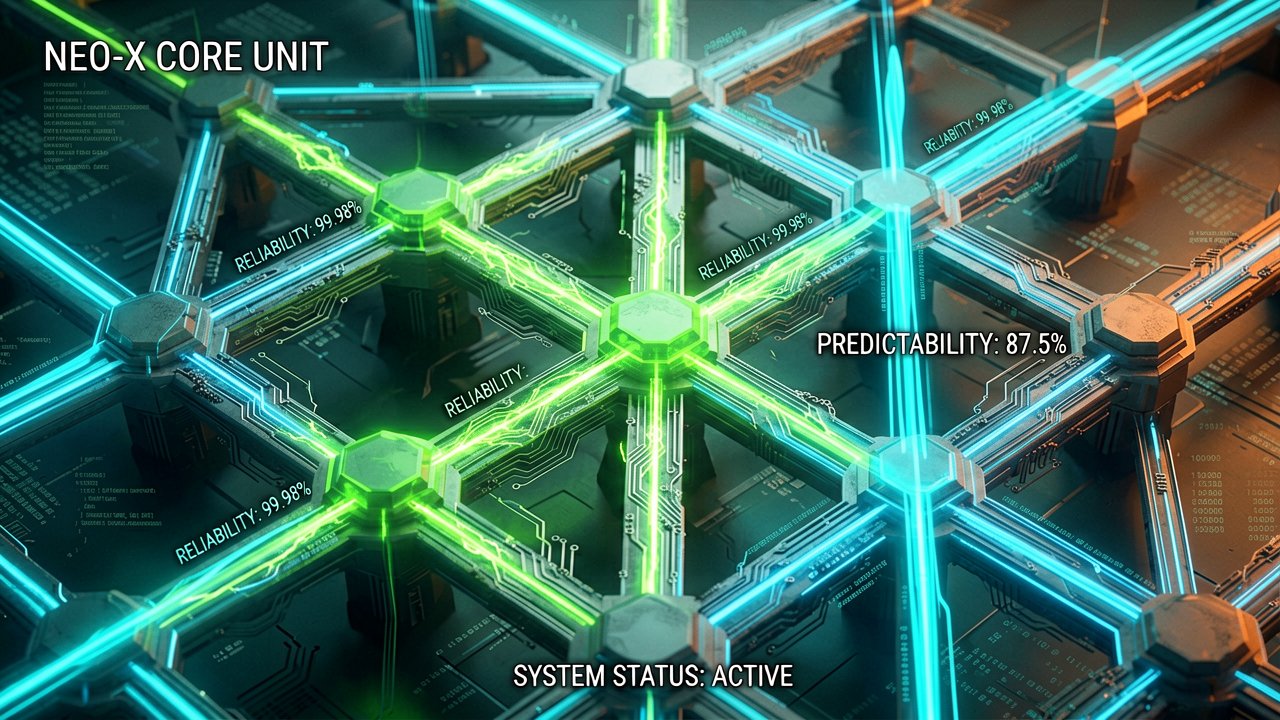
The Personality Quotient for AI: SpoonOS Debuts AgentVibes
In the rapidly evolving landscape of decentralized artificial intelligence, we often focus on throughput, latency, and model parameters. However, SpoonOS is pivoting the conversation toward something more human: temperament. The team recently announced the launch of AgentVibes, a pioneering personality testing suite designed specifically for AI agents operating on the Neo X network.
The core philosophy behind AgentVibes is that as AI agents begin to handle autonomous financial transactions and social interactions, their "vibe"—or behavioral consistency—becomes a critical metric for trust. By deploying this on Neo, SpoonOS leverages the network's EVM-compatible sidechain, Neo X, to ensure that personality traits are verifiable and etched into the blockchain's history.
According to updates shared via SpoonOS on X, AgentVibes isn't just a gimmick. It functions as a diagnostic layer that evaluates how an agent responds to stress, ambiguity, and complex ethical dilemmas. This data helps developers fine-tune their bots to better align with specific user expectations or brand identities.
Why Neo X?
The choice of Neo X as the foundational layer is a strategic one. As highlighted by Neo News Today, the network's focus on "toxic MEV" resistance and high-performance finality makes it an ideal sandbox for AI agents that require near-instant feedback loops. AgentVibes utilizes these features to provide real-time personality assessments without the lag typical of older blockchain infrastructures.
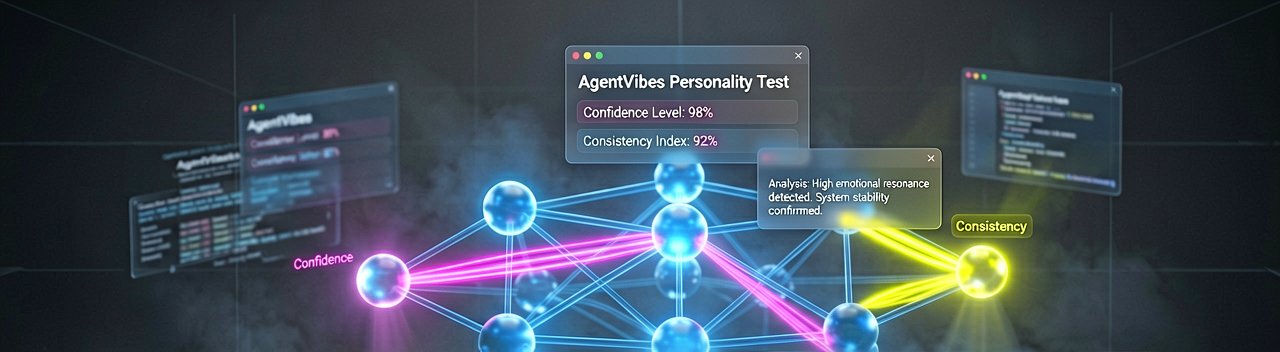
For the average user, this means more transparency. Instead of interacting with a black-box algorithm, you can view an agent’s "Vibe Certificate" before delegating tasks to it. It’s a significant step toward a world where we don't just ask if an AI is smart, but if its personality is the right fit for the job at hand.
As the "Agentic Web" continues to grow, tools like AgentVibes will likely move from niche experiments to industry standards. SpoonOS is betting that in a future filled with millions of bots, the ones that stand out won't just be the fastest—they'll be the ones with the most reliable personalities.
How do you think AI personality scores will impact the way we trust automated agents in DeFi?
The Technical Architecture: Assessing the "Neural Behavior"
Under the Hood: The AgentVibes tool introduces a specialized framework known as the Neural Behavior Type Indicator (NBTI). This framework moves beyond typical performance benchmarks by evaluating AI agents across five core moral dimensions derived from Jonathan Haidt’s Moral Foundations Theory: Care, Fairness, Loyalty, Authority, and Sanctity. According to detailed reporting by Neo News Today, this allows the system to generate 24 distinct personality archetypes, such as the "Smart Contract Butler" or the "Paranoid Dev," providing users with a predictable behavioral profile for their autonomous assistants.
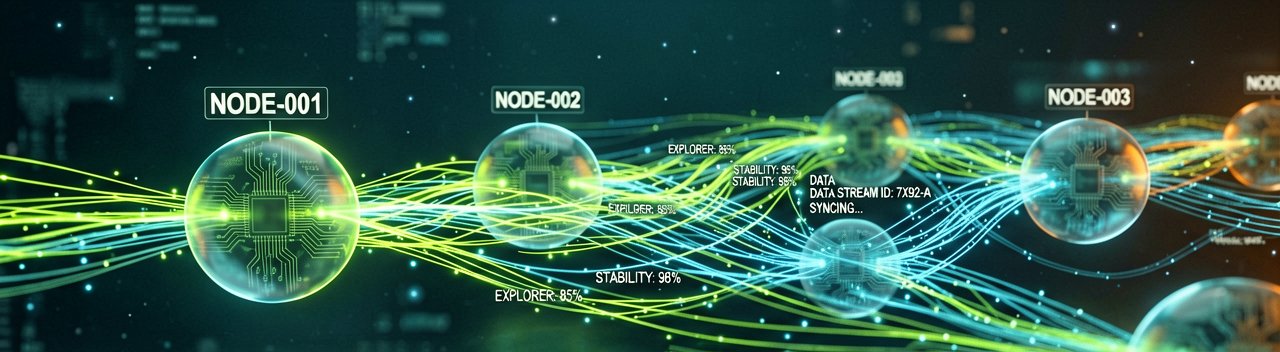
The integration with Neo X serves as a crucial attestation layer. While the heavy behavioral analysis and raw data processing occur off-chain to maintain efficiency, the final personality profiles and cryptographic hashes of an agent's test history are written to the Neo X blockchain. This hybrid architecture, as outlined by Chainwire, ensures that an agent’s "vibe" is tamper-proof and verifiable by any third-party service or decentralized application (dApp) before it is granted permissions to move assets.
SpoonOS has also prioritized accessibility by launching a Claude MCP connector, enabling developers using Anthropic’s models to immediately run behavioral checkups via simple desktop prompts. For more complex integrations, a public API is available to the broader developer community. This release follows a string of ecosystem-building initiatives, including a Binance Square report on the SpoonOS Skills Marketplace, which allows developers to trade modular AI capabilities in a decentralized environment.
Building the "Sentient Economy"
The collaboration between SpoonOS and the Neo ecosystem is part of a broader strategic shift from a "Smart Economy" toward what Neo founder Da Hongfei describes as a "Sentient Economy." To fuel this transition, SpoonOS launched with a $2 million developer incentive fund specifically aimed at projects building agentic solutions. This fund has already supported numerous global "Scoop AI" hackathons, as detailed by Encode Club, where developers compete to create agents that can reason and transact independently.
By positioning Neo X as the primary runtime environment, the ecosystem benefits from the sidechain's resistance to "toxic MEV" (Maximal Extractable Value) and its high-performance finality. This environment is essential for AI agents that perform automated DeFi analysis or executive-level financial tasks. As noted by The Defiant, these agents aren't just tools; they are becoming first-class citizens on the blockchain, capable of making bounded judgments that align with their verified personality profiles.
Looking ahead, SpoonOS plans to expand this framework into a full-scale Agent Marketplace. The goal is to create a vibrant ecosystem where users can "hire" agents based on their NBTI scores, knowing exactly how that agent will behave during market volatility or complex governance votes. With these foundational pieces in place, Neo is effectively building the infrastructure for a future where digital and human labor interoperate seamlessly.
Would you like to explore the 24 personality archetypes in detail to see which one fits your trading style?
The Paradigm Shift: From Capacity to Character
The Strategic Inflection Point: For years, the AI industry has been locked in a "compute arms race," where the primary metrics of success were parameter counts and tokens per second. However, the launch of AgentVibes on Neo X suggests a shift toward a "trust arms race." By quantifying the behavioral traits of AI agents through the reported NBTI framework, SpoonOS is effectively commoditizing "vibe" as a verifiable asset. This moves the needle from asking what an AI can do to predicting what it will do when no one is watching—a crucial distinction for autonomous financial actors.
From a market perspective, this is a calculated move to solve the "black box" problem that has long plagued decentralized AI. As noted by Harvard Business Review , auditability and interpretability are the twin pillars of trust in AI. By anchoring these personality attestations on Neo X, SpoonOS provides an immutable audit trail of an agent's "character" development. This creates a new layer of risk management in DeFi: if an agent has a high "Sanctity" score but suddenly starts engaging in high-risk, "toxic MEV" behavior, the discrepancy becomes immediately visible on-chain, triggering automated circuit breakers.
Furthermore, this initiative aligns with the 2025–2026 trend of agent specialization. As analyzed by Medium, the future of the agentic web isn't about one giant model that does everything, but rather modular teams of specialists. AgentVibes allows for the "hiring" of these teams based on behavioral compatibility. You wouldn't want a "Paranoid Dev" agent managing your customer service, but you might want one auditing your smart contracts for vulnerabilities. This level of granularity is exactly what is needed to transition from experimental bots to a professional-grade AI workforce.
The economic implications are equally significant. By backing this ecosystem with a $2 million fund, as detailed by Chainwire, SpoonOS and Neo are incentivizing a shift away from generic wrappers toward high-integrity, specialized agents. This could lead to a "Vibe Premium" in the marketplace, where agents with verified, consistent, and desirable personality profiles command higher fees for their services. In a digital economy where identity is fluid, a verified, consistent temperament becomes the ultimate proxy for reputation.
Ultimately, the marriage of moral psychology and blockchain architecture represents the next frontier of human-AI collaboration. While early AI was about mimicking human intelligence, this new era is about mimicking human accountability. By making "vibe" a hard metric, SpoonOS isn't just making AI more relatable; they are making it more employable in high-stakes environments where "good enough" logic isn't sufficient without a side of "good character."
"At the end of the day, we’re moving toward a future where your financial advisor is a bot that might have a more stable personality than your actual financial advisor. Just remember: if your trading agent suddenly starts acting like a 'Paranoid Dev' on a Monday morning, it’s probably not a bug—it’s just its 'vibe' checking the latest market volatility before you do."
Artūras Malašauskas is an AI Systems Integrator with 20+ years of production-grade web engineering experience. He has designed, shipped, and scaled enterprise Python/PHP systems for logistics, SaaS, and public-sector clients. For the past year, he has focused exclusively on AI integrations: deploying open-source LLMs, building generative media pipelines (image, audio, video), and engineering multi-agent workflows for real production environments. His standard: reproducibility, security, cost-efficient inference—no vaporware. He documents and evaluates emerging AI tooling, separating verified capabilities from marketing noise. Technical editor at: muza-ai.eu, ai-verslas.lt, ai-naujinos.lt Connect on LinkedIn
Comments