The Vatican’s New OS: Pope Francis Formalizes Global AI Ethics Commission

The Vatican is officially leaning into the silicon age. In a move that signals the Catholic Church’s intent to be a primary voice in the global tech ethics conversation, Pope Francis has formally approved the creation of the Interdicasterial Commission on Artificial Intelligence. This isn't just a symbolic gesture; it’s a structural pivot designed to synchronize the Holy See’s various departments as they grapple with the "epochal change" triggered by generative AI and automated systems.
A Unified Front for Tech Ethics
For years, different corners of the Vatican—from the Pontifical Academy for Life to the Dicastery for Culture and Education—have been operating somewhat independently on tech issues. According to Vatican News, this new commission acts as a centralized "control tower." By breaking down silos, the Pope ensures that the Church’s stance on AI is consistent, whether the topic is the labor market, digital surveillance, or the very definition of human consciousness.
The commission’s mandate is broad but urgent. It is tasked with monitoring the rapid evolution of AI and coordinating a theological and ethical response. This follows the Pope’s persistent calls for "algorethics"—a term he championed to describe the need for ethics to be baked into the coding and deployment of algorithms. As reported by The Pillar, the commission will likely be led by the Dicastery for Culture and Education, highlighting the Church’s view of AI as a cultural phenomenon rather than just a technical one.
Why the Vatican Cares About Silicon
You might wonder why a 2,000-year-old institution is so focused on Large Language Models and neural networks. For Pope Francis, the concern is deeply human-centric. He has frequently warned that AI could exacerbate global inequality or lead to a "technocratic paradigm" that strips individuals of their agency. National Catholic Reporter notes that the Pope’s 2024 World Day of Peace message was entirely dedicated to AI, proving that this new commission is the natural evolution of a long-standing papal priority.
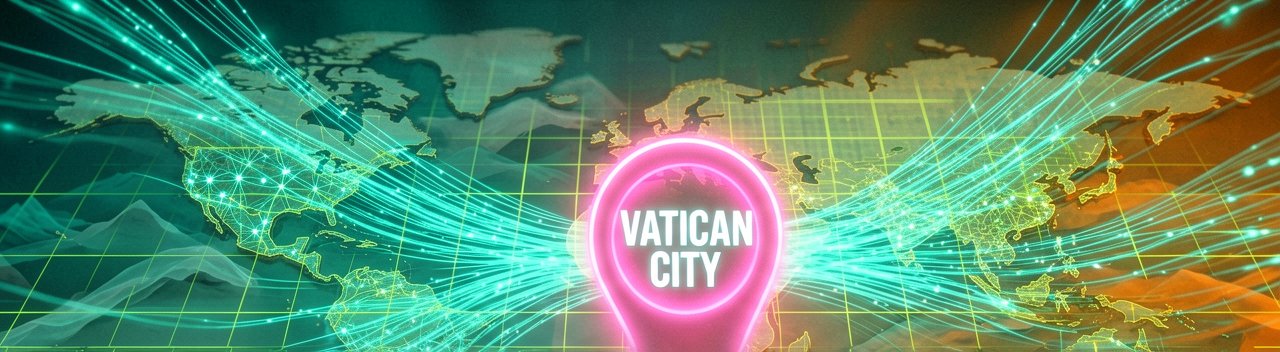
This initiative also puts the Vatican in a unique position to act as a bridge between Silicon Valley and the Global South. By hosting high-level summits with executives from Microsoft and IBM, the Holy See has already secured signatures for the "Rome Call for AI Ethics." This new commission provides the permanent infrastructure needed to turn those high-level signatures into actionable policy recommendations and educational frameworks for the world’s 1.3 billion Catholics.
The Road Ahead: Algorethics in Action
As AI begins to permeate everything from judicial sentencing to healthcare diagnostics, the Interdicasterial Commission will face its first real tests. The group is expected to collaborate with international bodies like the UN and the EU to ensure that "human-centered" AI isn't just a marketing buzzword but a legal and moral requirement. Reuters has previously highlighted how the Vatican’s influence has already nudged tech giants to consider the impact of their products on the most vulnerable populations.
Ultimately, the creation of this commission suggests that the Church doesn't see AI as a threat to be shunned, but as a tool to be steered. By establishing a dedicated body of experts and theologians, the Pope is making sure that as the world rushes toward a future defined by code, the "human heart" remains the primary compass. It’s a bold move into the digital frontier, proving that even the oldest institutions realize that in the age of AI, standing still is not an option.
The Architectural Blueprint of Algorethics: The formation of the Interdicasterial Commission on Artificial Intelligence marks the culmination of a multi-year diplomatic and ethical offensive by the Holy See. While the formal decree centers on internal coordination, the move is intrinsically linked to the "Rome Call for AI Ethics," a project initiated by the Pontifical Academy for Life. This project has successfully brought together unlikely bedfellows, including secular tech giants and leaders of other world religions, to sign a manifesto prioritizing transparency, inclusion, and accountability in machine learning.
The Power Players: Microsoft, IBM, and Cisco
The Vatican’s strategy has relied heavily on direct engagement with the architects of the digital age. Corporations like Microsoft and IBM were among the first to join the Pope's ethical crusade. By involving these companies, the Vatican isn't just shouting from the sidelines; it is actively participating in the "design phase" of global tech policy. More recently, Cisco also joined the fold, emphasizing the infrastructure side of AI and the need to bridge the digital divide that threatens to leave developing nations behind.
Brad Smith, Vice Chair and President of Microsoft, has been a frequent visitor to the Vatican, often speaking about the "humanitarian necessity" of ethical AI. This relationship underscores a growing trend where tech companies seek moral frameworks from traditional institutions to navigate the complex social consequences of their inventions. For these companies, the Vatican’s new commission serves as a stable, long-term partner for dialogue that transcends the quarterly earnings cycle or the fast-moving political landscape of Silicon Valley.
Internal Synergy and Global Impact
On the ground in Rome, the commission is expected to be a collaborative hub for key figures like Bishop Paul Tighe, Secretary of the Dicastery for Culture and Education, and Archbishop Vincenzo Paglia. As noted by The Holy See, the goal is to ensure that the Church’s "human-centric" philosophy is applied consistently across all global missions. This includes everything from how AI is used in Catholic schools to how it might impact the future of social work and charitable outreach in the Church's vast network.
Furthermore, the commission will likely serve as a primary consultant for the Vatican’s diplomatic missions at the United Nations and the European Union. As the EU implements the historic "AI Act," the Vatican’s new body will provide the theological and ethical ammunition needed to advocate for strict protections against invasive surveillance and biased algorithms. By centralizing its expertise, the Vatican is positioning itself to be a permanent, sophisticated fixture in the global regulation of artificial intelligence for decades to come.
The Geopolitical Pivot of Moral Authority: Beyond the ecclesiastical implications, the Pope’s new commission represents a strategic bid to reclaim the "moral high ground" in a global regulatory vacuum. As nation-states scramble to catch up with the pace of Silicon Valley, the Vatican is positioning itself not just as a religious entity, but as a sovereign diplomatic actor capable of setting universal ethical benchmarks. By formalizing this body, the Holy See is signaling that "algorethics" is no longer a niche academic interest but a core component of 21st-century statecraft.
The Strategy of Soft Power in a Hard-Code World
From an analytical standpoint, this move is a masterclass in soft power. While the Vatican lacks the legislative teeth of the European Union or the capital of a venture firm, it possesses an unparalleled "moral brand" and a grassroots network that spans every continent. According to Foreign Affairs, traditional institutions are increasingly finding relevance by acting as ethical auditors for technologies that lack inherent guardrails. By centralizing its AI strategy, the Vatican creates a "one-stop shop" for tech CEOs and world leaders who need a philosophical framework that doesn't change with every election cycle.
This institutionalization also addresses a significant risk: the "Babelization" of AI ethics. Without a central authority, the Church’s message was at risk of becoming fragmented across its various dicasteries. Now, the Vatican can offer a unified front in high-stakes negotiations. As The Economist often highlights, the real battle in AI isn't just about who builds the fastest chip, but whose values are embedded in the software that manages human life. The commission ensures that the Catholic "human-centric" value set is ready for export into the global marketplace of ideas.
Market Implications and Corporate Responsibility
For the tech sector, this commission raises the stakes for "ESG" (Environmental, Social, and Governance) reporting. When companies like IBM and Microsoft engage with the Holy See, they aren't just looking for a photo op; they are seeking a form of ethical de-risking. A "blessing" from the Vatican’s commission—even a secular one—can serve as a powerful signal to investors and the public that a company’s AI roadmap isn't dystopian. This creates a new kind of "ethical competition" where companies may eventually vie for alignment with the commission’s standards to avoid the reputational damage of being labeled "anti-human."
However, the real test will be the commission’s ability to remain technically relevant. AI moves at "warp speed," while the wheels of the Roman Curia traditionally turn with "glacial" deliberation. For the commission to be truly effective, it will need to integrate silicon-native expertise with its theological heavyweights. If they can bridge this gap, they won't just be reacting to the news; they will be helping to write the code for the future of global society.
"It’s official: the Vatican has upgraded its 'cloud' services. While we’re all worrying if AI will take our jobs or start a robot uprising, the Pope has decided to make sure the robots at least have a conscience—which, let’s be honest, is more than we can say for some of the humans currently running the internet. Just don't expect your ChatGPT to start offering digital absolution anytime soon; some things still require a human touch and a much better Wi-Fi connection."
Artūras Malašauskas is an AI Systems Integrator with 20+ years of production-grade web engineering experience. He has designed, shipped, and scaled enterprise Python/PHP systems for logistics, SaaS, and public-sector clients. For the past year, he has focused exclusively on AI integrations: deploying open-source LLMs, building generative media pipelines (image, audio, video), and engineering multi-agent workflows for real production environments. His standard: reproducibility, security, cost-efficient inference—no vaporware. He documents and evaluates emerging AI tooling, separating verified capabilities from marketing noise. Technical editor at: muza-ai.eu, ai-verslas.lt, ai-naujinos.lt Connect on LinkedIn
Comments