The Denver AI Exchange: Why Distributors are Trading Competitive Secrets for Collective Growth

Community Over Competition in the AI Gold Rush
In a world where proprietary tech secrets are usually guarded like state secrets, the wholesale distribution industry recently took a refreshingly different path. At a recent industry gathering in Denver, leaders from across the sector set aside the usual competitive posturing to trade notes on what’s actually moving the needle in artificial intelligence. According to reporting from Distribution Strategy Group, the event highlighted a collective realization: the complexity of AI is too vast to tackle in a vacuum.
The "What’s Working" event served as a practical sounding board for distributors who are often caught between the hype of Silicon Valley and the gritty reality of warehouse logistics. Instead of focusing on theoretical futures, the conversation stayed grounded in the "here and now." This collaborative atmosphere allowed participants to admit where they’ve stumbled, which is often more valuable than a polished success story in the rapidly evolving AI landscape.
Low-Hanging Fruit: Where AI is Winning Today
One of the most significant takeaways from the Denver summit was that the most successful AI implementations aren't necessarily the flashiest. While "human-like" robots grab headlines, distributors are finding massive ROI in mundane tasks. Specifically, AI-driven pricing optimization and demand forecasting were cited as the primary drivers of immediate value. By leveraging machine learning to analyze historical data, firms are moving away from gut-feeling inventory management toward a more surgical, data-backed approach.
Another major win discussed was the integration of AI into sales enablement. As noted by Modern Distribution Management, top-tier distributors are using AI to provide sales reps with "next-best-action" recommendations. This allows veteran salespeople to focus on building relationships while the algorithms handle the heavy lifting of identifying cross-selling opportunities and flagging accounts that are at risk of churning.
The Data Quality Hurdle
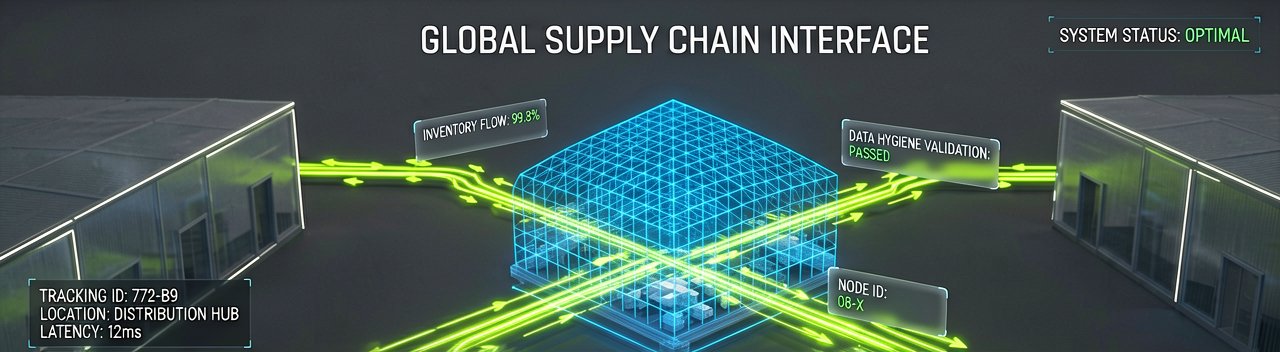
If there was a sobering note during the event, it was the universal consensus on data hygiene. Many distributors entered the AI arena thinking the software would be a "magic wand," only to realize their foundational data was fragmented or inaccurate. The experts in Denver emphasized that an AI model is only as good as the data it's fed. Consequently, many companies are currently pivoting their budgets toward "data cleansing" initiatives before they invest further in advanced neural networks.
The dialogue also touched on the cultural shift required to make AI stick. It’s not just an IT project; it’s a change management challenge. Leaders shared tips on how to build trust with employees who might view AI as a threat to their jobs. The consensus was clear: the goal is "augmented intelligence"—empowering human workers to do more, rather than replacing them entirely.
Looking Ahead: The Power of Peer Groups
The Denver event proved that the "lone wolf" era of tech adoption is ending for distributors. By forming peer groups and sharing "war stories," these companies are shortening their learning curves and avoiding costly pitfalls. The collaborative spirit seen in Colorado suggests that the distribution industry is maturing, recognizing that the real competition isn't who has the best AI, but who can integrate it into their workflow most effectively.
As the dust settles from the summit, the roadmap for the coming year seems to be focused on refinement. Distributors are leaving the "experimentation" phase and entering a period of disciplined execution. With a focus on clean data, salesperson empowerment, and collective learning, the industry is proving that even the most traditional sectors can become tech-forward powerhouses when they work together.
Practical Insights from the Denver Summit
Peeling back the curtain on the Denver proceedings reveals a strategic pivot away from the "black box" mentality that once defined AI adoption. The event, organized by Distribution Strategy Group, emphasized that for wholesale distributors, AI is no longer a peripheral experiment but a core business signal. Industry veterans like Ian Heller and Jonathan Bein highlighted that the most effective AI strategies are currently being built on "educationally driven" frameworks rather than pure technology acquisition.
The summit brought together heavy hitters from various distribution sectors who are moving AI from basic design tasks into complex operational workflows. A recurring theme was the "middle 80%" pattern—a strategy where humans provide the initial intent and final judgment, while AI handles the high-volume, repetitive tasks in between. This approach is reportedly freeing up 2 to 4 hours per employee each day, allowing teams to shift focus from back-office administration to high-value customer interactions.
Key Figures and Proven Strategies
Among the experts providing actionable insights was Justin J. Johnson, CEO of Motivate, who shared a proven model for turning the industry's talent gap into a growth engine through automated workflows. Other significant contributors included Brooks Hamilton of AI Strategy Advisors and Dr. Ajai Kapoor from Goldratt Consulting, both of whom specialized in applying "Pragmatic AI" to solve real-world problems like supply chain bottlenecks and demand forecasting. These leaders underscored that while the technology is moving at a breakneck pace, the most stable returns are found in addressing specific, narrow use cases rather than attempting to "boil the ocean".
Furthermore, the event showcased how distributors are integrating AI into their existing digital stacks. For instance, QAD and other tech partners demonstrated how "Action Centers" and predictive analytics can identify at-risk accounts or uncover hidden margin opportunities in real-time. The consensus among participants was that the next frontier involves "agentic AI"—autonomous systems capable of navigating complex B2B customer journeys and managing supplier descriptions without constant manual intervention.
As the Denver gathering concluded, the message to the broader distribution community was clear: waiting for the technology to "settle" is no longer a viable option. With National Association of Wholesaler-Distributors (NAW) resources and peer-led workshops becoming more accessible, the industry is shifting toward a model of continuous, collaborative innovation to stay relevant in an increasingly automated global marketplace.
The Strategic Calculus: Moving Beyond "FOMO" to Fundamental Value
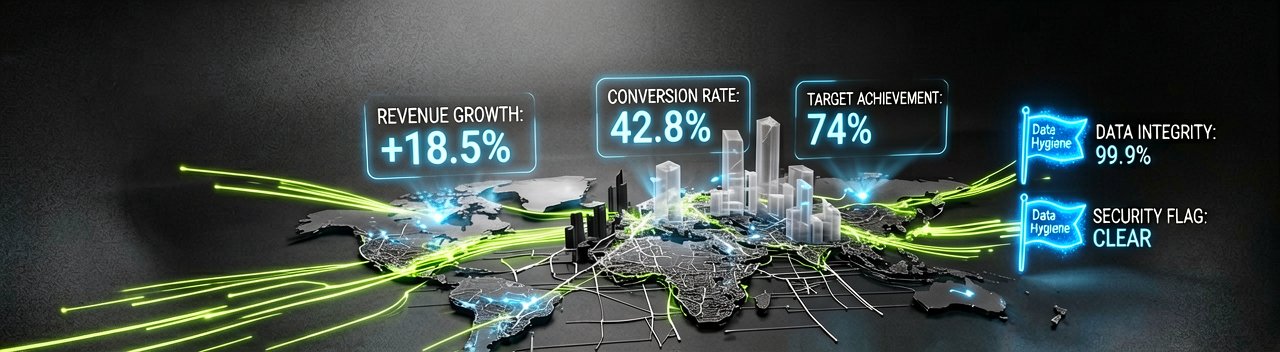
The shift from widespread speculation to tactical integration marks a critical maturity phase for the wholesale distribution market. Analysts tracking the fallout from the Denver event note that the industry is rapidly bifurcating between "AI-first" innovators and legacy firms struggling with digital inertia. According to the Distribution Strategy Group, early adopters are projected to see a 122% increase in cash flow over the next few years, while latecomers risk losing nearly a quarter of their market value. This isn't just about flashy tech; it’s an existential race to leverage predictive models for margin preservation in an increasingly volatile global economy.
From an analytical standpoint, the real breakthrough isn't the AI itself, but the "data democratization" it enables. Traditionally, high-level insights were siloed within executive suites or complex ERP systems. However, as highlighted by The Future of Commerce, the current trend is the deployment of "AI co-pilots" that put institutional-grade intelligence directly into the hands of warehouse managers and sales reps. This move decentralizes decision-making, allowing for real-time pivots in inventory and pricing that were previously impossible. The market is effectively moving away from centralized "gut-instinct" leadership toward a distributed, algorithmically-assisted workforce.
However, this transition exposes a significant structural weakness: the "ambition-reality gap." While 97% of distributors now view AI as essential, research from Modern Distribution Management indicates that a staggering 63% are still trapped in the exploration or pilot phase. This "pilot purgatory" often stems from inadequate data hygiene and the lack of a measurable ROI framework. Analysts warn that without a strategy-led roadmap—prioritizing specific use cases like churn reduction or automated lead prioritization—companies will continue to burn capital on "innovation theater" rather than building sustainable competitive advantages.
Ultimately, the long-term impact on the workforce cannot be ignored. The OECD and industry experts suggest that while AI will automate repetitive tasks, it will simultaneously demand a massive upskilling of the remaining workforce. The goal isn't total automation but "complementarity," where human nuanced reasoning manages the complex exceptions that AI still fails to grasp. For distributors, the next 24 months will likely determine which firms successfully evolve into tech-centric service providers and which ones are relegated to the history books as cautionary tales of digital hesitation.
"In the end, AI in distribution is a lot like a high-end GPS for a forklift: it’ll tell you exactly where to go and how to get there faster, but if your warehouse floor is still covered in 1995-era spreadsheets and metaphorical banana peels, you're still going to crash—just with much more expensive data to prove why it happened."
Artūras Malašauskas is an AI Systems Integrator with 20+ years of production-grade web engineering experience. He has designed, shipped, and scaled enterprise Python/PHP systems for logistics, SaaS, and public-sector clients. For the past year, he has focused exclusively on AI integrations: deploying open-source LLMs, building generative media pipelines (image, audio, video), and engineering multi-agent workflows for real production environments. His standard: reproducibility, security, cost-efficient inference—no vaporware. He documents and evaluates emerging AI tooling, separating verified capabilities from marketing noise. Technical editor at: muza-ai.eu, ai-verslas.lt, ai-naujinos.lt Connect on LinkedIn
Comments