The Great AI Power Surge: From Silicon Hype to Economic Infrastructure
Scaling Beyond the Hype
The honeymoon phase of artificial intelligence is transitioning into a gritty, results-oriented era of corporate integration. According to a comprehensive new analysis by Goldman Sachs, AI is no longer just a boardroom buzzword but a primary engine for long-term productivity. The report suggests that as generative AI moves from experimental pilots to full-scale deployment, it could eventually lift global GDP by nearly 7%, proving that the technology's growth role is foundational rather than superficial.
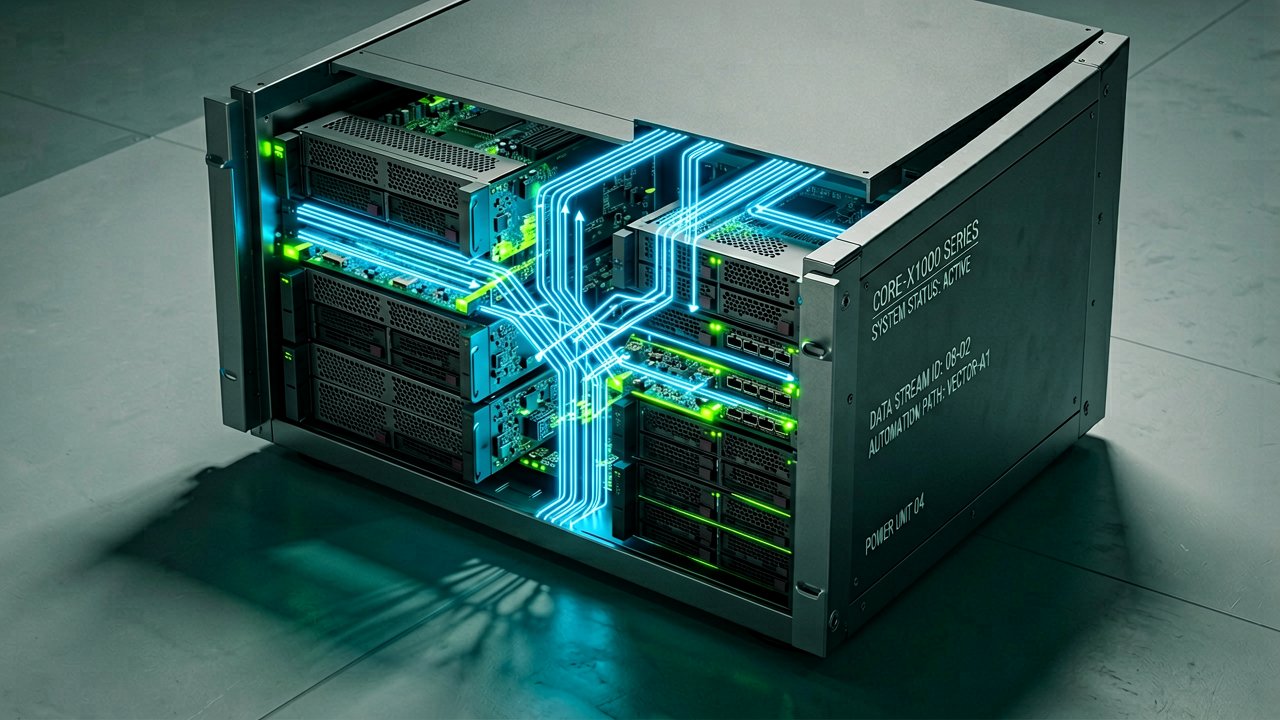
What makes this shift particularly notable is the "infrastructure first" approach currently dominating the market. We are seeing unprecedented capital expenditure from "Hyperscalers" who are racing to build the backbone of the AI economy. Data from Bloomberg indicates that tech giants are funneling hundreds of billions into specialized chips and energy-hungry data centers, betting that the hardware layer will yield the highest immediate returns before the software application layer fully matures.
However, the growth isn't just about silicon and electricity; it's about human labor evolution. A recent study cited by McKinsey & Company highlights that AI could automate activities that absorb 60% to 70% of employees' time today. This doesn't necessarily signal a "job apocalypse," but rather a pivot toward higher-value tasks. Companies that successfully integrate these tools are reporting faster development cycles and leaner operations, effectively decoupling revenue growth from headcount increases.
The Vertical Explosion
The impact of AI is increasingly uneven—in a good way. While general-purpose chatbots grab the headlines, the real growth is happening in "Vertical AI." Industry-specific models are transforming sectors like healthcare and finance. For instance, Reuters has tracked a surge in AI-driven drug discovery, where the technology drastically reduces the time and cost associated with bringing new treatments to clinical trials, representing a multi-billion dollar shift in efficiency.
Small and medium-sized enterprises (SMEs) are also finding their footing. While they lack the R&D budgets of the titans, the democratization of API access has allowed smaller players to "bolt on" intelligence to their existing services. Reports from Forbes suggest that the barrier to entry for high-level automation has never been lower, allowing startups to compete with established incumbents by using AI to handle complex logistics and customer data analysis at scale.
Despite the optimism, the report warns of a "bottleneck reality." The rapid growth is putting immense strain on global power grids and the supply chain for advanced semiconductors. As noted by The Wall Street Journal, the race for AI dominance is now as much about securing energy permits and cooling systems as it is about writing elegant code. The transition from "cool demo" to "economic pillar" is officially underway, and the winners will be those who can manage the physical costs of digital intelligence.
The Strategic Power Play: While the macroeconomic statistics paint a broad picture of progress, the granular reality is defined by a handful of "foundational" companies that have become the gatekeepers of this new era. The current surge is anchored by the aggressive spending of the "Big Four"—Microsoft, Alphabet, Amazon, and Meta—who collectively signaled during recent earnings calls that under-investing in AI infrastructure is a far greater risk than over-investing. This "all-in" mentality has created a gold-rush effect for specialized providers like Nvidia and Arista Networks, who provide the essential networking and processing hardware required to keep these models running.
A critical, often overlooked component of this growth story is the massive pivot toward custom silicon. As reported by CNBC, companies like Amazon and Google are increasingly designing their own AI chips (such as Trainium and TPUs) to reduce their dependency on external vendors and optimize energy consumption. This shift toward "in-house" hardware represents a significant evolution in corporate strategy, as software companies transform into hardware architects to protect their profit margins and ensure their AI roadmaps aren't stalled by global supply chain hiccups.
Furthermore, the "Vertical AI" movement is being led by a new wave of partnerships between tech giants and legacy industry leaders. For example, the collaboration between Microsoft and healthcare conglomerates, as highlighted by Financial Times, is moving beyond basic cloud storage into co-developing generative models for clinical documentation and genomic sequencing. These aren't just vendor-client relationships; they are deep integrations that weave AI into the literal fabric of regulated industries, making the technology "sticky" and ensuring its longevity far beyond the initial hype cycle.
The Infrastructure Reality Check
The logistical weight of this expansion is also forcing a rethink of corporate sustainability. To meet the massive power demands of new AI clusters, tech firms are becoming some of the world's largest investors in clean energy. According to The Verge, companies are now striking massive deals for nuclear power and geothermal energy to ensure their data centers can operate 24/7 without crashing local grids. This intersection of high-tech computing and heavy-duty utility infrastructure is where the next decade of AI growth will be won or lost.
Finally, the "human capital" aspect is being addressed through massive internal retraining programs. Companies like Accenture and IBM have committed billions to "skilling up" their workforces, recognizing that the AI growth role is limited by how quickly employees can adapt. As noted by Business Insider, the focus has shifted from "replacing workers" to "augmenting roles," with a specific emphasis on prompt engineering and AI ethics oversight, creating a new tier of high-paying technical positions that didn't exist five years ago.
Decoding the Silicon Supercycle: While the raw numbers suggest an era of unbridled expansion, a deeper dive into the market dynamics reveals that we are witnessing the birth of a "Silicon Supercycle" that is fundamentally rewriting the rules of corporate valuation. According to a 2026 report by Goldman Sachs, the market is no longer pricing AI as a speculative software feature but as a mandatory utility. This shift is evident in the divergence of capital: companies investing heavily in AI infrastructure are seeing a 56% wage premium for AI-skilled roles and a threefold increase in revenue per employee compared to those trailing behind, as noted in the 2025 Global AI Jobs Barometer. The analytical consensus is clear—AI has moved from a "nice-to-have" luxury to a "must-have" survival mechanism for the modern enterprise.
The "infrastructure bottleneck" is perhaps the most significant analytical pivot of the last year. We are moving from a world of infinite digital scaling to one defined by the finite physics of power and land. Data from the International Energy Agency (IEA) indicates that electricity consumption from AI-focused data centers surged by 50% in 2025 alone. This has turned tech giants into de facto energy speculators; the race to secure nuclear power and geothermal assets is a strategic hedge against the potential plateauing of AI growth caused by a starving power grid. Analysts at J.P. Morgan suggest that the next phase of market leadership will not be defined by who has the best algorithm, but by who has the most reliable access to the gigawatts required to run it.
Furthermore, the democratization of AI is entering a "Goldilocks" phase—models are becoming simultaneously more powerful and significantly cheaper to run. The Stanford HAI 2025 AI Index Report highlighted that the inference costs for high-level systems dropped over 280-fold in just two years. This collapse in pricing is triggering a "Vertical AI" explosion, where small and medium enterprises can finally afford to automate high-complexity tasks that were previously the exclusive domain of the Fortune 500. This suggests that the next wave of GDP growth won't come from the creation of new models, but from the millions of small-scale optimizations occurring across the global tail of the economy.
The Productivity Paradox Recharged
Looking ahead, the tension between job displacement and "task transformation" remains the central macroeconomic debate. While McKinsey projections suggest that up to 30% of current work hours could be automated by 2030, the 2026 data shows that job availability in AI-exposed sectors actually grew by 38%, confounding early doomsday predictions. This indicates that AI is currently functioning more as a "force multiplier" for human talent rather than a direct replacement. The analytical takeaway is that we are entering an era of "augmented employment," where the ability to collaborate with an AI agent is becoming as foundational a skill as literacy once was.
Ultimately, the surge in AI spending—projected by IDC to reach $632 billion by 2028—reflects a massive bet on a more efficient future. However, the market must remain wary of "AI Fatigue." As companies transition from pilot programs to permanent infrastructure, the pressure to show tangible ROI will intensify. The current "spending war" among hyperscalers is sustainable only as long as the application layer continues to deliver measurable productivity gains. For now, the momentum is undeniable, but the transition from a hardware-led boom to a software-led economy will be the true test of AI’s staying power.
"At the end of the day, AI is like that one overachieving intern: it’s incredibly fast, works 24/7 without complaining about the coffee, and occasionally hallucinates with total confidence. The trick isn't just building a bigger brain; it's making sure we have enough plugs in the wall to keep it conscious and enough humans in the room to make sure it doesn't try to 'optimize' the office plants out of existence."
Artūras Malašauskas is an AI Systems Integrator with 20+ years of production-grade web engineering experience. He has designed, shipped, and scaled enterprise Python/PHP systems for logistics, SaaS, and public-sector clients. For the past year, he has focused exclusively on AI integrations: deploying open-source LLMs, building generative media pipelines (image, audio, video), and engineering multi-agent workflows for real production environments. His standard: reproducibility, security, cost-efficient inference—no vaporware. He documents and evaluates emerging AI tooling, separating verified capabilities from marketing noise. Technical editor at: muza-ai.eu, ai-verslas.lt, ai-naujinos.lt Connect on LinkedIn
Comments