The $4.50 Revolution: AssemblyAI Disrupts the Voice Agent Market

The Low-Latency Revolution: AssemblyAI’s New Voice Agent API
AssemblyAI has officially thrown its hat into the real-time AI ring with the launch of its AssemblyAI Voice Agent API. Designed to help developers build conversational AI that feels human, the new tool targets one of the most frustrating bottlenecks in tech: latency. By combining speech-to-text, LLM processing, and text-to-speech into a single, unified stream, AssemblyAI is promising "natural-feeling" interactions that could finally make automated phone systems and digital assistants less of a chore to talk to.
The headline-grabbing feature is the price point. At just $4.50 per hour of conversation, AssemblyAI is positioning itself as a high-performance, cost-effective alternative to building custom stacks. As reported by VentureBeat, this pricing model is significantly more competitive than piecing together separate providers for transcription and synthesis, which often results in higher costs and "laggy" performance due to the transit time between different servers.
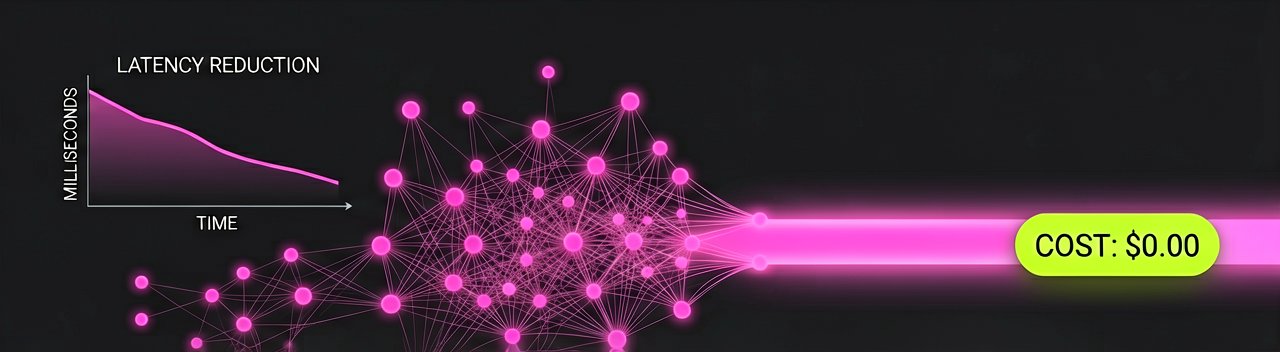
What makes this release technically interesting is the move away from "cascaded" systems. Traditionally, a voice bot has to finish transcribing a sentence, send that text to a model like GPT-4, wait for a response, and then send that response to a voice generator. This process creates a "silent gap" that kills the flow of conversation. AssemblyAI claims to have slashed this delay to sub-second levels, enabling features like "interruption handling," where the AI stops talking immediately if the human speaks over it—just like a real person would.
The API is built on top of the company's proprietary speech models, which have long been praised for their accuracy in noisy environments and ability to handle diverse accents. According to TechCrunch, the Voice Agent API also includes built-in "End-of-Turn Detection," a sophisticated tweak that helps the AI distinguish between a user taking a breath and a user actually finishing their thought, reducing awkward mid-sentence cut-offs.

From a developer's perspective, the move is a play for simplicity. Instead of managing three different API keys and complex synchronization logic, engineers can now use a single WebSocket connection. This "all-in-one" approach is becoming a major trend in the AI sector, as companies realize that the winners won't just have the best models, but the best developer experience. By lowering the barrier to entry, we’re likely to see a surge in AI-driven customer support, role-playing applications, and real-time coaching tools.
As the market for "Voice AI" heats up—with competitors like OpenAI and ElevenLabs also pushing real-time capabilities—AssemblyAI’s focus on the enterprise developer niche might be its winning strategy. By providing a stable, scalable, and affordable framework, they aren't just selling a tool; they are selling the ability to turn "Press 1 for support" into a conversation that actually works.
The Strategy Behind the Stream: A Deeper Dive into AssemblyAI
A legacy of developer-first innovation serves as the foundation for AssemblyAI’s latest leap into the voice agent market. Founded in 2017 by CEO Dylan Fox, a former machine learning engineer at Cisco, the company was born out of frustration with the "stagnant" and "clunky" speech recognition tools offered by legacy tech giants. According to , the goal was to build a "Stripe for speech"—a developer-centric platform that turned complex audio processing into a simple, high-performance API. This focus on the "plumbing" of AI has paid off, with the company now processing over 2 million hours of audio daily for major brands like Spotify and Fireflies.
The technical backbone of the new Voice Agent API is the Universal-3 Pro model, which AssemblyAI touts as a significant upgrade over general-purpose competitors. In technical documentation from AssemblyAI Documentation, the company details how the system utilizes "Speech-Aware VAD" (Voice Activity Detection). This specific technology allows the agent to distinguish between meaningful speech and ambient background noise—like a siren or a barking dog—ensuring the AI doesn't get confused or start generating responses to non-human sounds. This level of granular control is what enables the sub-second latency that is critical for enterprise-grade telephony and support applications.
From a business perspective, AssemblyAI’s growth has been fueled by substantial backing from Silicon Valley’s heavy hitters. As of late 2024, the company reached a $10.4 million ARR (Annual Recurring Revenue) and carries a valuation of approximately $300 million following its Series C funding round. Reports from GetLatka and Forbes highlight that the company has raised over $158 million in total, with lead investors like Accel and Insight Partners betting on AssemblyAI's ability to maintain its lead in "transcription accuracy"—a metric the company claims is the single most important factor for developers, even above cost.
The launch of the Voice Agent API also signals a strategic pivot toward full-stack orchestration. By offering a "single WebSocket" solution, AssemblyAI is moving beyond being just a "transcription engine" to becoming a central hub for conversational AI. This puts them in direct competition with the likes of OpenAI’s Realtime API, but with a distinct focus on transparency. While OpenAI often operates as a "black box," AssemblyAI provides developers with detailed logs and "JSON Schema tool calling," as noted on their product page, allowing for easier debugging and integration with existing enterprise databases.
As the voice AI market is projected to explode to $47.5 billion by 2034, the battle for the "ear" of the enterprise is only beginning. AssemblyAI’s $4.50/hr flat rate is a clear shot across the bow of competitors who often hide costs behind complex token-based pricing. By simplifying both the technology and the billing, the company is betting that the future of AI isn't just about how smart the models are, but how easily they can be deployed into the real world.
The Economic Gambit: Why $4.50/hr Changes the Math for Voice AI
Reading between the lines of the pricing wars reveals that AssemblyAI isn't just competing on technology—it’s attacking the unit economics of the entire conversational AI industry. While OpenAI’s Realtime API is a technical marvel, its per-token billing can be a financial minefield for high-volume enterprises. According to analysis from AssemblyAI, a typical production-grade voice agent using OpenAI can cost roughly $18 per hour when accounting for both input and output audio tokens. By contrast, AssemblyAI’s flat $4.50 per hour represents a nearly 75% reduction in operational expenditure, effectively turning a "premium" feature into a commodity that can be deployed at scale without a CFO’s constant oversight.
This aggressive pricing strategy targets a specific market segment: the "missing middle" of voice applications. Historically, developers had to choose between cheap but laggy "Frankenstein" stacks—piecing together separate STT, LLM, and TTS providers—or expensive all-in-one solutions that ate into profit margins. Market data from DialectAI suggests that as the voice AI market grows toward a projected $47.5 billion by 2032, the winners will be those who provide "predictable" costs. In an industry where one viral application can lead to a million-dollar API bill overnight, AssemblyAI’s move toward flat-rate, per-second session billing is a direct appeal to the risk-averse enterprise developer.
Beyond the spreadsheets, there is a deeper architectural shift at play. By integrating the entire "Voice-to-Voice" (V2V) loop into a single optimized pipeline, AssemblyAI is moving the bottleneck from the network to the model. As noted by Gnani.ai, enterprise-grade voice requires "low jank"—the elimination of the awkward pauses that signal a "bot" is listening. AssemblyAI’s sub-second latency doesn't just make the interaction faster; it makes it more psychologically acceptable for humans. When an AI can handle an interruption in under 500ms, it crosses the "Uncanny Valley" of conversation, allowing it to move from simple task execution to complex, empathetic customer engagement.
Finally, this release signals a consolidation of the "AI orchestration" layer. In 2024 and 2025, developers spent significant engineering hours managing WebSocket states and handling turn-detection logic. AssemblyAI’s "single-connection" philosophy, as detailed in their product announcement, suggests that the future of the industry isn't in modular components, but in unified "agents-as-a-service." This puts immense pressure on standalone TTS or STT companies to either evolve or face becoming mere features of larger platforms. In the race to replace "Press 1 for Support," AssemblyAI has just lowered the toll booth fee for everyone.
At $4.50 an hour, AssemblyAI has finally made it cheaper to talk to a robot than it is to pay for the electricity required to complain about one. Just remember: even at these prices, the AI still won't find it funny when you ask it if the refrigerator is running.
Artūras Malašauskas is an AI Systems Integrator with 20+ years of production-grade web engineering experience. He has designed, shipped, and scaled enterprise Python/PHP systems for logistics, SaaS, and public-sector clients. For the past year, he has focused exclusively on AI integrations: deploying open-source LLMs, building generative media pipelines (image, audio, video), and engineering multi-agent workflows for real production environments. His standard: reproducibility, security, cost-efficient inference—no vaporware. He documents and evaluates emerging AI tooling, separating verified capabilities from marketing noise. Technical editor at: muza-ai.eu, ai-verslas.lt, ai-naujinos.lt Connect on LinkedIn
Comments