The Great Deployment: Moving Beyond the AI Hype into the Era of Sovereign Intelligence

The Shift from Hype to Utility
For the past few years, the conversation around Artificial Intelligence has been dominated by breathless speculation and "god-mode" promises. However, 2024 has signaled a pivot toward what many insiders call the "deployment age." We are moving past the novelty of chatbots that can write mediocre poetry and entering a phase where AI is being woven into the fabric of enterprise infrastructure. This isn't just about flashy demos anymore; it’s about whether these tools can actually move the needle on productivity and ROI.
One of the most significant shifts involves the move from massive, general-purpose models to smaller, specialized ones. While GPT-4 remains a powerhouse, businesses are increasingly looking at "Small Language Models" (SLMs) that can run locally on devices. This trend addresses two of the biggest hurdles in AI adoption: cost and data privacy. By keeping data on-site, companies bypass the risks associated with sending sensitive information to a third-party cloud.
The hardware landscape is also evolving at a breakneck pace to keep up with these demands. Nvidia remains the undisputed king of the hill, but competitors are clawing for market share. According to a recent deep dive by The Verge, the scramble for high-end GPUs has sparked a global supply chain frenzy, forcing tech giants to design their own custom silicon to ensure they aren't left behind in the generative arms race.
We are also seeing a major evolution in how we interact with these machines. "Prompt engineering" was once touted as the hot new career path, but it’s already being automated away. Modern systems are becoming better at understanding intent without requiring users to speak in complex codes. The goal is seamless integration—AI that works in the background of your email, spreadsheet, or design software without you having to ask it to "act as a professional editor."
In the creative industries, the tension between AI and intellectual property has reached a boiling point. Lawsuits are flying as artists and publishers demand compensation for their data being used as training material. As reported by Wired, the legal precedents set this year will likely dictate the future of digital ownership and how much "fair use" actually covers in the age of synthetic media.
Beyond the office, AI is making startling leaps in the physical sciences. From predicting protein structures to discovering new battery chemistries, the "black box" of deep learning is solving problems that would take humans decades to crack. This "Scientific AI" is perhaps the most underrated aspect of the current boom, as it promises breakthroughs in medicine and climate tech that are far more impactful than a better search engine.
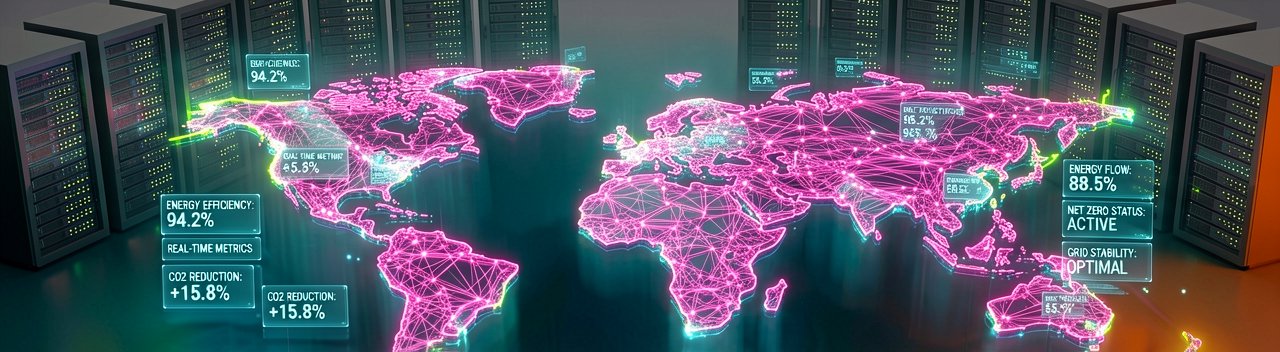
However, the industry is facing a looming energy crisis. The sheer amount of electricity required to cool data centers and power trillions of parameters is staggering. Tech leaders are now pivoting toward nuclear energy and fusion research to keep the lights on. This energy bottleneck is the one physical reality that could slow down the exponential growth we’ve seen in the last eighteen months.
Safety and ethics remain the elephant in the room. As models become more agentic—meaning they can take actions on your behalf rather than just answering questions—the risk of unintended consequences grows. Regulatory bodies like the European Union are leading the charge with the AI Act, attempting to strike a balance between fostering innovation and preventing a "black mirror" scenario of mass surveillance and bias.

The job market is feeling the tremors, too. While the "AI will take your job" narrative is often overblown, the reality is a massive shift in required skills. Knowledge workers are finding that they don't necessarily need to be replaced by AI, but they might be replaced by someone who knows how to use AI more effectively. Upskilling has become the new survival mechanism in the corporate world.
Apple’s recent entry into the fray with "Apple Intelligence" highlights a move toward "Personal AI." Unlike the broad, web-crawling knowledge of ChatGPT, this iteration focuses on your personal context—your calendar, your messages, and your photos. As noted by Bloomberg, this localized approach could be the key to making AI a truly indispensable daily tool for the average consumer.
Looking ahead, the focus is likely to shift toward "Multimodality." We are moving toward systems that can see, hear, and speak in real-time with human-like latency. This isn't just about accessibility; it’s about creating a more natural interface for computing. The mouse and keyboard have had a long run, but the voice-and-vision interface is finally ready for its closeup.
Despite the cooling of the initial "meme-stock" level of hype, the fundamental technology is only getting more robust. We are currently in the "messy middle" of a technological revolution—the part where the novelty wears off and the hard work of implementation begins. It’s less about the magic of the machine and more about the utility of the output.
Ultimately, the success of Artificial Intelligence won't be measured by how many billions of dollars are poured into startups, but by how quietly it integrates into our lives. The most successful technology is the kind you eventually stop calling "technology" because it just works. We’re not quite there yet, but the trajectory is unmistakable.
The Architects of the Silicon Boom
Behind the Scenes: While the public is captivated by the outputs of generative models, a massive consolidation of power and capital is occurring among a handful of key players. This is no longer just a race for technical superiority; it is a battle of multi-billion dollar alliances that are restructuring the entire tech ecosystem. By early 2026, the industry has effectively split into two primary funding camps: the Microsoft-OpenAI juggernaut and the Amazon-Google-Anthropic coalition. This "collapsing of the independent lab era" means that even the most innovative startups must now pick a side to secure the massive compute capacity required for frontier research.
The financial scale of these partnerships is unprecedented. In 2025 alone, global corporate AI investment surged to a record $581.7 billion, a 130% increase year-over-year, according to recent findings from SQ Magazine . Leading this charge was OpenAI, which secured a staggering $40 billion funding round that valued the company at $300 billion. Not far behind, Anthropic raised $13 billion, pushing its valuation to $183 billion. These figures represent more than just capital; they are commitments to build the next generation of data centers and custom silicon necessary to sustain the AI evolution.
Surprisingly, the market share leader in the consumer space is facing stiff competition in the enterprise sector. While OpenAI's ChatGPT remains the household name, Anthropic’s Claude has made significant inroads with business users. Data from VentureBeat indicates that Anthropic now wins nearly 70% of head-to-head matchups for business adoption. This shift is particularly visible in the coding market, where Claude holds a dominant 42% to 54% share compared to OpenAI’s 21%, signaling that developers are prioritizing performance over brand recognition.
This competition is forcing the "Big Three" cloud providers—Amazon Web Services (AWS), Microsoft Azure, and Google Cloud—to undergo a fundamental transformation. As of 2026, Quantumrun reports that AWS still leads the infrastructure market with a 30% share, but Google Cloud is growing at a blistering 63% annually. To keep up, these hyperscalers are projected to spend over $725 billion on AI-related capital expenditures by the end of 2026, shifting their roles from simple storage providers to orchestrators of massive AI-era networks.
The "arms race" has also triggered a gold rush in the mergers and acquisitions (M&A) space. Rather than building every feature from scratch, tech giants are spending billions to acquire ready-made talent and specialized capabilities. Notable examples include Alphabet’s $32 billion acquisition of the security firm Wiz and Palo Alto Networks’ $25 billion move for CyberArk. As noted by FE International, these buyers are no longer paying for revenue alone; they are paying for proprietary datasets and distribution moats that would otherwise take years to develop.
However, this rapid expansion is hitting a wall of physical reality: the energy grid. The surge in AI-driven workloads has pulled industrial M&A activity toward power and reliability. Tech companies are now actively investing in data centers, grid interconnections, and even small modular nuclear reactors to ensure a stable energy supply. This "build-out" is reshaping local economies, especially in regions that can provide the high-voltage power dense enough to sustain modern GPU clusters.
The legal landscape is the second major bottleneck. The European Union’s AI Act is set to take full effect in August 2026, introducing strict transparency and accountability rules. For companies like Apple and Meta, this means ensuring that every piece of AI-generated content is clearly identifiable and that high-risk systems—such as those used in healthcare or finance—meet rigorous safety benchmarks. Failure to comply could result in hefty fines or even total bans within the EU market.
Despite the regulatory pressure, enterprise adoption is reaching a "mainstream" tipping point. In 2026, 72% of large companies have deployed at least one AI application in production, up from 55% just two years ago. Most of these applications are focused on customer service automation, data analytics, and marketing content generation. While the transformation is widespread, the real competitive advantage is moving away from "experimentation" and toward deeply integrated, agent-driven workflows that automate complex business processes.
Ultimately, the current phase of the AI industry is defined by high-stakes pragmatism. The initial phase of awe has been replaced by a focus on "enterprise muscle"—the combination of talent, technical resources, and change management required to turn expensive models into profitable outcomes. As we move deeper into 2026, the winners will be the organizations that successfully navigate the intersection of massive infrastructure needs, evolving global regulations, and the shifting preferences of the professional user base.
The Great Decoupling of Intelligence and Compute
Reading Between the Lines: We are currently witnessing a fundamental shift in the AI value chain, moving from a period of "unconstrained scaling" to one of "surgical optimization." While the raw power of billion-dollar clusters continues to push the frontier of what is possible, the market is quietly decoupling intelligence from sheer size. The true breakthrough of 2026 isn't just that models are getting smarter, but that they are getting smarter while becoming significantly leaner. This suggests that the competitive moat built on "who has the most GPUs" is beginning to crack, favoring those who possess the most efficient architectures and highest-quality proprietary data.
From an analytical standpoint, the massive capital expenditures by the "Big Three" cloud providers are as much about defensive positioning as they are about innovation. By locking in energy contracts and custom silicon designs, these giants are attempting to commoditize the intelligence layer before it commoditizes them. If intelligence becomes "too cheap to meter," the value shifts back to the hardware that hosts it and the distribution networks that deliver it. This is a classic infrastructure play, reminiscent of the early days of the fiber-optic boom, where the physical layer eventually dictated the winners of the digital economy.
The "efficiency paradox" is also coming into play. As models like Mistral and Meta’s Llama series prove that smaller, highly-curated datasets can outperform massive, unvetted crawls, the premium on data quality has skyrocketed. We are moving toward a "post-scraping" world where the value of the open internet as a training set has peaked. Moving forward, the most valuable AI assets will be derived from "locked" data—clinical trials, proprietary codebases, and private financial ledgers—that the general-purpose web crawlers simply cannot access.
There is also a significant psychological shift occurring in the corporate boardroom. The "Fear of Missing Out" (FOMO) that fueled the 2024-2025 spending spree is being replaced by a "Show Me the ROI" mandate. CFOs are no longer satisfied with pilots; they are demanding measurable decreases in "unit cost per task." This transition from experimental spending to operational integration is creating a "chasm" that many mid-tier AI startups will fail to cross if they cannot prove immediate, tangible utility beyond a sleek user interface.
On the geopolitical front, AI has officially become the new "oil." National strategies are no longer just about regulation, but about "sovereign AI"—the ability of a nation-state to produce and control its own intelligence infrastructure. This balkanization of the AI landscape means we may soon see a fractured ecosystem where models are trained on specific regional values and legal frameworks, potentially ending the era of the "global model" that serves everyone from San Francisco to Seoul with the same weights and biases.
The role of "AI agents" represents the next logical step in this analysis. If 2024 was the year of the chatbot, 2026 is the year of the autonomous worker. The economic implication of software that can not only suggest a strategy but execute it—booking flights, reconciling invoices, and managing supply chains—is a total re-evaluation of white-collar labor costs. We are effectively witnessing the birth of a new tier of digital labor that operates with zero marginal cost, which will inevitably lead to a massive restructuring of service-based business models.
However, we must account for the "model collapse" risk—a phenomenon where AI models trained on AI-generated content begin to degrade in quality. As the internet becomes saturated with synthetic data, the "human-origin" data point becomes a luxury good. Analysts are starting to see a future where "human-certified" data carries a massive price premium, potentially creating a new economy for creators who can prove their work was produced without algorithmic assistance.
The energy bottleneck mentioned earlier isn't just a logistical hurdle; it’s a valuation cap. If an AI company's growth is limited by the number of megawatts it can pull from the grid, it is no longer a "pure software" play with infinite scalability. It becomes a heavy industry firm, subject to the slow timelines of utility commissions and physical construction. This shift in identity will likely lead to a cooling of software-style valuations for companies that are increasingly reliant on physical infrastructure to survive.
Finally, we are seeing the emergence of "Antifragile AI"—systems designed to be resilient against the very hallucinations and adversarial attacks that plagued earlier versions. As businesses move AI into mission-critical roles, the focus has shifted from "generative creativity" to "deterministic reliability." The winners of the next decade won't be the ones that give the most surprising answers, but the ones that give the most consistently correct ones under pressure.
In the end, AI is a lot like teenage romance: everyone is talking about it, everyone thinks everyone else is doing it better, and those who are actually doing it are mostly just hoping they don’t break anything expensive before they figure out how it works.
Artūras Malašauskas is an AI Systems Integrator with 20+ years of production-grade web engineering experience. He has designed, shipped, and scaled enterprise Python/PHP systems for logistics, SaaS, and public-sector clients. For the past year, he has focused exclusively on AI integrations: deploying open-source LLMs, building generative media pipelines (image, audio, video), and engineering multi-agent workflows for real production environments. His standard: reproducibility, security, cost-efficient inference—no vaporware. He documents and evaluates emerging AI tooling, separating verified capabilities from marketing noise. Technical editor at: muza-ai.eu, ai-verslas.lt, ai-naujinos.lt Connect on LinkedIn
Comments