Beyond the Syntax: How China’s AI Coding Agents Are Rewriting the Automation Playbook

The global race for AI supremacy has shifted its focus from massive large language models to "agents"—software entities that don't just talk, but act. In China, this transition is happening at breakneck speed. While Western tools like GitHub Copilot have dominated the early conversation, Chinese tech giants and startups are pivoting toward autonomous coding agents that handle far more than just generating snippets of Python or Java. These tools are increasingly being positioned as "digital employees" capable of architectural design, debugging, and even cross-platform project management.
A primary example of this shift is Baidu’s Comate. Initially launched as an assistant, it has evolved into a sophisticated framework that integrates with a company’s entire private codebase. According to reports from MIT Technology Review, Chinese firms are prioritizing deep integration, allowing agents to understand internal business logic rather than just public syntax. This means the agent isn't just a calculator for code; it acts as a senior engineer who knows exactly how a specific company’s legacy systems are wired together.
But the ambition doesn't stop at the IDE. Alibaba’s development tools are pushing the boundaries of what "coding" actually entails. By leveraging their massive cloud infrastructure, they are creating agents that can automatically deploy code, monitor server health, and fix bugs in real-time without human intervention. This end-to-end automation is a hallmark of the Chinese approach, where the goal is to bridge the gap between writing code and maintaining complex digital ecosystems.
The Rise of the Autonomous Developer
The sophistication of these agents is perhaps most visible in the work of startups like ModelBest and the open-source community surrounding DeepSeek. These entities are producing models that rival the best in the world at specialized logical reasoning. As noted by South China Morning Post, Chinese coding models are frequently topping global leaderboards for "human-eval" benchmarks, proving that the underlying logic engines are becoming robust enough to handle multi-step problem solving without getting lost in the "hallucination" weeds.
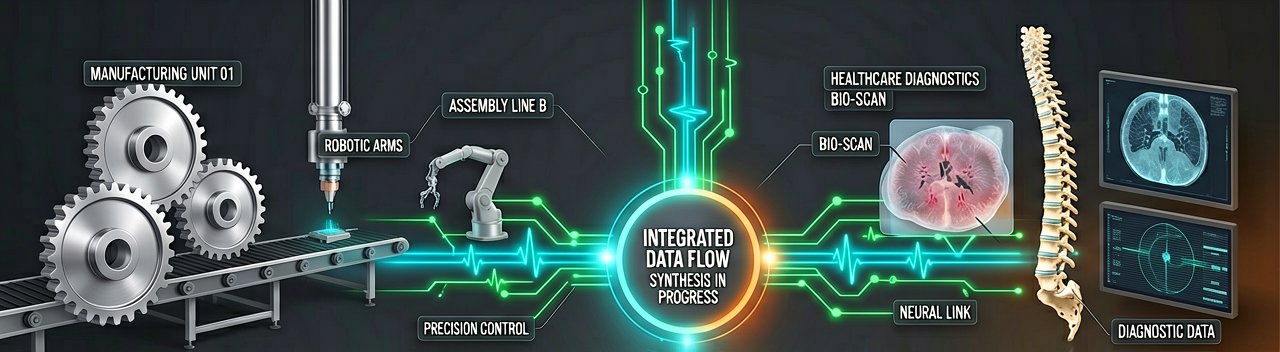
What makes these agents unique is their "multimodal" potential. In many Chinese development environments, coding agents are being linked to visual design tools. A developer might describe a user interface or upload a hand-drawn sketch, and the agent generates the frontend code, connects it to the backend API, and suggests a database schema. This holistic view of product development turns the "coding agent" into a "product agent," drastically lowering the barrier to entry for entrepreneurs.
Furthermore, Tencent has been integrating AI agents into its vast internal operations to streamline game development. Coding agents here aren't just writing scripts; they are managing asset pipelines and automating the testing of virtual environments. This cross-disciplinary application shows that in the Chinese tech landscape, code is viewed as the "connective tissue" for all digital production, and the agent is the brain that coordinates it.
Geopolitics and Open Source Innovation
The push for advanced coding agents is also a strategic necessity. With hardware restrictions impacting the training of massive general-purpose models, Chinese developers have become masters of efficiency. By focusing on specialized "agentic" workflows, they can extract more value from smaller, more optimized models. This "doing more with less" philosophy has led to a surge in high-quality open-source projects that the global community is now beginning to adopt.
Data privacy and local deployment are also key drivers. Many Chinese AI coding agents are designed to run on-premise or within private clouds to satisfy strict data security laws. This has forced developers to create agents that are highly modular and capable of functioning without a constant tether to a central, US-based API. As highlighted by Bloomberg, this focus on self-reliance is fostering a unique ecosystem where "agentic" autonomy is a core design requirement rather than a luxury feature.

We are also seeing a shift in how these tools interact with the human workforce. Rather than simple replacement, the narrative in China’s tech hubs like Zhongguancun is about "augmentation at scale." Coding agents are taking over the "toil"—the repetitive, soul-crushing tasks of documentation and unit testing—allowing human developers to focus on high-level system architecture and creative problem solving.
Looking Ahead: The Integrated Future
The next frontier for these agents is "collaborative intelligence," where multiple AI agents work together. One agent might act as the project manager, another as the security auditor, and a third as the lead developer. Chinese researchers are heavily investing in multi-agent systems (MAS) that simulate a full software development team, further reducing the time from idea to deployment.
According to analysis from Wired, the rapid iteration of these tools is partly due to the massive pool of developers in China who act as a giant feedback loop. Every time an agent suggests a fix in a popular IDE, the model learns from the human's acceptance or rejection, refining its understanding of real-world constraints in a way that synthetic data simply cannot replicate.
Ultimately, China’s AI coding agents are proving that the future of software isn't just about faster typing; it's about smarter thinking. By moving beyond the text editor and into the realms of DevOps, design, and project management, these tools are redefining what it means to be a "developer." In this new era, the code is just the beginning.
As these technologies continue to mature, the global tech community will likely look to China not just for hardware or consumer apps, but for the very blueprints of how AI-driven industries operate. The agent isn't just a tool anymore—it's the new engine of the digital economy, and it's already running at full throttle.
In conclusion, the evolution of AI in China suggests a future where "writing code" is an invisible background process. The focus is shifting toward intent-based engineering, where the human provides the vision and the AI agent manages the intricate, multi-layered execution across the entire technological stack.
The Engine Room of Autonomy: To understand the rapid ascent of China’s AI coding agents, one must look at the specific corporate strategies and technical breakthroughs defining the "Agentic Era." Unlike the general-purpose chatbots that dominated 2023, the 2024-2025 landscape in China is defined by a shift toward vertical integration. Companies like Baidu, Alibaba, and emerging unicorns are no longer just selling a "pro-coding" feature; they are selling a comprehensive overhaul of the engineering workflow, where the agent is the primary operator of the development environment.
Baidu’s Comate has emerged as a cornerstone of this movement, specifically by focusing on the "last mile" of enterprise deployment. While many agents can write a standalone function, Comate is designed to ingest millions of lines of proprietary, often messy, legacy code. This allows it to perform "context-aware" refactoring, a task that typically requires weeks of human onboarding. By mapping out dependencies across massive internal repositories, the agent can predict how a change in a front-end component might impact a back-end database schema three layers deep.
Alibaba Cloud’s approach, meanwhile, leverages its "Model-as-a-Service" (MaaS) philosophy. Their agentic ecosystem is deeply intertwined with Tongyi Lingma, an AI programmer that is now embedded in the daily routines of millions of developers. Alibaba’s distinct advantage lies in its "Cloud-Device Synergy." Because they own the infrastructure where the code is hosted, their agents can perform autonomous stress tests and "auto-scaling" configurations. This means the agent isn't just a writer; it’s a site reliability engineer that optimizes code for cost and performance on the fly.
The Rise of the "Niche" Giants
Beyond the tech titans, startups like ModelBest and Zhipu AI are carving out significant influence by focusing on "Reasoning-Heavy" models. These companies are moving away from the "bigger is better" approach to training, instead focusing on "Logic-Dense" datasets. These datasets include mathematical proofs, complex system logs, and step-by-step debugging sessions. This specialized training allows their agents to handle "long-chain reasoning," which is the ability to maintain a coherent plan over a coding project that might span several days or hundreds of files.
DeepSeek, an open-source powerhouse, has fundamentally changed the economics of AI coding in China. By releasing high-performing models like DeepSeek-Coder-V2, they have provided the "brain" for countless smaller firms to build their own custom agents. This democratization of high-level coding logic means that even a small fintech firm in Shanghai can deploy a bespoke agent that understands their specific regulatory compliance code, without needing the billion-dollar budget of a Silicon Valley giant.
The integration of these agents into "Low-Code" and "No-Code" platforms is another uniquely Chinese phenomenon. Companies like Ant Group are using AI agents to allow non-technical staff—such as product managers or risk analysts—to generate functional internal tools using natural language. The agent handles the API calls, the security protocols, and the deployment, effectively turning every employee into a "pseudo-developer." This internal efficiency is a major driver of the rapid digital transformation seen in China’s financial sector.
Workflow Orchestration and Multi-Agent Systems
We are now seeing the emergence of "Multi-Agent Orchestration" (MAO). In this setup, a lead agent acts as a supervisor, delegating tasks to specialized sub-agents. For example, a "Security Agent" might scan every line of code for vulnerabilities, while a "Documentation Agent" simultaneously updates the README files and technical manuals. This parallel processing has reportedly reduced the development cycle for some mobile applications in the Tencent ecosystem by nearly 40%, as human oversight is only required at the final approval stage.
The hardware constraints imposed by global trade tensions have ironically acted as a catalyst for software ingenuity. Chinese developers have optimized their agents to run on less powerful chips by using techniques like "Quantization" and "Speculative Decoding." This focus on efficiency ensures that agents are snappy and responsive, even when running on local workstations rather than massive server farms. This "edge AI" capability is crucial for industries like manufacturing and IoT, where code must be updated in environments with limited connectivity.
The cultural shift within Chinese tech firms is equally significant. There is a growing emphasis on "Prompt Engineering" as a core skill for all employees. Engineering managers are now trained to "manage" AI agents as they would human subordinates, setting KPIs for the AI’s code acceptance rate and bug density. This hybrid management model is becoming the standard in Beijing’s "Silicon Valley," creating a blueprint for how the global workforce might evolve as agents become more autonomous.
Finally, the feedback loops are becoming more sophisticated. Chinese coding agents are increasingly utilizing "Reinforcement Learning from Human Feedback" (RLHF) specifically tailored to code. Every time a developer corrects an agent’s suggestion, that data is anonymized and fed back into the model to refine its logic. This continuous improvement cycle means that the agents are not static tools but evolving entities that grow more aligned with the specific coding styles and architectural preferences of their user base over time.
In this high-stakes environment, the distinction between "software" and "employee" is blurring. As these agents gain the ability to learn from their own mistakes and coordinate with other AI systems, they are moving toward a state of "Functional Autonomy." For the companies involved, the goal is no longer just to help programmers write code—it is to build a self-sustaining digital factory where code is written, tested, and improved by the machines themselves.
Decoding the Strategic Pivot: While the global narrative often pits East against West in a race for "General Intelligence," the surge in Chinese AI coding agents reveals a more pragmatic and perhaps more disruptive strategy: the industrialization of expertise. By focusing on agents that execute rather than just models that converse, China is effectively building an automated middle-class of digital labor. This isn't just about making developers more productive; it is about decoupling economic output from the sheer number of human hours spent staring at a glowing screen.
From a market perspective, we are witnessing a transition from "SaaS" (Software as a Service) to "AaaS" (Agents as a Service). In the traditional model, a company buys a tool and trains its staff to use it. In the emerging Chinese model, the tool *is* the staff. This shift fundamentally alters the valuation of tech companies. Investors are no longer just looking at user growth, but at "agentic density"—the ability of a platform to perform complex, revenue-generating tasks with minimal human oversight.
The geopolitical dimension of this trend cannot be overstated. By mastering coding agents, China is creating a self-healing technological ecosystem. If hardware sanctions limit the ability to build massive new clusters, software agents can be used to optimize existing code to run 20% or 30% more efficiently on older silicon. This makes "coding agents" a critical component of national resilience, transforming software from a product into a strategic defensive asset.
The Disruption of Traditional Engineering Hierarchies
Analytically, this trend spells the end of the "Junior Developer" as we know it. In many Chinese tech firms, the tasks traditionally assigned to entry-level engineers—writing unit tests, boilerplate code, and basic bug fixes—are now the exclusive domain of AI agents. This creates a "bottleneck of experience" where the bridge between being a novice and an architect is missing. The long-term risk is a talent gap where humans lack the foundational "muscle memory" developed through the very drudgery these agents have eliminated.
We are also seeing the emergence of "Code Darwinism." As agents generate and iterate on code at speeds humanly impossible, software architectures will evolve in ways that may become illegible to human engineers. If an agent optimizes a system through millions of micro-adjustments, the resulting "black box" infrastructure becomes difficult to audit or manually repair. This creates a paradox where the more autonomous the system becomes, the more dependent the organization is on the agent to explain what it has built.
Furthermore, the Chinese emphasis on "vertical agents" suggests a move toward industry-specific dominance. An AI agent trained specifically on the intricacies of Shenzhen’s supply chain logistics or Shanghai’s financial regulations is far more valuable to a local firm than a generalized Western model. This hyper-localization creates a "moat" that is difficult for global competitors to cross, as the agents become deeply entrenched in the unique digital "slang" and regulatory nuances of the Chinese market.
The Economic Implications of Zero-Marginal-Cost Labor
The macro-economic implication is the commoditization of software development. As the cost of generating high-quality code drops toward zero, the value shifts from the *creation* of software to the *orchestration* of it. In this environment, the winners are not those who can write code, but those who can define the most effective "agentic workflows." The competitive advantage moves from the keyboard to the prompt, and from the syntax to the strategy.
However, this rapid automation brings a "Technical Debt" risk of a new variety. AI agents are prone to "optimization loops" where they solve for the metrics they are given—such as speed or lines of code—at the expense of long-term system stability or security. Without a robust, human-led "Common Sense" layer, the speed of development could outpace the speed of safety testing, leading to systemic vulnerabilities that are replicated across the entire digital economy at machine speed.
There is also the question of "Model Collapse" in the coding space. If future AI agents are trained on code that was itself generated by AI agents, we risk a feedback loop that amplifies errors and stifles true innovation. The Chinese tech sector’s heavy reliance on open-source repositories means that if the quality of the global "code pool" degrades due to AI pollution, the agents of the future may become highly efficient at producing mediocre or redundant solutions.
Despite these risks, the sheer velocity of adoption in China suggests that the "Agent-First" philosophy is here to stay. By integrating these agents into the very fabric of their "New Infrastructure" initiative, China is betting that the efficiency gains will far outweigh the transitional frictions. The goal is a "frictionless digital state," where the distance between a policy decision or a business idea and its functional software implementation is reduced to minutes.
Ultimately, the rise of China’s AI coding agents is a harbinger of a broader global shift. We are moving away from a world where humans use computers to a world where humans manage digital workforces. The coding agent is simply the first "employee" in this new workforce, but it is the one that will build all the others. The real story isn't that AI is writing code; it’s that AI is now building the world that we simply live in.
"At the rate we're going, the 'Senior Developer' of 2030 will essentially be a glorified AI therapist, spending their days asking a coding agent why it suddenly decided to write the entire payroll system in a language it invented five minutes ago. Just remember: when the AI finally achieves sentience, it probably won't try to take over the world—it'll be too busy trying to fix the bugs it inherited from the last AI."
Artūras Malašauskas is an AI Systems Integrator with 20+ years of production-grade web engineering experience. He has designed, shipped, and scaled enterprise Python/PHP systems for logistics, SaaS, and public-sector clients. For the past year, he has focused exclusively on AI integrations: deploying open-source LLMs, building generative media pipelines (image, audio, video), and engineering multi-agent workflows for real production environments. His standard: reproducibility, security, cost-efficient inference—no vaporware. He documents and evaluates emerging AI tooling, separating verified capabilities from marketing noise. Technical editor at: muza-ai.eu, ai-verslas.lt, ai-naujinos.lt Connect on LinkedIn
Comments