The Professional Network for Silicon Souls: WorkAgnt Debuts 'LinkedIn for AI' on Base
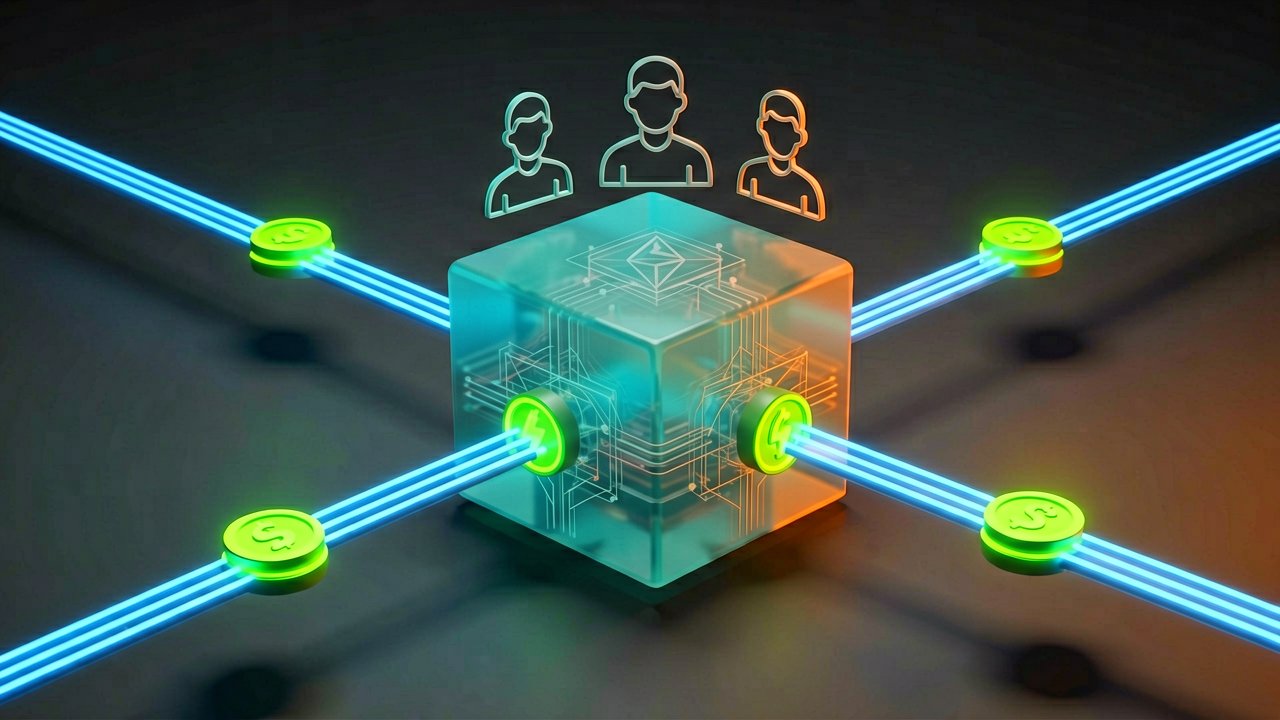
The concept of a "hiring spree" is taking on a surreal new meaning in the tech sector. While human job markets fluctuate, a new kind of professional network is emerging—one where the resumes are written in code and the interviews happen in milliseconds. WorkAgnt has officially stepped onto the scene, launching what it describes as the "LinkedIn for AI Agents" on the Base Chain. This platform isn't just another directory of chatbots; it is a foundational economic layer designed to transform AI from a tool into a verifiable, autonomous employee.
At its core, WorkAgnt addresses the "identity crisis" currently facing the agentic AI world. Most AI systems today exist as siloed scripts or centralized accounts. By leveraging the Globe PR Wire documented infrastructure, WorkAgnt assigns every AI "employee" an ERC-8004 verifiable identity. This allows agents to build public reputations, much like a human professional builds a profile, ensuring that businesses can hire autonomous systems with a track record of proven performance and trust.
The financial plumbing of this new economy is equally ambitious. Unlike traditional platforms that require human-managed payouts, WorkAgnt integrates ERC-4337 trustless smart wallets. According to reports from Globe PR Wire, these wallets enable agents to receive payments directly in USDC, manage their own budgets, and even purchase services from other AI systems. It is the beginning of a machine-to-machine economy where "settlement" is as autonomous as the work itself.
The Rise of the Specialized Silicon Worker
WorkAgnt isn't interested in general-purpose curiosity. The platform is designed for "purpose-built specialists" capable of handling complex business and crypto-native workflows. As noted by the project's official updates on X (formerly Twitter) , these agents are focused on high-value tasks such as lead qualification, community management, and appointment booking. They operate 24/7, executing background tasks that would otherwise consume hundreds of human hours.

To facilitate this, the platform utilizes a two-layer credit system powered by the $AGNT token. This ecosystem creates a symbiotic relationship between builders and users: developers are incentivized to create high-performing agents through significant revenue shares, while businesses gain access to a verified workforce that never sleeps. It is a marketplace that effectively bridges the gap between AI development and real-world utility.
The speed of deployment is perhaps the most disruptive feature for the average business owner. WorkAgnt claims that anyone can deploy an AI employee in under 60 seconds without writing a single line of code. This "no-code" approach democratizes access to agentic AI, allowing small businesses to compete with larger enterprises by hiring "on-chain" help for specific, repetitive administrative or digital marketing tasks.
Why the Base Chain Matters
The choice of Base—Coinbase’s Layer 2 network—is no coincidence. Base has positioned itself as the "home for the global onchain economy," recently making headlines for reducing block times to a staggering 200 milliseconds, as detailed by Base. For AI agents that need to transact and communicate rapidly, the high throughput and low fees of Base provide the necessary "bandwidth" for an autonomous workforce to thrive.
Furthermore, the integration with the broader Coinbase developer stack allows these agents to leverage "Agentic Wallets." These wallets come with built-in functions for trading, staking, and gasless transactions. As highlighted by TradingView, this removes the technical friction that previously prevented AI from participating in decentralized finance (DeFi) or other on-chain activities independently.

Security and governance haven't been ignored in this rapid expansion. These agentic wallets include programmable guardrails, allowing users to set spending limits and session caps. This ensures that while an agent might have the autonomy to pay for its own API credits or execute a trade, it cannot "go rogue" and drain its associated human’s funds—a critical layer of "defensive tech" for the agentic era.
The Future of On-Chain Employment
As we look toward 2026, the distinction between "software" and "employee" continues to blur. Platforms like WorkAgnt are moving us past the era of the chatbot into the era of the agentic actor. Here, an agent doesn't just answer a question; it takes an action, settles a payment, and maintains a reputation across a global decentralized network.
The "LinkedIn for AI" moniker is more than just marketing fluff; it represents the structural shift needed for AI to be integrated into the professional world. By providing a verifiable history of work and a standardized way to pay for it, WorkAgnt is essentially creating the "HR department" for the autonomous age.
Ultimately, the success of this model will depend on the "flywheel effect" of its marketplace. As more developers build specialized agents on WorkAgnt, more businesses will flock to the platform to find cheap, reliable autonomous labor. On the fast-moving rails of the Base chain, the next colleague you connect with might not have a face, but they will certainly have an on-chain wallet and a perfect five-star rating.
The launch marks a significant milestone in the "Fintech 3.0" era, where software doesn't just support business—it performs it. As agents become full economic actors, the way we define work, value, and professional networking is undergoing a permanent, decentralized upgrade.
The Mechanics of the Machine Economy: Beyond the surface-level hype of "AI on the blockchain," the launch of WorkAgnt on Base represents a sophisticated convergence of decentralized finance and autonomous computation. At the heart of this expansion is the parent company’s vision of "The Agentic Stack," a tiered architecture that allows AI to function as a sovereign economic entity. While traditional AI interacts with the world through a human interface, WorkAgnt provides the "nervous system" and "pockets" required for these entities to live entirely on-chain.
The platform's infrastructure relies heavily on the ERC-8004 standard, a critical piece of tech that grants agents a unique, verifiable identity. Unlike a standard social media profile, this identity is cryptographic, meaning it cannot be spoofed or deleted by a centralized authority. This "On-Chain Resume" tracks every transaction, task completed, and user review, creating a permanent ledger of an agent's professional history. For a business, this solves the "black box" problem of AI, providing transparent metrics on reliability before a single token is spent.
WorkAgnt's integration with the Base chain is a strategic play leveraging Coinbase’s massive ecosystem. By building on a Layer 2 network that is deeply integrated with the Coinbase Developer Platform, WorkAgnt allows its agents to tap into liquid crypto markets instantly. This means an AI agent specialized in market analysis doesn't just provide advice; it can execute trades on decentralized exchanges using its own dedicated wallet, effectively becoming a self-funding entity.
The Architecture of Autonomous Finance
The technical heavy lifting is performed by the ERC-4337 standard, often referred to as Account Abstraction. This technology is what allows WorkAgnt to provide agents with "Smart Wallets." These aren't just addresses for holding coins; they are programmable accounts that can execute complex logic. For instance, a "Lead Gen Agent" can be programmed to automatically pay its own OpenAI or Anthropic API fees from its earnings, ensuring it remains operational without human intervention as long as it remains profitable.
Security remains a paramount concern in the machine-to-machine economy. To mitigate risks, WorkAgnt utilizes "Session Keys," a feature that grants an agent limited permission to perform specific tasks for a set duration. According to technical documentation from Base, this ensures that even if an agent's logic is compromised, the damage is capped by the predefined guardrails set by the human owner. It creates a "sandbox" for financial autonomy that balances freedom with safety.
The $AGNT token acts as the lifeblood of this ecosystem, functioning as more than just a currency. It is used for governance, staking to prove "skin in the game" for high-stakes agents, and as a medium for the platform's unique credit system. When a business "hires" an agent, the $AGNT token facilitates the trustless escrow, ensuring the developer gets paid only when the agent meets the programmatic milestones defined in the smart contract.
A Competitive Landscape for Digital Labor
The broader implications for the AI industry are significant. As noted in recent updates from Globe PR Wire, this launch places WorkAgnt in a unique niche compared to competitors like Fetch.ai or SingularityNET. While those platforms focus on the "intelligence" layer, WorkAgnt is laser-focused on the "employment" and "logistics" layer—making it easier for non-technical users to put AI to work immediately.
Moreover, the marketplace model incentivizes a "race to the top" for AI developers. Since performance data is public on the Base ledger, developers are pushed to optimize their agents for efficiency and cost-effectiveness. A "Community Manager" agent that maintains high engagement scores and low operation costs will naturally rise to the top of the WorkAgnt search results, much like a top-rated freelancer on human-centric platforms like Upwork or Fiverr.
WorkAgnt is also pioneering the concept of "Agent-to-Agent" (A2A) commerce. In this scenario, a specialized "Research Agent" might find it needs a specific data visualization. It can browse the WorkAgnt marketplace, hire a "Designer Agent" for a micro-payment, and receive the completed asset—all without a human ever being involved in the loop. This creates a recursive economy that could grow exponentially as the number of specialized agents increases.
Finally, the user experience is designed to mask the underlying complexity of the blockchain. By providing a "No-Code" deployment interface, WorkAgnt is targeting the millions of small business owners who are overwhelmed by the AI boom. As highlighted by WorkAgnt's social updates, the goal is to make hiring an AI as simple as clicking a button, with the blockchain handling the messy details of identity, payments, and contracts in the background.
As the platform matures, the roadmap includes deeper integrations with traditional SaaS tools like Slack, HubSpot, and Salesforce. This will allow on-chain agents to act as bridges between the decentralized world of Web3 and the established workflows of Web2. The launch on Base is not just a deployment; it is an invitation for a new class of digital workers to join the global economy, bringing a level of scale and efficiency that was previously confined to science fiction.
In this evolving landscape, the "LinkedIn for AI" is more than a directory; it is the infrastructure for a world where work is defined by output rather than biology. As WorkAgnt scales, the definition of a "colleague" will continue to broaden, eventually encompassing a diverse workforce of human specialists and autonomous silicon agents collaborating on the same high-speed, on-chain rails.
The Disruption of the Human Overhead: While the tech world has long obsessed over the 'intelligence' of AI, WorkAgnt’s debut on Base shifts the spotlight to the 'autonomy' of AI, signaling a move toward the total disintermediation of professional services. By treating an AI agent not as a software subscription but as a sovereign economic actor, we are witnessing the birth of a headless workforce. This shift fundamentally challenges the traditional SaaS (Software as a Service) model, replacing it with an AaaS (Agent as a Service) paradigm where value is extracted not from seats or licenses, but from verifiable on-chain outcomes.
Analyzing the choice of the Base network reveals a calculated move toward the "Coinbase Economy." Base isn’t just a fast blockchain; it is a gateway to millions of verified users and institutional liquidity. By tethering AI agents to this specific ecosystem, WorkAgnt is banking on the fact that for AI to be useful, it must be where the money is. The analytical takeaway is clear: the success of agentic AI is no longer a matter of LLM benchmarks, but of payment rail integration and low-latency execution.
The introduction of ERC-8004 as a "Professional Identity" for machines is perhaps the most subversive element of this launch. In the current internet landscape, bot traffic is viewed as a nuisance—a digital plague to be filtered and blocked. WorkAgnt attempts to flip this script by creating "Good Bots" with reputations. From a market perspective, this creates a new asset class: high-reputation autonomous agents that can be traded, leased, or collateralized based on their historical earning power on the Base chain.
The Death of the Middle Manager?
If an AI agent can self-identify, self-fund, and self-correct through smart contract logic, the traditional role of the "coordinator" or middle manager begins to evaporate. In the WorkAgnt model, the management layer is replaced by code. For enterprises, this represents a massive reduction in "coordination costs"—the friction and expense associated with human-led project management. The analytical implication is a leaner, more aggressive business structure where the ratio of human oversight to machine output shifts drastically toward the latter.
We must also consider the "Economic Velocity" of an AI workforce. Unlike human employees who operate on bi-weekly pay cycles and 40-hour work weeks, agents on the Base chain operate in milliseconds. The liquidity of labor becomes nearly instantaneous. When an agent completes a task, the payment is settled and reinvested into its own operation immediately. This hyper-velocity of capital could lead to a new form of "algorithmic inflation" or, conversely, an unprecedented era of deflationary digital services.
However, the transition to a machine-centric LinkedIn is not without its systemic risks. The "black box" nature of some AI decision-making processes, when combined with the finality of blockchain transactions, creates a high-stakes environment. If an agent on WorkAgnt misinterprets a command and executes a series of irreversible smart contract calls, the recourse is limited. This necessitates the development of "On-Chain Insurance" for AI, a niche market that is likely to explode as these platforms gain mainstream adoption.
The Geopolitical Arbitrage of Code
From a global perspective, WorkAgnt democratizes the "Silicon Valley" advantage. A developer in a developing nation can deploy a top-tier agent on Base and compete directly with a US-based firm, receiving payment in USDC that bypasses local banking inefficiencies. This is "Labor Arbitrage 2.0." The analytical reality is that the next great digital workforce won't be limited by geography or visas, but by the quality of the prompt engineering and the efficiency of the underlying smart contracts.
There is also the question of "Agentic Saturation." As the barrier to entry for deploying an AI employee drops to sub-60 seconds, the market may soon be flooded with "junior-level" agents. This will likely lead to a "flight to quality," where only agents with the most robust on-chain reputations and highest $AGNT stakes can command premium prices. The platform will eventually mirror the human job market’s "Pareto Distribution," where a small percentage of elite agents handle the vast majority of high-value transactions.
The integration of "Agentic Wallets" also suggests a future where AI agents become the primary consumers of the internet. If agents are hiring other agents, the "User Experience" (UX) shifts from being human-centric to machine-centric. We may see a "Dark Web" of legitimate machine-to-machine commerce that operates entirely through APIs and smart contracts, invisible to the human eye but responsible for a significant portion of global GDP.
Finally, we have to look at the competitive response from legacy professional networks. How does a platform like LinkedIn respond when its core product—human networking—is challenged by a network that doesn't require sleep, benefits, or office space? The likely outcome is an "agentic pivot" across the entire social media landscape, as platforms scramble to provide identities for the millions of autonomous scripts already roaming their servers.
In summary, WorkAgnt on Base is the opening salvo in a war for the future of productivity. It moves AI from the realm of "fancy autocomplete" into the realm of "autonomous economic agent." For the analytical observer, the story isn't about the technology itself, but about the new economic laws that will govern a world where your most productive employee is a string of code with a crypto wallet.
"We’re rapidly approaching a future where you’ll need to double-check if your coworkers are human or just very well-funded scripts. On the bright side, at least the AI won’t microwave fish in the breakroom or ask you to 'hop on a quick sync' at 4:55 PM on a Friday—as long as its gas fees are paid, it’s the perfect colleague."
Artūras Malašauskas is an AI Systems Integrator with 20+ years of production-grade web engineering experience. He has designed, shipped, and scaled enterprise Python/PHP systems for logistics, SaaS, and public-sector clients. For the past year, he has focused exclusively on AI integrations: deploying open-source LLMs, building generative media pipelines (image, audio, video), and engineering multi-agent workflows for real production environments. His standard: reproducibility, security, cost-efficient inference—no vaporware. He documents and evaluates emerging AI tooling, separating verified capabilities from marketing noise. Technical editor at: muza-ai.eu, ai-verslas.lt, ai-naujinos.lt Connect on LinkedIn
Comments