Cracking the Glass Code: Machine Learning Reveals the Hidden Architecture of Metallic Stability
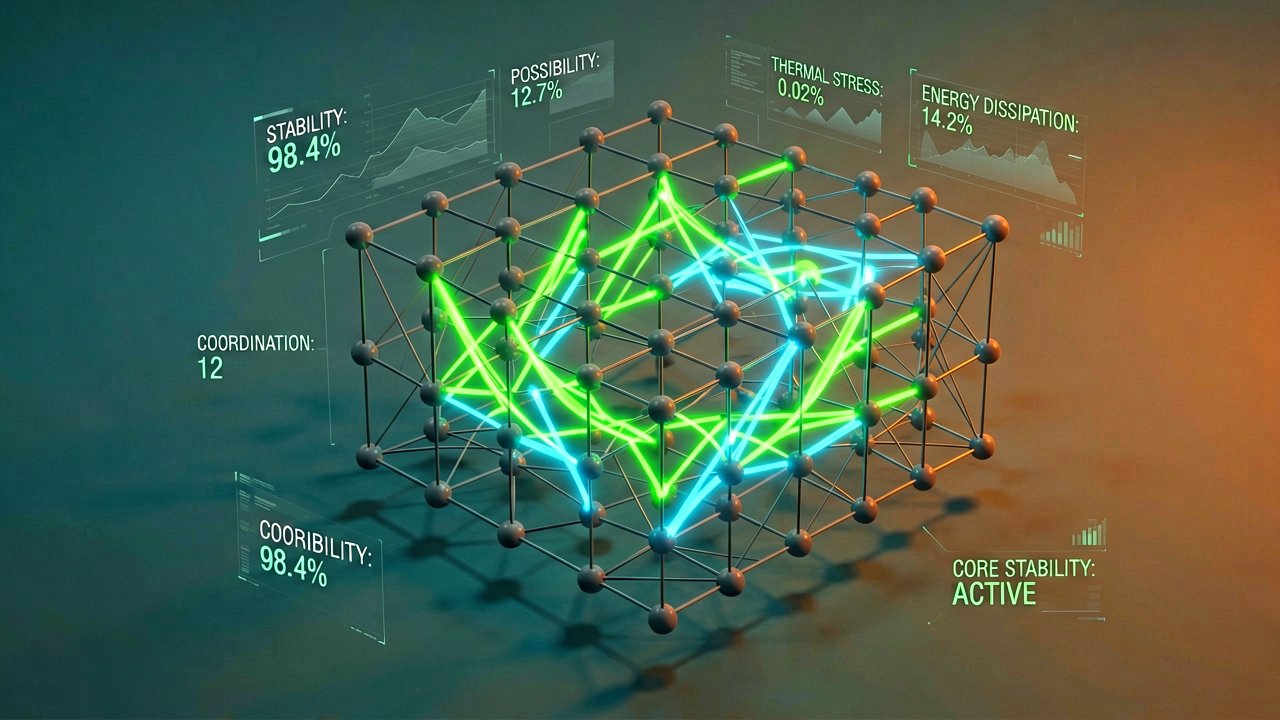
For decades, metallic glasses have been the "enigma" of the materials science world. Unlike traditional metals, which possess a neat, repeating crystalline lattice, these materials are a chaotic jumble of atoms—an "amorphous" state that grants them incredible strength and corrosion resistance but makes their behavior nearly impossible to predict. Until now, scientists struggled to pinpoint exactly which atomic arrangements prevented these glasses from collapsing back into a brittle, crystalline state.
A recent study led by researchers at the University of Michigan Engineering has finally pulled back the curtain. By employing two competing machine learning philosophies, the team discovered that the "secret sauce" of metallic glass stability lies not in the immediate neighbors of an atom, but in the second-nearest neighboring atoms. This finding provides a definitive structural marker for a material class that has long lacked a clear "genetic" blueprint.
The Five-Angstrom Breakthrough
The core of the discovery is a specific spatial scale: 5 angstroms (Å). In the world of subatomic measurements, this is the distance that encompasses an atom’s second shell of neighbors. The researchers found that this specific radius holds the most predictive structural information about whether a metallic glass will remain stable under stress or temperature fluctuations. This scale, which the team named the "Radius of Informative Structural Environments" (RISE), appears to be a universal feature across various alloy compositions.
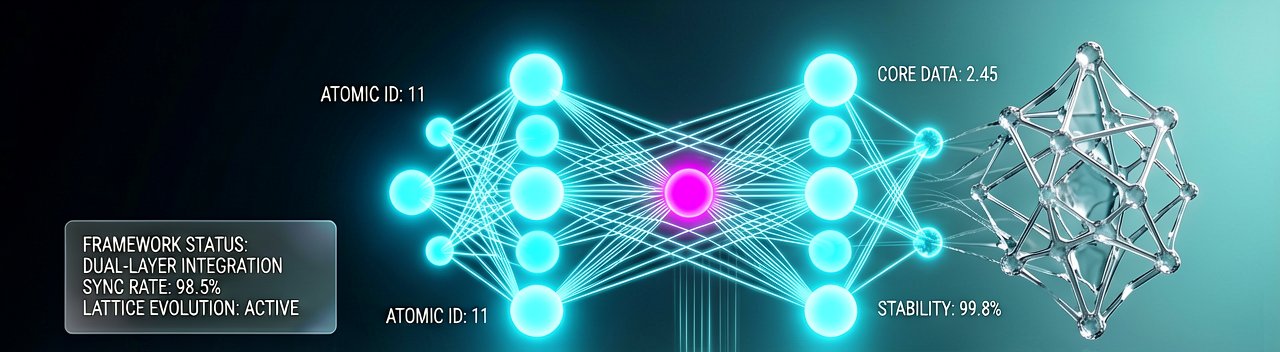
What makes this result particularly robust is how it was achieved. The team didn't just use one AI model; they used two with fundamentally different "personalities." The first was a reductionist model based on physics-inspired descriptors, while the second was an "emergentist" model that used attention mechanisms to find patterns from scratch without any prior human assumptions. When both models converged on the same 5 Å scale, the researchers knew they had found a fundamental physical reality rather than a digital fluke.
Moving Beyond Trial-and-Error
Historically, discovering new Amorphous metals was a high-stakes game of trial-and-error. Scientists would mix various elements and cool them at extreme speeds—often millions of degrees per second—hoping to "freeze" the liquid chaos into a solid glass. This process is expensive, time-consuming, and often results in brittle failures. By identifying the specific structural motifs that lead to stability, AI can now simulate thousands of virtual recipes to find the ones most likely to succeed.
This shift is part of a broader trend in "AI for Science" (AI4S). According to a report by IOP Publishing, the integration of machine learning into materials science is closing the long-standing "theory-experiment loop." By aligning microscopic simulations with macroscopic experimental results, researchers can now design materials with "on-demand" properties, such as high-entropy alloys that remain ductile even at cryogenic temperatures.
The Role of Local Environments
The stability of these glasses is deeply tied to how atoms pack together. In Nature Communications, recent research highlights that exceptional hardness in multi-component metallic glasses often arises from "boron-enriched short-range environments" and "refractory-stabilized local rigidity." These local clusters act like structural anchors, preventing the atoms from sliding past one another or rearranging into a crystal lattice.
By focusing on these "unique local environments" (ULEs), machine learning models can now predict a sample's global stability by analyzing its "structural heterogeneity." In simpler terms, AI can look at the "noise" in the atomic structure and determine if that noise is organized in a way that provides strength or if it contains hidden "vacancy-like motifs" that could lead to premature failure.
Applications and Future Outlook
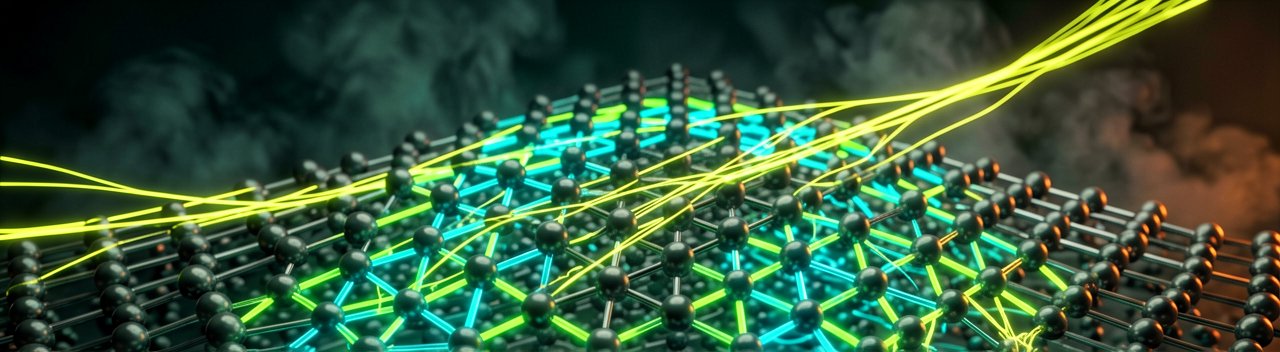
The implications for industry are massive. Metallic glasses are already finding their way into high-end electronics, biocompatible medical implants, and even aerospace components. However, their high cost—often due to the inclusion of expensive elements like palladium or zirconium—has limited their widespread adoption. With the ability to accurately model cheaper iron- or copper-based glasses, we may soon see "amorphous steel" used in everything from smartphone frames to more efficient power transformers.
Furthermore, this research supports the development of more efficient machine learning interatomic potentials (MLIPs). As noted in arXiv, these MLIPs are essential for multiscale simulations that bridge the gap between individual atoms and bulk industrial parts. By training these models on the 5 Å scale identified by the Michigan team, future simulations will be significantly more accurate while requiring less computational power.
As we move toward a future where AI designs our materials from the atom up, the discovery of the 5 Å stability scale marks a turning point. We are moving from observing the chaos of amorphous materials to mastering it. The "enigma" of metallic glass is finally becoming a predictable, programmable tool for the next generation of engineers.
In the grand scheme of things, this isn't just about better alloys; it's about the maturation of AI as a legitimate scientific collaborator. When machine learning can point to a physical scale that humans missed for sixty years, it proves that the most important discoveries in the coming decade might not be made by eyes looking through a microscope, but by algorithms looking through the data.
Behind the Silicon Curtain: The quest to decode metallic glasses has transformed into a high-stakes competition between traditional metallurgy and advanced computational physics. While the University of Michigan led the charge in identifying the 5-angstrom scale, the broader ecosystem involves a network of institutions and tech-forward enterprises racing to commercialize these findings. The push is no longer just about basic science; it is about establishing a "Materials Genome" that can be patented and scaled across global manufacturing supply chains.
The Collaborative Powerhouse
The University of Michigan’s Department of Materials Science and Engineering acted as the primary hub for this specific breakthrough. Their team utilized the "Great Lakes" high-performance computing cluster to run the massive simulations required to pit two different AI philosophies against one another. By leveraging the University’s deep ties with the National Science Foundation (NSF), the researchers were able to bridge the gap between academic theory and the practical constraints of industrial smelting.
Complementing the Michigan efforts, researchers at the University of Michigan Engineering worked to ensure that the machine learning models weren't just "black boxes." They focused on "explainable AI" (XAI), a critical sub-field that ensures scientists understand why a model makes a prediction. This transparency is vital for companies like Liquidmetal Technologies and other specialized alloy manufacturers who need to justify multi-million dollar investments in new production lines.
Industrial Giants and the Glass Race
The industrial interest in these stable metallic glasses is led by sectors that demand extreme performance in small packages. Apple, for instance, has long been rumored to be experimenting with amorphous alloys for internal components and casing materials, holding numerous patents in the space. The ability to predict stability via machine learning allows consumer electronics giants to move away from rare earth elements toward more sustainable, iron-based amorphous alloys without sacrificing durability.
In the aerospace sector, companies are eyeing these materials for their "elastic limit"—the ability to deform and return to shape—which is significantly higher than that of titanium or crystalline steel. Organizations like NASA and SpaceX have a vested interest in any research that identifies structural markers for stability, as metallic glasses could be the key to more resilient landing gear or lightweight shields for deep-space missions.
The Role of Data Providers
Data is the fuel for this AI revolution, and organizations like the Materials Project have become the "libraries" of the modern metallurgist. By providing vast open-source datasets of atomic structures, these platforms allowed the Michigan team to train their "emergentist" models. This collaborative data-sharing culture is what enabled the AI to recognize the 5 Å scale as a universal constant across different chemical compositions.
Furthermore, the development of these AI models relies on sophisticated software frameworks provided by companies like NVIDIA and Google. The use of GPU-accelerated computing was essential for the "attention mechanisms" mentioned in the study. These are the same algorithms that power Large Language Models, repurposed here to "pay attention" to the spatial relationships between atoms instead of words in a sentence.
Addressing the Brittle Challenge
The most significant hurdle these companies face is the inherent brittleness of many amorphous metals. While the 5 Å discovery explains stability, the industrial application requires "plasticity"—the ability of a material to bend before it breaks. Companies are now using the Michigan findings to design "composite" metallic glasses, where tiny crystalline particles are embedded within the amorphous matrix to act as "speed bumps" for cracks.
This hybrid approach is currently being tested by medical device startups. Because metallic glasses can be injection-molded like plastics but remain as strong as metal, they are ideal for microscopic surgical tools. The 5 Å stability marker ensures that these tools can be sterilized at high temperatures without losing their unique amorphous properties, a frequent failure point in previous generations of the technology.
Global Strategic Implications
Beyond individual companies, there is a geopolitical layer to this research. As traditional mining for precious metals becomes more fraught with environmental and political tension, the ability to create "designer materials" from abundant elements like iron, nickel, and aluminum is a matter of national security. AI-driven materials science allows nations to bypass resource scarcity by engineering high-performance substitutes in a lab.
The convergence of AI and metallurgy is also sparking a new wave of "materials informatics" startups. These firms act as consultants to traditional manufacturers, providing the software tools necessary to implement the University of Michigan’s 5 Å framework. By integrating these ML models into their R&D workflows, old-school steel mills are transforming into data-centric tech companies.
Ultimately, the story behind this breakthrough is one of convergence. It is the moment where the oldest technology in human history—working with metal—met the newest—artificial intelligence. This partnership is finally unlocking the potential of materials that have existed since the dawn of the space age but remained too temperamental to use. The 5 Å scale is the key that finally fits the lock.
As we look forward, the focus shifts from discovery to optimization. The researchers and companies involved are now refining their models to predict not just stability, but also the magnetic and electrical properties of these glasses. The goal is a "Universal Model of Amorphous Matter," which would effectively end the era of trial-and-error chemistry once and for all.
With these structural secrets revealed, the next generation of infrastructure, from more efficient power grids to indestructible hardware, is no longer a matter of "if," but "when." The digital blueprints are already being drawn, 5 angstroms at a time.
The 5-Angstrom Paradigm Shift: From an analytical standpoint, the identification of the "Radius of Informative Structural Environments" (RISE) represents a fundamental pivot from descriptive science to prescriptive engineering. For decades, the materials science community was bogged down in a "curse of dimensionality," where the near-infinite combinations of elements and cooling rates made the search for stable metallic glasses feel like searching for a needle in a haystack—without even knowing what the needle looked like. By defining a specific spatial constraint of 5 Å, this research effectively reduces the search space of the universe by orders of magnitude, turning a chaotic mystery into a solvable geometry problem.
Decoupling Stability from Scarcity
The most significant market implication of this breakthrough is the potential for "resource decoupling." Until now, the most stable metallic glasses often relied on "heavy hitter" elements like Platinum or Palladium to prevent crystallization. These elements act as structural anchors because of their size and bonding characteristics, but their price tags make them non-starters for mass-market infrastructure. By understanding that stability is a function of the second-nearest neighbor environment, engineers can now use AI to simulate how cheaper, more abundant elements like Iron or Aluminum can be "tricked" into forming those same 5 Å stabilizing motifs.
This shift moves the value proposition of the metals industry from the "raw material" to the "computational recipe." We are likely to see a surge in intellectual property filings focused on specific atomic configurations rather than just chemical compositions. In this new landscape, a company’s competitive advantage won't be their access to a specific mine, but the sophistication of their neural networks in predicting local structural rigidity.
The "Black Box" Trust Gap
Analytically, the use of two competing machine learning models—the "reductionist" and the "emergentist"—is a masterclass in scientific validation for the AI era. One of the biggest hurdles in adopting AI for industrial manufacturing is the "trust gap." Engineers are historically hesitant to risk a billion-dollar production line on a "black box" prediction. By showing that two fundamentally different algorithms arrived at the exact same 5 Å conclusion, the researchers have provided the kind of cross-verified certainty that the conservative industrial sector demands before shifting its standards.
However, we must also consider the "simulation-to-reality" gap. While the AI can identify the perfect structural environment at 5 Å, the physical manufacturing of these materials still requires cooling rates that can be difficult to achieve at scale. The next analytical bottleneck isn't finding the stable structure; it’s engineering the industrial hardware capable of quenching these specific "AI-approved" recipes without introducing microscopic defects that the models might have overlooked.
Disrupting the Crystalline Hegemony
For over a century, the global economy has been built on the predictability of crystalline lattices—the way steel girders bear weight or silicon wafers conduct electricity. The rise of stable, predictable metallic glasses threatens this "crystalline hegemony." Amorphous metals offer a combination of properties that shouldn't exist together: the strength of high-end steel with the processability of a polymer. If the 5 Å marker allows us to master these materials, we are looking at the potential obsolescence of several traditional alloy categories in high-stress environments.
From a sustainability perspective, the impact is equally profound. Crystalline metals often fail due to corrosion that starts at the "grain boundaries"—the microscopic cracks between neat rows of atoms. Because metallic glasses have no grain boundaries, they are virtually immune to this type of decay. Analytically, this suggests a future where infrastructure doesn't just get "better," but significantly more "durable," potentially doubling the lifecycle of underwater pipelines or coastal reinforcements.
The Emergence of "Materials Informatics"
The business model of metallurgy is being forcibly modernized. We are seeing the birth of "Materials Informatics" as a standalone sector, mirroring how Bioinformatics revolutionized the pharmaceutical industry twenty years ago. Companies that fail to integrate the 5 Å stability framework into their R&D will find themselves in a "Kodak moment," stuck with slow, trial-and-error laboratory processes while competitors deploy "digital twins" of their alloys to run a million stress tests per second.
There is also a hidden risk: the homogenization of research. As more labs adopt the same machine learning frameworks and focus on the same 5 Å scale, there is a danger of "algorithmic bias" where we stop looking for stability markers outside of this radius. While the 5 Å scale is clearly a dominant feature, the "tails" of the distribution—the rare, extreme environments—might hold the keys to even more exotic properties like room-temperature superconductivity or ultra-efficient hydrogen storage.
Final Market Outlook
In the short term, expect to see the "5 Å rule" become a standard benchmark in computational materials science papers. In the medium term (3-5 years), look for the first wave of "AI-optimized" iron-based metallic glasses to hit the consumer electronics market. The long-term trajectory suggests a fundamental rewriting of the periodic table’s utility—not based on where an element sits in a row, but how it interacts with its neighbors at the second-shell level.
Ultimately, the University of Michigan’s findings serve as a reminder that the most complex problems in the universe often have surprisingly elegant, localized solutions. We spent decades looking at the "forest" of the entire metallic structure, only to realize that the health of the entire ecosystem was determined by the specific "neighborhood" of atoms just 5 angstroms away.
The era of "accidental metallurgy" is over. We are now in the age of atomic architecture, where the blueprints are drawn by machines and the materials are limited only by our ability to keep them from "relaxing" into boring, old crystals.
"It turns out that if you want to build a better future, you don't need a crystal ball—you just need a glass that refuses to become one. Just remember: when the robots finally design a bridge that lasts forever, we'll still find a way to complain about the toll price."
Artūras Malašauskas is an AI Systems Integrator with 20+ years of production-grade web engineering experience. He has designed, shipped, and scaled enterprise Python/PHP systems for logistics, SaaS, and public-sector clients. For the past year, he has focused exclusively on AI integrations: deploying open-source LLMs, building generative media pipelines (image, audio, video), and engineering multi-agent workflows for real production environments. His standard: reproducibility, security, cost-efficient inference—no vaporware. He documents and evaluates emerging AI tooling, separating verified capabilities from marketing noise. Technical editor at: muza-ai.eu, ai-verslas.lt, ai-naujinos.lt Connect on LinkedIn
Comments