The New Playbook: How Generative AI is Rewriting the Rules of Game Development
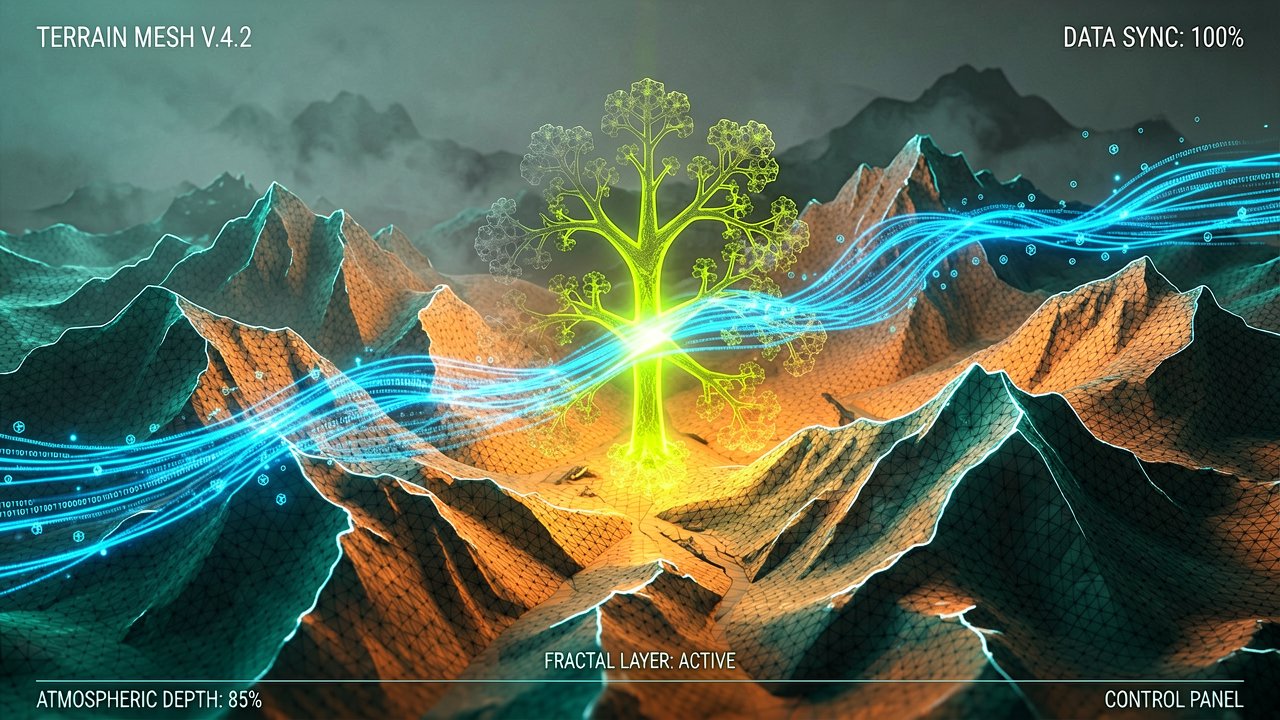
The gaming industry has always been a pioneer in adopting cutting-edge tech, but the recent infusion of generative AI is different. It isn’t just a new coat of paint; it’s a fundamental shift in how games are built and played. As studios grapple with ballooning budgets and decade-long development cycles, AI is stepping in as the ultimate force multiplier, promising to streamline workflows while expanding the boundaries of player agency.
One of the most immediate impacts is in the realm of asset creation. Traditionally, building a hyper-realistic open world required thousands of artists and years of manual labor. Now, tools like NVIDIA’s Ace and various procedural generation engines are allowing smaller teams to punch way above their weight class. By automating the "grunt work" of 3D modeling and texturing, developers can focus more on the soul of the game—the mechanics and the narrative.
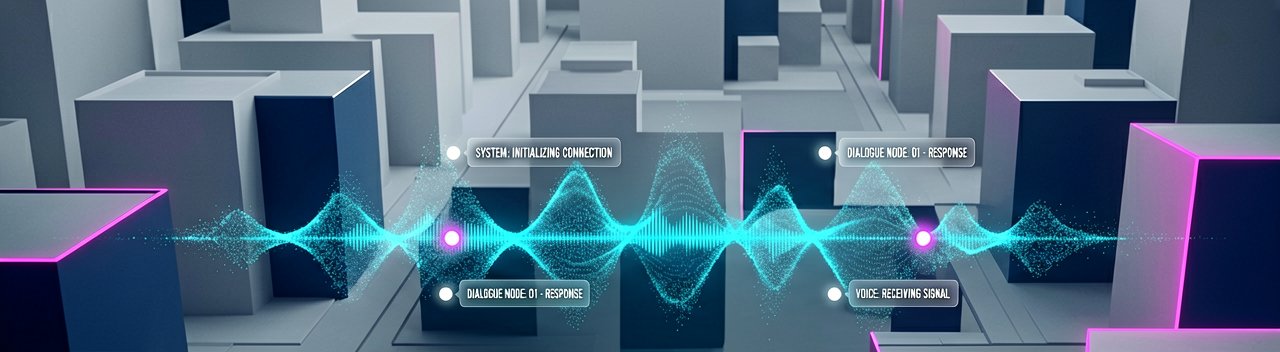
We are also seeing a massive evolution in Non-Player Characters (NPCs). For decades, talking to an in-game character meant clicking through a pre-written dialogue tree. However, companies like Inworld AI are pioneering "unscripted" NPCs that use large language models to react dynamically to player input. This means your interaction with a shopkeeper or a villain could be entirely unique to your specific playthrough.
The Rise of the Infinite World
Procedural generation isn't new—think Minecraft or No Man’s Sky—but AI is making these environments feel less like random math and more like intentional design. Advanced algorithms can now ensure that a randomly generated forest doesn't just look right, but functions logically within the game's ecology. This creates a sense of "infinite replayability" where the world evolves alongside the player's actions.
Ubisoft has been particularly vocal about their experiments in this space. Through their "Ghostwriter" tool, they are using AI to help narrative designers draft "barks"—the small snippets of dialogue NPCs say during combat or exploration. As reported by The Verge, this allows writers to spend less time on repetitive scripts and more time on the overarching plot, effectively raising the quality bar for world-building.
However, the trend isn't just about saving time; it’s about personalization. Imagine a game that adjusts its difficulty, music, and even its storyline based on your physiological responses or playstyle. AI-driven telemetry is allowing developers to analyze player behavior in real-time, creating a "Director" system similar to what we saw in Left 4 Dead, but significantly more sophisticated and nuanced.
Democratizing Game Design

Perhaps the most exciting trend is the democratization of the medium. High-end game development was once the exclusive playground of those who could code in C++ or master complex engines like Unreal. AI-assisted "no-code" or "low-code" platforms are lowering the barrier to entry, allowing creators to describe a scene or a mechanic in plain English and see it come to life.
According to insights from Andreessen Horowitz (a16z), we are entering a "Golden Age" of user-generated content. Just as YouTube turned everyone into a video creator, AI tools integrated into platforms like Roblox or Fortnite are turning gamers into developers. This shift is expected to trigger an explosion of niche, experimental titles that traditional publishers might have deemed too risky.
Of course, this rapid integration hasn't come without friction. The industry is currently facing a heated debate regarding intellectual property and the training data used for these models. Many artists fear that AI could devalue their work or replace entry-level roles. Finding a balance between efficiency and ethical creative practices remains one of the biggest hurdles the industry faces in 2024 and beyond.
The Hardware Revolution
The hardware side is also pivoting to support this AI-heavy future. Modern GPUs are no longer just about pushing more pixels; they are about specialized AI cores that handle tasks like DLSS (Deep Learning Super Sampling). This technology, championed by NVIDIA, uses AI to upscale lower-resolution images, allowing games to run at higher frame rates on modest hardware without sacrificing visual fidelity.
This efficiency is crucial for the burgeoning cloud gaming market. By offloading heavy AI computations to the cloud, players can experience complex, AI-driven worlds on devices as simple as a smartphone or a smart TV. This "compute-anywhere" model is essential for reaching the next billion gamers globally who may not own a $2,000 gaming rig.
Looking ahead, the integration of AI in game development is moving toward "multimodal" applications. We will soon see games where you can speak into your microphone to cast a spell, or where the game environment changes based on a sketch you draw on a tablet. The line between the player's imagination and the game's code is becoming increasingly blurred.
Even the testing phase is being transformed. Quality Assurance (QA) has traditionally been a grueling process of human testers running into walls for hours to find bugs. AI "agents" can now play through games millions of times in a fraction of a second, identifying glitches and balance issues far more effectively than any human team could, as noted by Unity in their recent AI whitepapers.
In conclusion, AI isn't replacing the human element of game design; it's augmenting it. The most successful games of the next decade won't be the ones that use the most AI, but the ones that use it to create deeper emotional connections and more immersive experiences. We are moving from a world of "static" games to "living" software that grows, learns, and surprises us every time we hit 'Start.'
The Backstory: A Closer Look at the Power Players and Indie Disruptors
To understand the sheer momentum behind these shifts, one must look at the specific collaborations currently redefining the industry’s "middle class." While AAA giants like Ubisoft and Microsoft grab the headlines, the real story lies in how modular AI tools are being packaged for creators of all sizes. The recent GDC 2025 event highlighted a notable pivot: the industry is moving away from "showcase" tech demos toward practical, integrated production pipelines that solve the specific pain point of high-fidelity content scaling.
A prime example of this evolution is the ongoing partnership between Inworld AI and Team Xbox. Their "Project Explora" initiative is specifically designed to provide developers with an AI-driven "Design Copilot." Instead of manually mapping out every branching path in a quest, designers can use these tools to generate complex narrative graphs and logic trees, effectively allowing a solo developer to manage a story depth that previously required a full writing staff.
The "Small-Scale" Supercomputer in the Living Room
Hardware is evolving just as fast as the software, with a focus on bringing heavy AI processing to the "edge." At the start of 2025, NVIDIA introduced new hardware optimized for on-device generative AI, significantly reducing the latency for real-time NPC interactions. Their "Nemotron-Mini 4B Instruct" model is a lightweight large language model (LLM) designed to run locally, ensuring that player data remains private and the game remains playable even without a high-speed internet connection.
This "on-device" trend was put to the test with Mecha BREAK, developed by Amazing Seasun Games. As the first title to publicly showcase NVIDIA’s ACE (Avatar Cloud Engine) and digital human technologies, it allowed players to interact with characters using natural language to receive mission briefings or customize their mechs. This serves as a vital proof of concept for how AI can move from a gimmick to a functional part of the core gameplay loop.
Meanwhile, the established guard is doubling down on internal research. Ubisoft has expanded its AI portfolio beyond simple dialogue generation with "Project Teammates." This research project explores how an AI-driven companion, named Jaspar, can dynamically support players through real-time voice commands, bridging the gap between a scripted sidekick and a real human co-op partner.
The Efficiency Paradox and the Indie Edge
For independent studios, these tools are not just about adding features; they are a survival mechanism. Small teams are leveraging AI to automate the creation of "boilerplate" code and environmental assets, allowing them to allocate their limited budgets toward unique art styles and innovative mechanics. This has led to a surge in "AI-native" startups that build their entire production strategy around these automated workflows from day one.
According to reports from GDC 2025, over half of the developers surveyed now work for companies that have implemented generative AI in some capacity. This widespread adoption is fostering a new era of "hyper-niche" games—titles that are too specific for a major publisher to fund but can now be produced cheaply enough by a small team to be profitable among a dedicated fanbase.
However, the rapid pace of change has created a significant "skills gap." Studios are increasingly seeking developers who don't just know how to code, but who are also proficient in "prompt engineering" and managing AI-driven workflows. This is shifting the job market, with a new emphasis on roles like "AI Narrative Director" and "Procedural Technical Artist."
Addressing the Friction of Innovation
Despite the technical triumphs, the human element remains a point of intense friction. As of 2025, the industry is seeing a stronger push toward unionization and clearer ethical guidelines. Developers are demanding "human-in-the-loop" systems, ensuring that AI tools like Ubisoft's Ghostwriter remain assistants rather than replacements. The goal is to automate the repetitive "barks" while keeping the emotional heart of the story firmly in human hands.
The legal landscape is also catching up. Major tech players and AI developers are currently navigating complex copyright battles, such as those involving Anthropic and various creative labels. These rulings will ultimately define how much "inspiration" an AI model can take from existing game assets, potentially setting a precedent for how future titles are built and protected.
Ultimately, the "Living Game" of the future is being built on a foundation of hybrid intelligence. By combining the vast processing power of cloud-based AI with the nuanced creativity of human designers, the industry is creating worlds that aren't just larger, but more responsive and alive than anything we've seen in the previous four decades of gaming history.
The Analytical Lens: Decentralizing Creativity and the End of the Linear Script
When we peel back the layers of AI integration in gaming, we find a structural transformation that goes far deeper than mere efficiency. Historically, game development has been a "top-down" endeavor where every possible player choice had to be pre-visualized and hard-coded by a human designer. We are now entering an era of "emergent design," where the developer sets the initial conditions and rulesets, but the AI facilitates the specific, granular outcomes. This fundamentally shifts the value of a game from its static content to its underlying systemic depth.
From a market perspective, this transition is a double-edged sword. On one hand, the "cost per hour of gameplay" is plummeting. If an AI can generate infinite, high-quality side quests and dialogue, the traditional value proposition of a 100-hour RPG changes. Players will likely stop measuring value by the quantity of content and start measuring it by the quality of the "surprise"—how well the game engine reacts to their specific, often chaotic, decisions in ways that feel meaningful rather than robotic.
The Battle for the Middleware Layer
We are witnessing a fierce consolidation of power in the "middleware" layer of game development. Companies like Unity and Epic Games are no longer just providing rendering engines; they are becoming AI platforms. By embedding generative tools directly into the editor, they are creating a walled-garden effect. The developer who masters a specific AI-integrated pipeline becomes locked into that ecosystem, making the choice of engine more consequential than it has ever been in the history of the medium.
Furthermore, the data suggests a shift in the "talent economy" of game studios. As noted in recent industry trends by GamesIndustry.biz, there is a growing demand for "Systems Architects" over "Content Creators." The industry is moving away from the assembly-line model of asset production toward a model where engineers build the tools that build the game. This could lead to a leaner, more agile workforce, but it also risks a "homogenization of style" if too many studios rely on the same underlying LLMs for their narrative and art.
There is also the "Immersion Paradox" to consider. As AI makes NPCs more realistic, the "Uncanny Valley" moves from the visual to the behavioral. A character that looks like a real human but fails to remember a conversation from five minutes ago feels more "broken" than a pixelated sprite from the 1990s. The technical challenge for the next three years isn't just generating content, but maintaining "state" and "context" across massive, multi-modal systems.
Economic Realism vs. Creative Aspirations
The financial incentive for AI adoption is undeniable. With AAA development costs regularly exceeding $200 million, studios are desperate for a "deflationary" technology. According to analysis from Morgan Stanley, AI-driven automation could theoretically reduce production budgets by up to 25% by 2027. However, history suggests that these savings are rarely pocketed; instead, they are usually reinvested into making even larger, more complex games, keeping the industry on its high-stakes treadmill.
On the consumer side, we must anticipate the "AI Fatigue" factor. Just as the market became saturated with "open-world" games that felt empty, we may soon see a glut of "AI-generated" games that feel procedurally bland. The winners in this new market will be the developers who use AI to enhance human-authored stories, rather than those who try to automate the creative process entirely. Authenticity, it seems, will become the ultimate luxury good in a sea of synthetic content.
The role of the player is also being redefined from "consumer" to "co-creator." In games powered by platforms like Roblox, the line between playing and building is already gone. AI further accelerates this by allowing players to modify their game world in real-time using natural language. This "Live Ops 2.0" model turns games into service platforms that are never truly "finished," but rather constantly evolving based on user input and AI refinement.
Finally, we have to look at the environmental and infrastructure costs. The massive compute power required to run real-time generative AI at scale is significant. As studios push for "cloud-first" AI experiences, the industry will have to grapple with the carbon footprint of these data centers. Sustainability is becoming a board-room topic for tech giants like Microsoft, who must balance the quest for infinite immersion with the physical limits of power grids and cooling systems.
"In the future, your favorite game character might finally understand your jokes, which is great—until they start judging your playstyle with the passive-aggressive energy of a tired barista. We wanted infinite worlds; we got a digital roommate who remembers every time we accidentally walked into a wall."
Artūras Malašauskas is an AI Systems Integrator with 20+ years of production-grade web engineering experience. He has designed, shipped, and scaled enterprise Python/PHP systems for logistics, SaaS, and public-sector clients. For the past year, he has focused exclusively on AI integrations: deploying open-source LLMs, building generative media pipelines (image, audio, video), and engineering multi-agent workflows for real production environments. His standard: reproducibility, security, cost-efficient inference—no vaporware. He documents and evaluates emerging AI tooling, separating verified capabilities from marketing noise. Technical editor at: muza-ai.eu, ai-verslas.lt, ai-naujinos.lt Connect on LinkedIn
Comments