Silicon Oases: The U.S. and Israel Chart a New Frontier for AI Infrastructure

The global race for artificial intelligence supremacy has just found a new, high-stakes geographic anchor. According to recent reports, the U.S. and Israel are deep in discussions to establish a massive, joint AI innovation center. This isn't just another research hub; it’s a strategic pivot toward what insiders call "Special Relationship 2.0," bridging American industrial might with Israel’s legendary agility in tech development, as highlighted by the Times of Israel.
The proposed facility, dubbed "Project Spire," is being evaluated for potential sites in Israel’s Western Negev desert. The vision is to create a high-security campus dedicated to the design and testing of next-generation AI chips and computing infrastructure. This move follows a report from the Atlanta Jewish Times , which suggests the project could become the first node in a global network of U.S.-backed research facilities.
The Rise of Pax Silica
This collaboration falls under a broader U.S. framework known as "Pax Silica." The initiative aims to unify leading democratic nations to secure critical technology supply chains and ensure that the future of AI is built on shared values rather than authoritarian models. In early 2026, Israel became the first nation to sign a joint statement with the U.S. under this banner, signaling its role as an "anchor partner," according to The American Israelite.
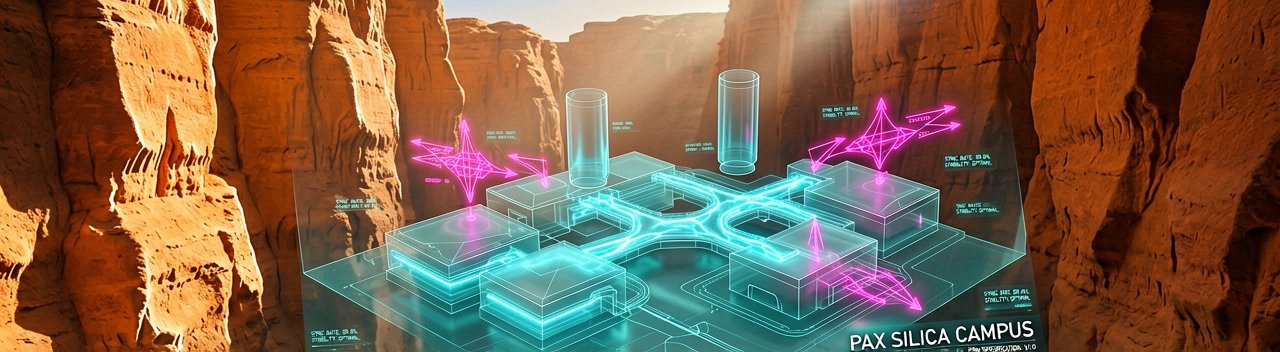
The strategic timing is no accident. As the demand for AI compute power skyrockets, the U.S. is increasingly focused on "de-risking" its tech dependencies. By integrating Israel into its core strategic supply chain, Washington is betting on Israel's unique "battle-tested" innovation ecosystem to provide asymmetric advantages in the ongoing competition with global rivals like China.
Energy, Infrastructure, and Innovation
Beyond pure software, the partnership has a heavy hardware and energy focus. Recognizing that AI data centers are massive energy consumers, the U.S. Department of Energy and the Department of the Interior have already signed memorandums of understanding with Israeli officials to align AI development with energy security, as reported by Energy.gov. This includes exploring AI-enabled grid optimization and resilient power infrastructure to support the coming wave of data-intensive workloads.
The "Project Spire" blueprints suggest that the center will prioritize "Physical AI" and edge solutions—technology that moves AI implementation away from distant data centers and into real-world environments like surgical rooms, classrooms, and autonomous systems. This focus on "Physical AI" is a cornerstone of Israel's national strategy to turn defense-tech expertise into civilian market dominance.

The Billion-Dollar Bet
While the exact price tag remains fluid, some proposals suggest a commitment of at least $1 billion per year in joint public funding. This level of investment would facilitate the establishment of applied AI laboratories where researchers from both nations can share data and infrastructure. For Israeli startups, this provides an unprecedented "golden ticket" to U.S. federal programs and capital pathways, as noted by the Government of Israel.
From a journalistic perspective, this development marks a "dramatic shift" from previous years when technology export restrictions often strained bilateral ties. Today, the narrative has flipped: the U.S. is not just selling technology to Israel; it is actively co-developing the next generation of it. The Negev desert, once a symbol of isolation, may soon be the most important square mile in the AI world.
The road ahead will likely face challenges, particularly regarding data privacy and the complex logistics of building such sensitive infrastructure. However, the momentum behind the U.S.-Israel AI alliance suggests that both nations view this collaboration as an existential necessity in the digital age. As we move deeper into 2026, the success of Project Spire will be a key indicator of whether this "Silicon Oasis" can truly secure a technological edge for the Western world.
Behind the Blueprint: Scaling the Pax Silica Vision in the Negev
The acceleration of "Project Spire" marks a departure from traditional tech diplomacy, moving toward a model of deep industrial integration. At the heart of this endeavor is the 16,000-dunam (approximately 4,000-acre) site in the Western Negev, often referred to in internal planning documents as "Fort Foundry One." This massive tech park is designed to operate under a unique legal and operational framework, with the Government of Israel granting a 99-year lease to the United States to ensure long-term stability for American-led investments.
The Powerhouse Players: Silicon Valley in the Desert
While the project is a bilateral government initiative, its success relies heavily on the "Big Tech" ecosystem already entrenched in Israel. Companies like NVIDIA have already signaled their long-term commitment, with plans to build a new mega-campus in northern Israel capable of housing 10,000 employees. According to reports from NVIDIA News, this expansion is part of a broader strategy to utilize Israel as its largest R&D base outside of the U.S., focusing specifically on next-generation Blackwell GPU architectures and AI networking technology.
Other major U.S. firms, including Microsoft and Google, have also deep-rooted their interests in the region. Microsoft recently launched a chip development center in Haifa, while Google continues to expand its cloud infrastructure in Israel under Project Nimbus. These corporate giants are expected to be primary tenants of the Negev's high-security perimeter, utilizing the center's advanced fabrication capabilities to prototype chips that are otherwise vulnerable to supply chain disruptions in East Asia.
Securing the Energy Frontier
One of the most innovative aspects of the Negev center is its proposed energy solution. To meet the voracious power demands of AI training clusters, the U.S. and Israel are exploring the deployment of Small Modular Reactors (SMRs) directly on-site. This strategy, highlighted by the U.S. Department of Energy, aims to create a self-sustaining, carbon-neutral "AI Factory" that can operate independently of the national power grid, providing the 24/7 reliability required for frontier model development.
The collaboration also extends into "Energy-AI," where the two nations are developing tools to optimize grid resilience. By leveraging Israeli cybersecurity expertise, the partnership intends to build the world's most secure energy infrastructure for AI, shielding critical compute resources from both physical and digital threats. This "hardened" approach to infrastructure is what distinguishes Project Spire from civilian tech hubs in Europe or elsewhere.
A Strategic Buffer Against Geographic Risk
Geopolitically, the Negev facility serves as a critical hedge against the concentration of semiconductor manufacturing in Taiwan. Industry analysts suggest that by establishing advanced fabrication and assembly lines in Israel—a nation with a proven track record of maintaining high-tech operations during regional conflict—the U.S. is effectively diversifying its risk. As noted in the Wall Street Journal, the project aims to reduce dependence on "exposed regions" while generating high-value manufacturing jobs for both nations.
The initiative is also a cornerstone of the broader Pax Silica framework, which now includes partners like the UAE and Qatar to secure the entire AI value chain. However, Israel's role remains unique due to its "battle-tested" R&D environment. The integration of military-grade security with Silicon Valley-style innovation is the "secret sauce" that Washington hopes will maintain its lead over global rivals.
Finally, the economic impact on Israel’s southern region could be transformative. Local academic institutions, such as Ben-Gurion University, are already aligning their curricula with the needs of the coming AI center. This synergy between government, academia, and private industry is designed to turn the Negev into a global beacon for "Physical AI," ensuring that the next century of technological leadership is anchored in the dunes of the Middle East.
The Geopolitical Sandbox: Why the Negev is the Ultimate AI Stress Test
Analyzing the U.S.-Israel AI partnership reveals a move that is as much about military doctrine as it is about economic growth. By situating "Project Spire" in the Western Negev, Washington is effectively placing its most sensitive technological bets in a high-friction environment. This is a calculated risk: if AI infrastructure can be hardened to operate seamlessly amidst regional instability and cyber-warfare in the Middle East, it can survive anywhere. This "battle-hardening" of silicon is the new gold standard for national security.
The End of the Globalized Chip
This shift signals the definitive end of the "efficiency-first" era of global supply chains. For decades, the tech industry prioritized low costs and just-in-time manufacturing in East Asia. However, the Pax Silica framework represents a pivot toward "values-based" reshoring. By integrating Israel into the U.S. domestic tech perimeter, the Biden-Harris administration is signaling that geopolitical alignment is now a non-negotiable component of hardware architecture. We are witnessing the birth of "Trusted Silicon."
From an analytical standpoint, the reliance on Israeli R&D acts as a force multiplier for American capital. While the U.S. provides the massive subsidies via the CHIPS Act, Israel provides the "lean innovation" required to iterate rapidly. This synergy addresses a major American weakness: the slow pace of domestic industrial scaling. The Negev facility isn't just a factory; it is a laboratory for how to build high-tech infrastructure at the speed of a startup.
The "Black Box" Problem in Diplomacy
There is, however, a significant "black box" regarding data sovereignty. As these two nations share datasets to train frontier models, the lines between sovereign intelligence and commercial IP become dangerously blurred. Critics argue that this level of integration could lead to a "vendor lock-in" at the nation-state level. If Israel’s entire tech economy becomes an extension of the U.S. strategic reserve, it gains security but potentially loses the autonomy to trade with emerging markets in the Global South.
Furthermore, the move to power these centers with Small Modular Reactors (SMRs) creates a new precedent for "Energy-Tech" sovereignty. By decoupling AI compute from the public grid, the U.S. and Israel are creating a "State within a State" model of infrastructure. This ensures that even in the event of a national infrastructure collapse or a massive cyber-physical attack, the AI "brain" remains online. It is the ultimate insurance policy for the digital age.
The Talent Moat and the "Brain Gain"
The market impact on human capital cannot be overstated. The Negev center will likely trigger a massive "brain gain," pulling top-tier AI researchers from Europe and Asia into the U.S.-Israel orbit. This creates a "talent moat" that rivals are find increasingly difficult to cross. When you combine American venture capital, Israeli defense-tech expertise, and a physical location that is legally and militarily protected, you create a gravity well for innovation that is nearly impossible to replicate.
Investors should also look at the "secondary" industries this project creates. Beyond the chips themselves, the demand for specialized cooling systems, AI-specific cybersecurity, and autonomous physical security for these campuses will create a multi-billion dollar sub-sector. The Negev is becoming a testing ground for the "Smart Fortress" concept, which will eventually be exported to other Pax Silica partners.
Ultimately, the U.S. is using Israel to solve its "Taiwan Dilemma." While it cannot move the island of Taiwan, it can move the intellectual and physical capacity to create high-end chips into a more manageable strategic geography. The Western Negev is no longer a desert; it is the frontline of the 21st century's most important arms race. The success of this venture will determine if the next decade of AI evolution is written in English and Hebrew or in a language that Washington finds much less palatable.
"Building a billion-dollar AI powerhouse in the middle of a desert might seem like a lot of work just to make sure your future robot butler doesn't have a 'Made in Elsewhere' sticker, but hey, at least the sand is free. Let’s just hope the AI likes the heat as much as the engineers like the tax breaks."
Artūras Malašauskas is an AI Systems Integrator with 20+ years of production-grade web engineering experience. He has designed, shipped, and scaled enterprise Python/PHP systems for logistics, SaaS, and public-sector clients. For the past year, he has focused exclusively on AI integrations: deploying open-source LLMs, building generative media pipelines (image, audio, video), and engineering multi-agent workflows for real production environments. His standard: reproducibility, security, cost-efficient inference—no vaporware. He documents and evaluates emerging AI tooling, separating verified capabilities from marketing noise. Technical editor at: muza-ai.eu, ai-verslas.lt, ai-naujinos.lt Connect on LinkedIn
Comments