The Jobless Horizon: If AI Takes the Paychecks, Will the Public Take to the Streets?
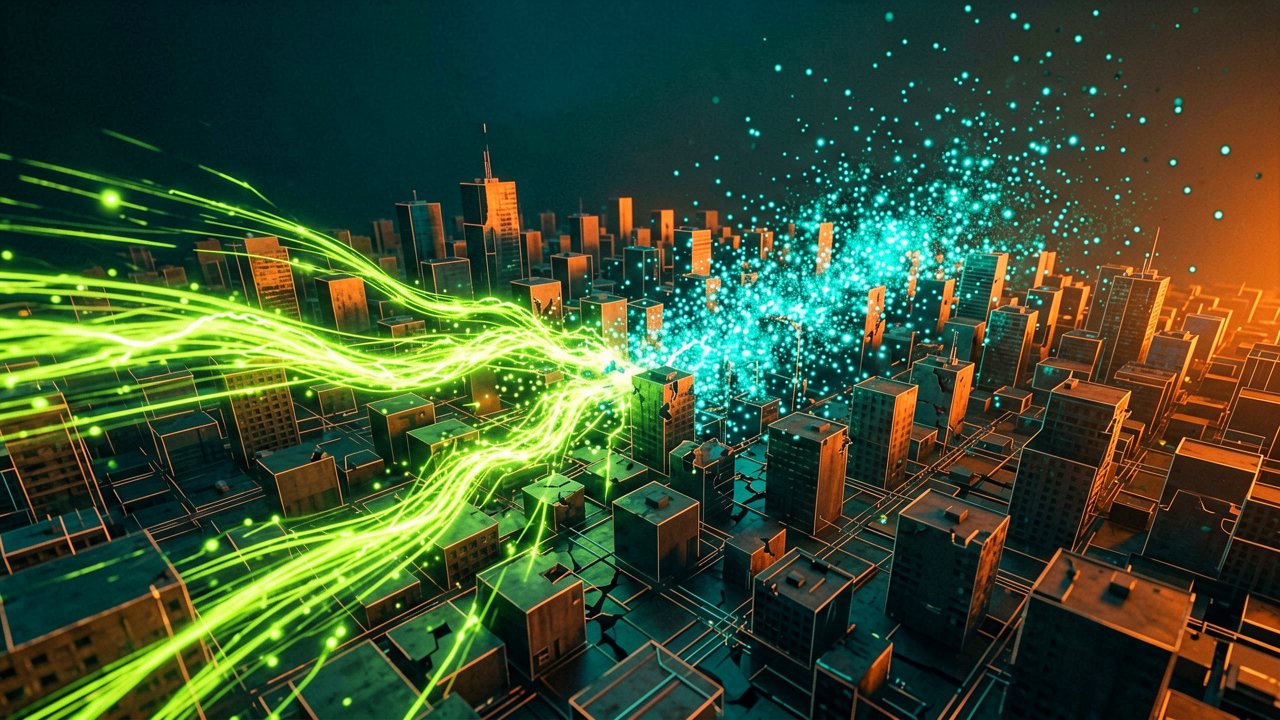
For decades, the "robot apocalypse" was a trope of science fiction, usually involving shiny chrome humanoids and laser beams. Today, the reality is much quieter but arguably more disruptive: it’s an algorithm in a clean server room capable of writing code, diagnosing diseases, and managing logistics better than a human ever could. As these tools move from novelty to necessity, a chilling question looms over the global economy: if AI creates a permanent underclass of the "unemployable," will the social fabric hold, or are we headed for a digital-age explosion of violence?
History suggests that humans don't take the loss of agency lightly. When the first Industrial Revolution threatened the livelihoods of weavers in the 19th century, the Luddites didn't just write letters of protest; they smashed the machines that replaced them. Today’s stakes are higher because the displacement isn't just physical—it's cognitive. When a person’s identity and survival are tied to their professional utility, the sudden erasure of that utility creates a vacuum often filled by resentment and desperation.
The scale of the potential displacement is staggering. Research suggests that nearly 40% of global employment is exposed to AI, with advanced economies facing even higher risks of disruption to high-skill roles, according to the IMF. Unlike previous technological shifts that moved workers from farms to factories, the AI revolution is hitting white-collar and blue-collar sectors simultaneously. This "omni-threat" leaves fewer "safe harbors" for workers to migrate toward, increasing the likelihood of a trapped, frustrated populace.
The Psychology of the "Useless Class"
Sociologists warn that the danger isn't just poverty—it's "uselessness." High unemployment rates have historically been a leading indicator of civil unrest. When people lose their ability to provide for their families, the "social contract"—the unwritten agreement that if you work hard, you can live well—is effectively breached. If the public perceives that the gains of AI are being hoarded by a tiny tech elite while the masses suffer, the resulting "inequality gap" becomes a powder keg for populist anger and radicalization.
We are already seeing the tremors of this friction in the labor market. The 2023 Hollywood strikes were a landmark moment, representing one of the first major organized resistances against AI's encroachment on creative labor. As noted by The Guardian, the hard-fought protections against AI-generated scripts highlight a growing sentiment: workers are willing to halt entire industries to prevent their digital replacement. If these protections fail, that organized energy could easily pivot from picket lines to more chaotic forms of protest.
The volatility of the public response may depend heavily on the speed of the transition. If AI displaces workers gradually over decades, society might adapt through retraining. However, the current pace of LLM development is exponential, not linear. Rapid, mass-scale job losses within a three-to-five-year window would likely overwhelm government safety nets, leaving millions without a safety valve for their economic anxiety.
The Role of Governance and the UBI Safety Valve
To prevent a descent into violence, many experts point to Universal Basic Income (UBI) as a necessary evolution of the state. The logic is simple: if machines do the work, the wealth they generate must be redistributed to maintain domestic peace. However, UBI remains politically divisive. Without a radical shift in how we value human existence beyond "productivity," the transition to a post-work society will be fraught with ideological battles that could spill into the streets.
Data from the Brookings Institution suggests that the impact will be felt most heavily in urban centers where high-tech and service industries overlap. These are the same areas that historically serve as the epicenters of protest. The concentration of displaced workers in densely populated zones creates a "network effect" for unrest, where social media can mobilize millions of frustrated individuals in a matter of hours.

Furthermore, the rise of AI-driven misinformation could act as an accelerant. If a mass unemployment crisis occurs, AI tools themselves could be used to spread inflammatory rhetoric or organize "anti-tech" militias. The irony of using AI to fight AI is a scenario that security agencies are already monitoring. The "explosion" may not just be physical, but a digital insurgency that targets the infrastructure of the companies seen as responsible for the crisis.
There is also the "surveillance state" factor to consider. As AI improves, so do the tools for quelling dissent. Governments might use AI-powered facial recognition and predictive policing to suppress protests before they even begin. While this might prevent "violence" in the short term, it creates a high-pressure cooker environment. Suppressed grievances don't disappear; they mutate into deeper, more radical underground movements that are harder to track and resolve.
Looking for the "Middle Path"
Not everyone believes a violent uprising is inevitable. Some economists argue that AI will follow the path of the personal computer—initially feared as a job-killer, but ultimately a job-creator. The World Economic Forum suggests that while millions of roles will vanish, new categories of work in the "green economy" and "care economy" will emerge. The question is whether these new jobs can be created fast enough to outpace the destruction of the old ones.
The "public explosion" might also manifest as a political realignment rather than physical violence. We could see the rise of "Neo-Luddite" political parties that campaign on platforms of banning certain AI technologies or taxing "robot labor" to fund social programs. This would channel the public's energy into the democratic process, though the gridlock of modern politics might still drive the more impatient segments of society toward radicalism.
Ultimately, the "violence" of an AI-induced crisis might be more structural than physical—a slow-motion decay of communities, a rise in "deaths of despair," and a total breakdown of trust in institutions. According to MIT Technology Review, the way we manage the transition of white-collar work will be the ultimate test of our resilience. If we treat workers as disposable assets to be optimized out of existence, we shouldn't be surprised when the "assets" fight back.
The path forward requires a level of global cooperation we haven't seen in the digital age. It’s not just about building better models; it’s about building a better social safety net. If the public feels they are being steered toward a cliff, they will eventually try to take the wheel. Whether that happens through a ballot box or a brick depends entirely on how the tech industry and world leaders share the fruits of the intelligence revolution today.
In the end, AI is a tool, and like any tool, its impact is determined by the hand that wields it. If we use it to enhance human potential and provide for the common good, the "mass unemployment crisis" becomes the "mass liberation from toil." If we use it only to maximize margins at the expense of the many, the public "explosion" won't be a matter of if, but when. The code for our future is currently being written; let's hope it includes a line for human dignity.
The Architects of Displacement: While the threat of automation is often discussed in the abstract, the corporate engines driving this shift are very real. Tech giants like OpenAI, Google (Alphabet), and Microsoft are no longer just software providers; they have become the primary designers of the new labor landscape. These companies are engaged in a relentless "arms race" to achieve Artificial General Intelligence (AGI). As they compete to build models that can outperform humans at virtually any task, the focus has shifted from "augmenting" workers to "replacing" tasks. This shift is creating a friction point between the Silicon Valley boardrooms, where productivity is the ultimate metric, and the global workforce, where stability is the priority.
The role of OpenAI is particularly central to this narrative. Since the launch of ChatGPT, the company has transitioned from a research non-profit to a commercial powerhouse. Their partnership with Microsoft has integrated generative AI into the "daily workflows" of millions of office workers. According to The New York Times, the release of tools like Sora—capable of generating hyper-realistic video—has sent shockwaves through the creative industries, signaling that even highly specialized technical skills like cinematography and digital effects are no longer immune to automation.
Google’s "Gemini" project represents another front in this economic transformation. By embedding AI into its Workspace suite, Google is effectively automating the "connective tissue" of modern business—emails, scheduling, and data synthesis. This trend toward "Invisible AI" means that displacement doesn't always look like a mass layoff; often, it looks like a hiring freeze for entry-level roles. When a single intern equipped with AI can do the work of a five-person team, the ladder of professional development is effectively pulled up, leaving a generation of graduates with nowhere to start.
The "AI Tax" and Corporate Responsibility
As these companies reap record profits from efficiency gains, a debate is intensifying over their social obligations. If a corporation replaces 30% of its workforce with an algorithm, should that corporation pay a "robot tax" to fund the retraining of those employees? Some industry leaders, including Elon Musk, have voiced support for radical ideas like UBI, but the actual implementation remains a distant dream. In the meantime, companies like Amazon are already using AI to manage their vast logistics networks, where algorithms often dictate the pace of work, leading to concerns about "digital Taylorism" and the dehumanization of the workplace.
The pushback is beginning to take legal and regulatory forms. In the European Union, the AI Act represents one of the first major attempts to categorize AI risks, including those related to employment. As highlighted by Reuters, the EU's landmark rules aim to ensure that high-risk AI systems—those used in recruitment or worker management—are subject to strict transparency and human oversight. This legislative friction is a precursor to the larger social battle: who gets to decide when a human is "obsolete"?
Beyond the tech giants, the consulting industry is also playing a pivotal role. Firms like McKinsey and BCG are advising Fortune 500 companies on how to "lean out" their operations using AI. This creates a feedback loop where the drive for shareholder value directly accelerates the displacement of the middle class. When efficiency is the only KPI, the social consequences of a jobless public are often relegated to "externalities" that someone else—usually the taxpayer—will have to deal with later.
The Geopolitical Dimension of Labor AI
The crisis isn't limited to the West. In China, companies like Baidu and Alibaba are integrating AI at an even faster pace, often with the direct backing of a state that sees AI dominance as a matter of national security. This creates a "race to the bottom" for global labor. If one country automates its manufacturing and services to the point where they are near-zero cost, other nations will feel pressured to do the same to remain competitive, regardless of the domestic social cost. This global competition makes it nearly impossible for any single nation to "pause" AI development to protect jobs.
Furthermore, the concentration of AI power in a few geographic hubs (Silicon Valley, Seattle, Beijing) exacerbates regional inequality. A report by Forbes citing Goldman Sachs data suggests that while the US and Europe may see the highest number of "degraded" jobs, the global South could see a collapse in "outsourced" labor markets. Roles like call centers and data entry, which provided a path to the middle class for millions in developing nations, are being vaporized by chatbots that cost pennies to operate.
This "hollowing out" of the global workforce creates a unique type of volatility. Unlike the factory closures of the 20th century, which were localized, the AI crisis is distributed. A software update in San Francisco can simultaneously impact accountants in London, developers in Bangalore, and graphic designers in Sao Paulo. This synchronization of economic pain could lead to a global, rather than national, movement of resistance, where workers across borders find common cause against the algorithmic erasure of their livelihoods.
The response from the "Big Tech" firms has largely been to promote "upskilling." However, critics argue that upskilling is a myth when the AI itself is learning faster than any human can retrain. According to Wired, the notion that everyone can simply become an "AI prompter" or a "data ethicist" ignores the reality of human cognitive diversity and the sheer volume of jobs being lost. This disconnect between corporate rhetoric and the reality on the ground is what fuels the "explosion" risk.
Looking at the financial structures, the venture capital (VC) world is also a major player. Billions of dollars are being poured into startups whose sole value proposition is "the AI version of X," where X is a human-centric industry. This speculative frenzy creates a "growth at all costs" mentality that prioritizes rapid market capture over social stability. When a startup's exit strategy depends on proving they can run a billion-dollar business with only ten employees, the writing is on the wall for the traditional labor market.
Ultimately, the companies at the heart of this revolution are at a crossroads. They can continue to treat labor as a cost to be eliminated, or they can pivot toward "Human-Centered AI" that prioritizes collaborative intelligence. The latter requires a fundamental change in business models—moving away from pure automation toward tools that truly empower. If they fail to make this shift, the very technology they built to "solve the future" might end up burning down the present.
The "explosion" we fear may not be a single event, but a series of cascading failures. It starts with a drop in consumer spending because the unemployed can't buy the products the AI makes. It moves to a housing crisis as mortgages go unpaid, and finally, it arrives at a political crisis where the disenfranchised demand the dismantling of the systems that replaced them. The tech industry has spent years "disrupting" industries; it may soon find that society is not just another industry to be disrupted, but a living organism that will fight for its survival.
The Paradox of the Empty Paycheck: When we strip away the techno-optimist marketing, we are left with a fundamental macroeconomic contradiction: a world where production hits peak efficiency while the consumer base loses its ability to consume. This isn't just a labor problem; it is a systemic threat to the very logic of capitalism. If AI achieves the ultimate goal of corporate efficiency—removing the "human cost" entirely—it simultaneously destroys the "human demand" that fuels market growth. This structural deadlock is the real catalyst for potential social volatility, as a society without purchasing power is a society with nothing left to lose but its patience.
Analyzing the trajectory of generative AI reveals a "winner-take-all" concentration of wealth that dwarfs the Gilded Age. In previous industrial shifts, technology acted as a multiplier for human labor; today, it acts as a substitute. This creates a "decoupling" effect where corporate valuations and GDP can theoretically rise even as median household incomes crater. This divergence is a historical precursor to civil unrest, as the psychological toll of being "surplus to requirements" creates a fertile ground for radical ideologies that promise to tear down the digital architectures of the new elite.
The traditional economic "shock absorbers"—such as service industry jobs or gig work—are precisely the sectors most vulnerable to the next wave of automation. According to analysis from Goldman Sachs, while AI could drive a 7% increase in global GDP, that wealth is not inherently programmed to trickle down. Without aggressive fiscal intervention, the "productivity dividend" of AI will be captured by capital owners, leaving the working class to navigate a deflationary spiral of their own wages.
The Erosion of the Intellectual Middle Class
What makes this potential crisis unique is the "class of the displaced." Historically, revolutions are often led not by the most impoverished, but by a frustrated professional class that sees its future evaporating. As AI begins to outperform junior lawyers, mid-level analysts, and software engineers, we are seeing the disenfranchisement of the very demographic that typically maintains social stability. When the "educated elite" lose their stake in the system, the barrier between intellectual discontent and physical protest becomes dangerously thin.
The speed of this transition creates what sociologists call "cultural lag." Our institutions—educational systems, tax codes, and social safety nets—are still optimized for a 20th-century industrial model. As noted by OECD, the urgent need for "policy agility" is often met with legislative gridlock. This delay between technological impact and government response creates a "risk window" where public anger can bypass slow-moving democratic channels in favor of more immediate, disruptive actions.
Furthermore, we must analyze the "Black Box" nature of AI decision-making as a factor in public resentment. When a human manager fires an employee, there is a face to the decision and a process to appeal. When an algorithm determines a role is redundant based on opaque data points, the resulting sense of powerlessness is profound. This "algorithmic injustice" fuels a specific type of rage directed at the "system" rather than individuals, making the resulting unrest harder to negotiate or pacify through traditional labor relations.
The Geopolitical Risk of the Digital Divide
On a global scale, the analytical outlook suggests a deepening of the "digital divide" into a chasm. Developed nations may have the fiscal space to experiment with UBI or massive retraining programs, but developing economies that rely on labor-intensive exports face an existential threat. If "re-shoring" occurs because robots in the US are cheaper than workers in Southeast Asia, the resulting global instability will not stay within borders. Mass migration driven by "AI-induced poverty" could become the defining geopolitical challenge of the mid-21st century.
This brings us to the "Securitization of AI." Governments are increasingly viewing social stability through the lens of surveillance. As AI threatens to cause joblessness, the state may be tempted to use AI-driven predictive tools to identify and neutralize "troublemakers" before economic frustration boils over. This creates a feedback loop: the more the public feels oppressed by the technology that replaced them, the more likely they are to resort to the very "explosive" violence the state is trying to prevent.
Investment patterns also offer a grim foresight. Capital is currently flowing away from human-centric enterprises and toward "autonomous" business models. This "capital flight from humanity" indicates that the market has already bet on a future with fewer employees. As Bloomberg reports, sectors like video game development and media are already seeing the first wave of "AI-first" restructuring. The analytical takeaway is clear: we are no longer in a speculative phase; the restructuring of the human experience is actively underway.
However, an alternative analysis suggests that this crisis could be the catalyst for a "Human Renaissance." If the threat of violence is real enough, it may force a radical rethinking of the "work-for-survival" paradigm that has dominated human history since the agricultural revolution. The "explosion" might not be one of bombs, but of a total cultural rejection of 60-hour work weeks and the commodification of human time. Whether this leads to a utopia or a wasteland depends entirely on whether our political imagination can keep pace with our engineering talent.
In the final analysis, the "Public Explosion" is a symptom, not the disease. The disease is an economic system that views human beings as a cost to be minimized rather than the purpose of the economy itself. AI is simply the mirror reflecting this flaw back at us with terrifying clarity. If we don't like the reflection, smashing the mirror (or the robots) won't help; we have to change the person standing in front of it.
The role of the "Tech Elite" in this scenario cannot be overstated. If the creators of AI continue to frame displacement as an "unfortunate but necessary evolution," they are effectively volunteering to be the villains in a very messy historical drama. Real leadership in the AI era would look like companies actively lobbying for the taxes and regulations that would limit their own unbridled power in favor of a stable, albeit less profitable, society.
We are standing at the edge of a "Great Decoupling." If we allow AI to decouple productivity from wages, we decouple the public from the peace. The data is screaming, the algorithms are learning, and the public is watching. The next five years will determine if the "AI Revolution" is a headline about a better world, or a headline about a world on fire.
"In the future, we’ll all have plenty of free time to ponder the deep questions of life—mostly because our robot replacements will be busy doing our jobs, and our only remaining task will be figuring out how to pay for a 'venti latte' with nothing but our sparkling personalities and a slightly outdated resume."
Artūras Malašauskas is an AI Systems Integrator with 20+ years of production-grade web engineering experience. He has designed, shipped, and scaled enterprise Python/PHP systems for logistics, SaaS, and public-sector clients. For the past year, he has focused exclusively on AI integrations: deploying open-source LLMs, building generative media pipelines (image, audio, video), and engineering multi-agent workflows for real production environments. His standard: reproducibility, security, cost-efficient inference—no vaporware. He documents and evaluates emerging AI tooling, separating verified capabilities from marketing noise. Technical editor at: muza-ai.eu, ai-verslas.lt, ai-naujinos.lt Connect on LinkedIn
Comments