The Great Service Hangover: Why the Games-as-a-Service Obsession is Finally Breaking

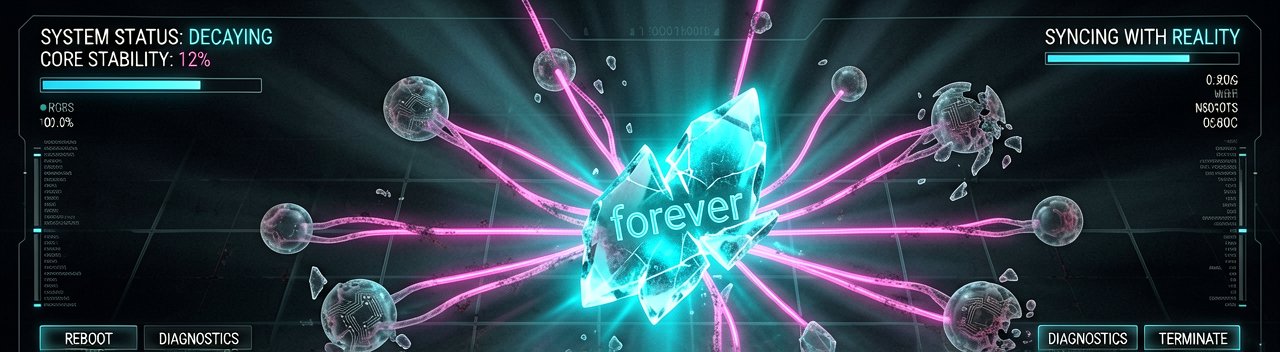
For the better part of ten years, the video game industry has been chasing a single, shimmering mirage: the "forever game." Inspired by the astronomical success of titles like Fortnite and League of Legends, publishers pivoted away from one-off sales in favor of Games-as-a-Service (GaaS). The logic was simple: why sell a game for $60 once when you can sell battle passes, skins, and "time-savers" for a decade? But in 2024, the party didn't just end—the lights came on, the music stopped, and a massive industry-wide hangover set in.
We are currently witnessing the collapse of the "gold rush" mentality that defined the mid-2010s. For years, every major publisher felt the need to have their own recurring revenue engine. This led to a market oversaturated with titles that felt less like art and more like digital chores. According to a report by GamesIndustry.biz, the sheer volume of live-service failures in recent years has forced a strategic pivot among even the most stubborn corporate entities.
The fundamental issue is one of math and physics. A player only has so many hours in a week, and a "service" game is designed to consume all of them. When every game demands a daily login to avoid missing out on limited-time rewards, players eventually experience "live-service fatigue." They aren't just playing games anymore; they are managing a second job. This saturation point has turned the market into a zero-sum game where new entries must "kill" an established giant to survive.
The High Cost of Chasing the Trend
The human and financial cost of this obsession has been staggering. Development cycles for massive live-service titles have ballooned to six or seven years, often with budgets exceeding $200 million. When these games fail to find an immediate, massive audience, the fallout is catastrophic. As noted by IGN, the cancellation of high-profile projects like Sony’s The Last of Us Online serves as a grim milestone for the industry's changing priorities.
Furthermore, the creative drain on legendary studios has been painful to watch. Teams known for world-class single-player storytelling were suddenly tasked with building complex netcode and monetization loops—skills that don't always overlap. This "square peg, round hole" approach resulted in several high-profile dps, where even established franchises lost their identity in pursuit of a recurring monthly active user (MAU) metric.
Investors are also losing their appetite for the high-risk, high-reward nature of GaaS. While a hit can print money, the failure rate is increasingly untenable. A deep dive by Bloomberg highlights how major publishers are now facing internal pressure to return to "boutique" or single-player experiences that offer more predictable, albeit smaller, returns without the astronomical server maintenance costs.
The Rise of the "Finished" Game
In a delicious twist of irony, the antidote to the GaaS hangover has been the return of the traditional "finished" game. Titles like Baldur’s Gate 3 and Elden Ring proved that players are still hungry for expansive, complete experiences that don't ask for a credit card every fifteen minutes. These games succeeded specifically because they respected the player's time and intelligence, offering a sense of closure that live services inherently lack.
The industry's shift is evident in the recent success of smaller, focused titles as well. As Kotaku points out, the massive popularity of "AA" games—those with smaller budgets but clearer creative visions—suggests that the era of the "bloated blockbuster" might be waning. Players are voting with their wallets for games they can actually finish, rather than those that promise an infinite, shallow roadmap.

This doesn't mean live service is dead; rather, it is evolving into a more sustainable niche. The "hangover" is leading to a more sober assessment of what actually benefits from a service model. Competitive shooters and MMOs still make sense, but forced multiplayer elements in narrative-driven genres are being stripped away. The era of "everything must be a service" is officially over.
As we look toward the next console cycle and the future of PC gaming, the focus seems to be shifting back toward quality over quantity. Developers are relearning the value of a strong "Day One" experience that doesn't rely on "Fixing it in Year Two." According to analysis from Eurogamer, the most successful studios moving forward will be those that balance the occasional service hit with a robust portfolio of standalone titles.
Ultimately, the GaaS obsession was a symptom of a younger industry trying to mimic the Silicon Valley "platform" model. But games are not software-as-a-service like Slack or Salesforce; they are cultural products. The hangover we’re feeling now is simply the pain of the industry remembering that its primary goal is to entertain, not to act as a permanent vampire on a user's free time.
The next decade will likely be defined by a more hybrid approach. We will see fewer "Projected 10-Year Plans" and more focus on making the first ten hours of a game unforgettable. For players, this is a win. We are moving away from the era of the "forever game" and back into the era of the "great game." It might take a few more layoffs and studio closures to fully clear the fog, but the industry is finally waking up.
The Corporate Reckoning: The fallout of the games-as-a-service (GaaS) gold rush is perhaps most visible in the executive suites of the industry’s biggest players. For years, companies like Sony, Electronic Arts, and Warner Bros. Discovery signaled to shareholders that live services were the only path to sustainable growth. However, 2024 and 2025 have served as a cold shower, proving that even the most prestigious intellectual properties can crumble under the weight of forced monetization and "engagement-first" design.
Warner Bros. Discovery serves as a primary case study for this strategic whiplash. After the astronomical success of Hogwarts Legacy—a purely single-player, traditional experience—the company pivoted hard toward GaaS with the release of Suicide Squad: Kill the Justice League. The result was a financial disaster so significant that management admitted it contributed to a $200 million revenue shortfall. According to reporting by Bloomberg, the failure of such a high-profile project has ignited intense internal debates about whether the company should stick to its service-oriented guns or return to the single-player well.
Sony Interactive Entertainment has faced a similarly turbulent path. Under previous leadership, the PlayStation manufacturer announced an ambitious plan to launch a dozen live-service titles by 2026. However, the reality of development proved much harsher. Sony eventually halved that number, acknowledging that quality and long-term viability were more important than hitting a quantity quota. As detailed by IGN, the high-profile cancellation of Naughty Dog’s standalone multiplayer project was the "canary in the coal mine," signaling that even the world's best studios struggle with the technical and creative demands of GaaS.
The Human Cost of Live Service Failures
Behind the corporate earnings calls lies a more somber reality: the mass layoffs that have gutted the industry. When a live-service game fails to meet its "recurring revenue" targets, it isn't just a project that ends; it often results in the dissolution of entire teams. The "always-on" nature of these games requires massive staff to maintain content pipelines, making them incredibly expensive to keep afloat if they aren't immediately profitable. This has led to a "boom and bust" cycle that has left thousands of developers unemployed.
Creative burnout is another invisible tax of the GaaS era. Developers at legendary studios have frequently spoken out about the soul-crushing nature of "content treadmill" development. Instead of crafting new worlds or innovative mechanics, veterans find themselves designing endless variations of "battle pass" cosmetics and daily challenges. This brain drain has seen top-tier talent flee established AAA studios to form independent outfits where they can focus on making "complete" games once again.
The "hangover" is also visible in the shifting marketing strategies of mid-sized publishers. Companies that once looked at Ubisoft’s "map-clearing" service model as the blueprint are now pivoting toward "extracted" or "session-based" experiences that don't require a decade-long commitment. This shift represents a tactical retreat to safer, more manageable projects that don't risk the entire company's future on a single, permanent platform.
The Player Revolt and the Value Gap
While the companies struggle with spreadsheets, the players have staged a quiet revolt. The "Review Bomb" has become a potent tool for communities to push back against aggressive monetization. Games that launch with intrusive in-game stores or "pay-to-win" elements are being met with immediate and overwhelming backlash. As noted by Eurogamer, the modern player is more savvy than ever, quickly identifying when a game’s mechanics have been compromised to serve a financial department rather than the fun factor.
There is also a growing "value gap" between what publishers think a service is worth and what players are willing to pay. In an era of high inflation and subscription fatigue, asking a player to buy a $70 game and then pay $10 every three months for a "season" is becoming a harder sell. This friction has led to the rise of the "free-to-play or bust" mentality for live services, leaving premium-priced service games in a precarious "no man's land" where they struggle to find an audience at all.
Ubisoft’s recent struggles further illustrate the point. With the underwhelming reception of Skull and Bones—a game famously described by the CEO as "AAAA"—the gap between corporate hubris and consumer reality has never been wider. Reports from GamesIndustry.biz suggest that the industry is watching these "sunk cost" projects closely, learning that a long development cycle and a massive budget do not guarantee a community will follow.
The success of Helldivers 2 provided a rare counter-example, but it also highlighted the flaw in the traditional GaaS strategy. It succeeded because it was priced lower, lacked aggressive monetization, and focused on pure, chaotic fun. It felt like a game first and a service second. This distinction is what many legacy publishers missed during their decade-long obsession; they tried to build the "service" before they built a game people actually wanted to play.
Moving forward, the industry is entering a "Correction Phase." We are seeing a resurgence in the "AA" space—smaller, more focused games with sustainable budgets. These titles don't need to sell 10 million copies to be successful, allowing for more creative risk-taking. As Kotaku has observed, the indie and "triple-I" sectors are now the ones driving innovation, while the AAA giants are left trying to figure out how to downsize their over-inflated expectations.
The end of the GaaS obsession isn't the end of multiplayer gaming, but it is the end of the industry's attempt to turn every hobby into a subscription. As the dust settles, the companies that survive will be those that realize "engagement" cannot be forced—it must be earned through quality. The hangover is painful, but it is a necessary step toward a healthier, more diverse gaming ecosystem that values the player's time as much as their wallet.
The Strategic Pivot: When we dissect the remains of the industry's decade-long GaaS obsession, we aren't just looking at a series of failed launches; we are witnessing the fundamental breakdown of the "infinite growth" myth within interactive entertainment. For ten years, the sector operated on the Silicon Valley assumption that digital products should behave like platforms—capturing users and never letting them go. However, the market has finally hit a "time-wealth" ceiling where the supply of live-service hours far exceeds the human capacity to consume them, leading to a brutal correction that is reshaping how games are funded and greenlit.
From an analytical standpoint, the failure of the GaaS model in recent years reveals a profound misunderstanding of consumer psychology. Publishers treated "engagement" as a purely quantitative metric, assuming that more hours spent in-game automatically equated to higher brand loyalty. In reality, the "grind" mechanics required to sustain these games often built resentment rather than affinity. According to data analysis from GamesIndustry.biz, the most successful titles of the past 24 months have been those that offer high-intensity, "disposable" fun rather than those demanding a permanent lifestyle commitment.
The financial risk profile has also shifted. Historically, a live-service hit like Apex Legends could subsidize dozens of smaller failures. But as development costs for these "forever games" balloon, a single failure can now threaten the structural integrity of a multi-billion dollar corporation. This has led to what analysts call the "Portfolio Paradox": in trying to minimize risk through recurring revenue, publishers actually maximized it by putting all their eggs in a few incredibly expensive, highly volatile baskets. The pivot back to single-player and "AA" experiences is, therefore, a risk-mitigation strategy disguised as a creative rebirth.
The cannibalization of the AAA Ecosystem
We are also seeing the limits of intellectual property elasticity. The industry assumed that any popular IP—whether it was Marvel, DC, or Star Wars—could be successfully "GaaS-ified." The failure of titles like Marvel’s Avengers showed that players have specific expectations for certain brands. When a narrative-heavy IP is stretched thin to fit a repetitive loot-grind template, the brand value doesn't just stagnate; it actively depreciates. As reported by IGN, the mismatch between IP identity and monetization mechanics has been a primary driver of the most high-profile service collapses.
Furthermore, the competitive landscape has become increasingly ossified. The "Big Three" of live service—Fortnite, Roblox, and Minecraft—have built such massive moats of social capital and user-generated content that they are effectively utilities rather than mere games. For a new GaaS title to succeed, it must not only be good; it must convince a 15-year-old to abandon the digital social circle they’ve spent five years building. This social inertia is a barrier to entry that most CFOs significantly underestimated during the initial gold rush.
Looking at the labor market, the shift away from GaaS is also a response to a desperate need for efficiency. The live-service model is notoriously inefficient during the development phase, often requiring massive "over-scoping" to ensure there is enough content for a three-month roadmap at launch. This leads to wasted assets and "crunch" culture that is no longer sustainable under modern labor scrutiny. A deep dive by Bloomberg suggests that shorter, more focused development cycles are becoming the preferred way to maintain a healthy and productive workforce.
The Emergence of the "Value-Per-Hour" Metric
Analytics also point toward a shift in how players define "value." During the pandemic, when time was abundant, the "hours-per-dollar" metric favored long, drawn-out service games. In the post-pandemic economy, the "value-per-hour" has taken over. Players are now willing to pay a premium for a high-quality, 12-hour experience that respects their schedule. This explains why polished, finite experiences are suddenly topping the charts again, often outperforming service giants in terms of sheer sentiment and brand health.
The role of subscription services like Game Pass and PlayStation Plus cannot be ignored in this analysis. These platforms have ironically acted as both a savior and a saboteur for the GaaS model. While they provide an immediate audience, they also encourage "sampling" behavior. Players will try a live-service game for an hour, and if the "hook" isn't immediate, they move on to the next title in the catalog. This has forced developers to front-load their games with dopamine hits, often at the expense of long-term depth or narrative cohesion.
Technologically, the industry is also grappling with the "Technical Debt" of live services. Maintaining servers, anti-cheat software, and constant balance patches is a massive ongoing expense that eats into profit margins. According to Eurogamer, many studios are finding that the "long tail" of revenue isn't quite as long or as profitable as they projected once the reality of cloud computing costs and live-ops maintenance is factored in.
The "hangover" is ultimately a return to the mean. The games industry tried to escape the hit-driven nature of entertainment by turning into a service industry, only to find that people still treat games like movies or books—they want a great story, a beginning, and an end. The data suggests that the most successful "services" of the future won't be games that try to be platforms, but games that use service elements to enhance a core, finite experience.
As we move into the latter half of the decade, expect to see a "Great Thinning" of the live-service market. Only the strongest, most authentic social platforms will survive, while the rest of the industry returns to the "prestige" model of game development. This is not a sign of a dying industry, but of a maturing one that has finally realized you can't force a player to stay at the party if the host is only interested in their wallet.
The final takeaway for investors and creators alike is that "community" cannot be manufactured via a roadmap. It is an organic byproduct of a great game. By returning the focus to the moment-to-moment experience rather than the ten-year financial projection, the industry is actually securing its long-term future. The hangover might be painful, but the sobriety it brings is exactly what the medium needs to rediscover its creative soul.
"The video game industry spent a decade trying to turn our favorite hobby into a gym membership we can't cancel. Now that they've realized we’d rather just go outside—or, you know, actually finish a game for once—everyone is acting surprised that the 'forever game' didn't actually last forever. It turns out that 'surprise and delight' is a much better business model than 'log in or you'll lose your digital pants.'"
Artūras Malašauskas is an AI Systems Integrator with 20+ years of production-grade web engineering experience. He has designed, shipped, and scaled enterprise Python/PHP systems for logistics, SaaS, and public-sector clients. For the past year, he has focused exclusively on AI integrations: deploying open-source LLMs, building generative media pipelines (image, audio, video), and engineering multi-agent workflows for real production environments. His standard: reproducibility, security, cost-efficient inference—no vaporware. He documents and evaluates emerging AI tooling, separating verified capabilities from marketing noise. Technical editor at: muza-ai.eu, ai-verslas.lt, ai-naujinos.lt Connect on LinkedIn
Comments