Pi Network Bridges the AI-Crypto Divide with New Native App Converter
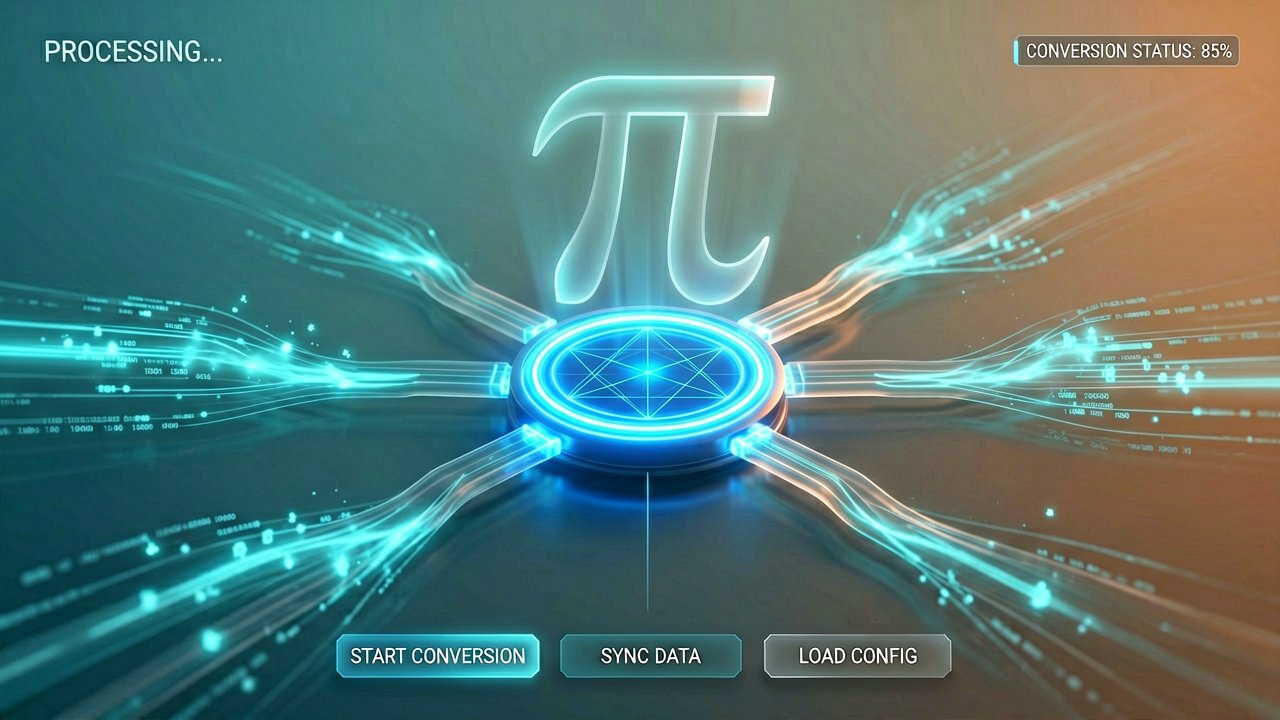
The boundary between generative AI and blockchain utility just got a lot thinner. In its latest major ecosystem update, the Pi Network has launched a new "AI-to-native" app converter within its Pi App Studio. This tool is designed to solve a persistent bottleneck in the Web3 space: the gap between creating a functional application with AI and actually deploying it to a massive, verified user base with integrated payment systems.
According to reports from MEXC, the update allows creators to build applications using popular external AI coding assistants—such as Claude Code, Replit, Cursor, and Lovable—and then seamlessly import them into the Pi Network. Once imported, these apps gain access to Pi’s native infrastructure, including its built-in identity verification (KYC) and Pi payment protocols, effectively turning a standalone AI project into a live Web3 business.
Empowering the 'Vibe Coder'
The target audience for this update isn't just seasoned blockchain engineers; it's the "vibe coder." This term describes a new generation of creators who use natural language prompts to generate software code. By removing the need for deep technical knowledge of back-end technologies, Pi is positioning itself as a primary destination for the explosion of AI-generated software. The network's 60 million "Pioneers" represent a ready-made market that most independent AI developers struggle to reach on their own.
This initiative is part of a broader push to expand the utility of the Pi token before the anticipated transition to the Open Network phase. As detailed by Coinfomania, the App Studio upgrade also includes AI-assisted customization tools directly within the platform. These tools help creators generate app logos, craft chatbot welcome messages, and perform guided edits to improve their applications over time.
Strategic Infrastructure and Protocol 23
The timing of this AI update is no coincidence. It coincides with a critical technical milestone for the network: the Protocol 23 upgrade. This foundational shift, which mandated node completion by May 15, 2026, is essential for supporting the increased transaction capacity and smart contract capabilities required by a bustling app ecosystem. CoinMarketCal notes that this upgrade is a "hard cut-over" designed to strengthen network reliability as it prepares for more complex decentralized applications (dApps).
Beyond the technical plumbing, the update introduces a revamped app discovery interface. This system allows users to explore community-built apps, vote on their favorites, and even stake Pi to support specific projects. This creates a feedback loop where the most useful AI-generated apps rise to the top, driven by the community's own preferences and "staking" of resources.
Solving the Web3 Adoption Puzzle
For years, the critique of many crypto projects has been the lack of "real-world" utility. By integrating AI-built apps that serve everyday needs—from productivity tools to localized marketplaces—Pi Network is attempting to pivot from a mining-focused mobile app to a functional utility platform. As highlights, the network already claims over 9,120 AI-generated apps built using its no-code tools, with at least 30 already live on the mainnet.
This "no-code" philosophy is central to the project's identity. By allowing anyone with a good concept to own and operate an online business supported by blockchain, Pi is betting that accessibility will drive adoption faster than technical complexity ever could. The integration of AI isn't just a trendy addition; it's the engine intended to populate the ecosystem with thousands of diverse services.
The Road Ahead: From Build to Execution
As the network moves further into 2026, the focus is shifting from building potential to measuring performance. The transition to Protocol 23 and the rollout of these AI tools signal that the "build" phase is giving way to an "execution" phase. Analysts from MEXC suggest that the coming months will be a critical test of the network's ability to maintain security and performance as it scales to handle these new AI-driven utilities.
While skepticism remains regarding the long road to a fully open exchange and the complexities of managing a 60-million-user network, the move to embrace AI-to-native conversion is a clear play for developer mindshare. In the competitive landscape of Web3, the winner may not be the platform with the most complex code, but the one that makes it easiest for the next million creators to turn an AI "vibe" into a functional, income-generating reality.
Ultimately, the Pi Network is betting that by lowering the barrier to entry to almost zero, it can foster a self-sustaining economy. Whether these AI-generated apps can provide enough long-term value to support a global currency remains the multi-billion dollar question for the "Pioneers" and the broader crypto market alike.
Would you like to explore how the Protocol 23 upgrade impacts the security of these new AI-integrated applications?
Peeling Back the Layers of the Pi AI Revolution: The recent integration of AI-to-native conversion tools isn't just a localized software patch; it represents a fundamental pivot in how the Pi Core Team views the future of its massive decentralized ecosystem. While many blockchain projects focus on attracting professional Solidity developers with high-value grants, Pi is looking toward the "masses"—the non-technical users who have supported the project for years—by democratizing the creation of digital services.
At the center of this transition is the Pi Core Team, a group of Stanford graduates who have navigated years of both intense loyalty and sharp criticism regarding the project's slow move toward an open mainnet. By launching the AI converter, they are effectively outsourcing the innovation of the ecosystem to its 60 million users, betting that the collective creativity of a global population will outpace the output of a small team of internal developers.
The Rise of the No-Code Blockchain Architect
The collaboration between Pi Network and external AI entities like Replit and Claude is largely facilitated by standardized APIs. These platforms allow a user to describe an app—for instance, "a local vegetable marketplace that uses Pi tokens"—and receive the necessary React or JavaScript code. The Pi App Studio then acts as the "glue," wrapping that code in the network’s proprietary SDKs to ensure it can communicate with the Pi Wallet and the user’s identity profile.
This approach addresses the "cold start" problem that plagues many dApp stores. By making it easy to port an app from a common AI assistant, Pi ensures its store doesn't look like a digital ghost town. Instead, it becomes a laboratory for thousands of experimental utilities, ranging from niche community tools to ambitious peer-to-peer commerce engines that were previously impossible to build without a five-figure development budget.
Standardizing Trust in a Generated World
One of the primary concerns with AI-generated software is security, particularly in a financial ecosystem. To mitigate this, the Pi Network update includes rigorous sandboxing and automated testing within the App Studio. When a creator imports code from an AI assistant, the Pi platform scans for common vulnerabilities and ensures the code doesn't attempt to bypass the network’s strict KYC (Know Your Customer) and data privacy protocols.
This security layer is vital because it protects the "Pioneers" from malicious apps. By providing a "safe harbor" for AI-built software, Pi is creating a curated environment where trust is systemic rather than individual. This allows users to interact with experimental apps without the same level of fear associated with connecting a traditional Web3 wallet to an unverified third-party site.
Protocol 23: The Silent Engine of Growth
While the AI converter is the visible "front-end" of this update, the Protocol 23 upgrade serves as the essential back-end infrastructure. As the network prepares for a potential open mainnet transition, it must handle a exponential increase in transaction volume. Protocol 23 introduces more efficient block propagation and improved consensus stability, which are necessary when thousands of new AI-driven apps start triggering simultaneous micro-transactions.
The deadline for nodes to update to Protocol 23 by May 2026 underscores the urgency the Core Team feels regarding network maturity. This isn't just about speed; it's about decentralization. For the AI apps to truly be "native," they must run on a network that can resist outages and censorship, even as it becomes the target of increased global scrutiny during its final pre-launch phases.
The Economics of 'Vibe' Utility
From an economic standpoint, the "vibe coder" movement within Pi Network aims to create a circular economy. If the millions of Pi tokens currently held in user wallets are to have value, there must be things to buy. By enabling the rapid creation of apps—from digital art galleries to task-based marketplaces—Pi is creating "sinks" for its currency, ensuring that tokens circulate within the ecosystem rather than being immediately dumped on exchanges.
This strategy mirrors the early days of mobile app stores but with a decentralized twist. The Pi Network doesn't just host the apps; it provides the identity and the currency. This vertical integration is what the Core Team hopes will differentiate Pi from competitors who rely on fragmented third-party wallets and complex "gas fees" that often alienate casual users.
Competing for the Future of Web3
The broader tech industry is watching closely. Companies like Replit and Cursor have already changed the landscape of traditional software development, but their entry into the blockchain space has been limited by the friction of crypto-native tools. Pi's converter removes that friction, potentially making it the most "developer-friendly" platform for the average person on the planet.
The ultimate success of this move will depend on the quality of the apps produced. While quantity is guaranteed by the ease of AI generation, utility is not. The network's next challenge will be implementing sophisticated discovery algorithms that can sift through thousands of AI-generated projects to find the "killer apps" that will define the Pi Network's legacy in the post-Open Mainnet era.
Would you like to see a breakdown of the specific AI prompts that are currently producing the most successful apps on the Pi platform?
The High-Stakes Gamble on Algorithmic Utility: From a macro-analytical perspective, Pi Network’s pivot to an AI-to-native converter is less about software engineering and more about economic terraforming. By lowering the barrier to entry to almost zero, Pi is effectively testing the "Infinite Monkey Theorem" of app development: if you give 60 million people the tools to generate software via natural language, will they eventually build a "killer app" that justifies a multi-billion dollar valuation? It is a radical departure from the traditional venture capital model, which bets on high-end talent, favoring instead a sheer volume of experiments.
This move highlights a critical realization in the Web3 space: the bottleneck for adoption isn't just the complexity of blockchain, but the scarcity of developers. By co-opting the "vibe coder" movement, Pi is attempting to leapfrog the established developer ecosystems of Ethereum and Solana. However, this strategy carries the inherent risk of "utility dilution," where the market is flooded with low-quality, derivative AI applications that provide little more than digital noise, potentially masking the genuinely innovative tools the network needs to survive.
Solving the Liquidity Vacuum
The core problem for any "pre-mainnet" cryptocurrency is the lack of a circular economy. Historically, crypto users have viewed their tokens as speculative assets to be cashed out for fiat. Pi’s AI initiative is a direct counter-offensive against this "exit liquidity" mindset. By creating a factory for utility, the network is trying to ensure that when the Open Mainnet finally arrives, there are enough sinks—places to spend Pi—to prevent a catastrophic price crash driven by mass sell-offs.
The analytics suggest that the success of this strategy hinges on "micro-utility." If a thousand AI-generated apps can each capture a small fraction of the 60-million-user base for daily tasks—like paying for a localized weather report or a niche community forum—the cumulative demand for Pi could create a stable floor. This is a bottom-up approach to valuation that relies on the velocity of the token rather than purely on institutional speculation.
The Protocol 23 Safety Net
Analyzing the technical roadmap reveals that Protocol 23 is the "invisible hand" ensuring this influx of AI apps doesn't crash the system. The transition to this protocol, set for May 2026, is likely designed to handle the high-frequency, low-value transactions that characterize AI-driven services. Without this infrastructure, an explosion of simple apps would lead to network congestion, high fees, and a poor user experience, effectively killing the experiment before it scales.
Furthermore, the reliance on external AI giants like Claude and Replit creates an interesting geopolitical and technical dependency. Pi is essentially building its house on the foundations laid by Silicon Valley’s AI leaders. While this allows for rapid growth, it also means that the Pi ecosystem is subject to the changes, pricing models, and censorship policies of these external AI providers—a paradox for a project that markets itself on the virtues of decentralization.
The Quality vs. Quantity Paradox
One cannot ignore the "noise-to-signal" ratio. In a traditional app store, human curators and high development costs act as a filter. In Pi’s new AI-driven reality, that filter is replaced by community staking and voting. This is a bold experiment in decentralized governance. If the community successfully identifies and elevates high-quality apps, they prove the model works. If the voting system is gamed or results in "popularity over performance," the ecosystem risks becoming a warehouse of useless digital trinkets.
The integration of AI-assisted logos and chatbot messages further emphasizes the focus on "packaging" over "plumbing." It suggests that the Core Team believes user experience (UX) is the final frontier of blockchain adoption. By making dApps look and feel like familiar Web2 tools, they are lowering the psychological barrier for the average person who doesn't care about "consensus algorithms" but does care about a "smooth interface."
Final Market Implications
Ultimately, Pi’s strategy is a hedge against the technical elitism of the crypto world. While other networks compete for the best ZK-rollup or sharding technology, Pi is competing for the most "prompts per hour." It is a bet that in the future, the most valuable network won't be the one with the fastest transaction speed, but the one with the most accessible "creative engine" for the common user.
As we approach the 2026 milestones, the market will be looking for one thing: retention. Can these AI apps keep users coming back once the novelty of "mining" wears off? If the answer is yes, Pi might just provide the blueprint for the next decade of decentralized software. If not, it will serve as a fascinating case study in the limits of AI-generated utility within a closed economic system.
"At the end of the day, Pi Network is turning into a massive science experiment where 60 million people are trying to prompt their way to early retirement. It’s a bold move: if you can’t find enough genius developers, just build a tool that lets everyone pretend to be one—and hope that between the AI hallucinations and the 'vibe' coding, someone accidentally builds the next Amazon for digital oranges."
Artūras Malašauskas is an AI Systems Integrator with 20+ years of production-grade web engineering experience. He has designed, shipped, and scaled enterprise Python/PHP systems for logistics, SaaS, and public-sector clients. For the past year, he has focused exclusively on AI integrations: deploying open-source LLMs, building generative media pipelines (image, audio, video), and engineering multi-agent workflows for real production environments. His standard: reproducibility, security, cost-efficient inference—no vaporware. He documents and evaluates emerging AI tooling, separating verified capabilities from marketing noise. Technical editor at: muza-ai.eu, ai-verslas.lt, ai-naujinos.lt Connect on LinkedIn
Comments