Elon’s Next Act: xAI Enters the Developer Area with Grok Build

The race for AI-driven developer productivity has just gained its most aggressive contender yet. Elon Musk’s AI venture, xAI, recently announced the early beta release of Grok Build, its first dedicated AI coding agent. This move marks a pivotal shift for the company, moving from general-purpose conversational AI into the high-stakes world of professional software engineering tools.
For months, Musk has been candid about his startup’s position in the market, admitting that xAI had previously lagged behind rivals like Anthropic and OpenAI in the coding domain. According to Android Headlines, Grok Build is the centerpiece of a strategic effort to "rebuild from the foundations up" and finally bridge that performance gap.
The Rise of the Agentic CLI
Unlike standard LLM chatbots that merely suggest snippets of code, Grok Build is described as an "agentic" Command Line Interface (CLI). This distinction is critical; the tool doesn't just talk about code—it executes multi-step workflows. It is designed to navigate complex project structures, handle infrastructure management, and automate the more tedious parts of the development lifecycle.
One of the standout features of this new release is its specialized "plan mode." As detailed by xAI, this mode allows developers to review and approve a logical roadmap before the AI touches a single file. Once the human in the loop gives the green light, the agent executes the changes, presenting them as clean diffs for final verification.
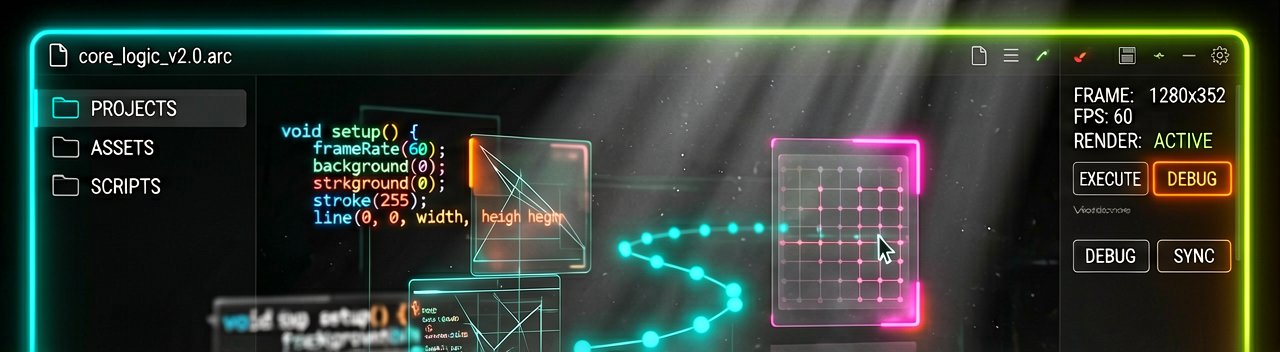
To power this ambitious tool, xAI has moved away from its standard chatbot lineage. Grok Build utilizes a new model called grok-code-fast-1, which was reportedly trained on a massive corpus of programming content and real-world pull requests. This specialized focus has already yielded results, with the model scoring an impressive 70.8% on the SWE-Bench Verified benchmark, as noted by DevOps.com.
Parallel Agents and Local-First Privacy
Perhaps the most technically impressive aspect of Grok Build is its "Society of Mind" architecture. Instead of relying on a single linear thought process, the tool can spawn up to eight parallel sub-agents. These digital workers collaborate in real-time—one might search documentation while another writes logic and a third performs automated testing—significantly accelerating complex tasks.
In an era of heightened security concerns, xAI is leaning into a "local-first" philosophy. The tool is designed to run primarily on the developer’s hardware, ensuring that sensitive proprietary codebases aren't constantly being beamed to external servers. This design choice targets enterprise teams and regulated industries that have been hesitant to adopt cloud-only AI assistants.
The launch also comes on the heels of a massive operational restructuring. Following a co-founder exodus earlier this year, xAI has been aggressively hiring and forming new alliances. A key part of this strategy includes a partnership with Cursor, an AI-native code editor, which allows xAI to leverage its massive Colossus supercomputer for specialized training, according to PCMag.
The Price of Progress
However, accessing the cutting edge of Musk’s coding vision isn't cheap. The Grok Build beta is currently restricted to "SuperGrok Heavy" subscribers, a top-tier plan that carries a steep price tag of $300 per month. This premium positioning suggests that xAI is initially targeting power users and enterprise professionals rather than the casual hobbyist market.
This launch is more than just a product release; it is a declaration of intent. xAI President Michael Nicolls has reportedly told staff that matching the performance of Anthropic’s Claude—currently the gold standard for many developers—is the company's "near-term goal," as reported by Tech in Asia.
As the AI coding space fragments between cloud-based giants and local-first newcomers, Grok Build’s arrival signals a new phase of the war. Whether its unique parallel architecture and privacy-centric approach can justify the $300 monthly fee remains to be seen, but one thing is clear: Elon Musk is no longer content to sit on the sidelines of the software revolution.
For now, the tool remains in early testing, with xAI seeking feedback from its first batch of users to iron out bugs. But if the initial benchmarks and the sheer scale of the Colossus-backed training are any indication, the developer community might be looking at a formidable new standard in agentic programming.
The Strategic Blueprint: The launch of Grok Build represents more than just a software release; it is the culmination of a massive infrastructure gamble and a radical pivot in xAI’s corporate structure. To understand how Grok Build reached its 70.8% SWE-Bench score so rapidly, one must look at the "Colossus" supercomputer located in Memphis. This cluster, powered by 100,000 NVIDIA H100 GPUs, provided the raw compute necessary to iterate on the grok-code-fast-1 model in weeks rather than months, effectively "brute-forcing" the optimization of its coding logic.
This aggressive development cycle was necessitated by a period of internal turbulence within xAI. Earlier in 2024, the company faced a talent drain as several co-founders and senior engineers departed, leading to fears that the startup would lose its competitive edge against established players like OpenAI. In response, Musk consolidated the engineering team around a "hardcore" development philosophy, prioritizing speed and vertical integration over traditional corporate scaling.
The Cursor Alliance and Ecosystem Integration
A critical, often overlooked detail in this launch is the symbiotic relationship between xAI and Cursor, the AI-native code editor that has taken the developer world by storm. By partnering with Cursor, xAI didn't have to build an Integrated Development Environment (IDE) from scratch. Instead, they focused on the "brain" (the agent) and the "limbs" (the CLI), allowing the existing Cursor user base to plug directly into the xAI ecosystem.
This partnership is a tactical masterstroke. It allows Grok Build to bypass the "onboarding friction" that usually kills new developer tools. Developers already comfortable with Cursor’s interface can now toggle on Grok’s agentic capabilities, utilizing the specialized grok-code-fast-1 model to handle complex refactoring tasks that general models often hallucinate or fail to complete.
Furthermore, the integration with X (formerly Twitter) provides a unique data feedback loop. Musk has hinted that Grok Build will eventually be able to ingest real-time bug reports and developer discussions from X, potentially allowing the AI to learn from the "wisdom of the crowd" regarding emerging software vulnerabilities or framework updates faster than its competitors.
The Technical Logic of the "Society of Mind"
The "Society of Mind" architecture implemented in Grok Build is a departure from the monolithic model approach. By spawning eight parallel sub-agents, xAI is attempting to solve the "context window fatigue" that plagues many AI coders. In a typical AI session, a model might lose track of a variable defined 2,000 lines ago. In Grok Build’s architecture, one sub-agent can be tasked specifically with maintaining a "memory map" of the codebase.
This multi-agent coordination mimics a high-functioning human engineering team. While the "Lead Agent" manages the overarching plan, the "Testing Agent" can simultaneously write unit tests in a sandboxed environment. If the tests fail, the "Debugging Agent" analyzes the logs and suggests a fix to the "Writing Agent" before the human user even sees the first draft of the code.
This level of autonomy is what justifies the "agentic" label. While GitHub Copilot is often described as a sophisticated "auto-complete," Grok Build is being positioned as a "junior engineer" capable of taking a vague prompt—like "migrate this entire project from REST to GraphQL"—and executing the bulk of the manual labor with minimal supervision.
Market Positioning and the $300 Barrier
The decision to price the service at $300 per month through the "SuperGrok Heavy" tier is a calculated risk that moves xAI away from the consumer market. It signals that Musk is not interested in competing for the $20-a-month hobbyist. Instead, xAI is hunting for enterprise contracts and high-output professional freelancers where the time saved translates directly into thousands of dollars in billable hours.
Critics argue that this price point is exclusionary, but proponents suggest it reflects the actual cost of the massive compute required to run eight parallel agents simultaneously. By targeting the top tier of the market, xAI can maintain a high quality of service and avoid the latency issues that have occasionally hampered more affordable, mass-market AI tools.
This high-end strategy also serves as a filter for the beta program. By requiring a significant financial commitment, xAI ensures that its early testers are professional developers who will provide high-quality, actionable feedback. This feedback is essential for the tool to survive its transition from beta to a general-purpose enterprise solution.
Ultimately, the story of Grok Build is the story of xAI’s evolution from an underdog curiosity to a serious industrial player. The company is betting that the combination of massive compute power, specialized parallel architecture, and a local-first privacy model will be enough to lure developers away from the ecosystems of Big Tech. If successful, it could redefine the "developer experience" for the next decade.
The Intelligence Infrastructure War: Beyond the syntax and the command line, Grok Build’s arrival represents a tectonic shift in how "AI value" is extracted from silicon. For years, the industry has debated whether LLMs would remain mere chat interfaces or evolve into autonomous workers. By shipping a specialized agentic CLI, xAI is placing a massive bet that the future of software isn't just "AI-assisted," but "AI-orchestrated." This moves the goalposts from generating code to managing state, a far more difficult and lucrative engineering problem.
Analyzing the SWE-Bench Verified score of 70.8% reveals a calculated assault on the "Claude moat." Anthropic’s Claude 3.5 Sonnet has long been the darling of the developer community due to its nuance and reasoning capabilities. xAI is attempting to leapfrog this by using its massive "Colossus" compute advantage to distill reasoning directly into the grok-code-fast-1 model. This suggests a move toward specialized, task-specific models rather than a single "God Model" for everything, a trend that could force OpenAI and Google to pivot their own development roadmaps.
The Disruption of the Developer Workflow
The "local-first" design of Grok Build is perhaps its most savvy analytical move. In the enterprise world, the biggest barrier to AI adoption isn't performance—it's data sovereignty. Large corporations are terrified of their proprietary logic ending up in a competitor’s training set. By emphasizing local execution, xAI is positioning itself as the "Linux" of AI coding agents: a tool that respects the sandbox and works within the existing security protocols of a professional workstation.
However, the $300 monthly price tag introduces a fascinating economic experiment in "Compute-as-a-Service." Most developers are used to paying $20 for a subscription. By charging 15 times that amount, xAI is essentially selling the labor of eight digital interns. From an analytical perspective, this is a transition from a software subscription to a "virtual headcount." If a $300 tool can replace even 10% of a $150,000 engineer's manual labor, the ROI is mathematically undeniable, even if the sticker shock is high.
There is also the "Elon Factor" to consider regarding the X integration. Musk’s ecosystem is increasingly becoming a closed loop: X for data and distribution, xAI for intelligence, and Tesla/Optimis for physical manifestation. Grok Build is the glue for this loop. It is the tool that will allow xAI to rapidly build the custom software required to manage the massive data streams coming from Musk’s other ventures, creating a self-reinforcing flywheel of development speed.
Market Fragility and the Agentic Future
We are currently witnessing the "unbundling" of the IDE. For decades, Microsoft’s VS Code and GitHub reigned supreme. But by partnering with Cursor and launching a standalone CLI agent, xAI is attacking the vertical stack. If developers begin to spend more time in an agentic CLI than in a traditional text editor, the platform power shifts from the person who owns the "view" to the person who owns the "logic." This is a direct threat to Microsoft’s long-term dominance in the developer space.
Yet, the risks are substantial. Agentic AI is notoriously difficult to "jailbreak" from its own mistakes. If a sub-agent in the Society of Mind architecture makes a fundamental architectural error early in a project, the subsequent parallel agents might build a massive, complex skyscraper on a cracked foundation. The challenge for xAI won't just be speed, but "consistency of thought" across multi-step, multi-hour autonomous tasks.
Furthermore, the competitive landscape is not static. The moment xAI proves that a $300/month agentic model is viable, expect "Pro" versions of GitHub Copilot and Amazon CodeWhisperer to emerge with similar parallel architectures. xAI has the first-mover advantage in this ultra-premium tier, but maintaining that lead will require a relentless pace of updates that exceeds even the current frantic speed of the AI sector.
Ultimately, Grok Build’s success will be measured by its "hallucination-to-utility" ratio. If it can truly handle infrastructure-level changes without a human having to babysit every line, it will fundamentally change the economics of software startups. We could see a return to the era of the "one-person unicorn," where a single founder utilizes a fleet of Grok agents to build, test, and deploy software that previously required a team of twenty.
"Grok Build is essentially Elon Musk’s way of telling us that if you’re still typing every single semicolon yourself in 2026, you’re basically a digital blacksmith in a world that just invented the industrial power hammer. It costs about as much as a fancy car payment, but hey, at least the AI won't ask for equity or complain about the office coffee—as long as you keep the GPUs fed."
Artūras Malašauskas is an AI Systems Integrator with 20+ years of production-grade web engineering experience. He has designed, shipped, and scaled enterprise Python/PHP systems for logistics, SaaS, and public-sector clients. For the past year, he has focused exclusively on AI integrations: deploying open-source LLMs, building generative media pipelines (image, audio, video), and engineering multi-agent workflows for real production environments. His standard: reproducibility, security, cost-efficient inference—no vaporware. He documents and evaluates emerging AI tooling, separating verified capabilities from marketing noise. Technical editor at: muza-ai.eu, ai-verslas.lt, ai-naujinos.lt Connect on LinkedIn
Comments