Precision Pricks: How AI is Reshaping the World of Botulinum Toxin Injections

For decades, the success of a botulinum toxin injection—whether for smoothing a forehead or treating a painful muscle spasm—depended almost entirely on the "eye" of the injector. It was a craft perfected through years of trial, error, and a deep, intuitive grasp of human anatomy. But the era of purely subjective assessment is coming to a close. A new wave of artificial intelligence is entering the clinical suite, promising to turn every syringe into a precision instrument guided by billions of data points.
The integration of AI into neurotoxin practice isn't just about robots holding needles; it's about the "digital brain" behind the procedure. According to a recent mini-review published in Cureus, AI is now being deployed across the entire treatment pathway—from initial facial analysis and anatomical mapping to real-time simulation and objective outcome assessment. This shift marks a transition toward "physician-supervised" precision, where algorithms handle the heavy lifting of spatial calculations.
Mapping the Human Canvas
One of the most immediate applications of AI is in the realm of facial analysis. Traditional methods rely on static photographs or the clinician's observation of a patient making expressions. AI systems, however, utilize sophisticated computer vision to identify sub-millimeter asymmetries and muscle activation patterns that the human eye might miss. Platforms are now being developed to create 3D renders that map exactly how a specific muscle's contraction translates into a wrinkle, allowing for hyper-individualized injection patterns.
This level of detail is particularly revolutionary in aesthetic medicine. In a study highlighted by Wiley Online Library , AI-driven facial analysis and 3D modeling were found to significantly optimize the communication between patient and clinician. By visualizing possible outcomes through augmented reality (AR) before the first drop of toxin is even drawn, practitioners can bridge the gap between "artistic intention" and achievable biological results, setting realistic expectations and increasing overall satisfaction.
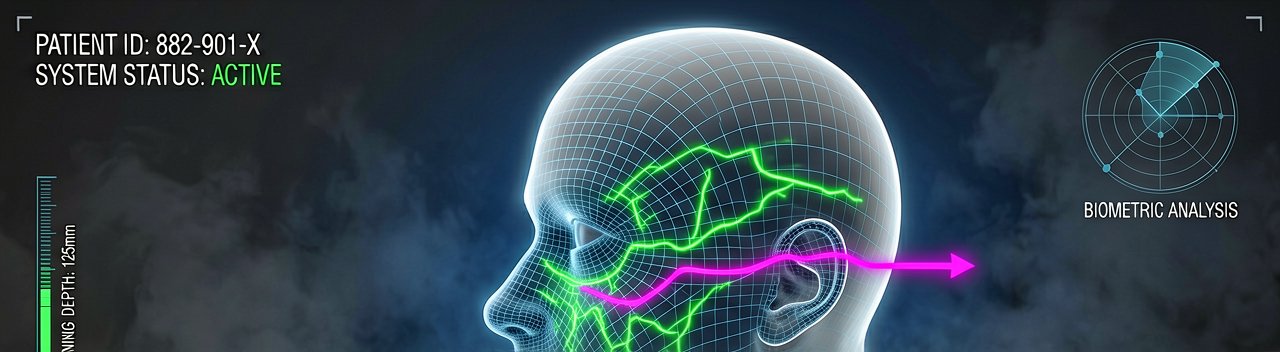
Beyond beauty, AI is tackling the complex world of medical neurology. For patients suffering from dystonia or spasticity, finding the right muscle and the right dose is often a grueling process of elimination. New tools like DystoniaBoTXNet are changing that. As reported by Mass Eye and Ear, this AI platform can predict a patient's response to toxin injections with an astounding 96.3% accuracy by analyzing brain MRI biomarkers. This allows doctors to identify "responders" before treatment begins, saving months of ineffective therapy.
The Challenge of the "Nuance Gap"
Despite these technological leaps, the road to full automation is paved with clinical subtleties that current AI still struggles to navigate. Research into managing spasticity, such as the AIMS study published in MDPI, reveals that while AI can provide standardized recommendations that align with clinical guidelines, it often lacks the adaptability required for complex cases. The "black box" of algorithmic decision-making cannot yet fully replace the nuanced judgment of a veteran physician who considers a patient's lifestyle, psychological state, and tactile muscle feedback.
Furthermore, the data used to train these models presents a significant hurdle. Many AI systems are built on datasets that lack ethnic and physiological diversity, which can lead to biased treatment recommendations. If an algorithm is primarily trained on one skin type or one age demographic, its precision may falter when applied to a global population. Ensuring that AI tools are "formulation-aware" and "ethnically inclusive" is one of the primary hurdles for the next generation of developers.
The translational perspective—the "how do we get this into the clinic safely" part—requires a cautious framework. The consensus among researchers is that AI's strongest near-term role is as a decision-support tool rather than an autonomous actor. By automating the "boring" parts of the job, like documenting wrinkle reduction through automated photography or calculating volumetric diffusion, AI frees up the clinician to focus on the human-centric aspects of care.
The Future: Digital Twins and Real-Time Guidance
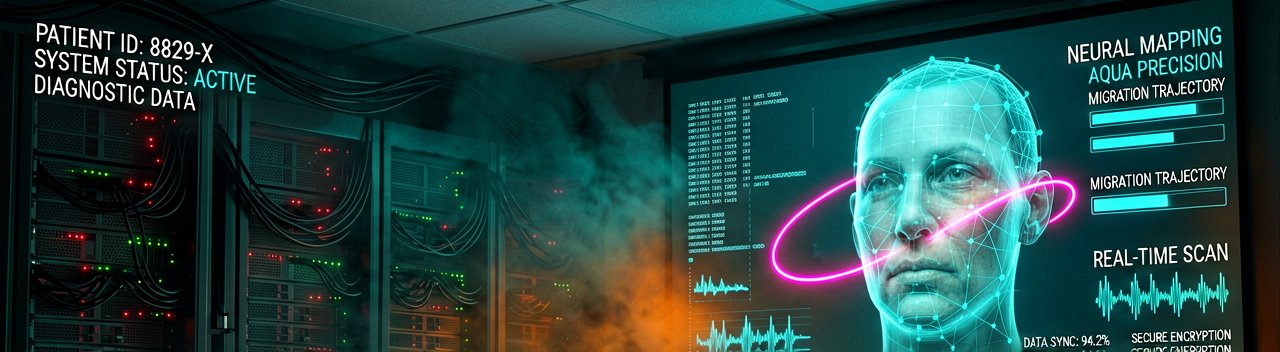
Looking ahead, the next frontier involves the "Digital Twin" concept. Imagine a virtual representation of your own facial anatomy, updated in real-time, that allows a doctor to simulate the exact spread of a neurotoxin before injecting. This would minimize "off-target" diffusion—the culprit behind drooping eyelids or frozen expressions. AI-enhanced ultrasound is also being explored to provide real-time guidance, helping injectors steer clear of nerves and vessels while ensuring the toxin lands exactly in the intended muscle plane.
As these technologies mature, they will likely become standardized in clinical training. According to the Canadian Board of Aesthetic Medicine (CBAM), AI is already being used to introduce trainees to muscle activation mapping and individualized dosage guidance. This educational shift ensures that the next generation of injectors will be as comfortable with a tablet as they are with a needle, blending the "art" of the needle with the "science" of the chip.
In the end, the goal of AI in botulinum toxin therapy isn't to replace the human touch, but to refine it. By stripping away the guesswork and replacing it with evidence-based precision, AI is ensuring that "getting work done" is no longer a gamble, but a calculated, customized, and consistently successful medical procedure. The future of toxins is here, and it’s smarter than we ever imagined.
The journey from exploratory research to everyday clinical use will require rigorous validation and transparent governance. However, the potential to reduce side effects and maximize therapeutic benefits is too great to ignore. For both the patient seeking relief from a medical condition and the individual looking for a refreshed appearance, AI represents the most significant leap in injection safety and efficacy since the discovery of the toxin itself.
As we move forward, the collaboration between technologists and clinicians will be the key. The needle may still be driven by a human hand, but the eyes watching the "canvas" will increasingly be powered by the most advanced neural networks on the planet.
The Technological Underpinnings: While the clinical application of AI in neurotoxin delivery feels like science fiction, the companies and research institutions driving this change are very real. The movement is largely propelled by a mix of legacy pharmaceutical giants looking to modernize their portfolios and agile med-tech startups specializing in computer vision and predictive analytics. These entities are not just creating software; they are redefining the standard of care by building ecosystems where hardware and algorithms coexist to eliminate the "guessing game" of traditional injections.
The Pioneers of Predictive Modeling
One of the key players in this space is Revance Therapeutics, which has been vocal about integrating digital health solutions into the aesthetic journey. By focusing on long-lasting formulations, companies like Revance recognize that precision is paramount—the longer a toxin lasts, the more critical it is to get the placement right the first time. Their interest in digital mapping tools highlights a broader industry trend where the "product" is no longer just the liquid in the vial, but the entire data-driven treatment experience surrounding it.
On the diagnostic side, companies like Canfield Scientific have set the gold standard with their VISIA Skin Analysis systems. These platforms use AI to provide deep-tissue imaging that tracks wrinkles, spots, and texture over time. By incorporating AI-driven "aging simulations," they allow practitioners to show patients exactly how botulinum toxin can intercept the natural progression of aging. This data-heavy approach transforms the consultation from a subjective conversation into a visual, evidence-based roadmap.
In the neurological sector, the work being done at Mass Eye and Ear through the DystoniaBoTXNet project represents a landmark collaboration between academic research and clinical practice. By utilizing deep learning to analyze structural MRI data, researchers are solving a decades-old problem: why some patients simply don't respond to Botox. This research is instrumental for insurance companies and healthcare providers, as it provides a tool to justify treatment costs by predicting successful outcomes with near-certainty.
Startups and the "App-ification" of Aesthetics
Small, innovative startups are also making waves by bringing AI to the palm of the clinician's hand. Apps like NextMotion are utilizing 3D body and face scanning via smartphones to create "digital twins" of patients. These startups are focusing on the democratizing power of AI, making high-level anatomical analysis available to boutique clinics that might not have the budget for massive imaging suites. This "app-ification" ensures that the benefits of AI are not restricted to top-tier research hospitals.
Another fascinating player is the German-based Merz Aesthetics, which has heavily invested in the "Confidence to be" campaign, emphasizing individualized beauty. Their focus on practitioner education has led to the adoption of AI tools that help injectors understand the "myomodulation" effect—how injecting one muscle affects the movement of another. By using AI to visualize these interconnected muscular chains, Merz is helping to prevent the "frozen face" look that remains a primary fear for new patients.
The Role of Big Data and Global Databases
The "backstory" of these AI breakthroughs is fueled by massive datasets. Institutional repositories of clinical photographs and electromyography (EMG) readings are being fed into neural networks to train them on the vast diversity of human expressions. This requires global cooperation, as an AI trained only on Western faces will inevitably fail in Asian or African markets where muscle structures and aesthetic ideals differ. The push for "inclusive AI" is becoming a major talking point at international dermatology and neurology conferences.
Furthermore, the integration of Electronic Health Records (EHR) with AI analytics is allowing for longitudinal tracking on a scale never before seen. Companies are now able to analyze how certain toxins perform over five or ten years across tens of thousands of patients. This "big data" approach is revealing subtle nuances in how different formulations—like Botox, Dysport, or Xeomin—behave in specific demographics, allowing for a level of personalized medicine that was once purely theoretical.
Robotics and the Future of Physical Injections
While software currently leads the charge, the hardware is catching up. Robotic systems designed for micro-injections are being tested in controlled environments. These robots use AI to compensate for a patient’s micro-movements or breathing, ensuring the needle depth is accurate to the tenth of a millimeter. While we are still years away from a robot performing a full cosmetic procedure solo, the "co-bot" (collaborative robot) model is quickly gaining traction in medical research labs.
The convergence of these companies and technologies is creating a "closed-loop" system. It starts with an AI scan, moves to an AI-assisted injection plan, and finishes with an automated outcome analysis. This cycle not only improves patient results but also provides a massive amount of feedback data to refine the algorithms further. It is a self-improving system that promises to make the botulinum toxin procedures of 2030 look unrecognizable compared to the manual techniques of the early 2000s.
Ultimately, the story of AI in this field is one of collaboration between human expertise and machine speed. As companies continue to refine these tools, the focus remains on safety, predictability, and the elimination of human error. The "art" of the injection is being backed by the "logic" of the code, ensuring that every prick of the needle is backed by the collective knowledge of millions of successful treatments.
Beyond the Needle: The Algorithmic Shift in Precision Medicine: The encroachment of artificial intelligence into the botulinum toxin market represents more than just a software upgrade; it is a fundamental shift in the "value proposition" of aesthetic and therapeutic medicine. Traditionally, patients paid for the clinician’s experience and steady hand. In the emerging AI-driven landscape, the value is shifting toward the proprietary data and the predictive accuracy of the algorithms assisting those hands. This creates a new competitive moat where the "best" clinic may soon be defined by the sophistication of its digital diagnostic suite rather than just the reputation of its lead injector.
The Industrialization of Personalization
From a market perspective, we are witnessing the industrialization of what used to be a bespoke, artisanal process. By standardizing "individualization" through AI, large medical groups can ensure a consistent quality of results across hundreds of locations, effectively "de-risking" the procedure for the consumer. This scalability is a major driver for private equity investment in med-spas and neurology chains. However, there is an inherent tension here: as treatments become more algorithmic, the role of the physician risks being reduced to a "technician" executing a computer-generated plan, potentially commoditizing a highly specialized skill set.
The economic impact of AI-driven "first-time right" injections cannot be overstated. In medical neurology, where botulinum toxin is used for chronic migraine or cervical dystonia, the "trial and error" phase is the most expensive and frustrating part of the patient journey. By using AI to identify non-responders early, healthcare systems can redirect resources toward alternative therapies, potentially saving millions in wasted drug costs and improving the quality of life for patients who would otherwise spend months in a state of clinical limbo.
Data as the New Dermal Filler
There is also a significant "data play" occurring behind the scenes. Every 3D facial scan and every recorded muscle response is high-value fuel for the next generation of medical AI. We are entering an era where the data generated by the procedure might eventually be as valuable as the procedure itself. Pharmaceutical companies that can close the loop—connecting the specific formulation of a toxin to a digitally verified outcome—will have a massive advantage in getting new products through regulatory hurdles and into the hands of practitioners.
However, this analytical "utopia" faces a major hurdle in the form of the "black box" problem. In a medical context, saying "the AI told me to inject here" is not a legally or ethically sufficient justification if an adverse event occurs. The industry is currently grappling with how to maintain "human-in-the-loop" accountability while still reaping the efficiency gains of automation. This will likely lead to a new category of medical malpractice insurance and regulatory standards specifically designed for AI-augmented procedures.
The Psychological Paradox of Precision
Critically, the push for perfect symmetry and predictive outcomes through AI may have unintended psychological consequences. While AI can correct a drooping brow with mathematical precision, it cannot yet account for the "uncanny valley"—the point at which a face looks technically perfect but humanly "off." There is a risk that AI-guided aesthetics could lead to a homogenized standard of beauty, where the algorithm’s "optimal" version of a face overrides the unique character that makes a human face appealing. The most successful clinicians will be those who use AI to inform their decisions without letting it dictate their aesthetic taste.
Furthermore, the "democratization" of these tools via mobile apps creates a transparency gap. When a patient can use a consumer-grade app to "analyze" their own face and arrive at a clinic with a pre-set idea of their dosage, it challenges the traditional hierarchy of the patient-provider relationship. Clinicians will need to become expert "data translators," explaining why the algorithm on a smartphone might differ from the professional-grade system used in the sterile suite.
The Regulatory and Ethical Frontier
Regulators like the FDA and EMA are currently chasing a moving target. Most AI tools in this space are classified as "decision support," but as the software becomes more prescriptive, the line between "support" and "active medical device" blurs. We should expect a tightening of frameworks around "Software as a Medical Device" (SaMD), requiring AI developers to prove not just that their code works, but that it works consistently across different hardware and diverse patient populations.
Finally, we must consider the "digital divide" in healthcare. As AI-augmented injections become the premium standard, we might see a two-tier system: high-tech, high-precision clinics for those who can afford the data-driven "guarantee," and traditional manual methods for everyone else. Ensuring that AI efficiency translates to lower costs for the patient, rather than just higher margins for the provider, will be the true test of this technology’s success in the public eye.
The future of botulinum toxin is undeniably digital, but its success remains tethered to the analog world of human empathy and physical touch. The algorithm can map the muscle, but only the human can understand the person behind the movement. As we navigate this transition, the goal is not to replace the injector’s soul with a circuit board, but to give that soul a much clearer view of the canvas it’s working on.
"In the future, your AI will perfectly calculate the exact dose needed to stop your forehead from moving, but it still won't be able to tell you why you're frowning at the bill. Technology can fix the wrinkle, but the human touch is still the only thing that can fix the 'doctor-is-running-40-minutes-late' face."
Artūras Malašauskas is an AI Systems Integrator with 20+ years of production-grade web engineering experience. He has designed, shipped, and scaled enterprise Python/PHP systems for logistics, SaaS, and public-sector clients. For the past year, he has focused exclusively on AI integrations: deploying open-source LLMs, building generative media pipelines (image, audio, video), and engineering multi-agent workflows for real production environments. His standard: reproducibility, security, cost-efficient inference—no vaporware. He documents and evaluates emerging AI tooling, separating verified capabilities from marketing noise. Technical editor at: muza-ai.eu, ai-verslas.lt, ai-naujinos.lt Connect on LinkedIn
Comments